.png)


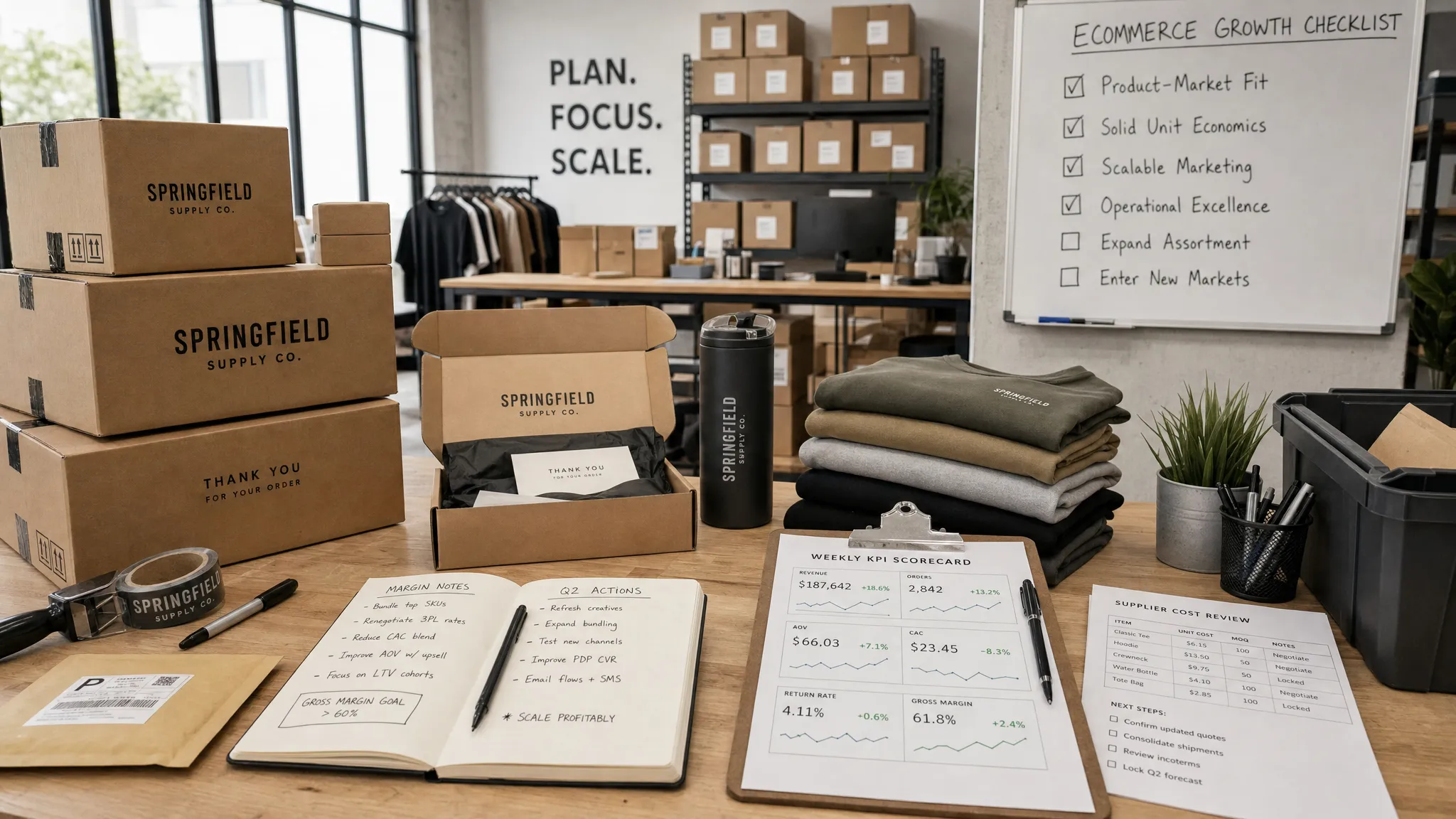

Scaling an ecommerce brand is not the same as chasing a bigger sales number next month. Many founders can create a spike with a new ad campaign, a discount, an influencer push, or a seasonal launch. The harder question is whether the brand can keep growing without burning margin, overwhelming operations, or losing the positioning that made customers care in the first place.
That is where an ecommerce agency can become valuable. The right partner does not simply “run ads.” It helps the brand build a growth system where acquisition, creative, website experience, retention, analytics, and brand strategy work together.
For entrepreneurs in sports, fitness, wellness, and consumer products, efficient scale usually means growing revenue while improving the quality of that revenue. That includes better customer acquisition costs, stronger conversion rates, higher repeat purchase, cleaner reporting, and a brand that becomes easier to buy from and easier to remember.
What “scaling efficiently” really means
Efficient scaling is growth with control. It means revenue increases without the business becoming more fragile.
A brand is not scaling efficiently if it doubles ad spend but sees contribution margin collapse. It is not scaling efficiently if it acquires new customers but cannot get them to buy again. It is not scaling efficiently if every new campaign requires the founder to manually coordinate freelancers, write copy, check tracking, review creative, and troubleshoot the website.
For ecommerce brands, efficient scale is usually measured across a few connected areas:
- Acquisition efficiency: How much it costs to acquire a customer, and whether those costs are sustainable as spend rises.
- Conversion efficiency: How well the website turns qualified traffic into buyers.
- Retention efficiency: How much revenue comes from repeat customers, subscriptions, replenishment, bundles, or lifecycle marketing.
- Creative efficiency: How quickly the brand can test, learn, and produce assets that match real customer motivations.
- Operational efficiency: Whether fulfillment, inventory, customer service, and internal decision-making can support growth.
- Strategic efficiency: Whether the brand is clear enough that marketing gets easier over time, not more confusing.
An ecommerce agency helps by improving these levers together. That matters because ecommerce growth rarely breaks for one reason. It usually breaks because one part of the system outpaces the others.
Why brands hit a scaling ceiling
Most ecommerce brands do not stall because the product is bad. They stall because early growth tactics stop working.
In the beginning, founders often rely on a tight combination of product-market fit, organic buzz, founder-led selling, small paid campaigns, and a few high-performing creative assets. That can work well up to a point. But as the brand spends more, reaches colder audiences, adds more products, and competes in more crowded channels, the same playbook becomes less reliable.
A sports nutrition brand, for example, might generate strong early sales from a community of athletes who already understand the product. Scaling beyond that group requires more education, stronger differentiation, better landing pages, more trust signals, and creative that speaks to different customer segments. A wellness brand might convert well through referrals but struggle when paid social introduces colder visitors who need more proof before buying.
Common scaling bottlenecks include:
- Ad accounts that depend on one winning creative angle.
- Product pages that explain features but not outcomes.
- Email lists that only receive discounts and launch announcements.
- SEO that is ignored until paid media becomes expensive.
- Reporting that shows revenue but not true profitability.
- Brand messaging that changes from campaign to campaign.
An agency can identify which bottleneck is actually limiting growth. That prevents founders from solving the wrong problem, such as increasing ad spend when the real issue is conversion rate, offer clarity, or weak post-purchase retention.
How an ecommerce agency builds a scalable growth system
A strong ecommerce agency approaches scale as a system, not a single channel. Paid media matters, but it performs best when supported by compelling creative, a persuasive website, strong lifecycle marketing, and clean measurement.
This is especially important for sports, fitness, and wellness brands because customers often need trust before they buy. They want to understand what the product does, why it is different, whether it fits their goals, and whether the brand feels credible.
It clarifies the growth strategy before spending more
Efficient scaling starts with deciding what the business is actually trying to optimize.
Some brands need more first-time customers. Others need to raise average order value, improve subscription adoption, increase repeat purchase, or reduce dependence on discounts. An ecommerce agency should help define the priority based on the brand’s stage, margins, product catalog, inventory position, and customer behavior.
This is where growth strategy becomes practical. Instead of setting vague goals like “increase revenue,” the agency can help turn growth into measurable priorities, such as improving conversion rate on top product pages, increasing repeat purchase within 60 days, or lowering customer acquisition cost for a specific product category.
For emerging brands, this kind of structure is often the difference between activity and progress. OPTYO has written more about what a strong growth partner should deliver for emerging brands, especially when founders need more than channel execution.
It improves acquisition without relying only on spend
Many ecommerce brands assume scaling means spending more on Meta, Google, TikTok, or influencer campaigns. More spend can help, but only if the economics support it.
An ecommerce agency improves acquisition by looking at the full path from impression to purchase. That includes audience strategy, offer structure, creative testing, landing page alignment, tracking, and post-click behavior. If traffic is expensive, every missed conversion matters.
For paid social specifically, creative is often the biggest lever. Fitness and wellness buyers respond to different types of proof: transformations, routines, founder stories, product education, athlete credibility, user-generated content, expert positioning, and comparison-based messaging. An agency can test these angles systematically instead of guessing which one should lead the next campaign.
The goal is not simply to find one winning ad. The goal is to build a repeatable testing process that produces new winners before the old ones fatigue. If paid social is a major part of your acquisition mix, it is worth understanding how a paid social agency can improve customer acquisition beyond basic campaign setup.
It turns creative into a testing engine
Creative production is often where ecommerce scaling slows down. Founders know they need more assets, but the process becomes reactive. Someone requests ads, someone edits clips, someone writes copy, and the team hopes the output works.
A better ecommerce agency treats creative like a growth function. It develops hypotheses, produces variations, measures performance, and feeds learnings back into the next round.
For example, a running accessories brand might test creative around injury prevention, comfort, performance improvement, durability, and giftability. A supplement brand might test education-led creative against lifestyle-led creative. A recovery product might compare athlete testimonials with problem-solution demonstrations.
Over time, the agency should learn which customer pains, proof points, offers, and formats drive efficient acquisition. This makes the brand less dependent on random inspiration and more capable of producing creative at the pace required to scale.
It improves conversion rate so traffic works harder
Conversion rate optimization is one of the most overlooked scaling levers. If a brand increases traffic but the website leaks buyers, growth becomes expensive fast.
An ecommerce agency can improve conversion by reviewing the customer journey from landing page to checkout. This includes product page messaging, mobile usability, page speed, offer clarity, reviews, comparison sections, bundles, subscription prompts, cart experience, and checkout friction.
For sports, fitness, and wellness products, product pages often need to do more than display images and ingredients. They need to answer questions like:
- What goal does this product help me achieve?
- Who is it for and who is it not for?
- How soon should I expect to notice value?
- What makes it different from alternatives?
- Can I trust the claims, materials, formulation, or community behind it?
Small improvements can compound. A better product page can make paid media more profitable. A clearer offer can increase average order value. Stronger trust signals can reduce hesitation. Better education can lower customer support volume.

It strengthens retention and lifetime value
Efficient scale depends on what happens after the first purchase. If a brand has to reacquire every customer from scratch, growth becomes harder as acquisition costs rise.
Email and SMS marketing can support retention, but only when they are used strategically. A strong lifecycle program goes beyond welcome discounts and holiday promos. It helps customers use the product successfully, understand related products, buy at the right time, and feel connected to the brand.
For a fitness apparel brand, that might mean post-purchase education on care, sizing, styling, and training use cases. For a wellness product, it might include habit-building content, replenishment reminders, product education, and customer stories. For a sports equipment brand, it might include onboarding, maintenance tips, seasonal recommendations, and cross-sells based on skill level.
Retention also improves paid acquisition. If the brand knows that a customer acquired at a certain cost tends to purchase again within 45 or 90 days, it can make smarter decisions about acceptable CAC, offers, and campaign scaling.
It connects brand strategy to performance
Performance marketing becomes more efficient when the brand is easier to understand. If customers cannot quickly tell what the brand stands for, why the product is different, and why they should buy now, even strong media buying will struggle.
This is why ecommerce scaling is not only a technical performance problem. It is also a positioning problem.
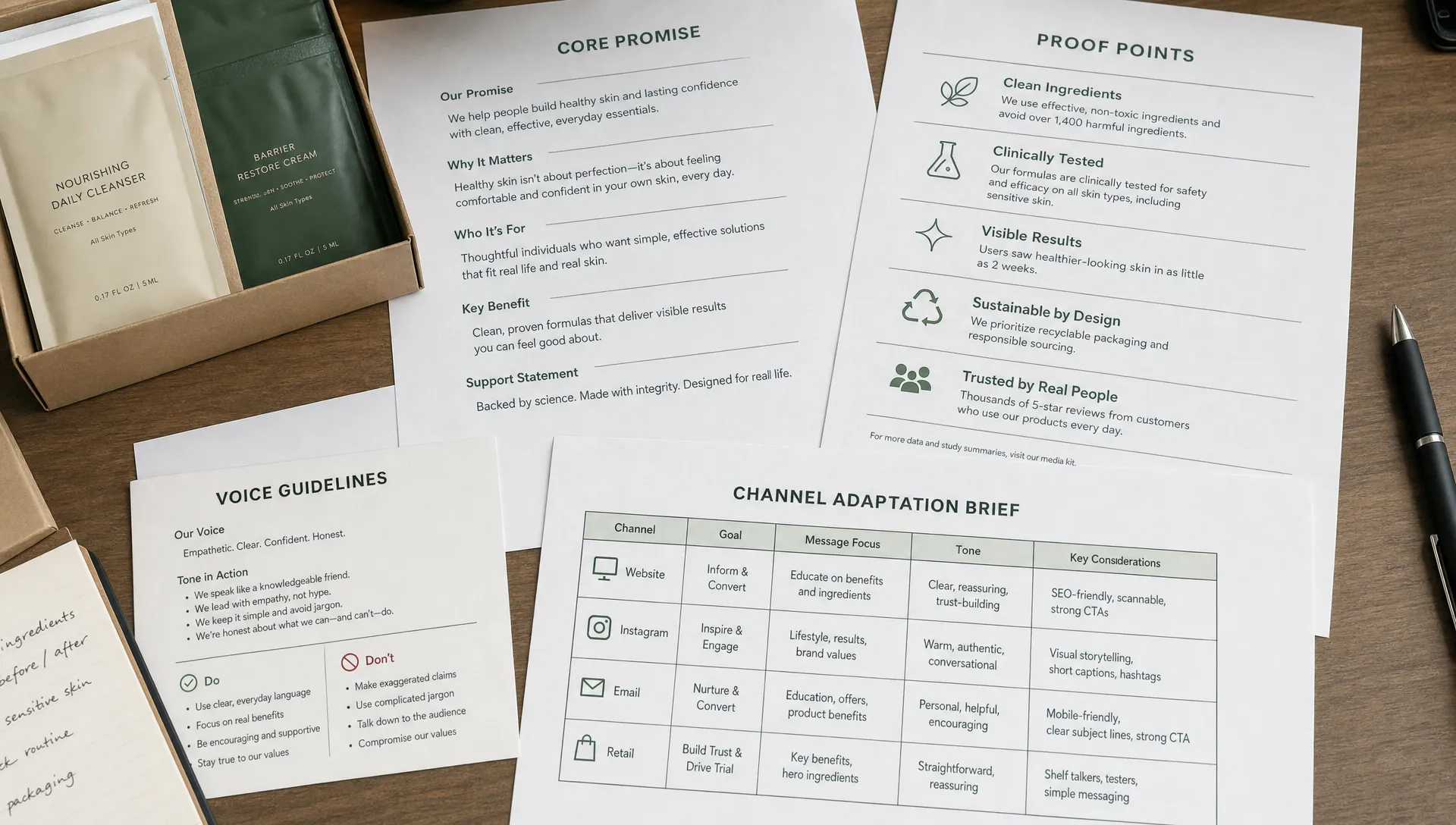
A brand strategy agency helps define the audience, market position, messaging hierarchy, value proposition, and customer experience. For ecommerce, those decisions show up everywhere: ads, landing pages, product descriptions, packaging, email flows, influencer briefs, and customer support scripts.
If your brand is entering a crowded category, such as supplements, activewear, recovery tools, or functional beverages, clarity is a competitive advantage. OPTYO’s breakdown of what a brand strategy agency actually does explains how positioning and messaging support both trust and conversion.
How agencies create efficiency inside the business
The benefits of an ecommerce agency are not limited to marketing outputs. A strong partner can also reduce internal drag.
Founders often become the bottleneck as the brand grows. They approve every campaign, interpret every report, coordinate every freelancer, and make every decision about priorities. That creates delays and inconsistent execution.
An agency can create a more efficient operating rhythm by establishing clear planning cycles, creative calendars, reporting dashboards, testing roadmaps, and accountability around KPIs. Instead of reacting to weekly performance swings, the team can evaluate what is working, what is being tested, and what needs to change.
This structure is especially useful when the internal team is small. A founder might not yet need full-time specialists for media buying, CRO, SEO, design, email, analytics, and growth strategy. An agency gives access to that mix of expertise without requiring the brand to build a large department immediately.
That said, agency support and internal hiring should eventually work together. As a brand matures, it may make sense to bring certain roles in-house while keeping an agency for strategy, creative production, or channel expertise. For leadership and business-critical hires, some growth-stage companies work with specialist search partners for sales and marketing leadership recruitment so the internal team can scale with the same discipline as the marketing engine.
The key is knowing what should be outsourced, what should be owned internally, and what should be shared. A good agency helps founders make that decision more objectively.
Signs your brand may be ready for an ecommerce agency
Not every brand needs an agency at the same stage. Hiring too early can create pressure if the fundamentals are not ready. Hiring too late can cause missed opportunities and founder burnout.
Your brand may be ready for an ecommerce agency if several of these are true:
- You have proven demand but growth has become inconsistent.
- You are spending on paid media but do not have a clear testing system.
- Your website gets traffic, but conversion rate is not where it should be.
- You rely heavily on discounts to generate sales.
- You have repeat customers but no strong lifecycle marketing program.
- You are launching new products and need a clearer go-to-market plan.
- You cannot easily tell which channels, campaigns, or products are driving profitable growth.
- Your internal team is stretched across strategy, execution, reporting, and creative.
The strongest agency relationships usually begin when the brand has enough traction to learn from data, but enough room to improve the system.
What to look for in an ecommerce agency
Choosing an ecommerce agency is not just about finding a vendor with channel experience. It is about finding a partner that understands how ecommerce growth works across the business.
Look for an agency that asks about margins, inventory, customer segments, repeat purchase, product roadmap, and brand positioning before recommending a media plan. If the first conversation is only about ad spend, the strategy may be too narrow.
A strong agency should be able to explain how it will prioritize work, how it will measure progress, and how insights from one area will inform another. For example, paid media learnings should influence landing page copy. Email performance should influence product bundling. CRO findings should influence creative briefs. SEO insights should influence content and product education.
You should also look for communication discipline. Efficient scaling requires fast decisions, but not chaotic ones. The agency should provide regular reporting, clear recommendations, and honest conversations about what is working and what is not.
For sports, fitness, and wellness brands, category fluency matters too. The agency should understand how customers evaluate performance claims, community, trust, credibility, aesthetics, and routine-based purchasing. Selling a protein powder, a recovery tool, a training app, and a premium activewear line are not the same challenge, even though they may share ecommerce infrastructure.
The real value: fewer wasted moves
The biggest advantage of an ecommerce agency is not that it adds more marketing activity. It is that it helps reduce wasted effort.
Without a clear growth system, brands often jump from tactic to tactic. They test a new ad platform, redesign a homepage, run a discount, launch a newsletter, hire a creator, and refresh packaging without knowing which move truly matters. Some of those actions may help, but they do not compound if they are disconnected.
An agency helps prioritize the highest-impact work. It can identify whether the next growth lever is creative volume, product page clarity, lifecycle marketing, SEO, paid media structure, offer strategy, or brand positioning. That focus is what makes scaling more efficient.
For entrepreneurs, this is a meaningful shift. The goal is not to do everything. The goal is to do the right things in the right order, with better information and stronger execution.
Frequently Asked Questions
What does an ecommerce agency do? An ecommerce agency helps online brands grow by improving areas such as paid acquisition, website conversion, creative production, email marketing, SEO, analytics, and growth strategy. The best agencies connect these functions so the brand can scale more efficiently.
How is an ecommerce agency different from a digital marketing agency? A digital marketing agency may focus mainly on channels like ads, SEO, or content. An ecommerce agency typically understands the full online selling system, including product pages, conversion rate optimization, average order value, retention, merchandising, and profitability.
When should a brand hire an ecommerce agency? A brand should consider hiring an ecommerce agency when it has proven demand but needs more structured growth. Common signs include inconsistent paid media performance, weak conversion rates, limited retention strategy, unclear reporting, or a founder-led team that has become overloaded.
Can an ecommerce agency help if paid ads are already working? Yes. If ads are working, an agency may help scale them by improving creative testing, landing pages, audience strategy, measurement, and post-purchase retention. The goal is to increase spend only when the wider system can support it profitably.
How long does it take to see results from an ecommerce agency? Timelines vary based on the brand’s stage, data quality, website, creative assets, and growth goals. Some improvements, such as campaign structure or email flow updates, may show signals quickly. Larger gains from CRO, brand positioning, SEO, and retention often compound over several months.
Build a more efficient path to scale
For ecommerce entrepreneurs, growth gets harder when every lever is managed in isolation. Paid media, creative, conversion, retention, brand, and reporting need to reinforce each other.
That is the role of an ecommerce agency: to help your brand scale with more focus, stronger execution, and fewer wasted moves.
If you are building a sports, fitness, or wellness brand and need a growth partner that understands both performance marketing and brand acceleration, OPTYO can help you turn scattered growth efforts into a more efficient system for scale.