.png)



In ecommerce, demand is not created by shouting louder. It is created when the right buyers understand why your brand matters, remember you when a need appears, and trust you enough to take action.
That distinction matters for sports, fitness, and wellness brands. A paid social campaign can put a product in front of more people, but it cannot fix unclear positioning, weak proof, forgettable creative, or a store experience that leaks intent. The strongest marketing and branding strategies work together: brand creates preference, and marketing converts that preference into measurable revenue.
For entrepreneurs, this is good news. You do not need a massive enterprise budget to build demand. You need sharper choices, stronger signals, and a system that compounds over time.
Demand Is Not the Same as Traffic
Traffic is a visit. Demand is a reason to care.
A brand can buy traffic tomorrow and still struggle to grow profitably if the market does not understand the product, believe the promise, or feel urgency around the problem. This is why many ecommerce founders feel stuck after early wins. They find one channel that works, usually Meta, Google, TikTok, Amazon, or influencer partnerships, then performance gets harder as the audience expands beyond high-intent buyers.
Demand building solves a different problem. It makes more people ready to buy before they reach your product page. It increases the quality of traffic, not just the quantity. It also helps your paid media spend work harder because ads are no longer doing every job at once.
In practical terms, demand shows up as:
- More branded search and direct traffic
- Higher click-through rates from familiar audiences
- Stronger conversion rates from cold traffic
- Better email and SMS engagement
- More repeat purchases and referrals
- Lower reliance on discounting to drive action
The goal is not to choose branding over performance. The goal is to build a brand that makes performance marketing more efficient.
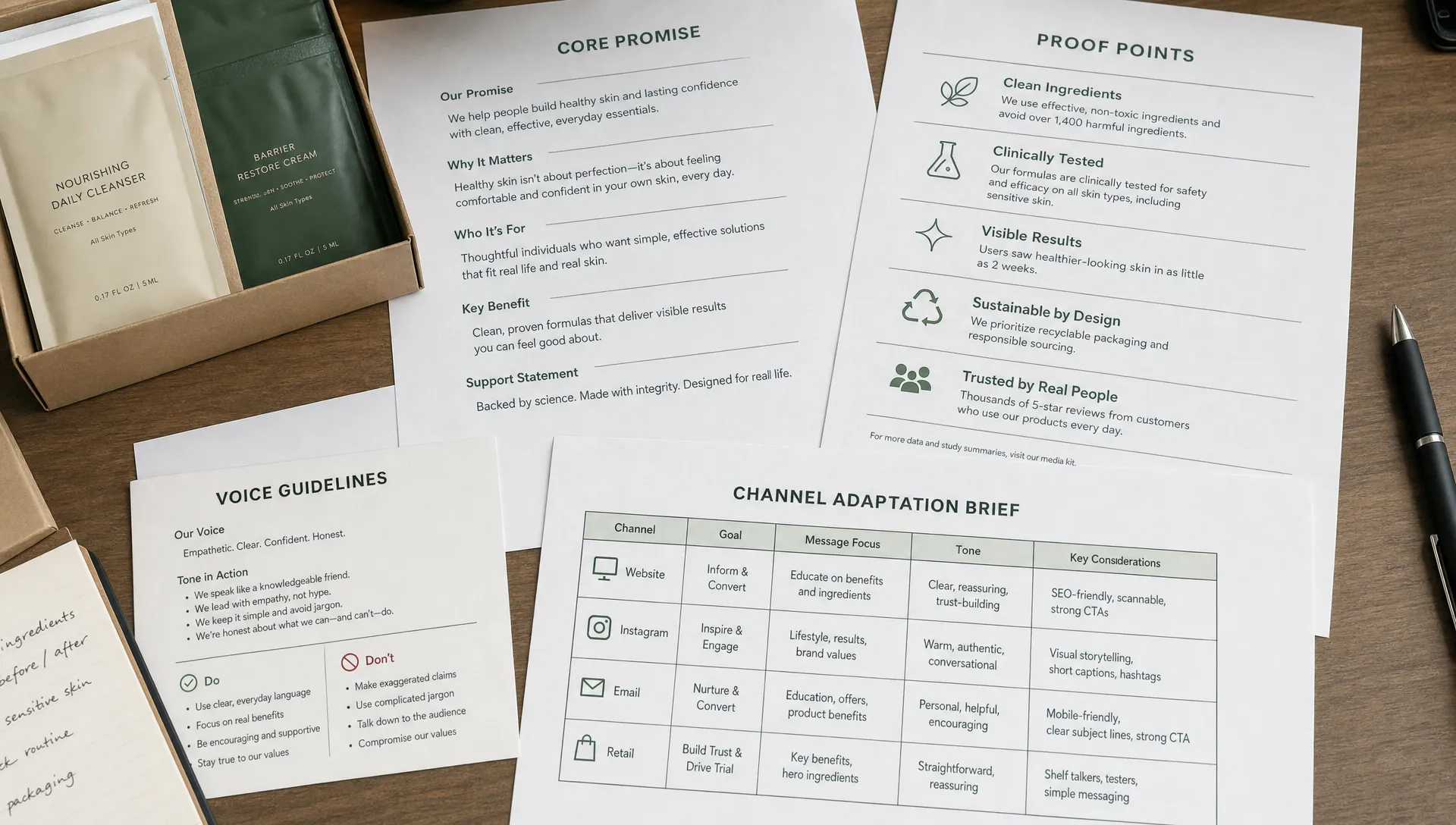
Start With a Position People Can Repeat
If customers cannot explain what makes your brand different, they are unlikely to remember it when they are ready to buy. Positioning is the foundation of demand because it tells the market what to associate with you.
For a sports nutrition brand, the position might not simply be clean protein. It could be clean protein for endurance athletes who need easy digestion before training. For a recovery brand, the position might not be better sleep. It could be nightly recovery for high-output professionals who train hard and work harder.
Strong positioning answers four questions:
- Who is this for?
- What problem does it solve?
- Why is this brand meaningfully different?
- What should the customer believe after seeing it once?
This is where many brands get too broad. They try to appeal to everyone who wants to be healthier, fitter, stronger, calmer, or more productive. But broad positioning often leads to generic creative. Specific positioning gives your ads, website, emails, packaging, and creator scripts a clear point of view.
If your brand is still refining its market angle, OPTYO has also covered how a creative branding agency shapes market position by turning strategy into recognizable signals customers can remember.
Define the Demand You Want to Build
Not all demand is equal. Some demand is category demand, where people already want a product like yours. Some demand is problem demand, where people feel the pain but do not yet know what solution to choose. Some demand is brand demand, where people specifically seek you out.
Most emerging ecommerce brands need all three, but the order matters.
If you sell a product in a familiar category, like hydration mix, activewear, supplements, equipment, or functional snacks, your job is often to shift preference. Buyers already understand the category. Your strategy should make your brand the obvious choice for a specific use case, identity, or outcome.
If you sell something more novel, your first job may be education. You need to help people recognize the problem, understand the cost of ignoring it, and see why your solution is credible.
A simple demand statement can keep your team aligned:
We want to become the brand that target customer thinks of when trigger moment happens because core belief.
For example, a wellness CPG brand might define demand this way: We want to become the brand that busy parents think of when they need a functional snack that feels healthy, tastes good, and fits into chaotic routines.
That statement gives creative teams, media buyers, retention marketers, and founders the same target. Every campaign can then reinforce the same mental link.
Build Distinctive Brand Assets
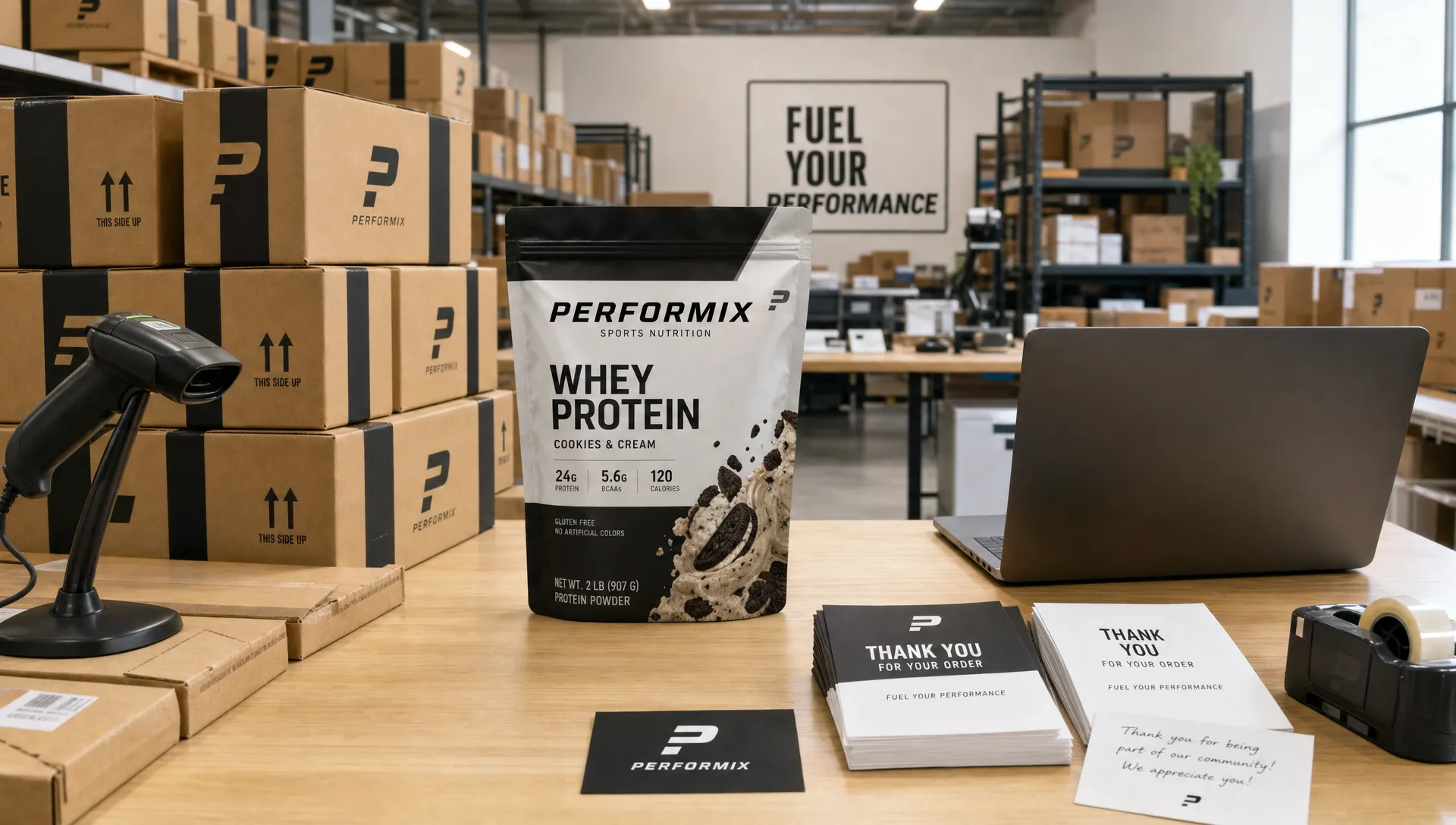
Demand is easier to build when your brand is easy to recognize. Distinctive assets are the visual, verbal, and experiential cues that make your brand identifiable before someone reads the logo.
These assets can include color systems, packaging structures, product naming conventions, photography style, recurring phrases, founder voice, creator formats, and even the way you demonstrate the product. In sports and wellness, this is especially important because many brands use similar visual language: athletes training, clean ingredients, bold claims, lifestyle imagery, and transformation stories.
Distinctiveness does not mean being strange for the sake of it. It means giving the market memory hooks. If your ad looks like every other fitness ad, your CPMs may still buy impressions, but those impressions are less likely to build recall.
A useful test is to cover the logo on your best ad, product page, or email. Would a customer still know it came from your brand? If the answer is no, your marketing may be working too hard to generate short-term clicks without building long-term memory.
Use Creative to Create Belief, Not Just Awareness
Awareness is not enough. A customer can know your brand exists and still feel no reason to buy. Demand-building creative should move people from passive recognition to active belief.
That means your creative system needs more than product beauty shots and discount messages. It should repeatedly prove why the product matters.
Effective demand-building creative usually covers five roles:
- Problem recognition: Show the customer a situation they immediately understand.
- Product demonstration: Make the mechanism, use case, or benefit visible.
- Proof: Use reviews, expert credibility, performance data, or customer outcomes when available and compliant.
- Identity: Help the buyer see the product as part of who they are or who they are becoming.
- Offer: Give a clear reason to act without making price the only reason to care.
For a fitness equipment brand, one ad might show the problem of inconsistent home workouts. Another might demonstrate fast setup. Another might feature real customer routines. Another might position the product around a specific identity, such as strength training for people who hate crowded gyms. Together, these assets build belief across multiple touchpoints.
This is also why creative testing should not only ask which ad has the cheapest click. It should ask which message creates the strongest buying signal, which angle improves landing page conversion, and which proof point gets repeated by customers.
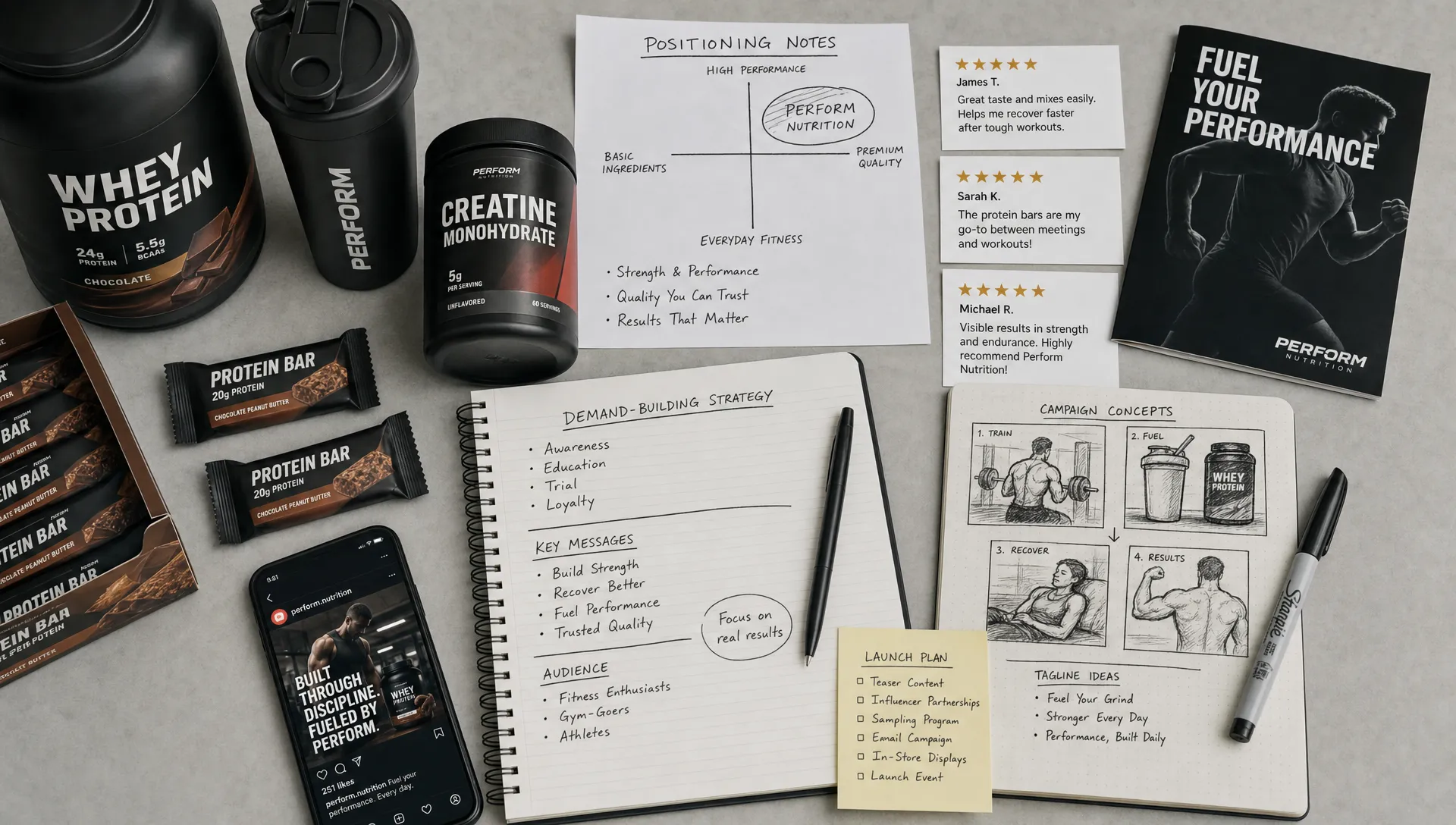
Balance Demand Creation and Demand Capture
Every growth brand needs both demand creation and demand capture.
Demand creation introduces or reframes a need. It often happens through paid social, creators, organic content, partnerships, PR, community, and educational content. Demand capture converts people who are already searching, comparing, subscribing, or returning. It often happens through search, shopping campaigns, SEO, email, SMS, retargeting, product pages, and marketplace listings.
Problems appear when brands over-invest in only one side.
If you only capture demand, you eventually run out of high-intent buyers and costs rise. If you only create demand, you may generate attention that fails to convert because the purchase path is unclear. A strong strategy maps each channel to the role it plays in the customer journey.
A running apparel brand, for example, might use creators and paid social to build awareness around injury-conscious training, SEO to capture searches for running gear comparisons, email to educate new subscribers, and retargeting to bring product viewers back with proof. The mix should depend on margin, buying cycle, creative capacity, and customer behavior.
For a deeper look at how to choose the right mix, OPTYO’s guide to channel marketing strategies for emerging consumer brands explains how channel decisions should connect to growth stage and economics.
Design Offers That Increase Urgency Without Weakening the Brand
Discounting can create short-term sales, but it can also train customers to wait. Demand-building brands use offers carefully. The goal is to reduce friction and increase urgency while preserving perceived value.
Instead of defaulting to constant percentage-off promotions, consider offer structures that match the customer’s buying barrier. If the barrier is uncertainty, proof, sampling, bundles, or education may matter more than a discount. If the barrier is replenishment, subscription incentives or multi-pack value can make sense. If the barrier is timing, limited seasonal relevance may be more compelling than price cutting.
The best offer answers a real objection. For ecommerce brands, common objections include not knowing whether the product will fit a routine, whether it will taste good, whether it will perform as promised, whether sizing is reliable, or whether the price is justified.
A stronger offer strategy starts by asking: What must the customer believe before buying, and what can we provide to make that belief easier?
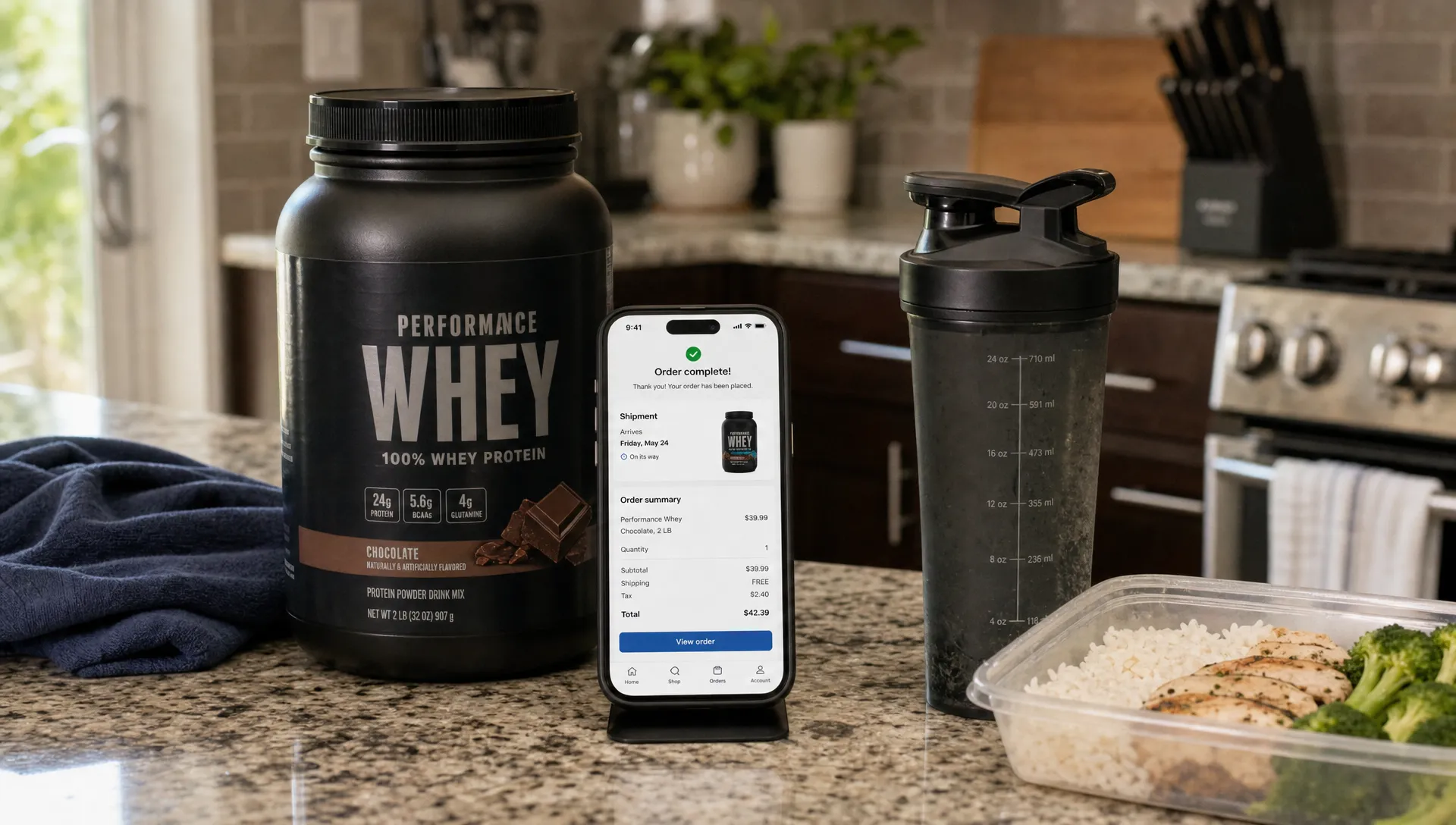
Turn the Ecommerce Experience Into a Demand Multiplier
Demand does not stop at the ad. It either strengthens or weakens on your website.
A customer who clicks with interest should land on a page that confirms the promise, answers objections, shows proof, and makes the next step obvious. If the page loads slowly, feels generic, hides key information, or forces too many decisions, demand leaks out of the funnel.
For sports, fitness, and wellness brands, the product page often needs to do serious education. Customers may want to know ingredients, sizing, usage instructions, performance benefits, comparison details, shipping expectations, and social proof. The page should not overwhelm them, but it should make confidence easy.
This is where ecommerce infrastructure and user experience become growth levers. Brands with complex retail needs may benefit from specialized partners focused on AI-powered digital transformation for retail, especially when site performance, UX, analytics, and ongoing optimization directly affect revenue.
From a demand-building perspective, your ecommerce site should reinforce the same message your ads and brand creative introduced. If the ad sells a specific use case but the landing page opens with generic brand language, the customer has to reconnect the dots. Every mismatch adds friction.
Make Retention Part of Demand Generation
Demand is not only built before the first purchase. It is reinforced after the first purchase.
A customer who has a great experience becomes easier to retain, easier to upsell, and more likely to refer. This matters because strong retention gives you more room to invest in acquisition. If your repeat purchase rate improves, your acceptable CAC can often rise without destroying profitability.
Email and SMS should not only be used for promotions. They can educate, onboard, remind, personalize, and deepen the brand relationship. A supplement brand might teach customers how to build a routine. An apparel brand might help buyers style or care for the product. A fitness brand might provide training guidance that increases product usage.
Post-purchase communication is also a powerful research tool. Reviews, support questions, survey responses, and user-generated content reveal the language customers use to describe your value. That language can feed back into ads, landing pages, product development, and positioning.
When retention and acquisition share insights, the brand gets smarter every cycle.
Measure Demand With the Right Signals
Demand creation can be difficult to measure if you only look at last-click attribution. A customer might see three creator posts, watch two ads, search your brand, read reviews, sign up for email, and buy a week later. If you judge only the final click, you may under-invest in the channels that created the sale.
This does not mean ignoring performance data. It means reading it with more context.
Useful demand signals include branded search growth, direct traffic, new customer revenue, returning customer revenue, marketing efficiency ratio, blended CAC, email list growth, creator code usage, engagement quality, product page conversion rate, repeat purchase rate, and customer survey data.
Qualitative signals matter too. Are customers repeating your core message in reviews? Are creators explaining the product in your language? Are support tickets showing confusion or confidence? Are people comparing you to the competitors you want to beat?
The best measurement system combines leading indicators and financial outcomes. Leading indicators show whether demand is forming. Business metrics show whether that demand is turning into profitable growth.
Common Mistakes That Suppress Demand
Many brands do not fail because they lack effort. They fail because their effort is scattered.
Common demand-building mistakes include:
- Changing the core message every month before the market has time to remember it
- Treating brand as visual design only, rather than a strategic growth asset
- Asking paid ads to fix weak positioning or weak product pages
- Scaling channels before understanding contribution margin and payback
- Using discounts as the main reason to buy instead of proof, relevance, or value
- Measuring every campaign with the same attribution window and missing long-term effects
The solution is not to slow down. Growth brands still need speed. The solution is to create a tighter learning loop so every campaign improves the next one.
A 90-Day Plan to Build More Demand
A demand-building strategy does not need to be theoretical. In 90 days, most ecommerce brands can make meaningful progress by focusing on clarity, creative, and conversion.
Days 1 to 30: Sharpen the foundation
Start by auditing positioning, customer language, product page messaging, paid creative, email flows, and performance data. Identify where the story is inconsistent or unclear. Interview customers if possible, especially recent buyers and qualified prospects who did not purchase.
By the end of the first month, define your core customer, trigger moment, primary promise, proof points, and brand codes. This gives every channel a shared direction.
Days 31 to 60: Build and test demand assets
Create a focused creative testing plan around a few high-potential angles. Test problem-led ads, demonstrations, proof-led creative, founder or expert perspectives, and offer framing. Update landing pages so each major campaign connects to a relevant page experience.
Do not judge winners only by top-of-funnel engagement. Look at qualified traffic, add-to-cart rates, conversion rate, email signups, and post-click behavior.
Days 61 to 90: Scale the strongest signals
Once you see which messages create real buying intent, scale them across channels. Turn winning ads into email themes, SEO content, product page modules, creator briefs, and retargeting sequences. Build consistency so customers see the same promise from multiple angles.
At this stage, the goal is not just more campaigns. It is stronger memory, better conversion, and more efficient learning.
Frequently Asked Questions
What is the difference between marketing and branding? Branding defines what your company should mean in the mind of the customer. Marketing activates that meaning through channels, campaigns, offers, and customer journeys that drive measurable action.
How do marketing and branding strategies build demand? They build demand by making the problem clear, positioning the brand as a relevant solution, creating memorable signals, proving value, and converting attention into purchases through the right channels.
Should ecommerce brands prioritize performance marketing or brand building? Growth brands usually need both. Performance marketing captures and converts demand, while brand building increases recognition, trust, and preference so performance channels can work more efficiently.
How long does it take to see demand-building results? Some improvements, such as stronger landing pages or better creative angles, can affect performance quickly. Broader brand demand, including branded search, direct traffic, and repeat purchasing, usually compounds over months of consistent execution.
Build Demand With a Strategy That Connects Brand and Performance
Demand is not built by isolated tactics. It is built when positioning, creative, channels, ecommerce experience, retention, and measurement all reinforce the same reason to buy.
For sports, fitness, wellness, D2C, and CPG brands, that alignment is often the difference between buying temporary spikes and building durable growth. If your brand is ready to connect performance marketing with a stronger market position, OPTYO helps growth-focused companies turn strategy, creative, and execution into scalable demand.