.png)



For ecommerce founders, inconsistent messaging usually shows up as a performance problem before it looks like a brand problem. Ads attract the wrong audience, product pages explain benefits differently, email campaigns sound disconnected from social content and customer service answers do not match the promise that won the sale. A communication agency helps prevent that drift by turning brand strategy into a practical messaging system that every channel can use.
Consistency does not mean repeating the same sentence everywhere. A strong brand adapts its message to the customer’s stage of awareness, the platform format and the buying context without changing the core idea. For sports, fitness and wellness brands, that balance is especially important because customers are often buying a mix of identity, trust, performance and routine.
How a Communication Agency Creates a Message System
A consistent message starts with hierarchy. Before any campaign goes live, the team needs to know what the brand should be known for, who it is for, what problem it solves and what proof makes the claim believable. Without that hierarchy, every campaign becomes a fresh debate.
The goal is to make brand communication easier to execute, not more complicated. A clear system gives founders, marketers, designers, media buyers and email teams the same source of truth. That source of truth should be specific enough to guide decisions but flexible enough to work across paid social, SEO, landing pages, packaging and retention campaigns.
Anchor the brand in a clear position
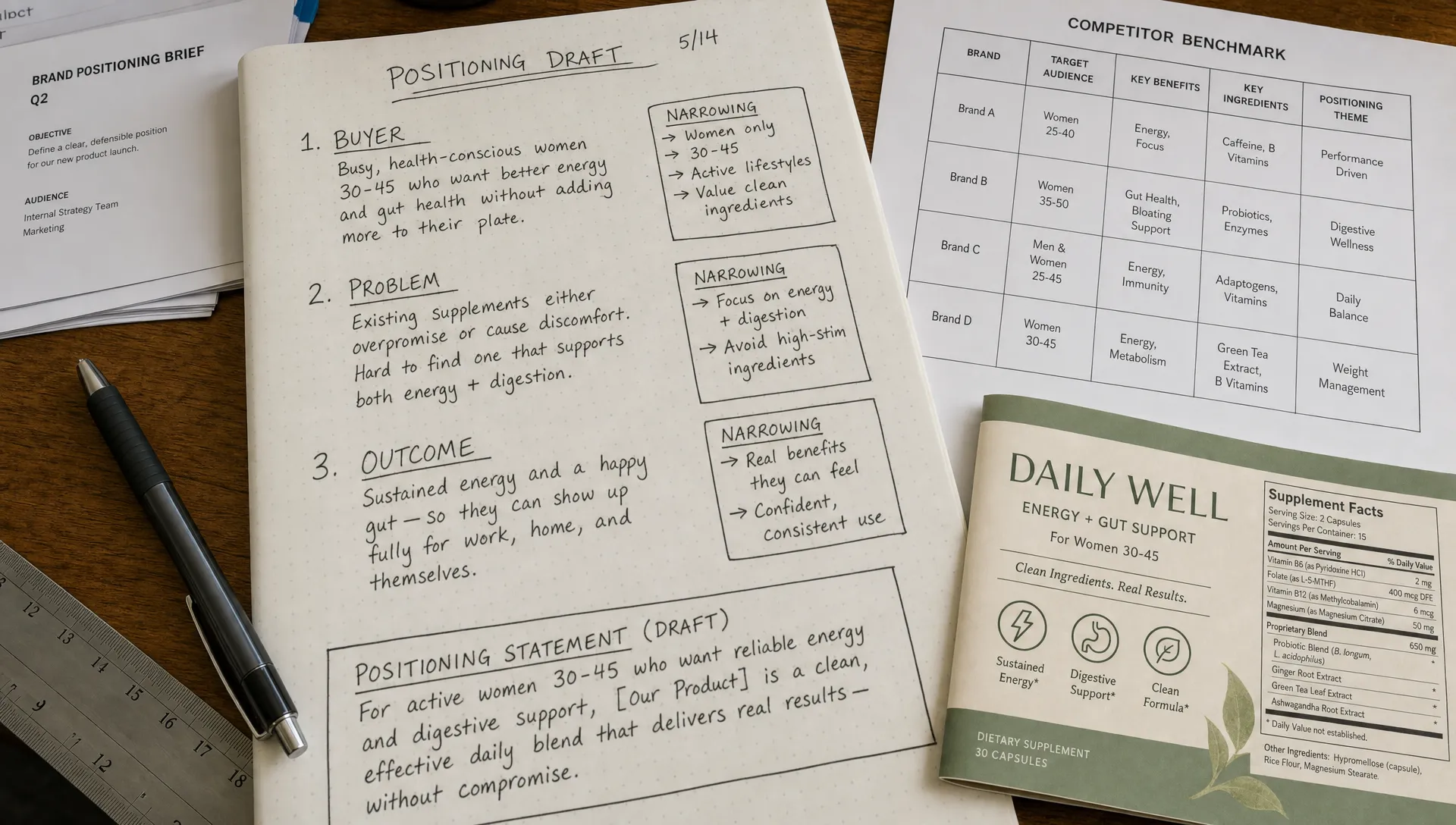
Positioning is the foundation of message consistency. A brand cannot sound consistent if the team is still unclear about whether it competes on performance, community, convenience, taste, science, aspiration, price or some combination of those factors.
A useful positioning statement usually answers four questions: who the brand serves, what meaningful outcome it helps them achieve, why the brand is different and why customers should believe it. A communication agency turns those layers into language that can be used by creative and growth teams without losing strategic intent.
If the deeper challenge is category positioning, OPTYO’s guide on how a creative branding agency shapes market position explains how strategy becomes clearer customer-facing creative.
Build a messaging architecture
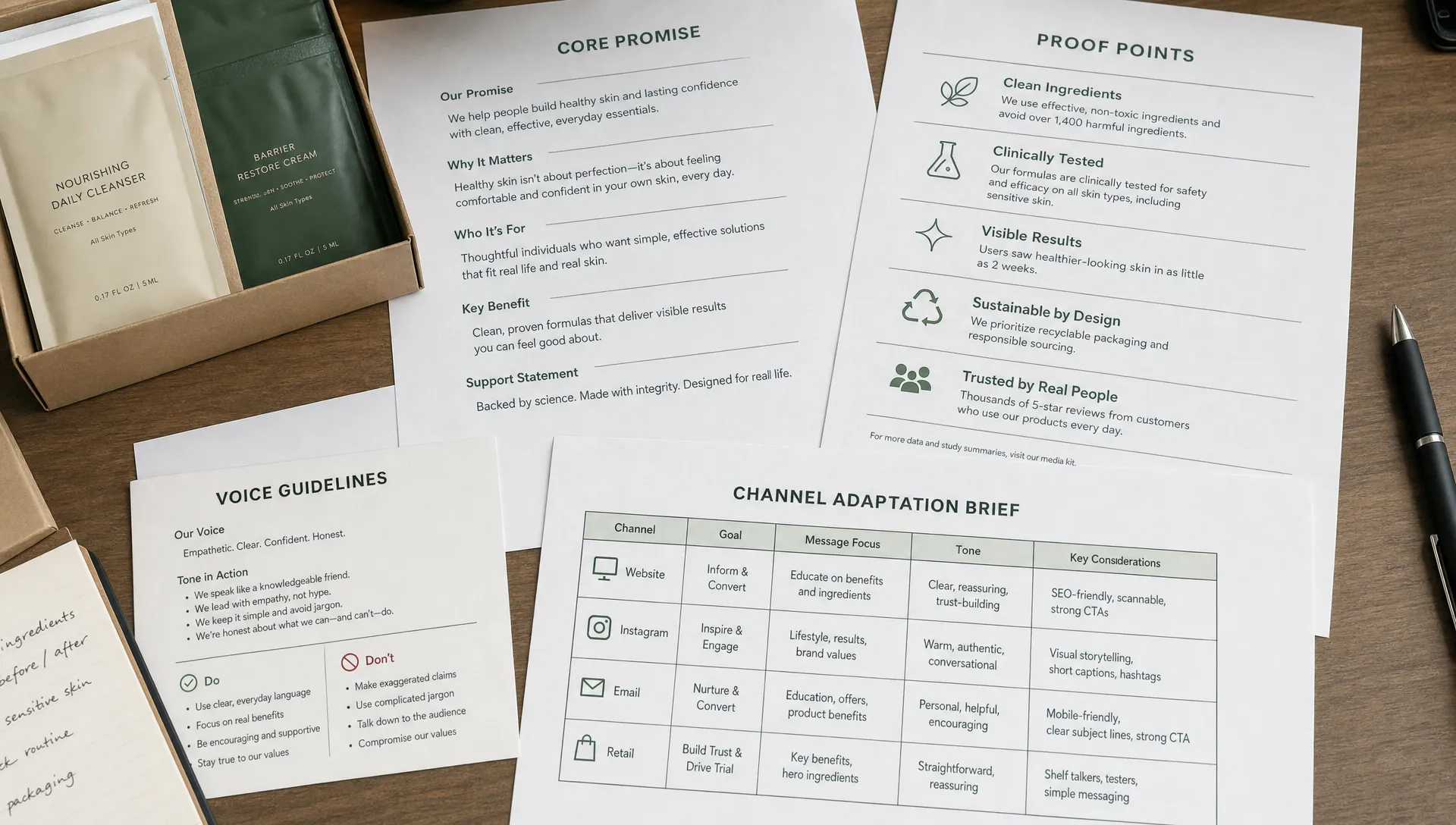
A messaging architecture organizes what the brand says from the most permanent ideas to the most campaign-specific variations. This prevents every ad, email or landing page from inventing its own version of the brand.
| Messaging layer | What it defines | Example use |
|---|---|---|
| Core promise | The primary value customers should remember | Homepage headline, brand story, investor deck |
| Audience segments | The needs, motivations and objections of key buyers | Paid social angles, email segmentation, product bundles |
| Proof points | Evidence that supports the promise | Product page claims, testimonials, comparison pages |
| Voice principles | How the brand should sound | Captions, customer support replies, lifecycle emails |
| Channel rules | How the message adapts by platform | TikTok hooks, SEO content, SMS, retail displays |
| Claim guardrails | What the brand should avoid saying | Compliance review, health claims, performance promises |
For sports, fitness and wellness brands, a communication agency also has to protect credibility. Claims about performance, recovery, nutrition or health need to be clear, supportable and not exaggerated. Strong messaging makes the benefit easy to understand without making promises the product cannot responsibly prove.
Make Consistency Work Across Paid, Owned and Retail Channels
Once the message architecture is in place, the next challenge is translation. The same brand idea should not look identical in every environment because customers behave differently by channel. A cold prospect watching a short-form video needs a different entry point than a returning buyer reading a replenishment email.
Consistency comes from keeping the promise stable while changing the emphasis. A hydration brand might focus on energy in paid social, daily habit formation in email and ingredient clarity on the product page. Those messages can all belong to the same brand if they point back to the same core position.
Match the message to the funnel stage
A common mistake is asking one tagline to do every job. Awareness content needs to earn attention quickly. Consideration content needs to explain the product and reduce uncertainty. Conversion content needs to make the decision feel clear, timely and low risk. Retention content needs to reinforce the customer’s choice and create a reason to come back.
A communication agency keeps the core promise intact while adjusting the message for each stage of the customer journey. That discipline helps performance teams test new angles without drifting into random claims or off-brand hooks.
| Funnel stage | Customer question | Messaging focus |
|---|---|---|
| Awareness | Why should I care? | Problem, aspiration or category tension |
| Consideration | Is this right for me? | Use cases, differentiation and product education |
| Conversion | Why buy now? | Offer clarity, proof, urgency and risk reduction |
| Retention | Why stay with this brand? | Routine, community, replenishment and progress |
Translate by channel without brand drift
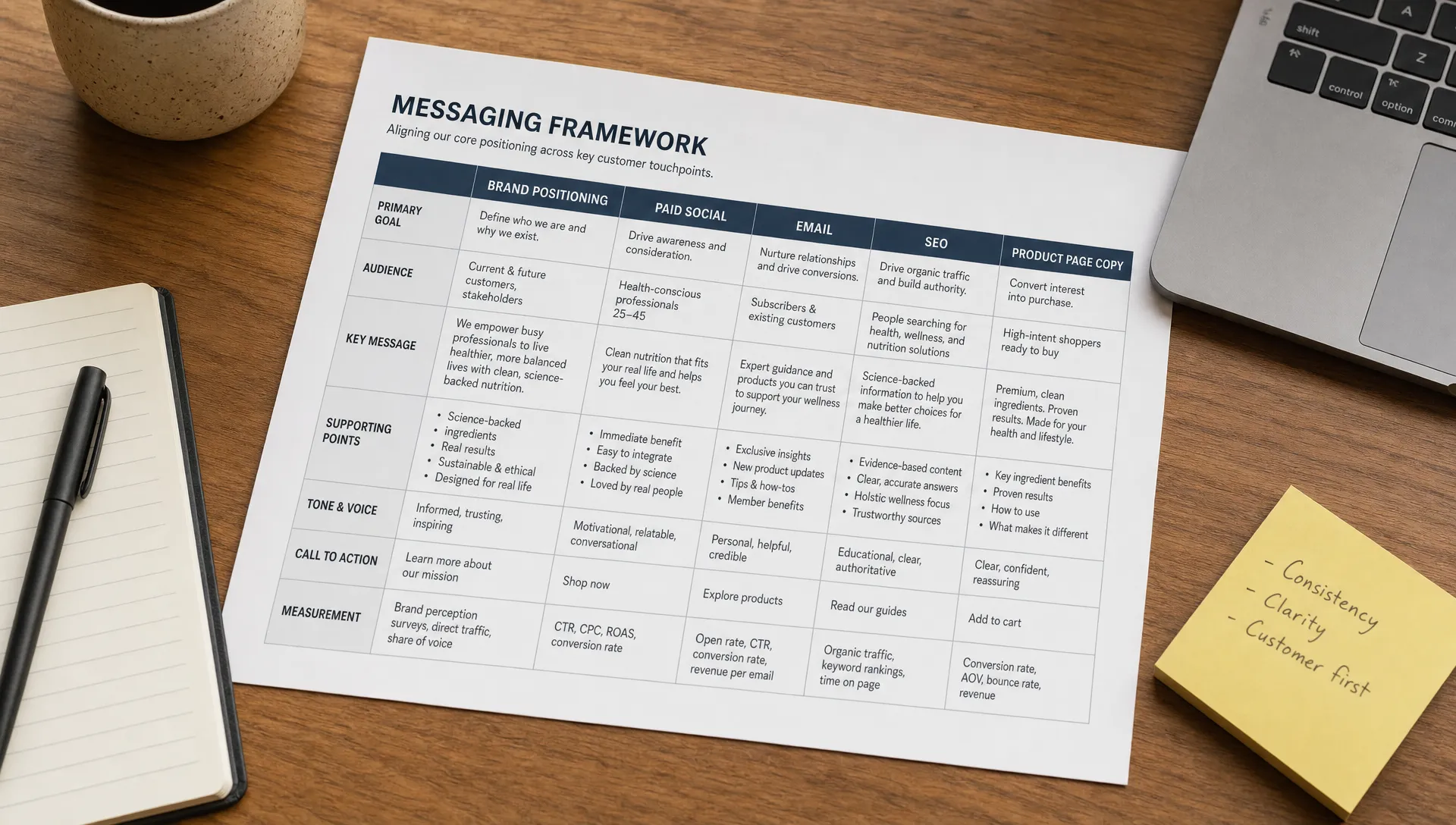
Each platform has its own behavior pattern. Paid social rewards strong hooks and fast comprehension. Search rewards specificity and useful answers. Email rewards relevance and timing. Product pages reward clarity, proof and friction reduction. Retail or marketplace listings reward scannable benefits and trust signals.
Message consistency means the customer should recognize the same brand even when the format changes. The copy can be shorter, more educational, more emotional or more direct depending on where it appears, but the promise, tone and proof should still feel connected.
For growth-focused brands, this alignment matters because acquisition, conversion and retention are connected. OPTYO’s article on how an ecommerce agency helps brands scale efficiently covers those growth levers in more detail.
The Operating System Behind Consistent Messages
Messaging does not stay consistent because a team agrees on it once in a workshop. It stays consistent because the operating system makes the right message easy to find, apply, review and improve.
That operating system usually includes a central messaging document, creative briefs, approval rules, campaign naming conventions, shared examples and a measurement process. The point is not bureaucracy. The point is reducing preventable confusion as the brand produces more campaigns across more channels.
Use briefs and templates to reduce interpretation
A good creative brief should not tell a designer or copywriter exactly what to make. It should define the customer, the objective, the message angle, the offer, the proof points, the constraints and the desired action. This leaves room for creativity while keeping the work connected to strategy.
Templates also help. A launch email template, product page framework or ad testing matrix gives the team a repeatable structure for applying the message. A communication agency can use these tools to help founders scale creative output without approving every sentence manually.
As teams grow, some repetitive coordination can be supported by technology. For example, this guide to AI automation workflows for agency teams shows how automation can handle parts of content operations and reporting while leaving strategy, creativity and client judgment to people.
Create feedback loops from performance data
Consistent messaging should not mean frozen messaging. The brand’s core promise should remain stable, but the way that promise is expressed should improve as the team learns from customers.
Performance data can reveal which benefits attract qualified traffic, which objections slow down conversion and which proof points make customers more confident. Qualitative inputs matter too. Reviews, support tickets, survey responses and sales calls often show the exact language customers use to describe their problem.
A communication agency should connect message consistency with KPI reporting so the brand learns what to keep, what to refine and what to stop using. For ecommerce brands, this is where brand and performance marketing become more effective together.
Common Signs Your Brand Message Is Fragmenting
Message fragmentation often happens gradually. A new channel launches, a freelancer writes copy from an outdated brief, a paid social test performs well but uses a claim the product page does not support, or a retention campaign focuses on a benefit that never appears in acquisition.
Founders should pay attention to these warning signs:
- Different team members describe the brand in noticeably different ways
- Ads drive clicks but landing pages do not continue the same idea
- Email, SMS and social channels sound like separate companies
- Product benefits change depending on who wrote the copy
- Customers misunderstand what the product does or who it is for
- Creative tests produce short-term wins that weaken long-term positioning
The fix is usually not a bigger brand book. Long documents often get ignored. The better answer is a practical messaging system that helps teams make daily decisions faster.
How to Keep Brand Messages Consistent as You Scale
As an ecommerce brand grows, message consistency becomes harder because more people touch the customer experience. Agencies, internal marketers, creators, customer support teams, retail partners and wholesale accounts may all need to communicate the brand.
A communication agency helps by turning the brand message into assets people can actually use. That can include a one-page positioning summary, approved claims, objection handling language, channel-specific examples, creative testing themes and a library of winning messages.
The system should also include review moments. Quarterly message audits can identify where campaigns have drifted, which assets need updating and which customer insights should be added to the messaging architecture. For D2C and CPG brands in sports, fitness and wellness, this keeps growth activity connected to long-term brand value rather than chasing disconnected campaign wins.
If your brand is working to build durable equity, OPTYO’s article on how a brand development agency builds long-term value is a useful next step.
Frequently Asked Questions
What does a communication agency do for brand messaging? A communication agency clarifies the brand’s position, builds messaging frameworks, translates the message across channels and helps teams keep campaigns aligned as the company grows.
Is brand message consistency the same as using the same tagline everywhere? No. Consistency means the core promise, tone and proof stay recognizable. The wording should still adapt to the customer journey, channel format and buying context.
Why do ecommerce brands struggle with consistent messaging? Ecommerce teams often move quickly across ads, email, product pages, SEO and social content. Without a shared message system, each channel may start using different claims, benefits or tones.
How often should a brand update its messaging framework? Most growing brands should review messaging quarterly or after major changes such as a new product line, new audience segment, category shift or significant performance learning.
Build Brand Messages That Can Scale
Consistent messaging is not just a brand exercise. It affects acquisition quality, conversion clarity, retention and customer trust. When every channel reinforces the same position in the right format, customers understand the brand faster and teams waste less time debating what to say.
OPTYO helps sports, fitness and wellness brands connect performance marketing, creative, ecommerce development, CRO, email marketing, SEO and growth consulting around clearer brand direction. If your message is getting diluted as you scale, visit OPTYO to explore how a more disciplined growth and brand system can support your next stage.