.png)



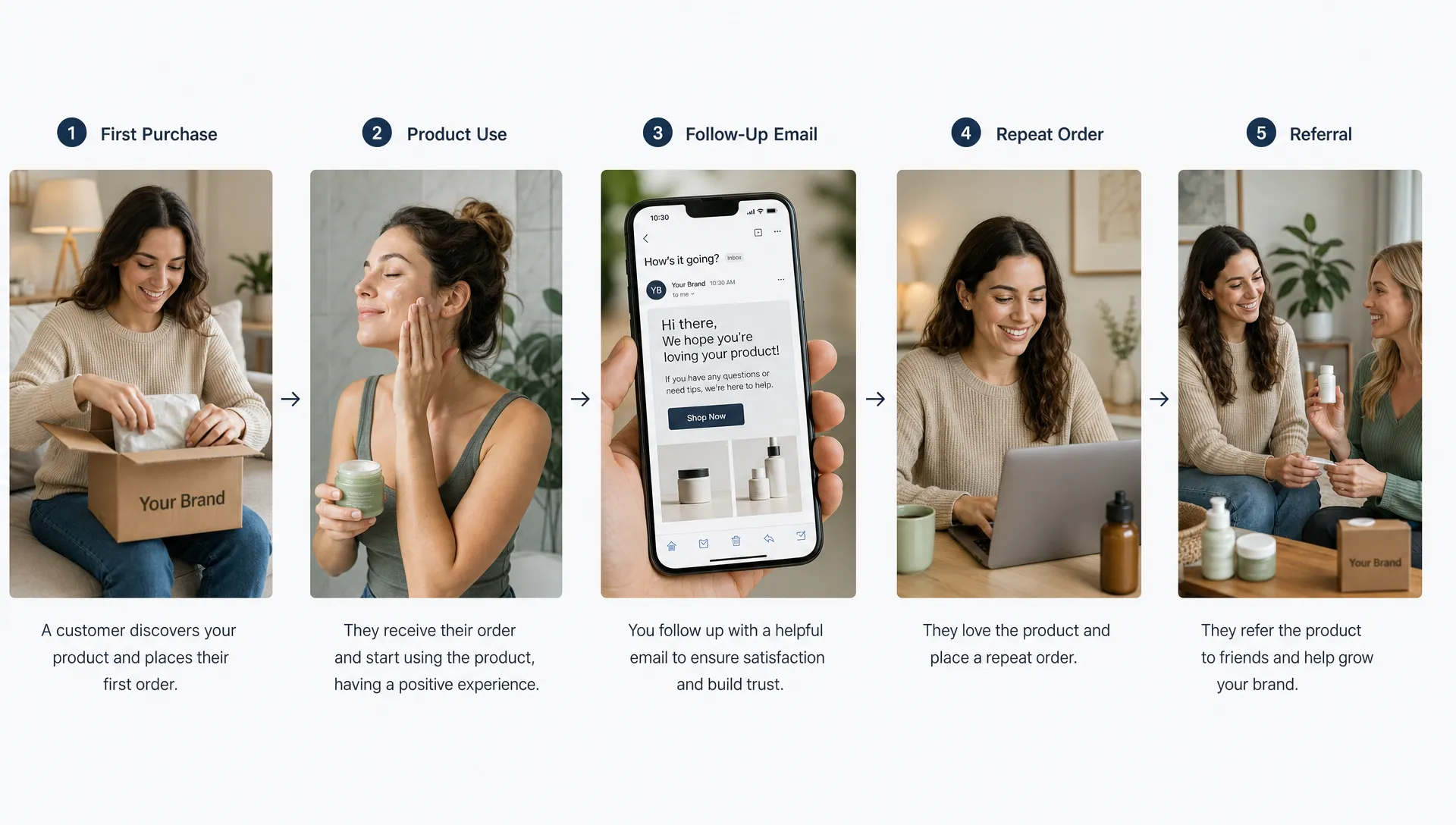
A brand business is not built by winning one purchase. It is built when customers trust the first purchase enough to come back, recommend you and give your next offer a fair chance before they shop around. For ecommerce founders, especially in sports, fitness, wellness and CPG, that changes the job of marketing from constant acquisition to building a system customers want to reenter.
That does not mean performance marketing stops mattering. Paid social, search, email, creative testing and conversion rate optimization still drive growth. The difference is that every touchpoint has to strengthen the reason a customer returns, not just push the first transaction across the line.
Build a brand business around a repeatable customer promise
A returning customer needs a reason to believe your brand will deliver the same valuable outcome again. That reason starts with a promise simple enough for your team to use and specific enough for customers to remember.
For a fitness apparel company, the promise might center on gear that holds up through high-friction training. For a wellness CPG brand, it might be a daily routine that feels easy to maintain. For a sports nutrition brand, it might be clean fuel that fits real training schedules. The wording can change, but the operating idea should guide product, creative, offers and service.
A strong customer promise usually includes four parts:
- The specific customer you serve best
- The problem or goal you help them solve
- The proof that makes the promise believable
- The boundary that keeps you from chasing every audience
If that foundation is still fuzzy, start by clarifying your positioning before adding more channels. OPTYO has a deeper guide on building a brand strategy customers remember, which is a useful companion to this retention-focused approach.
Understand why customers come back
Retention starts with behavior, not slogans. Customers return when a product becomes useful in a repeat situation, when the buying experience is low-friction and when the brand continues to feel relevant after checkout.
A brand business becomes easier to scale when you know the exact moments that create a second purchase. A protein customer might reorder when the tub is nearly empty. A runner might buy socks again after a marathon training block. A skincare customer might return when a routine finally feels stable. These are different triggers, so they need different merchandising, emails and creative angles.
Founders often over-rely on broad customer personas, such as active moms or serious athletes. Those labels can help, but they rarely explain repeat behavior. You need to map buying occasions, replenishment cycles, use cases and barriers.
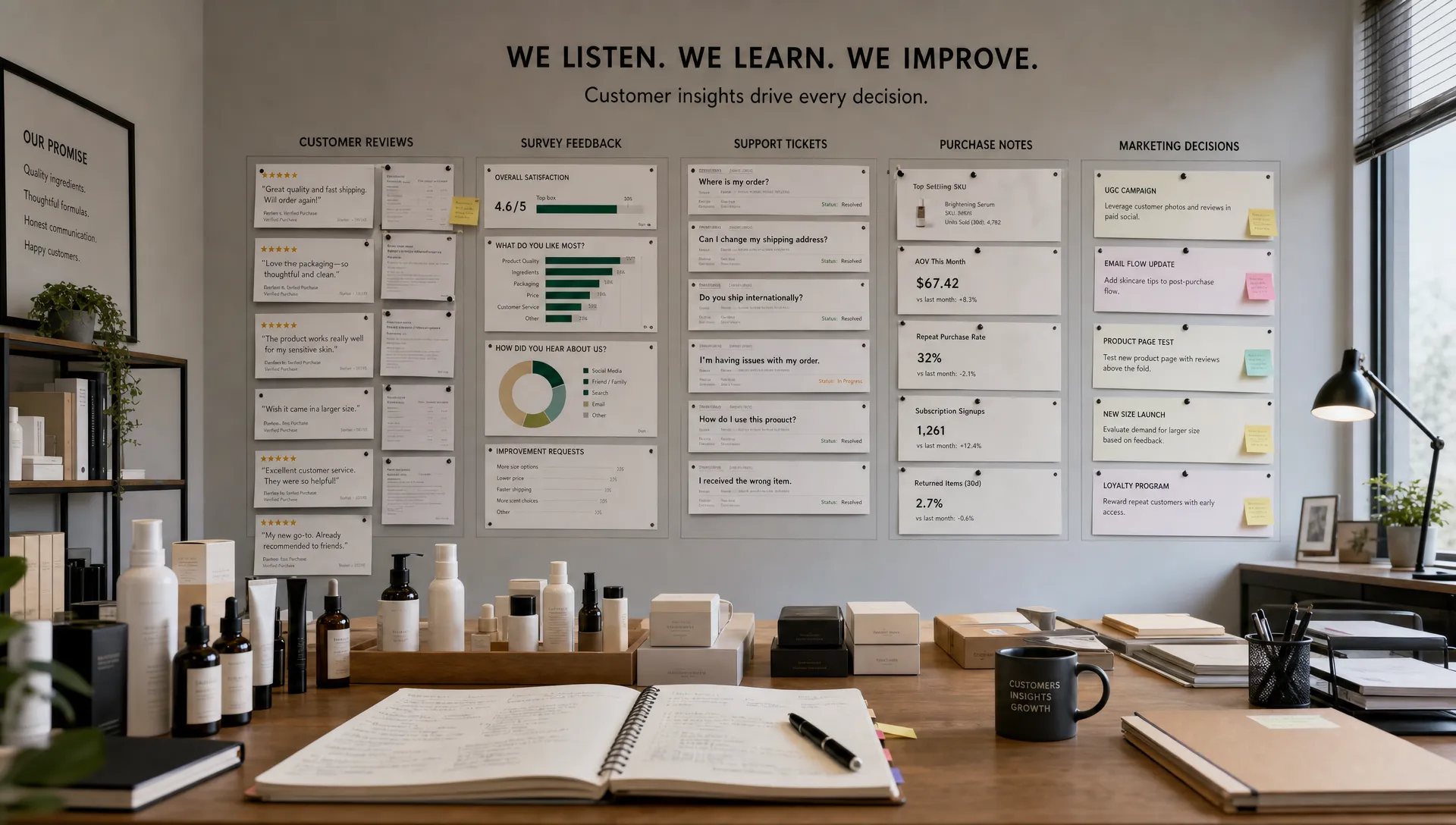
Use simple research inputs first. Read reviews, study support tickets, survey first-time buyers and review post-purchase email replies. Look for phrases that explain why people bought, what almost stopped them and what made them use the product again.
Design the product experience for the second purchase
Many ecommerce teams design for the first conversion, then wonder why repeat purchase rate stays flat. The better question is whether the first product experience naturally leads to a next action.
A brand business earns repeat orders when the product, packaging and follow-up experience reduce uncertainty. If the product requires education, include a clear usage path. If it is consumable, make replenishment timing easy to understand. If there are multiple variants, help customers identify which one fits their next need.
This is especially important in sports and wellness categories because customer outcomes often depend on consistency. A supplement is not judged only by flavor. It is judged by whether it fits a routine. Athletic gear is not judged only by how it looks on a product page. It is judged by how it performs after sweat, washing, travel and repeated use.
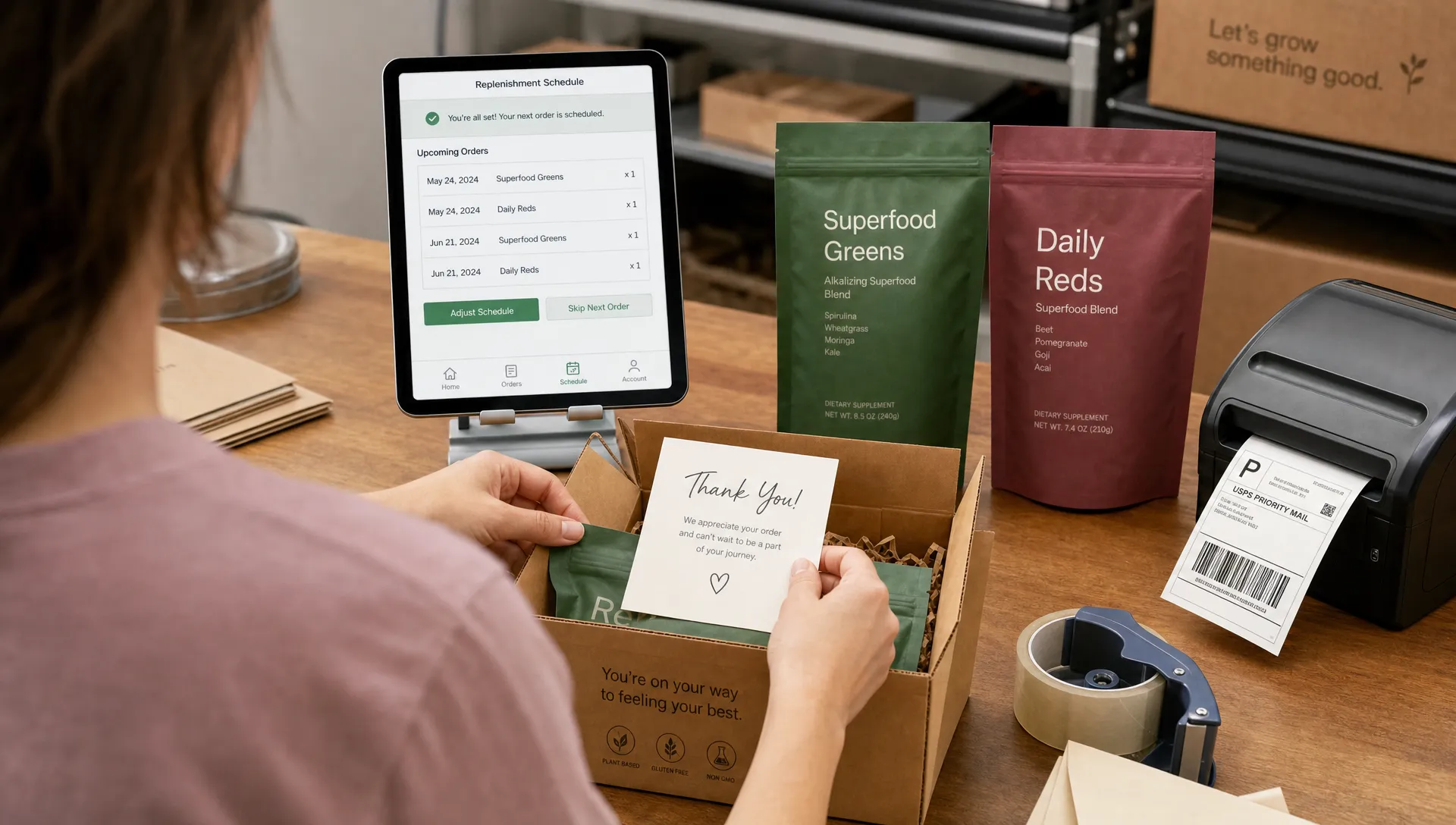
You can improve repeat behavior without discounting heavily by tightening the experience around the customer’s next likely question. That might mean better onboarding emails, clearer sizing guidance, a post-purchase routine, bundle logic based on usage or a replenishment reminder timed to real consumption.
Turn retention into an operating system
Retention should not sit in a single email flow or loyalty program. It should shape the way your team evaluates growth. A founder can have strong acquisition numbers and still build a fragile company if new customers do not come back.
A widely cited Bain & Company analysis by Frederick Reichheld found that a 5% increase in customer retention can raise profits by 25% to 95%, depending on the business model. The exact impact varies, but the principle is consistent: returning customers make acquisition more efficient because the business captures more value from each relationship.
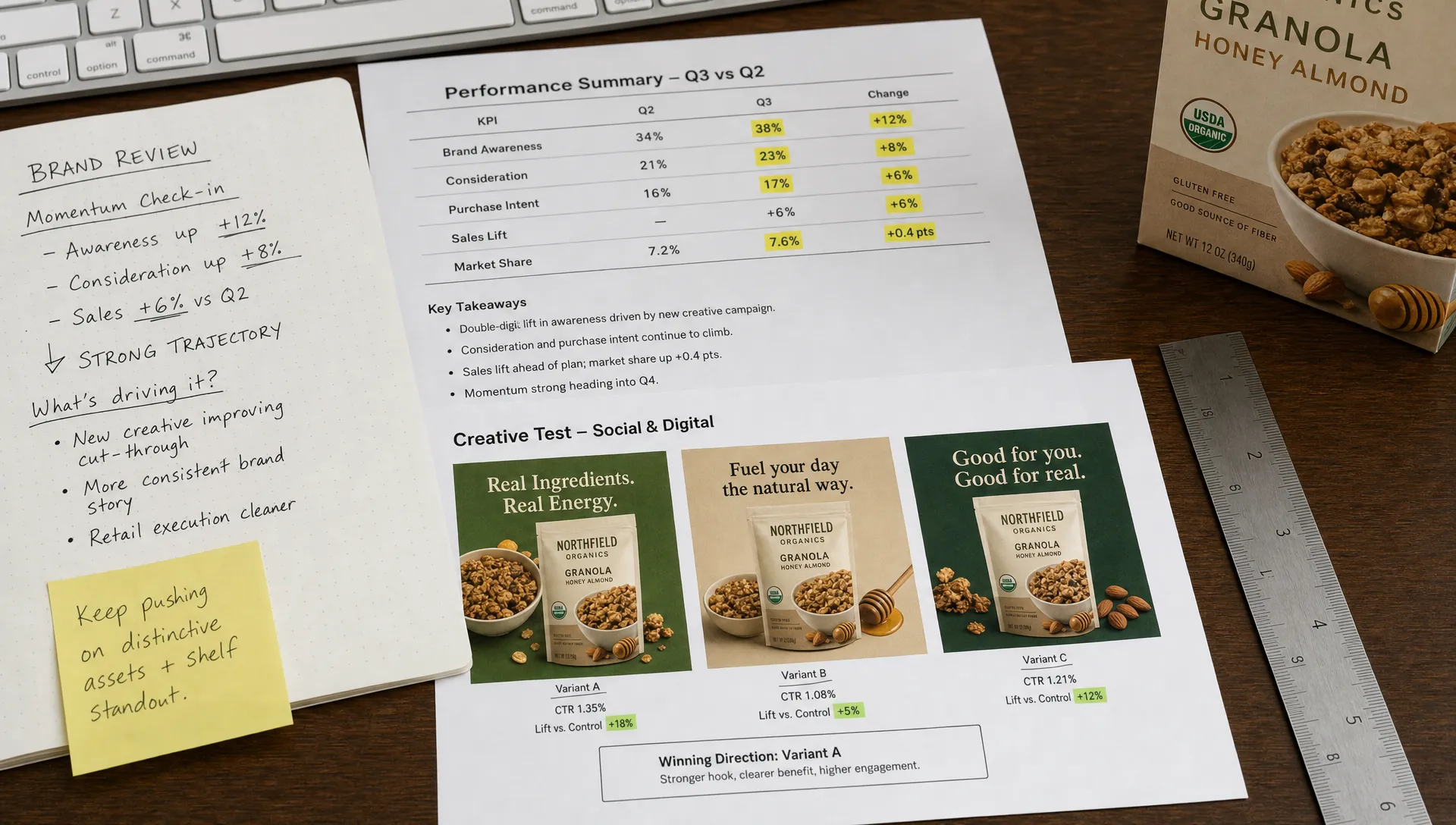
Use metrics that connect brand strength to commercial behavior:
| Metric | What it tells you | How to use it |
|---|---|---|
| Repeat purchase rate | Whether first-time buyers return | Segment by product, channel and cohort |
| Time to second purchase | How quickly customers reengage | Match email and SMS timing to real cycles |
| Customer lifetime value | Total value of a customer relationship | Compare against acquisition costs |
| Subscription retention | Whether recurring buyers stay active | Improve onboarding, usage and flexibility |
| Email revenue per recipient | How well owned media monetizes attention | Test education, replenishment and offers |
| Cohort revenue | How customer groups behave over time | Spot quality differences by channel |
Do not manage these numbers in isolation. If repeat purchase rate improves only because you trained customers to wait for discounts, you may be hurting long-term margin. If customer lifetime value rises because you acquired better-fit customers, that is a stronger signal.
Use content, email and paid media to reinforce the habit
Retention media has a different job than acquisition media. Acquisition creative earns attention from people who may not know you. Retention creative reminds customers why they bought, helps them use the product better and gives them a relevant reason to return.
For a hydration brand, that could mean post-purchase content around training days, travel, recovery and daily routines. For a home fitness brand, it could mean setup guidance, progress challenges and accessory recommendations. For a wellness snack brand, it could mean recurring use occasions, such as pre-workout, desk snack or school lunch.
If your team uses AI for customer research, product copy or creative variations, keep your inputs grounded in real customer language and brand constraints. This guide on improving AI outputs for your brand is a helpful reference for getting more relevant, on-brand results instead of generic marketing copy.
A brand business protects consistency across channels without making every message sound identical. Your paid social can test hooks, your emails can educate and your product pages can convert, but all three should point back to the same promise. For more on the trust side of this system, see OPTYO’s article on brand marketing that increases trust and repeat purchases.
Make your ecommerce site earn the reorder
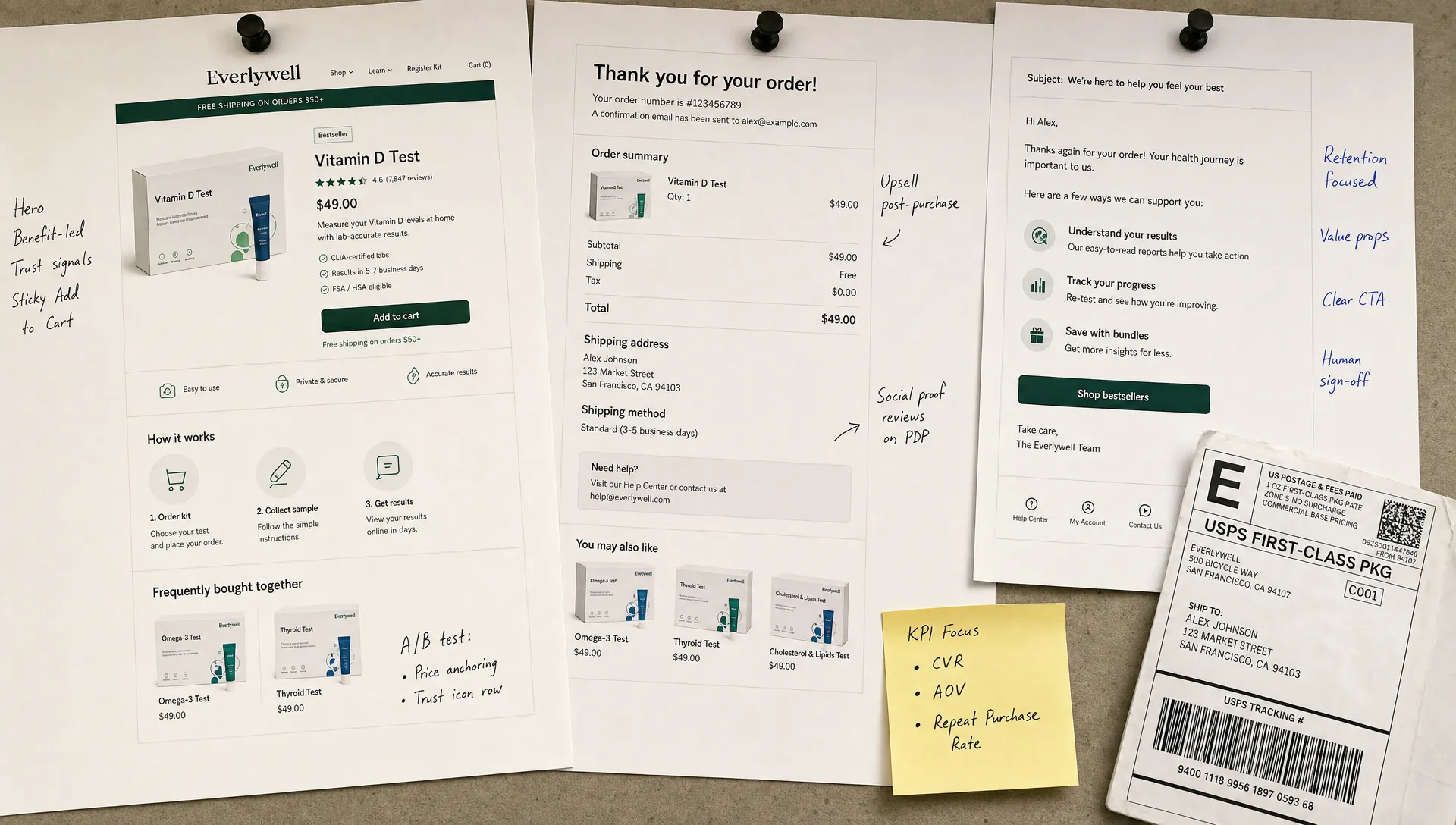
Your website is not only a first-purchase machine. It is where returning customers check details, reorder favorites, compare variants, manage subscriptions and decide whether the brand still feels worth their money.
A brand business should make the next right action obvious. If a customer bought a 30-day product, the site should make replenishment easy. If a customer bought an entry-level item, the next product should feel logical, not random. If sizing or flavor choice creates hesitation, the product page should remove friction before the shopper leaves.
Useful ecommerce improvements often include clearer product architecture, stronger product detail pages, better bundles, faster checkout, post-purchase education and a more intentional email capture offer. None of these are glamorous, but they compound.
Traffic gets more valuable when branding, advertising and onsite experience agree with each other. That is why demand generation should connect to retention, not stop at awareness. OPTYO’s guide to marketing and branding strategies that build demand covers how those pieces work together across the growth funnel.
Build community without making it carry the whole business
Community can strengthen retention, but it cannot fix a weak product experience or unclear positioning. Customers do not keep buying because a brand has a Discord group, ambassador program or hashtag. They keep buying because the brand helps them make progress and the community makes that progress feel easier, more visible or more rewarding.
For sports, fitness and wellness brands, community works best when it is tied to real behavior. Training challenges, customer spotlights, athlete education, local events and user-generated content can all support repeat purchase if they connect back to use occasions.
The mistake is treating community as a substitute for commercial discipline. You still need clear offers, strong merchandising, clean customer data and measured retention flows. Community should deepen the relationship, not become a vague label for every organic marketing idea.
Start small. Identify the customers already advocating for you, learn what they value and give them structured ways to participate. A strong community is usually built from proof that already exists, not from a campaign calendar created in isolation.
Know when to refresh, not rebrand
When growth slows, many founders assume they need a rebrand. Sometimes they do. More often, they need sharper execution of the brand they already have.
Before changing the name, identity or core message, look at the retention evidence. Are customers confused about the product? Are they buying once but not using it consistently? Are you attracting bargain shoppers who do not match your ideal customer? Are ads promising something the product experience does not deliver?
A refresh may involve tightening your offer hierarchy, updating creative direction, improving copy, segmenting email flows or clarifying proof points. A full rebrand should be reserved for deeper issues, such as a major audience shift, a broken trust signal or a positioning problem that blocks growth.
The goal is not novelty. The goal is to make the business easier to recognize, easier to trust and easier to buy from again.
Frequently Asked Questions
What is the difference between a brand and a retention strategy? A brand defines what customers should believe about your company and why it matters. A retention strategy turns that belief into repeat behavior through product experience, customer education, offers, email, service and ecommerce design.
How do I know if my brand is attracting the right returning customers? Look at repeat purchase rate, time to second purchase, cohort revenue, product reviews and support themes by acquisition source. A brand business should attract customers whose needs match the product well enough that they come back without constant discounting.
Can paid ads help customer retention? Yes, if they are used beyond cold acquisition. Paid social can reinforce product education, promote replenishment offers, highlight customer proof and introduce complementary products to past buyers. Retention-focused paid media should be measured differently from prospecting campaigns.
What should an early ecommerce founder focus on first? Start with one clear customer, one strong promise and one product experience that makes a second purchase likely. Once that loop works, scale acquisition with more confidence because each new customer has a better chance of becoming profitable over time.
Build the return loop before you chase the next channel
Customers return when the promise, product, creative, website and follow-up experience all point in the same direction. That is the difference between temporary traction and a company that compounds.
If you are scaling a sports, fitness, wellness or CPG brand, OPTYO helps ecommerce teams connect performance marketing, creative, conversion rate optimization, email and growth strategy into a more durable system. Visit OPTYO to see how a growth partner can help you turn more first-time buyers into returning customers.