.png)



A brand and marketing agency is worth the investment when it helps you make better growth decisions, not just produce more campaigns. For ecommerce founders, especially in sports, fitness and wellness, the real question is whether an outside team can improve the business system: positioning, acquisition, conversion, retention and reporting.
Many founders wait too long because agency fees feel like overhead. Others hire too early because they mistake activity for leverage. The right timing sits between those extremes. An agency becomes valuable when your internal team has enough traction to learn from the market but not enough specialized capacity to turn those signals into repeatable growth.
What a brand and marketing agency actually sells you
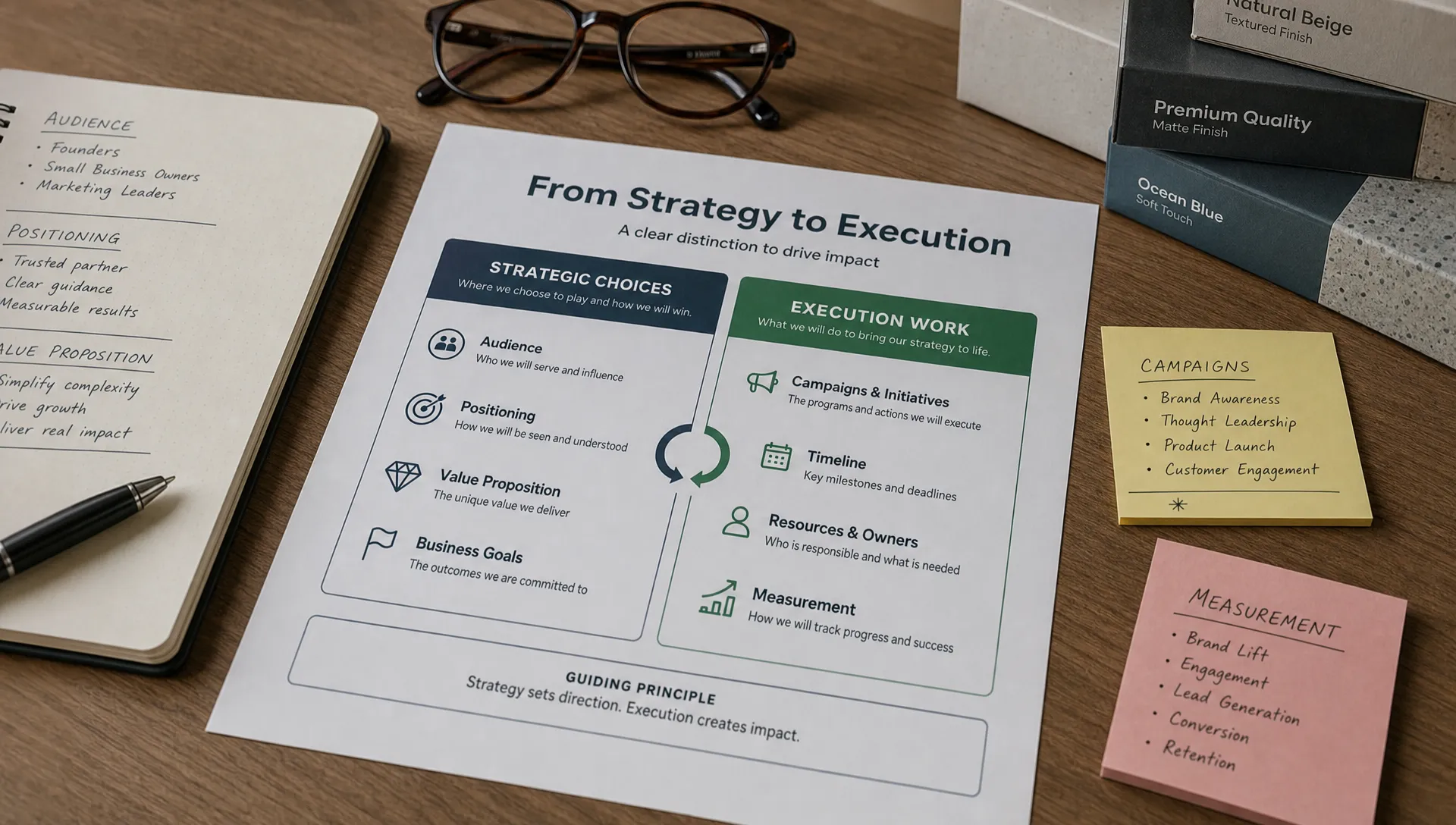
A strong agency does not simply sell ads, logos, email flows or landing pages. It sells sharper decisions across the full path from customer awareness to revenue. That includes what your brand should stand for, which audiences are most profitable, where media dollars should go, how creative should be tested and what needs to change when performance stalls.
For ecommerce brands, that combination matters because growth problems rarely live in one channel. A paid social campaign can underperform because the offer is weak. A landing page can convert poorly because the audience is mismatched. Email revenue can lag because the customer journey lacks a clear reason to buy again. The value of outside support comes from seeing these connections and acting on them quickly.
The investment makes sense when growth is constrained by the system
Agency investment is easiest to justify when the business already has signs of demand but growth feels inconsistent. At that point, the founder is no longer asking whether the product can sell. The more useful question is whether the company has the growth system needed to scale without wasting cash.
You have product-market signals but inconsistent acquisition
If customers are buying, returning, reviewing positively or recommending your product, you have evidence worth amplifying. The issue may be that acquisition still depends on founder hustle, occasional creator posts, one winning ad or seasonal spikes.
At that stage, a brand and marketing agency can help turn scattered wins into a repeatable acquisition engine. The work might include clearer customer segmentation, channel prioritization, testing roadmaps and creative angles built from actual buyer motivations. This is different from “running ads.” It is the process of creating enough structured learning that media spend becomes more predictable.
Your brand story is not strong enough to support paid media
Performance marketing exposes weak positioning fast. If shoppers cannot understand why your product is different, why it costs what it costs or why they should choose it now, increasing ad spend often increases confusion.
This is common in crowded categories like supplements, activewear, recovery tools, functional beverages and wellness products. A brand may have a good product but sound too similar to every competitor. A brand and marketing agency is worth considering when the core message needs to become more specific, more credible and more useful to the customer before larger media spend can work.
Your website converts less demand than you create
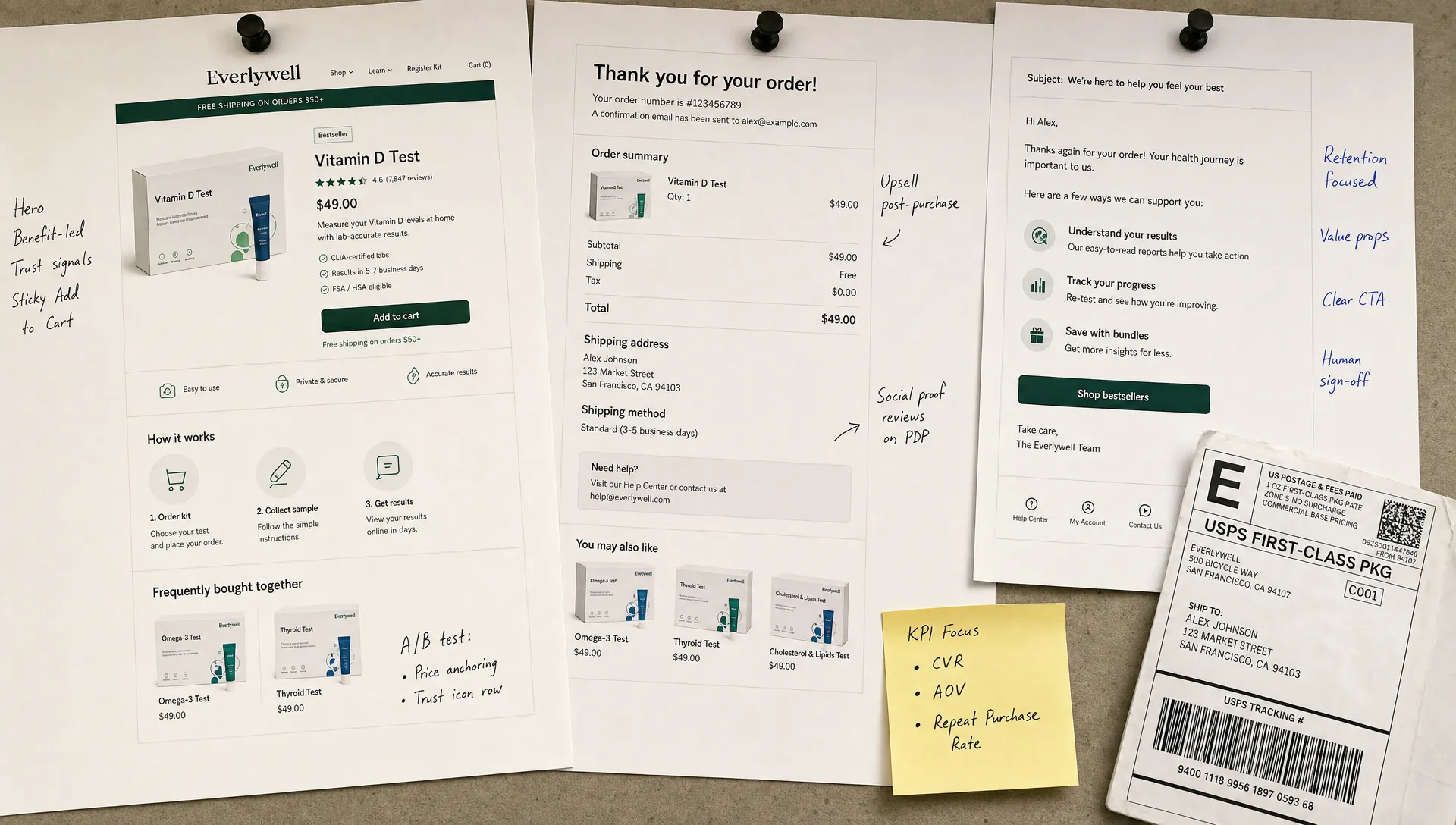
Traffic is expensive. If your store loses too many motivated visitors, the problem may not be reach. It may be conversion. Product pages, bundles, social proof, subscription offers, navigation, checkout friction and post-purchase flows all affect whether demand becomes revenue.
This is where branding and growth execution meet. A premium fitness product, for example, needs persuasive proof, strong visual hierarchy and a clear purchase path. A commodity-style product may need sharper offer architecture, comparison content and better retention hooks. A brand and marketing agency earns its keep when it can connect these details to measurable business outcomes, not just aesthetic preferences.
What you should expect to get for the money
The investment should create assets, operating discipline and insight that stay useful beyond a single campaign. If the relationship only produces disconnected tasks, it will be hard to justify. If it improves the way your company learns, sells and prioritizes, the return can compound.
| Agency output | What it should improve | Founder question to ask |
|---|---|---|
| Positioning and messaging | Customer clarity, differentiation and pricing confidence | “Can our buyer explain why we are the right choice?” |
| Paid media strategy | Spend efficiency and acquisition learning | “Do we know which audiences, angles and offers drive profit?” |
| Creative testing | Faster learning from ads, landing pages and organic content | “Are we testing ideas or just making more assets?” |
| Conversion optimization | Revenue per visitor and checkout completion | “Where are shoppers hesitating?” |
| Retention and email | Repeat purchase, lifetime value and customer education | “What happens after the first order?” |
| Reporting rhythm | Better decisions and less guesswork | “Are we measuring what actually changes profit?” |
If a brand and marketing agency cannot explain how its work affects these areas, the investment may be premature or misaligned.
Strategy that connects positioning, media, creative and retention
Founders often separate brand from performance because one feels strategic and the other feels measurable. In practice, they influence each other constantly. Strong positioning makes ads more distinctive. Better creative reveals which messages customers care about. Conversion data shows where the story is unclear. Retention data shows whether the promise is being fulfilled.
For a deeper look at the long-term side of this work, OPTYO has covered how a brand development agency builds value beyond short-term campaigns. That lens is useful because the best agency relationships do not treat brand as decoration. They treat it as an operating system for growth.
Measurement discipline and decision speed
A good agency should make performance easier to understand, not harder. That starts with clean naming conventions, UTM discipline, channel-specific KPIs, conversion tracking and a reporting cadence that leads to decisions. Reporting should not be a monthly slideshow full of disconnected metrics. It should clarify what happened, why it likely happened and what will change next.
This is especially important as attribution remains imperfect across paid social, search, retail media, email, creators and offline influence. No report can remove all uncertainty, but it can reduce noise. For founders building more advanced measurement systems, the same principles behind campaign measurement and automation fundamentals apply: define the journey, use consistent tracking, protect data quality and connect marketing activity to revenue.
A brand and marketing agency becomes more valuable when it helps the founder make faster, better calls with imperfect information. That may mean scaling a profitable creative angle, pausing a poor-fit channel, rewriting a landing page or changing an offer before more money is spent.
Creative production that can survive real testing
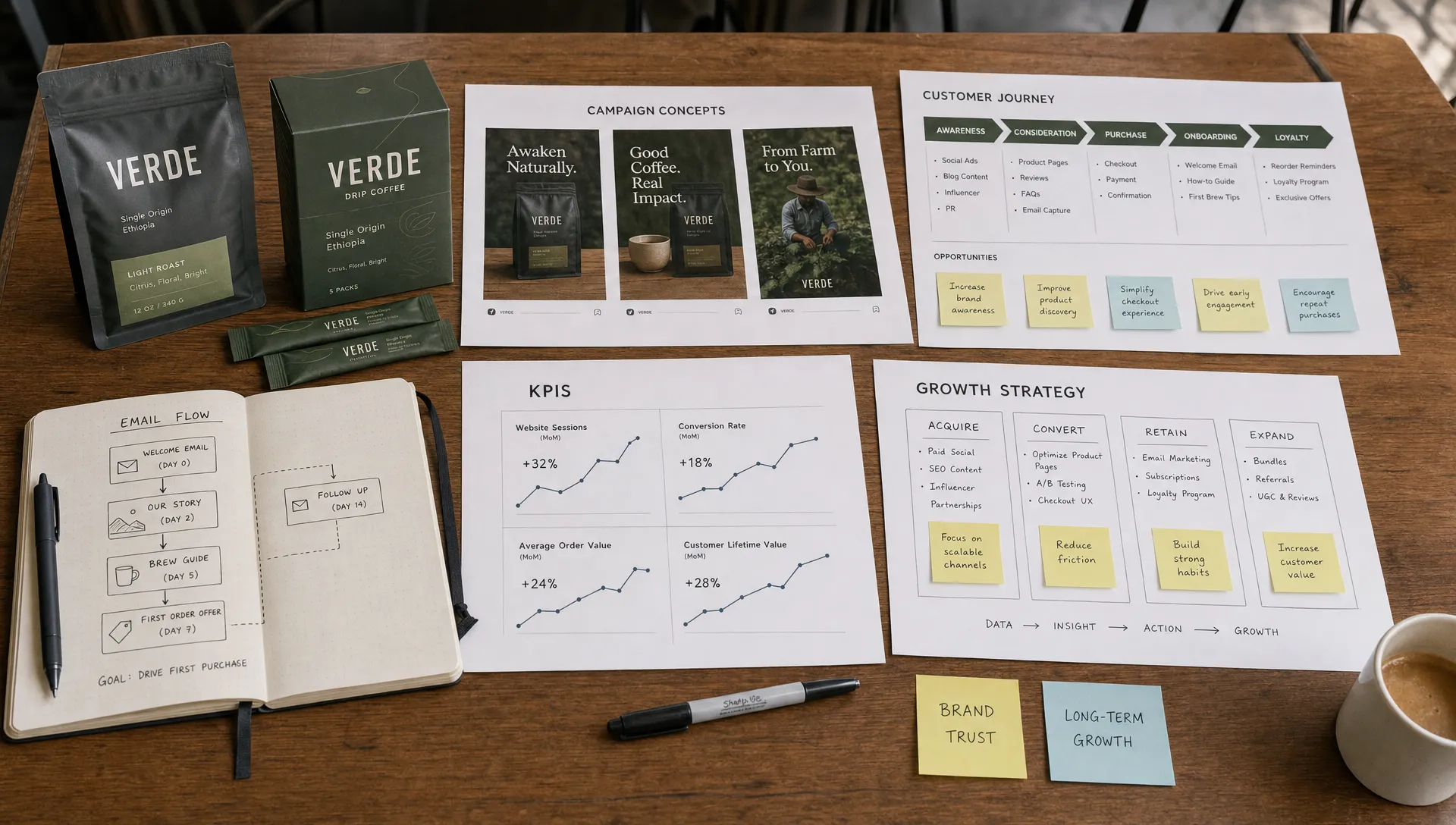
Creative is often the bottleneck in ecommerce growth. A small batch of polished assets may look good in a deck but fail to create enough learning in the market. Scaling brands need a system for generating, testing and improving creative angles across product education, founder story, social proof, comparison, problem-solution messaging and offer-led campaigns.
That does not mean flooding channels with low-quality content. It means producing assets with a clear hypothesis. Each ad, landing page section, product visual or email should answer a business question. Is the audience responding to performance benefits, lifestyle identity, ingredient transparency, durability, convenience, price comparison or community proof? The faster you learn that, the faster marketing spend becomes more intelligent.
What an agency cannot fix
Outside help is not magic. Some problems sit deeper than marketing execution, and paying a partner to push harder against them can make the financial picture worse.
Weak economics are not solved by better ads
If gross margins are thin, fulfillment costs are high, returns are frequent or average order value is too low, paid growth can be structurally difficult. An agency may improve conversion or reduce wasted spend, but it cannot turn fundamentally weak unit economics into a healthy acquisition model without changes to pricing, bundles, operations or retention.
Before hiring, founders should know their contribution margin, customer acquisition cost tolerance, repeat purchase behavior and payback window. These numbers do not need to be perfect, but they must be visible enough to guide decisions.
Undefined ownership slows down even strong partners
A brand and marketing agency also needs a decisive client-side counterpart. If no one can approve creative, provide product details, share margin data, clarify inventory constraints or make offer decisions, the work will slow down. Agency performance depends partly on access.
This is why the best relationships have clear owners, clean communication rhythms and agreed decision rights. The agency brings outside expertise, but the founder or leadership team still owns the business context. When both sides understand their role, execution gets faster and the work becomes more commercially useful.
How to judge ROI before signing
The simplest way to evaluate the investment is to compare the cost of the agency against the value of the constraints it can remove. This does not require blind faith. It requires a practical model.
| ROI signal | Why it matters | What good looks like |
|---|---|---|
| Clear growth bottleneck | The agency knows what it is being hired to solve | “We need to improve paid acquisition efficiency and site conversion” |
| Sufficient traffic or sales data | There is enough information to diagnose patterns | Existing revenue, customer feedback, ad history or analytics data |
| Room to improve economics | Better execution can materially change profit | Higher AOV, stronger retention, better conversion or lower wasted spend |
| Internal bandwidth gap | The team cannot execute the needed work alone | Founder is stuck managing channels instead of leading growth |
| Decision readiness | Recommendations can become action | Fast approvals, shared numbers and clear priorities |
A brand and marketing agency is worth the investment when several of these signals are present at the same time. If only one is present, a narrower consulting project may be a better first step.
Use break-even logic, not vanity metrics
Start with the agency fee, media spend and any production costs. Then estimate what needs to improve for the investment to pay back. That might mean a higher conversion rate, lower acquisition cost, increased repeat purchase revenue, improved email contribution or a higher average order value.
For example, if a site already has meaningful traffic, a small conversion rate improvement may create more value than launching a new channel. If retention is weak, better post-purchase education and replenishment flows may produce more profitable growth than spending more on cold traffic. The right ROI model depends on the constraint.
The key is to define success before the engagement starts. “Grow the brand” is too vague. “Increase profitable new customer acquisition while improving conversion rate and email revenue contribution” gives both sides a clearer target.
Evaluate how the agency thinks before you evaluate the pitch
A polished proposal is useful, but the questions an agency asks are more revealing. Strong partners ask about margins, inventory, repeat purchase, audience quality, conversion rate, creative history, channel mix, retail plans and founder goals. They want to understand the business model before prescribing tactics.
If you are comparing partners, this guide on how to choose a marketing agency that can actually scale is a useful next read. The main idea is simple: do not hire for channel management alone. Hire for the ability to connect channel execution to business economics.
When OPTYO-style support is a fit
OPTYO works with sports, fitness, wellness, D2C and CPG brands that need performance marketing and brand acceleration to work together. That combination is especially relevant when a founder has a real product, some traction and a need for better systems across paid social, ecommerce development, conversion rate optimization, email marketing, creative assets, SEO, KPI reporting and growth consulting.
A brand and marketing agency is not always the first investment a young company should make. If you are still validating the product, testing basic demand or searching for your first repeatable buyer segment, focused consulting may be more appropriate. OPTYO has also written about when marketing consulting makes sense for growing brands, which can help founders decide whether they need strategic direction, ongoing execution or both.
The strongest fit usually appears when the founder is ready to move from fragmented marketing activity to an integrated growth system. At that point, agency support is less about outsourcing tasks and more about building the commercial engine with experienced operators.
Frequently Asked Questions
How do I know if my ecommerce brand is ready for an agency? Your brand is likely ready if you have validated demand, some sales data, a clear product margin and a growth bottleneck that internal resources cannot solve quickly. If you are still proving whether people want the product, a smaller consulting engagement may be smarter.
What should a brand and marketing agency be accountable for? It should be accountable for the quality of strategy, execution, testing, reporting and recommendations tied to agreed business goals. It should not be judged only on impressions, clicks or activity volume.
Is hiring an agency better than hiring in-house? It depends on stage. In-house teams offer focus and company knowledge, while agencies offer specialized experience, faster ramp-up and broader pattern recognition across accounts. Many growing brands use both as they scale.
How long does it take to see results? Some improvements, such as landing page fixes or email flow updates, can show signals quickly. Bigger gains from positioning, creative testing and acquisition strategy usually need several testing cycles. The important part is to define learning milestones early.
Make the investment only when it changes the growth equation
Hiring a brand and marketing agency should be a commercial decision, not a status move. The investment makes sense when the agency can remove a real constraint, improve decision quality and help the business turn demand into profitable growth.
If your sports, fitness or wellness brand has traction but growth feels harder than it should, OPTYO can help you evaluate the system behind the numbers. Explore how OPTYO supports performance marketing and brand acceleration for ecommerce brands that are ready to scale with more clarity and discipline.