.png)




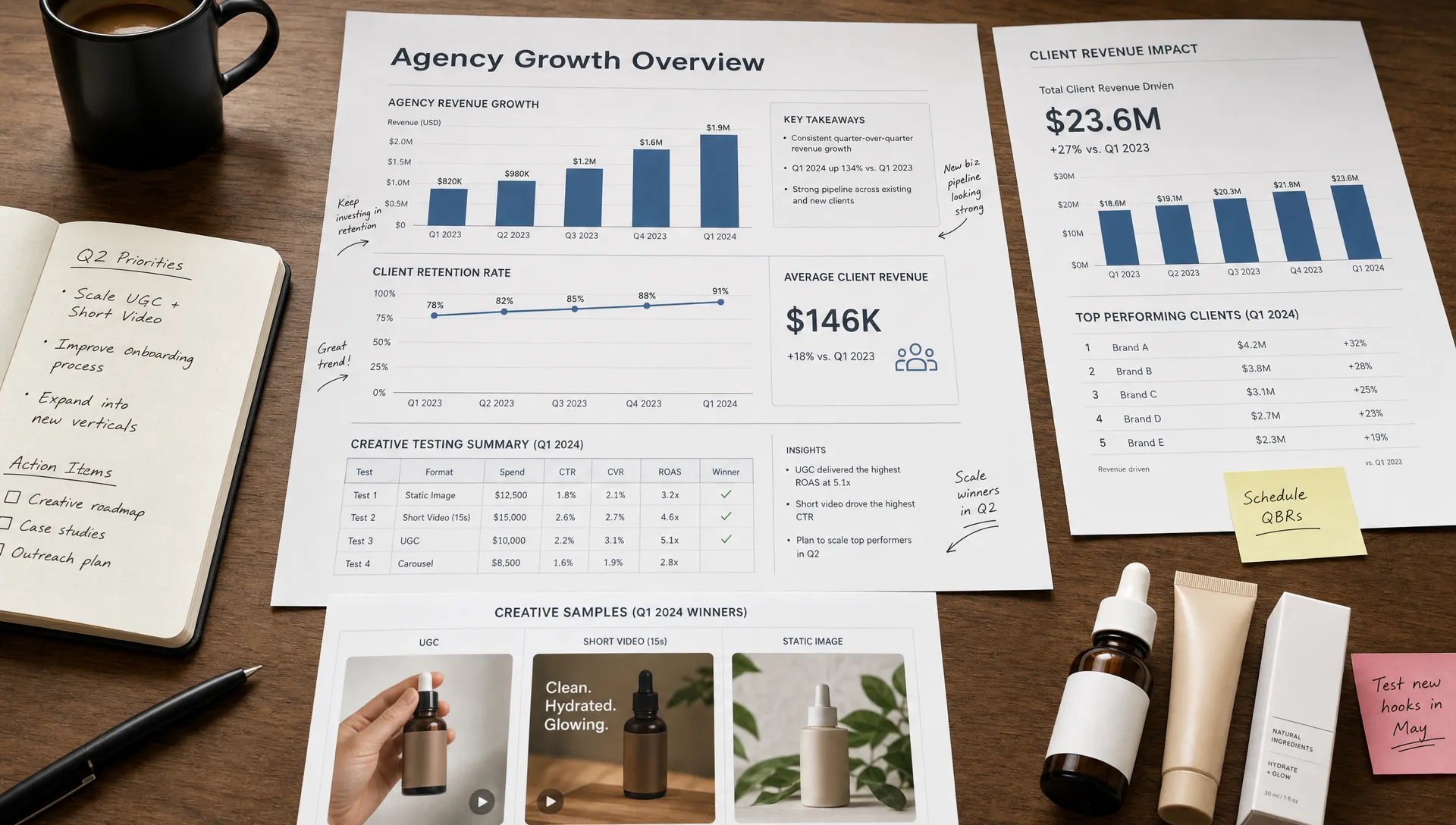
Marketing agency growth can be a good signal. It can mean an agency is winning trust, attracting talent and sharpening its systems. For ecommerce founders, though, the more important question is whether that agency momentum is turning into better client outcomes. An agency can hire quickly, sign bigger retainers and post impressive case studies while individual clients see flat contribution margin, inconsistent creative performance or slower learning cycles.
That gap matters most in sports, fitness and wellness, where the category is crowded, the buyer is emotional and the economics can shift fast. Paid media costs, inventory timing, subscription retention, product education and retail expansion all affect whether a campaign actually creates profitable growth. If you are choosing a partner, you need to know when agency scale helps you and when it mainly helps the agency.
Why marketing agency growth can separate from client performance
Agency businesses and ecommerce brands do not grow in the same way. Agencies can increase revenue by raising fees, adding service lines, hiring account teams or closing more clients. Ecommerce companies grow through a harder mix of demand creation, product-market fit, conversion rate, customer retention, gross margin and operational reliability.
That difference creates a blind spot. A growing agency may look more credible because its own sales engine is working, but client success depends on whether the agency can transfer that operating discipline into your business model. The best partners understand the distinction. They do not treat their own growth as proof that every client will scale.
The agency model rewards acquisition before outcomes
New client acquisition is often easier to measure than client transformation. A strong sales deck, a charismatic founder or a recognizable client logo can create fast agency momentum. Marketing agency growth is easiest to sell when prospects see a busy team, polished creative examples and strong positioning.
None of those are bad. In fact, a healthy agency should know how to market itself. The problem starts when the agency optimizes for the next signed contract more than the next client milestone. In that environment, the strongest strategists may spend more time selling than diagnosing, junior teams may inherit complex accounts and reporting may focus on what looks active rather than what changes the business.
Client results depend on variables outside the ad account
A Meta or Google Ads account can expose demand, but it cannot fix every constraint. A fitness apparel brand with weak sizing guidance may see traffic without conversion. A supplement brand with poor first-purchase education may acquire customers who never reorder. A recovery product brand with thin margins may improve ROAS and still lose money after shipping, discounts and returns.
This is why a marketing agency needs more than marketing. The work has to connect media, creative, landing pages, email, offer strategy, analytics and the founder's commercial reality. Without that connection, an agency can grow its book of business while clients get isolated channel improvements that do not compound.
Warning signs that agency momentum is not helping your brand
There is nothing wrong with hiring a growing agency. Scale can bring better processes, broader pattern recognition and stronger creative production. The risk is assuming that agency size automatically equals client progress. Marketing agency growth can hide this mismatch when founders do not ask how the agency's internal success translates into account-level accountability.
A useful test is to separate agency signals from client signals. Agency signals show whether the provider is building a strong business. Client signals show whether your brand is likely to benefit from that business.
| Agency growth signal | What it might mean | Client-level question to ask |
|---|---|---|
| More employees | More capacity or more layers | Who will actually own strategy on our account? |
| Bigger client list | Strong sales and category awareness | Which clients improved profit, retention or LTV? |
| Expanded services | Broader support across the funnel | How are services prioritized for our stage? |
| More case studies | Proof of past wins | What conditions made those results possible? |
| Higher retainers | More senior support or stronger positioning | What outcomes justify the fee structure? |
They lead with portfolio averages
Portfolio averages can be misleading. A headline like 4x revenue growth may come from one breakout client, a short promotional period or a brand that already had strong organic demand. You need to understand the starting point, the timeline, the budget, the margin profile and the constraints.
For ecommerce founders, the better question is not whether the agency has won before. It is whether the agency can explain why it won, what was repeatable and what would change for your category. A sports hydration brand, a connected fitness device and a wellness snack company may all sell online, but the buying cycles, claims environment, subscription potential and creative angles are very different.
They staff for capacity instead of fit
As agencies grow, staffing can become a capacity puzzle. The account goes to the team with room, not necessarily the team with the sharpest category fluency or strongest strategic match. This is where the sales experience and the delivery experience can diverge.
Founders should ask who is in the weekly work, not only who appears on the pitch call. Ask about the strategist, media buyer, creative lead, email owner and analyst. If the agency cannot describe how those roles collaborate, you may be buying access to a brand name rather than a growth system.
They confuse activity with progress
Busy calendars can make an agency feel productive. More ads launched, more emails sent and more reports delivered may create motion, but motion is not the same as learning. Real progress shows up when the team can explain what changed, what was learned and what decision comes next.
In performance marketing, a test that fails can still be valuable if it removes uncertainty. A winning ad can be low value if the team cannot identify why it worked or how to build on it. The agency's job is not to create constant noise. It is to create a feedback loop that gets smarter over time.
How to evaluate marketing agency growth before you sign
The right due diligence goes deeper than references and case studies. You are not only buying execution. You are buying judgment, prioritization and an operating rhythm. If you want a more complete checklist, OPTYO's guide on choosing a marketing agency that can actually scale covers the broader evaluation process.
For this specific question, focus on whether the agency has a clear theory for how its own growth improves your odds. More people should mean better specialization. More data should mean sharper pattern recognition. More process should mean fewer dropped balls. If those benefits are not visible in the client experience, the agency's growth may be internal only.
Ask how learnings compound across clients
A growing agency should have stronger pattern recognition than a solo operator. It should see creative hooks, funnel leaks and offer problems across multiple brands, then adapt those lessons to your market. The key word is adapt. Copying what worked for one client into another account is not strategy.
Category context changes the math. Even outside sports and wellness, a whitelabel workwear supplier with broad product depth and own production illustrates why assortment, delivery expectations and channel structure shape demand differently than a lifestyle fitness brand. The same principle applies inside ecommerce: channel tactics only work when they fit the buying environment.
Tie every channel to a commercial job
When marketing agency growth benefits clients, the agency does not treat channels as isolated workstreams. Paid social may create demand, search may capture it, email may improve repeat purchase, SEO may reduce dependency on paid acquisition and conversion optimization may turn existing traffic into more revenue.
The commercial job of each channel should be clear. If Meta is prospecting, what audience or angle is it proving? If Google is capturing intent, which terms show profitable demand? If email is driving retention, which lifecycle moments matter most? If creative is being tested, what insight will shape the next round?
This is also where agency specialization matters. A sports or wellness brand often needs more than performance media. It may need product education, credibility signals, community proof, athlete or creator creative and landing pages that answer objections quickly. A generalist agency can run campaigns. A growth partner connects those campaigns to the reasons customers buy.
Look for decision quality, not just reporting volume
Reporting should help you make decisions. A monthly deck full of channel screenshots is not enough if it does not connect performance to cash flow, inventory, margin and retention. Strong reporting translates data into tradeoffs.
For example, a campaign may look efficient on ROAS but attract low-retention buyers. A discount-heavy offer may lift conversion but train customers to wait for sales. A broad awareness push may be useful, but only if the brand has the budget and patience to measure delayed impact. Good agencies make those tradeoffs visible rather than hiding behind blended numbers.
How ecommerce founders can protect client outcomes
Founders cannot control how fast an agency grows, but they can control how the relationship is structured. For ecommerce founders, marketing agency growth is useful only when the engagement creates clarity, accountability and faster learning inside the brand.
Start by defining what success means before scope is finalized. Revenue alone is rarely enough. A brand can grow revenue while damaging margin or retention. Better targets may include contribution margin, new customer acquisition cost, first-order profitability, repeat purchase rate, AOV, conversion rate, email revenue mix or creative testing velocity.
Define decision rights early
Many agency relationships slow down because nobody knows who owns the final call. The agency recommends tests, the founder rewrites the offer, the creative team waits on assets and the media buyer launches late. Then both sides blame the channel.
A better operating model clarifies who decides on budget, offer, creative direction, landing page changes and performance thresholds. This matters even more when the agency is growing, because larger teams need cleaner communication. Without decision rights, scale creates more handoffs rather than more speed.
Keep the scorecard balanced
A good scorecard includes leading and lagging indicators. Lagging indicators show business impact. Leading indicators show whether the system is improving before revenue fully reflects it.
Useful leading indicators include creative test volume, hook diversity, landing page test completion, email flow coverage, site speed improvements, audience learning and offer clarity. Useful lagging indicators include contribution margin, customer acquisition cost, repeat purchase, LTV, revenue, profit and cash conversion cycle.
The point is not to track everything. The point is to track enough to prevent one metric from distorting the relationship. If the agency reports only ROAS, it may miss retention. If it reports only revenue, it may miss margin. If it reports only activity, it may miss outcomes.
Review the relationship by stage
The right agency engagement changes as your company matures. A brand doing its first $50,000 per month does not need the same system as a brand pushing into national retail or international markets. Growth stage should affect budget allocation, creative cadence, channel mix and reporting detail.
At earlier stages, the agency may need to help prove positioning, offers and funnel basics. At later stages, the work may shift toward creative systems, incrementality, retention, SEO, forecasting and cross-channel efficiency. If the agency uses the same playbook at every stage, its own maturity may not translate into yours.
What healthy marketing agency growth looks like
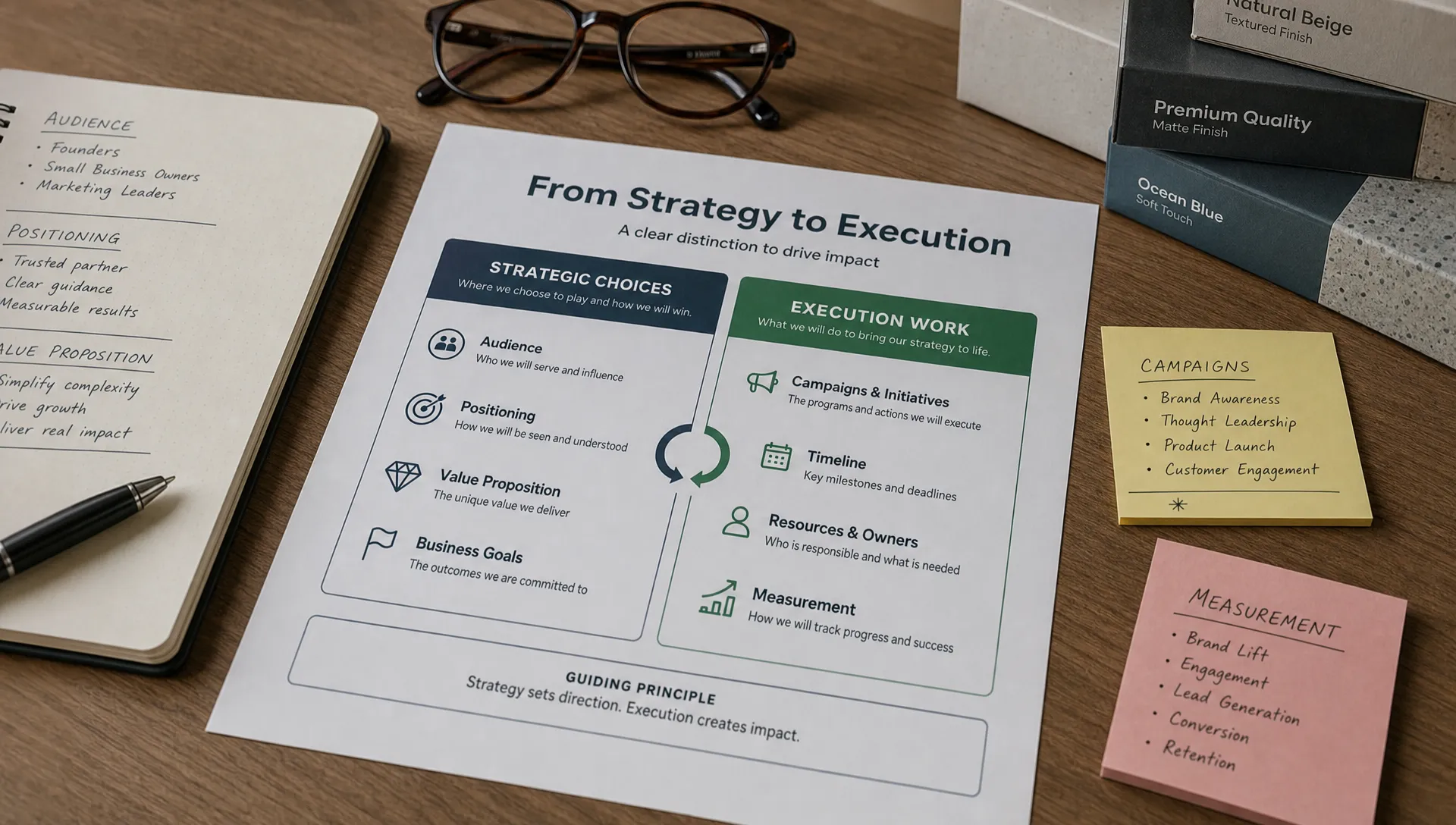
The healthiest version of marketing agency growth is not just more clients or more headcount. It is better client selection, stronger operating systems, deeper strategic thinking and clearer accountability. The agency becomes more valuable because it knows which problems it can solve, which brands it should not take on and which constraints must be fixed before scale.
For sports, fitness and wellness companies, that kind of partner should understand both performance marketing and brand trust. Customers may care about identity, health goals, ingredient transparency, social proof, product feel, community and long-term motivation. Growth is not only a media-buying problem. It is a brand, funnel and retention problem happening at the same time.
That is why the best agency relationships feel integrated. Creative tests inform landing pages. Landing page behavior informs offer strategy. Email data informs acquisition messaging. SEO insights inform product education. Paid media learnings inform merchandising and product positioning. If you want to explore that broader system, OPTYO's article on how a brand growth agency helps businesses scale faster expands on the connected approach.
Frequently Asked Questions
Can marketing agency growth be a positive sign? Yes. A growing agency may have stronger systems, more specialized talent and broader learning across clients. The key is confirming that those advantages show up in your account through better strategy, faster testing and clearer business outcomes.
Why do some agencies grow while clients struggle? Agencies can grow through sales, pricing, hiring and positioning, while clients need profitable customer acquisition, retention, conversion and operational strength. Those are related but not identical growth engines.
What should ecommerce founders ask before hiring a fast-growing agency? Ask who will work on the account, how strategy is developed, how creative tests are prioritized, which metrics define success and how the agency connects channel performance to margin, retention and cash flow.
Is a smaller agency always better for client results? No. Smaller agencies can offer senior attention, but they may lack capacity or specialization. Larger agencies can offer systems and resources, but they may create handoffs. Fit matters more than size.
How often should a brand review agency performance? Weekly or biweekly reviews should focus on active decisions and testing progress. Monthly reviews should connect those actions to business outcomes such as revenue, margin, acquisition cost, conversion rate and retention.
Build growth that shows up in your business
Agency momentum should not be the finish line. It should be a resource your brand can use to learn faster, convert better and scale more profitably. If an agency cannot explain how its growth improves your outcomes, keep asking questions.
OPTYO helps sports, fitness and wellness brands connect performance marketing, creative, ecommerce development, conversion optimization, email, SEO and growth strategy into one operating system. If you want a partner focused on client-side growth, start a conversation with OPTYO.