.png)


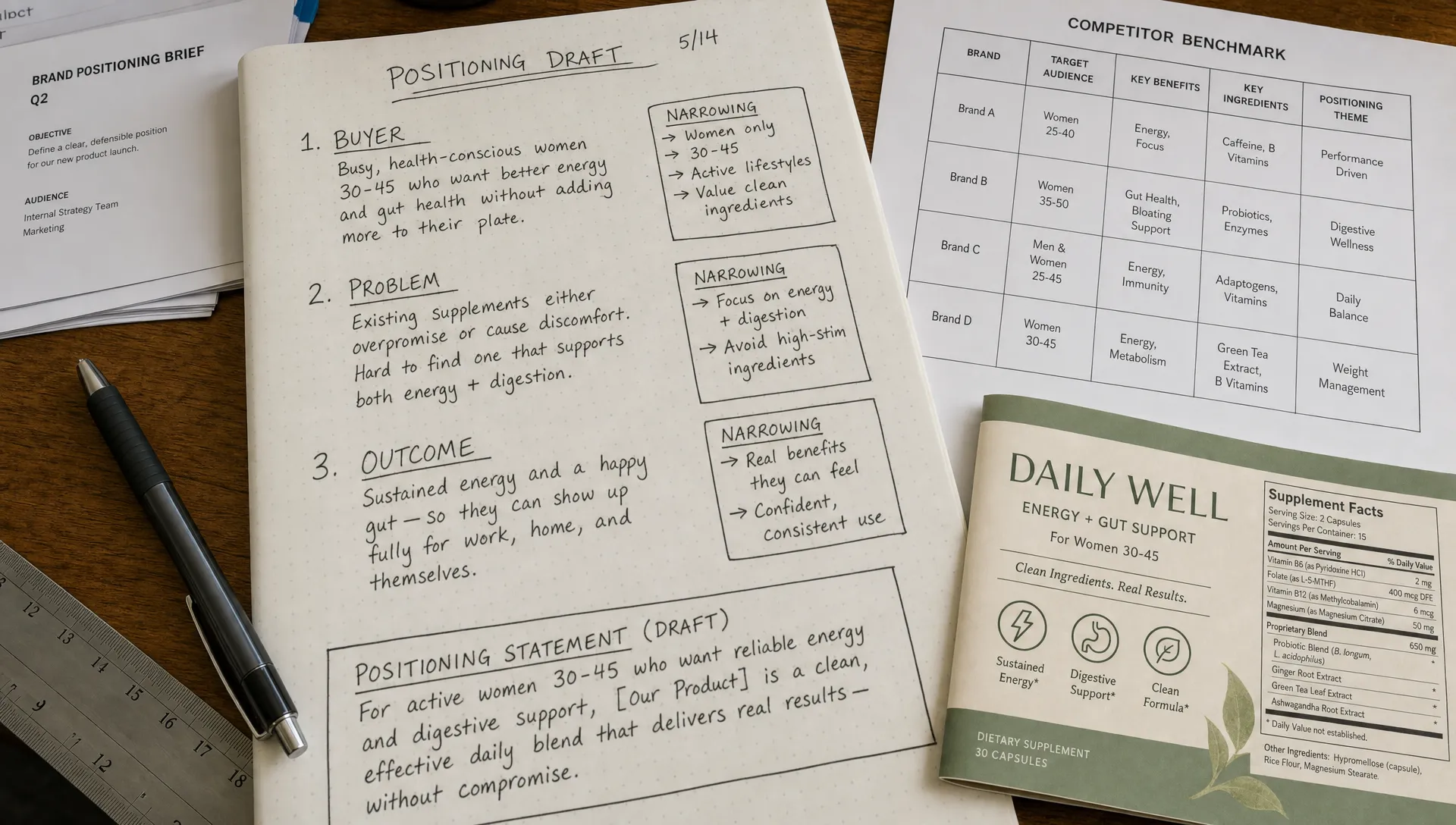

Building a marketing business gets much easier when you stop trying to serve everyone. A clear niche gives your offer sharper edges, helps buyers recognize themselves in your messaging and lets you build repeatable systems instead of reinventing your service for every new client. For entrepreneurs in ecommerce, especially sports, fitness and wellness, niche clarity is not a constraint. It is the operating system that makes growth possible.
A niche does not mean you can only work with one tiny category forever. It means you choose a specific problem, market or buyer type where your expertise compounds. When your positioning is precise, every case study, sales conversation, creative test and referral strengthens the same story.
Why a niche makes your marketing business easier to sell
A broad agency usually sounds interchangeable: paid ads, email, SEO, content, web design and strategy. Those services may be valuable, but buyers hear the same list from dozens of providers. A niche makes the value more concrete because it connects your capability to a situation the client already cares about.
For example, “we help ecommerce brands improve acquisition” is serviceable. “We help performance footwear brands scale paid social without destroying contribution margin” is more memorable because the buyer can picture the problem, the channel, the category and the business outcome.
A focused marketing business also reduces the trust gap. Prospects do not have to educate you on their market from scratch. You can speak to their channel economics, seasonal buying patterns, creative fatigue, product education challenges and retail or D2C tradeoffs with more confidence.
Niche clarity improves operations too. Your team can build reusable research templates, reporting dashboards, creative frameworks and onboarding workflows because clients share similar constraints. That repeatability is what turns service delivery from custom labor into a scalable business model.
Choose a niche where demand, pain and budget overlap
The best niche is not always the one you personally like most. It is the intersection of market familiarity, expensive problems, reachable buyers and a willingness to pay for a solution. Passion helps, but demand keeps the lights on.
Start by listing markets you understand better than average. For OPTYO’s world, that might include sports nutrition, connected fitness, recovery products, activewear, wellness supplements, performance equipment or youth sports brands. Then look for commercial pain. Are brands struggling with rising customer acquisition costs? Is retention weak? Are product pages failing to convert? Do founders need a sharper brand story before they scale paid media?
A marketing business with a strong niche should be able to answer three questions quickly: who it serves, what costly problem it solves and why it is better equipped than a generalist. If any one of those answers feels vague, the niche probably needs more pressure testing.
Score niche ideas before committing
Use a simple scoring table to compare options. The goal is not mathematical perfection. The goal is to prevent you from choosing a niche based only on taste or a few loud conversations.
| Niche factor | What to look for | Strong signal |
|---|---|---|
| Buyer urgency | The problem affects revenue, margin or growth | Founders already spend money trying to fix it |
| Market access | You can reach decision makers consistently | Communities, events, podcasts or LinkedIn clusters exist |
| Repeatable pain | Many companies face a similar bottleneck | Similar objections appear across sales calls |
| Proof potential | Results can be measured clearly | Revenue, conversion rate, CAC, LTV or retention data is available |
| Strategic fit | Your team has relevant experience | You can diagnose issues faster than a generalist |
Do not ignore unglamorous niches. Some of the most defensible businesses are built around specific, high-stakes jobs. A compliance platform that helps companies file IRS Form 720 online is a useful example: the niche is narrow, the buyer need is clear and the value comes from making a specialized task simpler.
Build a niche offer, not just a niche audience
Choosing a niche audience is only the first move. The stronger move is packaging a solution around a specific growth bottleneck. “We work with fitness brands” is a market. “We help fitness brands turn creator-led paid social into profitable first purchases” is an offer.
Your offer should connect a clear diagnosis to a clear outcome. Ecommerce founders do not wake up wanting a bundle of marketing services. They want lower CAC, higher conversion, better retention, stronger launches, more believable creative or a site experience that makes customers confident enough to buy.
This is where service design matters. A niche marketing business can build offers around recurring patterns, such as PDP optimization for supplements, launch strategy for performance apparel or retention flows for subscription wellness brands. If you are unsure where the real constraint sits, OPTYO’s guide to matching marketing services to ecommerce growth bottlenecks is a useful way to think through the diagnosis before prescribing tactics.
Turn services into a named process
A named process makes your expertise easier to understand and easier to sell. It does not need to be gimmicky. It can be as simple as a four-stage method: audit, reposition, test and scale.
The key is that each stage should have a business reason. If you run creative testing, explain how it reduces waste in paid social. If you improve email flows, explain how it increases payback speed. If you rebuild landing pages, connect the work to conversion rate and average order value.
Position your marketing business in one sentence
Your positioning should be plain enough that a prospect can repeat it after one conversation. If it takes a full paragraph to explain what you do, your market will struggle to refer you.
A practical positioning sentence looks like this: “We help [specific customer] achieve [business outcome] through [specific method or advantage].” For example, “We help D2C recovery brands increase first-purchase conversion through performance creative, landing page testing and retention strategy.”
That sentence will not capture every nuance, but it gives buyers a useful mental shortcut. A clear marketing business needs that shortcut because most prospects compare options quickly. They may not read every case study before deciding whether you belong on the shortlist.
Avoid positioning that is only based on channels. Channels change, and buyers can hire channel specialists anywhere. Your stronger advantage is category context, customer understanding and a repeatable way to solve a painful commercial problem.

Prove the niche before you scale acquisition
Before you pour time into content, outbound or paid acquisition for your agency, make sure the niche responds. Early proof can come from discovery calls, audits, small projects, pilot engagements or founder interviews. You are looking for repeated language: the same problems, the same constraints and the same buying triggers.
A young marketing business does not need dozens of case studies to build credibility, but it does need evidence. If you do not have a large client portfolio yet, create proof through teardown content, benchmark-style audits, before-and-after messaging examples or public strategy breakdowns. Make the thinking visible.
For ecommerce niches, proof should stay close to commercial outcomes. Creative quality matters, but it is stronger when paired with metrics such as thumb-stop rate, conversion rate, CAC trend, returning customer revenue, email revenue contribution or subscription retention.
Use founder language in your proof
The best niche proof reflects how customers describe their own problems. If founders keep saying “our ads scale for a week and then fall apart,” use that language. If they say “people understand the product only after a demo,” build content around product education and conversion friction.
This is also why customer insight should shape your market entry. If you are still defining the offer, review OPTYO’s approach to building a go-to-market strategy around real customer demand so your positioning is based on signals rather than assumptions.
Create a simple demand engine around the niche
Once the niche and offer are clear, your acquisition system should become simpler. You do not need to be everywhere. You need to show up consistently where your best buyers already look for answers.
For many B2B service businesses, the most efficient demand engine includes a tight mix of founder-led content, partner relationships, selective outbound and referral systems. If your niche is sports nutrition, that could mean publishing breakdowns of supplement landing pages, partnering with CPG operators, speaking on ecommerce podcasts and building relationships with Shopify developers who see growth problems before agencies do.
A marketing business should treat its own growth like a client engagement. Define the target account profile, clarify the buying trigger, create proof assets and track conversion from first touch to sales call. If your own acquisition feels random, clients will question whether your process is truly repeatable.
Pick content pillars that match buyer intent
Content should not just announce that you exist. It should help buyers see the problem more clearly. Strong niche content often falls into a few categories: diagnostic guides, teardown examples, category benchmarks, founder mistakes, channel strategy and retention opportunities.
For sports, fitness and wellness ecommerce, content might cover topics like launch sequencing, creator testing, subscription churn, product education, offer architecture and paid social fatigue. Each topic should connect back to a business outcome, not just a marketing tactic.
Price around value and operational reality
Pricing gets easier when the niche and outcome are specific. A generalist often competes on hours because the client is buying tasks. A specialist can price around the value of better judgment, faster diagnosis and more relevant execution.
That does not mean every engagement should be expensive or complex. The right model depends on client maturity, risk, scope and the level of involvement required. A niche marketing business might use strategy sprints for early diagnosis, project pricing for launches, retainers for ongoing growth systems or hybrid models when incentives are clearly defined.
| Pricing model | Best fit | Watch out for |
|---|---|---|
| Strategy sprint | Founders need diagnosis before execution | Scope must be tight and decision-oriented |
| Project fee | Launches, audits, site improvements or creative systems | Avoid letting projects become open-ended retainers |
| Monthly retainer | Ongoing paid media, CRO, email or growth leadership | Define ownership, reporting and meeting rhythm clearly |
| Performance component | Mature accounts with reliable tracking and clear economics | Do not accept upside without control over key inputs |
Strong pricing also requires saying no. If a prospect does not fit the niche, cannot support the necessary inputs or expects results without operational changes, the deal may cost more than it earns.
Know when to narrow further or expand
Your first niche is a hypothesis. Over time, the market will tell you whether to tighten or widen it. If sales calls are easy to book but hard to close, your pain point may not be urgent enough. If clients close but delivery varies wildly, the niche may be too broad. If results are strong and referrals are specific, you may have found a valuable lane.
Expansion should come from adjacency, not boredom. A marketing business that wins with D2C endurance nutrition brands might expand into hydration, recovery or performance wellness because the customer psychology and channel dynamics overlap. Jumping into unrelated categories too quickly can dilute the very expertise that made the business attractive.
As you mature, document what you learn. Build internal playbooks around onboarding, research, creative angles, offer testing, KPI reporting and client communication. If you want a broader framework for turning those inputs into a growth system, OPTYO’s article on building a scalable business marketing strategy complements this niche-focused approach.
Common mistakes when building around a niche
The most common mistake is choosing a niche that sounds good on a website but does not change daily behavior. If your sales calls, content, case studies and delivery process still look generic, the niche is cosmetic.
Other mistakes are more operational. Many entrepreneurs narrow by industry but not by problem, which leaves the offer vague. Some pick a market with low willingness to pay because they like the audience. Others build around one successful client without checking whether similar companies have the same pain.
Avoid these traps:
- Choosing a niche only because it is trendy
- Defining the niche by demographics instead of a costly business problem
- Selling too many services before one offer is proven
- Using jargon that buyers do not use themselves
- Expanding into new markets before delivery is repeatable
A niche should make decisions easier. It should tell you which prospects to pursue, which partnerships matter, which content to create and which services to remove.
Frequently Asked Questions
How narrow should my niche be when starting a marketing business? Narrow enough that your ideal buyer can recognize the problem and believe you understand their context. If the niche is so broad that your messaging could apply to any company, tighten it by customer type, category, channel, growth stage or business problem.
Is it risky to turn away clients outside the niche? It can feel risky early, but taking every client often creates a different risk: scattered proof, inconsistent delivery and unclear positioning. You can still accept select out-of-niche work, but your public positioning should stay focused.
What if I have experience in several industries? Use that experience to compare patterns, then choose the lane where your expertise, demand and willingness to pay overlap. You can always expand later into adjacent markets once your first niche has traction.
Can a niche marketing business offer multiple services? Yes, but the services should support one clear outcome. Paid social, CRO, email and creative can work together if they solve the same growth bottleneck. A random menu of services makes the offer harder to buy.
How long should I test a niche before changing it? Give the niche enough time to gather real signals. That usually means multiple sales conversations, several pieces of targeted content and at least a few paid or pilot engagements. Change direction when the evidence shows weak urgency, poor fit or limited ability to deliver repeatable results.
Build the niche around the business you want to become
A clear niche helps you build more than a sharper homepage. It shapes your sales process, proof, service delivery, hiring and long-term reputation. For ecommerce entrepreneurs, the goal is not to look smaller. The goal is to become more relevant to the right buyers.
If you are building or scaling a sports, fitness or wellness brand and need a partner that understands both performance marketing and brand growth, OPTYO helps D2C and CPG companies turn sharper strategy, creative and execution into measurable growth.