.png)




Customer acquisition is where paid social either proves its value or quietly drains budget. For ecommerce founders, especially in sports, fitness, and wellness, the challenge is not simply getting more clicks from Facebook, Instagram, TikTok, or Pinterest. The real goal is acquiring new customers at a cost that leaves room for profit, retention, and long-term brand growth.
That is where a paid social agency can make a measurable difference. The best agencies do not just launch campaigns and report on ROAS. They build a customer acquisition system that connects strategy, creative, targeting, landing pages, tracking, and post-purchase retention.
For a D2C supplement brand, that might mean identifying which customer segment responds to education versus social proof. For a fitness equipment company, it might mean testing product demos against transformation stories. For an activewear brand, it might mean finding the right balance between lifestyle creative, performance claims, influencer content, and promotional offers.
In other words, paid social improves customer acquisition when it stops being treated as an ad channel and starts being managed as a growth engine.
What customer acquisition really means in paid social
Customer acquisition is the process of turning someone who has never purchased from your brand into a paying customer. In paid social, that sounds simple: show an ad, drive traffic, get a sale. In practice, profitable acquisition depends on several moving parts working together.
A paid social agency looks beyond surface-level metrics and focuses on the economics behind growth. Click-through rate matters, but only if the traffic converts. ROAS matters, but only if it reflects new customer revenue and not just returning buyers. CAC matters, but only when it is compared against margin, average order value, repeat purchase rate, and lifetime value.
For ecommerce brands, customer acquisition usually depends on answering a few core questions:
- Who is the highest-value customer we should acquire first?
- What problem, desire, or outcome makes them ready to buy?
- What offer makes the first purchase feel low-risk?
- What creative angle earns attention in a crowded feed?
- What landing page experience removes friction?
- What follow-up turns first-time buyers into repeat customers?
A strong paid social agency improves each of these areas, not just the media buying inside the ad account.
It starts with acquisition math, not ad spend
One of the biggest mistakes ecommerce brands make is increasing paid social spend before knowing what they can afford to pay for a customer.
A good agency starts with business economics. If a product sells for $80 but has a gross margin of 55 percent, the brand does not actually have $80 to spend against. Fulfillment, discounts, payment processing, returns, agency fees, and operating costs all affect the maximum allowable CAC.
This is especially important for CPG and wellness brands, where the first purchase may not be highly profitable but repeat orders can create strong lifetime value. A hydration product, protein snack, recovery supplement, or skincare-adjacent wellness product may justify a higher first-purchase CAC if reorder behavior is reliable. A high-ticket fitness product, on the other hand, may need stronger first-order profitability because repurchase cycles are longer.
A paid social agency can help define:
- Target CAC for first-time customers
- New customer ROAS benchmarks
- Contribution margin after ad spend
- Payback period by product or bundle
- AOV targets for profitable acquisition
- Retention assumptions that are realistic, not wishful
This changes the conversation from “Can we get cheaper clicks?” to “Can we acquire the right customers at a cost that supports the business?”
Audience strategy turns targeting into insight
Modern paid social platforms rely heavily on algorithms, but that does not mean audience strategy is dead. It has simply changed.
Instead of relying only on narrow interest stacks, a strong agency builds customer hypotheses. These hypotheses guide creative, copy, offer testing, and landing page structure. The algorithm may decide who sees the ad, but the brand still needs to decide what message is worth showing.
For sports, fitness, and wellness brands, the same product can appeal to very different motivations. A resistance band set might attract beginners who want to work out at home, athletes who need warm-up tools, physical therapy patients rebuilding strength, or busy parents looking for convenience. Each segment may need a different message.
A paid social agency improves acquisition by finding the angles that produce buyer intent. This often includes mining customer reviews, analyzing support tickets, studying competitor ads, interviewing customers, reviewing search queries, and tracking which creative themes produce qualified traffic.
The goal is not to create generic personas. The goal is to understand the emotional and practical reasons people buy, then translate those insights into ads that make people stop, care, and click.
Creative is now the biggest acquisition lever
Paid social used to reward technical media buying hacks. Today, creative quality is often the difference between profitable acquisition and wasted spend.
That is because creative does more than make ads look good. It shapes who engages, what they expect, how qualified the click is, and how well the platform can find similar buyers. In many accounts, creative is the targeting.
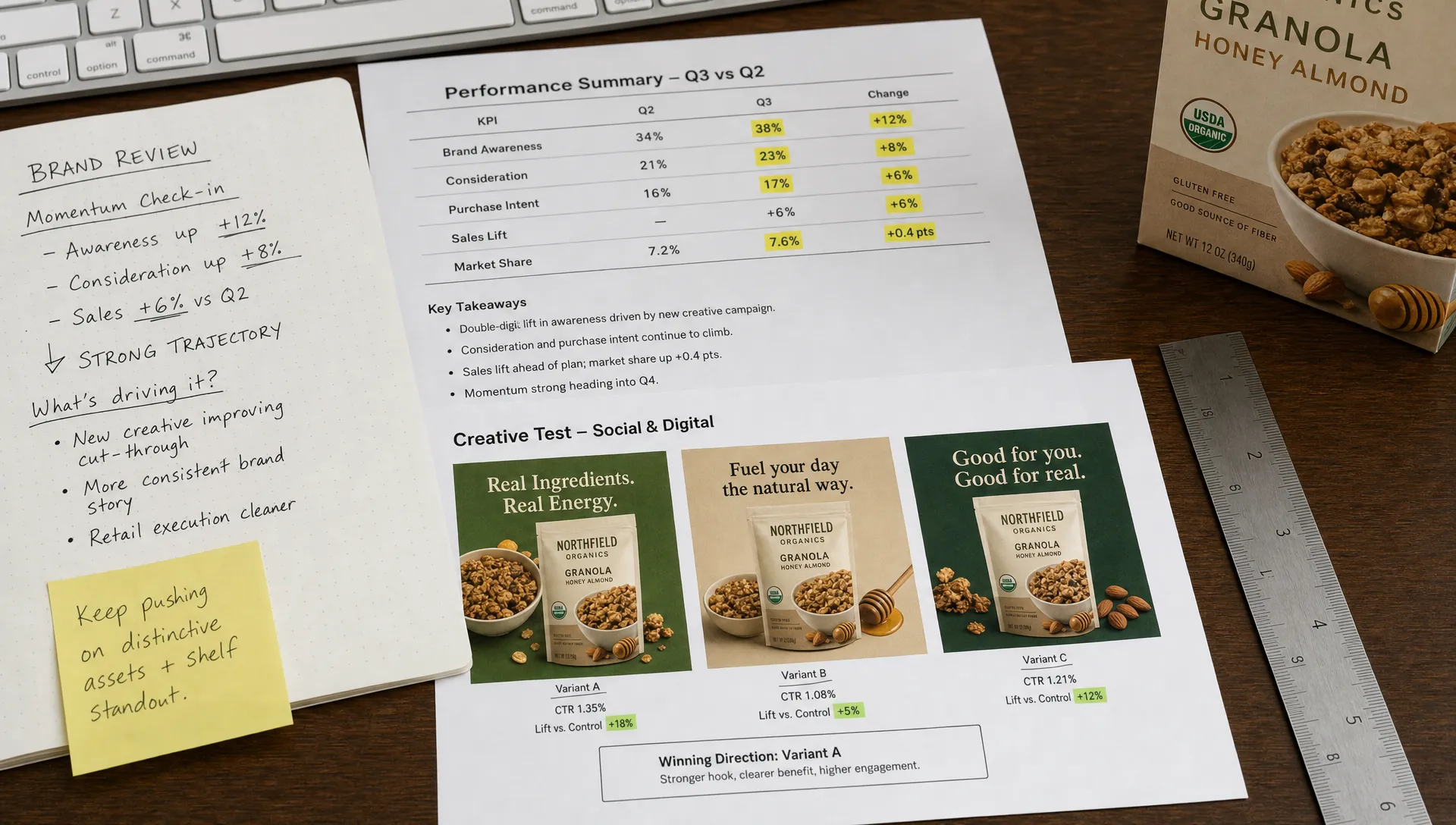
A paid social agency brings structure to creative testing. Instead of randomly posting new assets, it builds a creative pipeline around specific hypotheses. For example, a wellness brand may test whether customers respond more to ingredient transparency, routine-based messaging, founder credibility, customer testimonials, or a direct product demonstration.
Common paid social creative formats that support customer acquisition include:
- Product demos that show the item in use
- Problem-solution videos that make pain points obvious
- UGC-style testimonials that reduce skepticism
- Founder-led content that builds trust
- Before-and-after narratives where compliant and appropriate
- Comparison ads that explain why the product is different
- Offer-led ads focused on bundles, trials, or first-purchase incentives
- Educational content that helps buyers understand the category
For fitness and sports brands, motion matters. Showing the product being used in a real training environment can often communicate value faster than polished studio content. For wellness products, trust matters. Claims need to be clear, responsible, and supported by the customer experience.
The agency’s job is to create enough variation to learn quickly while protecting brand quality. That balance is critical. Cheap creative can generate attention, but if it damages trust or attracts the wrong buyer, it can increase CAC over time.
Better offers reduce friction for first-time buyers
A customer seeing your ad for the first time is taking a risk. They do not know whether the product works, whether the quality matches the claims, whether shipping will be smooth, or whether the brand is trustworthy.
A paid social agency improves acquisition by testing offers that reduce that perceived risk without destroying margin.
This does not always mean discounting. Discounts can work, but they can also train customers to wait for promotions. Depending on the product and audience, a better acquisition offer might be a starter bundle, free shipping threshold, limited-time bonus, subscribe-and-save option, sample pack, product quiz, guarantee, or value-added guide.
For example, a sports nutrition brand might test a variety pack for first-time buyers who do not know which flavor they will like. A home fitness brand might test a bundle that pairs the main product with an accessory. A wellness brand might test an educational landing page before pushing directly to purchase.
The key is matching the offer to the buyer’s hesitation. If the main objection is price, a discount may help. If the main objection is uncertainty, proof, education, or a lower-commitment entry point may work better.
Landing pages turn paid traffic into customers
Paid social does not end at the click. In many ecommerce accounts, the biggest customer acquisition gains come from improving the post-click experience.
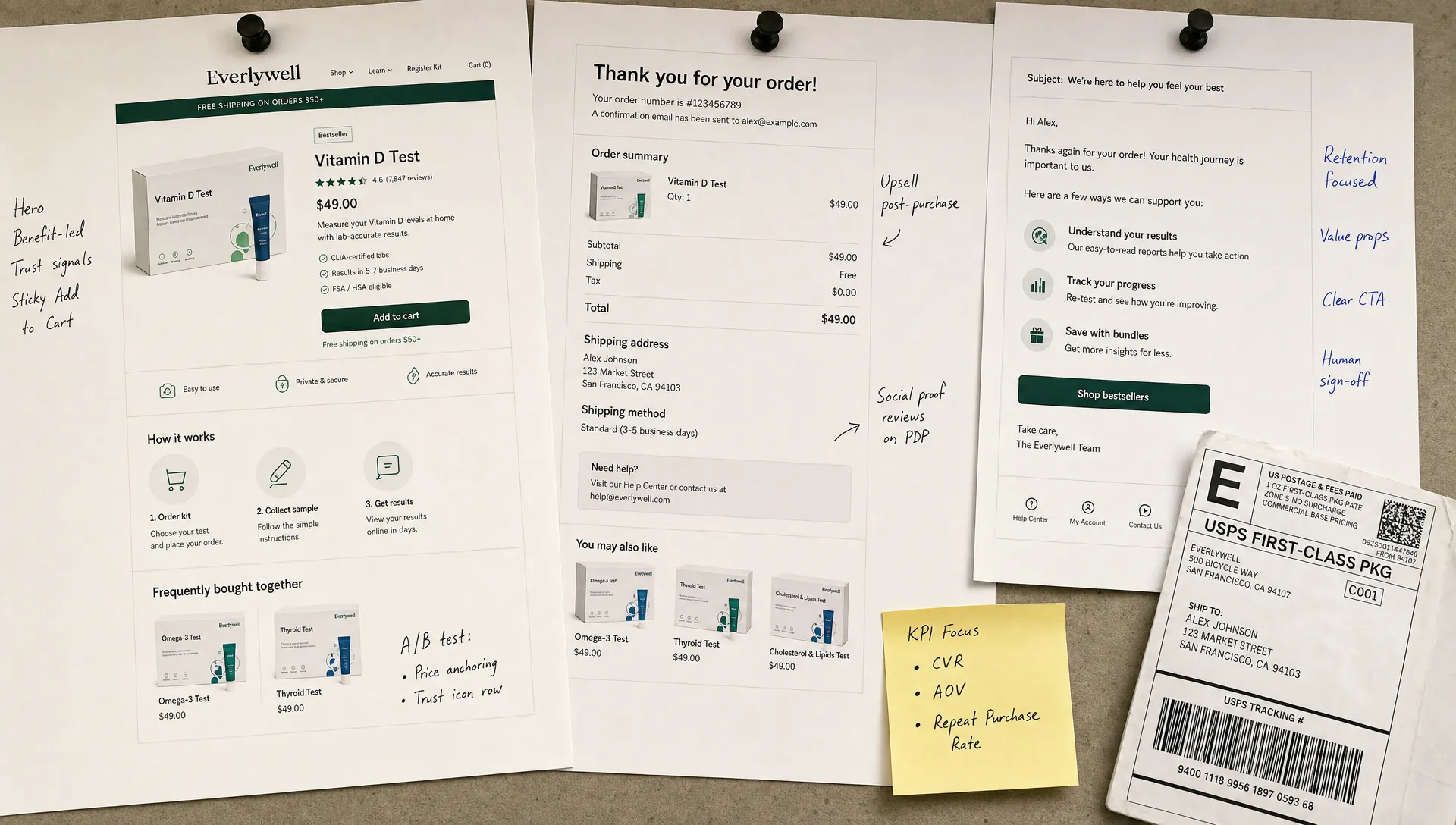
An agency that understands conversion rate optimization can identify where the funnel is leaking. If ads are getting strong engagement but purchases remain low, the issue may not be targeting. It may be the product page, site speed, offer clarity, mobile experience, reviews, checkout flow, or lack of trust signals.
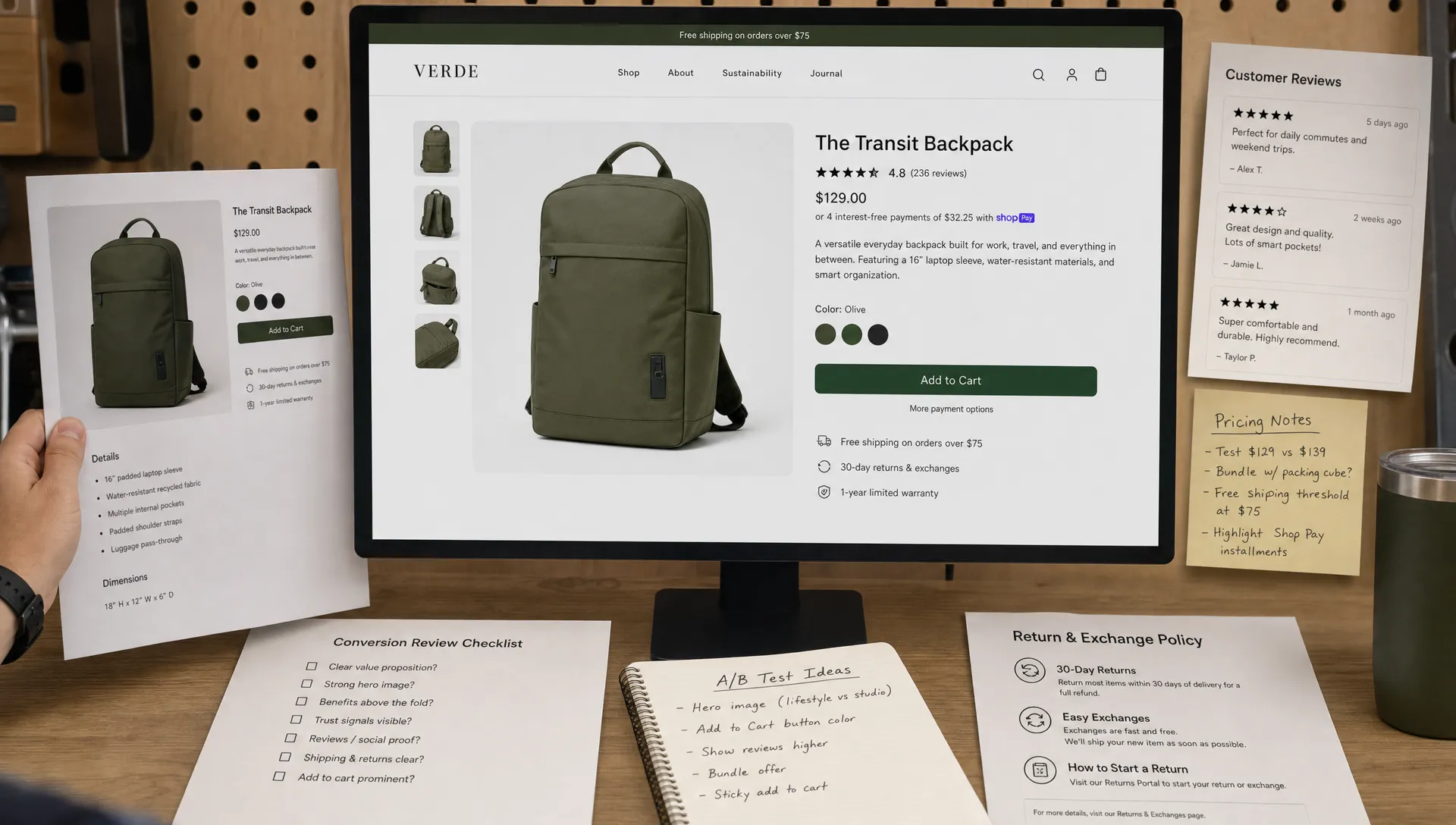
For paid social traffic, landing pages often need to do more than standard product pages. A shopper coming from search may already know what they want. A shopper coming from Instagram or TikTok may still need context. They may need to understand the problem, see the product in action, compare options, read reviews, and feel confident that the brand is legitimate.
Strong acquisition landing pages often include:
- A clear headline that matches the ad promise
- Visual proof of the product being used
- Concise benefit-focused copy
- Reviews, testimonials, or press mentions where available
- Simple product options and pricing
- FAQs that answer objections before checkout
- Fast mobile load speed
- A clear call to action above and throughout the page
This is why paid social and CRO should not operate separately. If the agency only changes ads but never improves the destination, it may keep paying to send traffic into the same friction.
Tracking and attribution keep decisions grounded
Paid social attribution has become more complex. Privacy changes, shorter attribution windows, cross-device behavior, and platform modeling can make performance harder to read. A brand may see one number in Meta, another in Shopify, another in GA4, and a different story from post-purchase surveys.
A paid social agency improves customer acquisition by building a measurement system that avoids overreacting to any single data source.
That typically includes clean pixel setup, server-side tracking where appropriate, consistent UTM naming, platform event checks, ecommerce analytics, blended performance reporting, and new customer revenue analysis. For some brands, post-purchase surveys can also help identify how customers first discovered the brand, especially when paid social assists conversions that are later completed through search or email.
The goal is not perfect attribution. Perfect attribution rarely exists. The goal is confident decision-making.
If CAC is rising, the agency should be able to investigate whether the issue is creative fatigue, audience saturation, conversion rate decline, AOV compression, tracking gaps, competitive pressure, or offer mismatch. Without reliable measurement, brands often cut campaigns that are helping or scale campaigns that only appear profitable.
Scaling requires more than increasing budgets
Once a campaign works, the natural instinct is to spend more. But scaling paid social too quickly can break performance. Costs rise, frequency climbs, creative fatigues, and the platform may struggle to find enough qualified buyers at the same efficiency.
A paid social agency improves customer acquisition by scaling in controlled stages. It watches leading indicators such as hook rate, thumb-stop rate, CTR, CPC, landing page conversion rate, CAC, new customer ROAS, frequency, and blended MER. More importantly, it looks for the reason performance is changing.
Scaling can happen in several ways. The agency might increase budget on proven campaigns, introduce new creative angles, expand into broader audiences, test new placements, launch adjacent product offers, or open a new channel such as TikTok or Pinterest. The right move depends on where the bottleneck is.
For example, if CAC increases because the same audience has seen the same ads too many times, the answer is not necessarily a new campaign structure. It may be a fresh creative concept. If traffic is cheap but conversion is weak, the next move may be a landing page test. If first purchase is profitable but repeat purchase is weak, the acquisition strategy may need to attract a higher-quality buyer or set better expectations before purchase.
Scaling is not just buying more traffic. It is expanding demand while protecting efficiency.
Paid social works best inside a larger growth system
Paid social can create demand quickly, but it performs best when it is connected to other channels. Email marketing, SMS, SEO, search ads, influencer partnerships, organic social, and strong customer support all affect acquisition efficiency.
For example, paid social may introduce the brand, but the customer might later search for reviews, compare competitors, visit the site directly, join the email list, and purchase after receiving a welcome flow. If those pieces are disconnected, the brand may undercount paid social’s impact or miss opportunities to convert interested shoppers.
Organic search can also reduce pressure on paid acquisition by capturing high-intent demand over time. For founders comparing how channel specialists communicate measurable growth, SEO Bridge, an SEO agency in Cheshire is a useful example of positioning SEO around real enquiries rather than jargon. The same standard should apply to paid social: every channel should be tied to business outcomes, not vanity metrics.
This is also why OPTYO approaches growth across performance marketing, creative, CRO, email, SEO, and brand strategy. In the MX Select case study, OPTYO combined data-driven advertising with landing page optimization and email automation to support major revenue growth for a premium fitness equipment brand. Paid social was not treated as an isolated tactic. It was part of a larger acquisition and conversion system.
What a paid social agency should improve first
The first priority depends on the account’s biggest constraint. A strong agency does not apply the same playbook to every brand. It diagnoses the system, then focuses on the highest-leverage fix.
If ads have low engagement, the creative and messaging likely need work. The offer may not be compelling, the first three seconds of video may be weak, or the ad may not make the product’s value obvious.
If ads get clicks but few purchases, the problem may be landing page friction, unclear pricing, weak product education, slow site speed, poor mobile UX, or a mismatch between ad promise and page content.
If ROAS looks good but revenue will not scale, the account may be over-reliant on retargeting, branded demand, or a narrow audience. The agency may need to separate prospecting performance from returning customer revenue and build a stronger new customer acquisition engine.
If CAC is acceptable but cash flow is tight, the brand may need better AOV, stronger bundles, faster payback, or improved email flows that increase repeat purchase rate.
If performance is inconsistent, the issue may be lack of testing structure. Without a clear cadence for creative, offer, audience, and landing page tests, the account depends too heavily on a few winners that eventually fatigue.
What the first 90 days with a paid social agency can look like
A realistic customer acquisition plan needs enough time to audit, test, learn, and optimize. While every account is different, the first 90 days often follow a pattern.
Days 1 to 30: Audit and foundation
The agency reviews account structure, historical campaigns, creative performance, pixel and event setup, UTMs, landing pages, product economics, customer segments, and previous tests. The goal is to identify what has already been learned and where the biggest opportunities are.
This stage should also clarify target CAC, budget levels, reporting cadence, creative needs, and the role paid social will play in the overall growth strategy.
Days 31 to 60: Testing and learning
The agency launches structured tests across creative angles, offers, audiences, and landing pages. Early results are used to identify which messages attract qualified buyers and which parts of the funnel create friction.
At this stage, the focus is not only finding winners. It is also eliminating weak assumptions. A failed test can still be valuable if it shows that a customer segment, claim, offer, or creative style is not worth scaling.
Days 61 to 90: Optimization and controlled scaling
Once early winners emerge, the agency begins scaling budget carefully while refreshing creative and improving conversion paths. Reporting should become more strategic, showing what is driving new customer acquisition, what is holding back efficiency, and what should be tested next.
By the end of 90 days, a brand should have a clearer understanding of its acquisition economics, strongest creative angles, best-performing offers, and next growth bottlenecks.
How to choose the right paid social agency
Not every agency is built for profitable customer acquisition. Some are strong at media buying but weak at creative. Others create beautiful assets but do not understand unit economics. For ecommerce brands, the right partner needs both performance discipline and brand sensitivity.
Before hiring a paid social agency, ask questions like:
- How do you measure new customer acquisition versus returning customer revenue?
- How do you determine target CAC and scaling thresholds?
- What is your creative testing process?
- Do you help with landing page recommendations and CRO?
- How do you handle tracking, attribution, and reporting?
- How often will we review performance and next actions?
- What do you need from our team to move quickly?
- Do you have experience with ecommerce, D2C, CPG, sports, fitness, or wellness brands?
The best answers will be specific. Be cautious of any agency that promises results without reviewing your margins, product price point, conversion rate, creative assets, and historical performance. Paid social can be powerful, but it is not magic. It works when the strategy fits the economics of the business.
Frequently Asked Questions
What does a paid social agency do? A paid social agency manages and improves advertising on platforms such as Meta, TikTok, Pinterest, and other social channels. For ecommerce brands, the role often includes strategy, media buying, creative testing, audience research, tracking, reporting, and recommendations for landing page improvements.
How does a paid social agency lower customer acquisition cost? An agency can lower CAC by improving creative quality, testing stronger offers, refining audience and messaging strategy, fixing tracking issues, improving conversion rates, and scaling campaigns based on profitable signals instead of vanity metrics.
How long does it take to improve customer acquisition through paid social? Some improvements can appear within weeks, especially if tracking or campaign structure is weak. Larger gains usually require 60 to 90 days of testing creative, offers, landing pages, and budget allocation. Sustainable acquisition comes from repeated learning, not one quick campaign change.
Which paid social platform is best for ecommerce customer acquisition? The best platform depends on the product, audience, price point, creative assets, and buying journey. Meta is often strong for broad ecommerce acquisition, TikTok can be effective for discovery and creator-style content, and Pinterest may work well for visual products with planning or lifestyle intent.
Do I need new creative before hiring a paid social agency? Not always, but creative is a major performance driver. A good agency can usually audit existing assets, identify gaps, and recommend or produce new creative concepts based on customer research and campaign data.
Build a stronger customer acquisition engine
Paid social works best when strategy, creative, tracking, CRO, and retention are aligned. If your brand is spending on ads but struggling to acquire customers profitably, the issue may not be one campaign. It may be the system around the campaign.
OPTYO helps sports, fitness, wellness, D2C, and CPG brands connect performance marketing with brand strategy, creative, ecommerce development, email marketing, SEO, conversion optimization, and growth consulting.
If you are ready to turn paid social into a more reliable customer acquisition channel, OPTYO can help you find the bottlenecks, build a smarter testing system, and scale with clearer performance data.