.png)


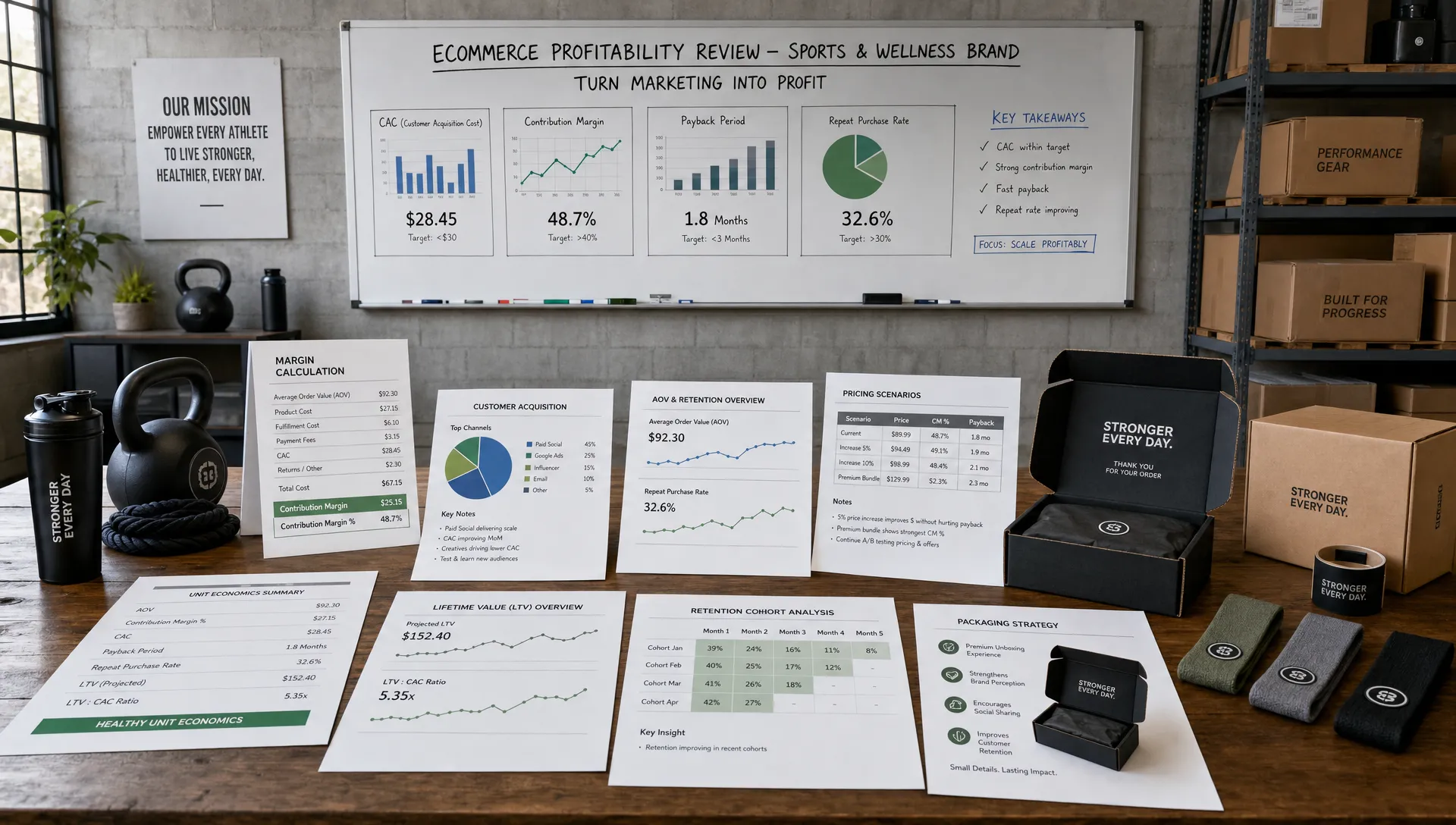

Profitability is the real test of ecommerce growth. A brand can increase sales, celebrate higher traffic, and still end the month with weaker cash flow if customer acquisition costs rise faster than margins. That is why performance marketing for ecommerce should not be treated as a way to simply buy more revenue. Done well, it becomes a system for improving contribution margin, reducing waste, and turning marketing spend into measurable profit.
For entrepreneurs in sports, fitness, wellness, and consumer products, this distinction matters. Many brands operate with tight inventory cycles, seasonal demand, wholesale pressure, and rising ad costs. A profitable growth strategy has to connect media buying, creative, website conversion, retention, pricing, and reporting into one operating model.
Performance marketing helps because it forces every marketing decision to answer a business question: does this improve the economics of acquiring, converting, and retaining customers?
Profitability Starts With Unit Economics, Not Ad Spend
Many ecommerce teams begin with the wrong question: “How much should we spend on ads?” A better starting point is: “How much can we afford to spend to acquire a customer and still make money?”
That answer depends on unit economics. Before scaling campaigns, brands need a clear view of gross margin, shipping costs, fulfillment costs, return rates, discounting, payment fees, and expected repeat purchase behavior. Without that foundation, even a strong ROAS can be misleading.
For example, a campaign with a 3x ROAS may look healthy on the surface. But if the product has a low gross margin, frequent returns, heavy discounting, and limited repeat purchase behavior, that campaign may be unprofitable. Another campaign with a lower first-purchase ROAS may be more valuable if it brings in customers who reorder, subscribe, or buy higher-margin products later.
This is where performance marketing becomes more than media buying. It helps ecommerce brands define performance around contribution margin, payback period, customer acquisition cost, average order value, lifetime value, and retention. Revenue still matters, but it is evaluated in context.
If your team is still evaluating growth only through top-line sales, it may be time to look at how an ecommerce marketing agency can scale revenue while also protecting the economics behind that growth.
The Ecommerce Profit Equation Performance Marketing Improves
Performance marketing improves profitability by optimizing the core variables that determine whether ecommerce growth is sustainable. Those variables usually include:
- Customer acquisition cost, or how much it costs to win a new buyer
- Conversion rate, or how efficiently traffic becomes revenue
- Average order value, or how much a customer spends per order
- Gross margin, or how much profit remains after product costs
- Repeat purchase rate, or how often customers come back
- Marketing efficiency ratio, or how total revenue compares with total marketing spend
None of these metrics work in isolation. Lowering customer acquisition cost is helpful, but not if the brand starts attracting low-quality buyers who never purchase again. Increasing average order value is useful, but not if it requires deep discounts that erode margin. Improving conversion rate matters, but not if it only converts bargain hunters.
A strong performance marketing system balances these variables. It does not chase the cheapest clicks or the highest ROAS at any cost. It focuses on acquiring the right customers, with the right offer, through the right channels, at a cost the business can sustain.
How Better Targeting Reduces Wasted Spend
Paid media platforms can generate demand quickly, but they can also burn cash quickly. Performance marketing reduces waste by using audience data, campaign structure, testing, and reporting to identify where spend is most likely to produce profitable customers.
For ecommerce brands, this often means separating prospecting from retargeting, testing different buyer segments, and understanding which messages resonate with high-intent audiences. A fitness apparel brand, for instance, may find that endurance athletes respond to performance claims, while lifestyle buyers respond more to comfort, fit, and identity. A supplement brand may discover that first-time buyers need education, while returning customers respond better to bundles or replenishment reminders.
The goal is not to create overly narrow campaigns that restrict growth. It is to learn which audiences produce quality revenue, then allocate budget based on profit signals instead of guesswork.
This is one reason a structured approach often outperforms intuition. As OPTYO has covered in its article on why a digital performance marketing agency beats guesswork, the advantage is not just execution. It is the discipline of testing, measuring, and making decisions based on evidence.
Creative Testing Can Lower CAC and Improve Margin
Creative is one of the biggest profitability levers in ecommerce marketing. The right ad creative can reduce customer acquisition costs, increase click-through rates, improve conversion intent, and clarify product value before someone reaches the website.
This is especially important in sports, fitness, and wellness categories, where customers often buy into a result, identity, routine, or lifestyle. A product photo may show what the item is, but strong creative shows why it matters. It can demonstrate performance, solve objections, show social proof, explain ingredients or materials, and make the brand feel credible.
Performance marketing treats creative as a testing engine. Instead of launching one campaign concept and hoping it works, brands test angles such as:
- Product benefit, such as durability, recovery, comfort, energy, or convenience
- Customer identity, such as runners, lifters, busy parents, outdoor athletes, or wellness enthusiasts
- Proof points, such as reviews, demonstrations, founder stories, comparisons, or before-and-after outcomes
- Offer framing, such as bundles, starter kits, subscriptions, limited drops, or free shipping thresholds
When creative improves, profitability improves in two ways. First, stronger ads can make paid traffic less expensive by improving engagement and relevance. Second, better pre-sell messaging can increase purchase intent, which means the traffic that arrives on site is more qualified.
That combination can lower CAC without reducing brand quality.
Conversion Rate Optimization Turns Traffic Into More Profit
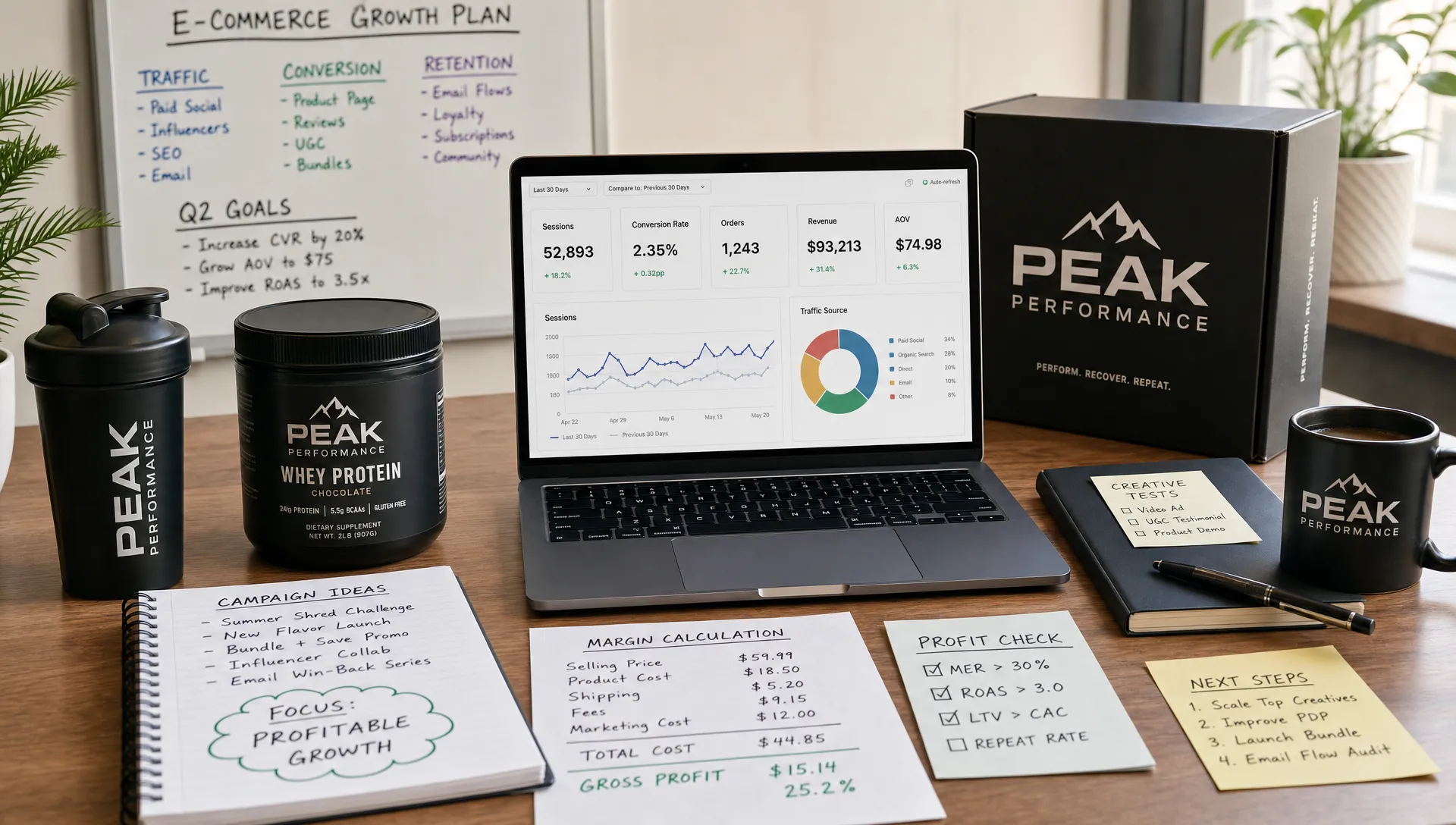
Buying traffic is expensive. Wasting that traffic is even more expensive. Conversion rate optimization, often called CRO, improves profitability by helping more visitors become customers without requiring the brand to spend more on acquisition.
For ecommerce entrepreneurs, CRO is not just button colors and page tweaks. It is the process of removing friction from the buying journey. That can include clearer product positioning, stronger product pages, better mobile performance, faster load times, more persuasive reviews, easier checkout, and more effective upsells.
A small improvement in conversion rate can have a meaningful effect on profit. If a brand already pays to bring 50,000 visitors to its site each month, increasing the percentage of visitors who buy can improve revenue and cash efficiency without increasing media spend.
CRO is also where marketing and merchandising intersect. A landing page may reveal that customers want comparison charts, sizing guidance, ingredient transparency, bundle recommendations, or clearer shipping information. Each improvement reduces uncertainty, and uncertainty is one of the biggest conversion killers.
Retention Marketing Improves Profit After the First Purchase
Customer acquisition is usually the most expensive part of ecommerce growth. Profitability improves when a brand earns more value from each customer after the first purchase. That is why email marketing, SMS, loyalty, subscriptions, replenishment flows, and post-purchase education are essential parts of performance marketing for ecommerce.
Retention marketing helps brands increase customer lifetime value without relying entirely on paid acquisition. A customer who comes back through email or organic search typically costs less to convert than a brand-new customer reached through paid social.
For sports, fitness, and wellness brands, retention opportunities are often built into the product experience. Supplements run out. Apparel collections change. Recovery tools become part of a routine. Fitness accessories pair well with complementary products. Wellness products often require education before customers fully understand how to use them.
Smart retention flows can support the customer journey by sending:
- Welcome emails that clarify the brand promise and best-selling products
- Post-purchase education that helps customers use the product successfully
- Replenishment reminders based on realistic usage cycles
- Cross-sell recommendations tied to the original purchase
- Winback campaigns for customers who have not purchased in a while
Retention is not just a revenue channel. It is a margin lever. The more repeat purchases a brand earns, the more flexibility it has with acquisition costs, payback periods, and scaling decisions.
Offer Strategy Can Improve AOV Without Heavy Discounting
Discounting can increase sales, but it can also damage profitability if it becomes the main conversion tool. Performance marketing helps ecommerce brands test offers that increase average order value while protecting margin.
Instead of defaulting to 20% off, a brand may test bundles, free shipping thresholds, gift-with-purchase offers, subscription incentives, starter packs, or limited-time product sets. These offers can increase order value and improve the customer experience without training buyers to wait for discounts.
For example, a sports nutrition brand might bundle a protein product with hydration or recovery items. A fitness accessories brand might create a starter kit for a specific training goal. A wellness brand might offer a routine-based set that helps customers understand how products work together.
The key is to measure offers by profit, not just conversion rate. A discount that increases conversion but reduces gross margin may not be the best option. A bundle with a slightly lower conversion rate may create better contribution margin if it increases AOV and introduces customers to more products.
Better Measurement Prevents False Wins
Ecommerce profitability depends on accurate measurement. If attribution is unclear, brands may overfund channels that look good in-platform but do not drive incremental profit. They may also underfund channels like email, SEO, or content because those touchpoints are harder to credit with a single click.
Performance marketing improves decision-making by combining platform data with business data. Instead of relying only on Meta, Google, or TikTok dashboards, profitable brands also look at Shopify or ecommerce platform data, blended CAC, contribution margin, cohort behavior, new versus returning customer revenue, and total marketing efficiency.
Privacy and compliance also matter more than ever. As brands collect customer data for email, SMS, analytics, and personalization, they need responsible data practices that support growth without creating unnecessary risk. For companies that need governance, risk, and compliance support, organizations such as Privacy & Legal Management Consultants Ltd. can be useful resources for understanding data protection obligations and building stronger privacy practices.
Better measurement does not mean perfect attribution. Perfect attribution rarely exists. The goal is to create enough clarity to make better budget, creative, offer, and retention decisions.
SEO and Content Reduce Dependence on Paid Acquisition
Paid media can accelerate growth, but relying on it too heavily can make profitability fragile. If ad costs rise or performance dips, the business feels it immediately. SEO and content marketing help improve profitability by building demand that does not require paying for every click.
For ecommerce brands, organic search can support both education and conversion. A running gear brand can create content around training, injury prevention, shoe rotation, or race preparation. A wellness brand can educate customers about ingredients, routines, and product comparisons. A fitness equipment brand can publish guides that help buyers choose the right product for their goals.
SEO is not a replacement for performance marketing. It is part of it. When content captures high-intent traffic and supports the buyer journey, paid media becomes more efficient. Customers may see an ad, research the brand, read a guide, join an email list, and purchase later. A full-funnel performance system accounts for that journey instead of treating every channel as separate.
This is why modern growth teams increasingly evaluate performance services across paid media, CRO, retention, SEO, creative, and reporting rather than treating each function as a silo. If you are mapping what a complete growth partner should provide, OPTYO’s guide to performance marketing services in 2026 is a helpful companion resource.
When Performance Marketing Becomes a Profitability Engine
Performance marketing improves ecommerce profitability when the team stops asking channels to solve problems that belong to the business model. Ads cannot permanently fix weak margins, unclear positioning, poor product-market fit, or a broken website experience. But when the fundamentals are in place, performance marketing can make every part of the growth system more accountable.
The strongest brands usually build a rhythm around four questions:
- What are we learning about our best customers?
- Which creative angles are improving acquisition quality?
- Where is the website leaking profitable demand?
- How can we increase repeat purchase without relying on discounts?
These questions turn marketing into a feedback loop. Campaigns reveal customer objections. Website data reveals friction. Email behavior reveals what buyers care about after purchase. Creative tests reveal positioning opportunities. Reporting connects those insights back to profit.
Over time, this loop helps ecommerce brands make better decisions about budget, inventory, product development, merchandising, and brand strategy.
Signs Your Ecommerce Marketing Is Growing Revenue but Hurting Profit
Not all growth is good growth. If revenue is rising but cash feels tighter, the marketing system may be scaling inefficiently.
Common warning signs include rising CAC, declining gross margin, increasing return rates, heavy dependence on discounts, weak repeat purchase rates, slow inventory turnover, and channel reports that look positive while total business profit declines.
Another warning sign is a lack of blended reporting. If each channel is judged only by its own dashboard, the business may miss the bigger picture. A retargeting campaign may claim credit for customers who would have purchased anyway. A prospecting campaign may look weak on first-click revenue but bring in valuable customers over time. A campaign may generate cheap purchases that produce high refund rates.
Performance marketing helps separate real growth from false positives. The objective is not to make every metric look good. The objective is to identify which activities actually improve profit.
Frequently Asked Questions
What is performance marketing for ecommerce? Performance marketing for ecommerce is a measurable growth approach that connects paid media, creative, CRO, retention, SEO, and reporting to specific business outcomes such as revenue, CAC, conversion rate, and profitability.
How does performance marketing improve profitability? It improves profitability by reducing wasted ad spend, lowering customer acquisition costs, increasing conversion rates, raising average order value, improving retention, and helping teams allocate budget based on contribution margin rather than vanity metrics.
Is ROAS enough to measure ecommerce profitability? No. ROAS is useful, but it does not account for gross margin, shipping, discounts, returns, fulfillment costs, or repeat purchase behavior. Ecommerce brands should also track contribution margin, CAC, payback period, LTV, and blended marketing efficiency.
Can performance marketing help small ecommerce brands? Yes. Small brands often benefit because performance marketing creates a disciplined testing process. Even with modest budgets, brands can learn which audiences, offers, creative angles, and website improvements produce the strongest profit signals.
When should an ecommerce brand hire a performance marketing agency? A brand should consider hiring an agency when it has product-market traction but needs stronger strategy, creative testing, paid media management, CRO, retention marketing, and reporting discipline to scale profitably.
Build Growth That Improves the Bottom Line
Performance marketing is not just about spending more money to generate more sales. For ecommerce brands, especially in competitive sports, fitness, and wellness markets, the real opportunity is building a growth system that makes every dollar work harder.
That means understanding unit economics, testing creative, improving conversion, retaining customers, strengthening measurement, and evaluating success through profit. When these pieces work together, ecommerce growth becomes more predictable, more efficient, and more sustainable.
If your brand is ready to move beyond surface-level metrics and build a more profitable growth engine, OPTYO helps ecommerce, D2C, sports, fitness, and wellness brands connect performance marketing with brand strategy, creative, CRO, email, SEO, and growth consulting.