.png)



Performance marketing used to be easier to define. A brand hired an agency, launched ads, watched cost per acquisition, and scaled the campaigns that worked. In 2026, that definition is too narrow.
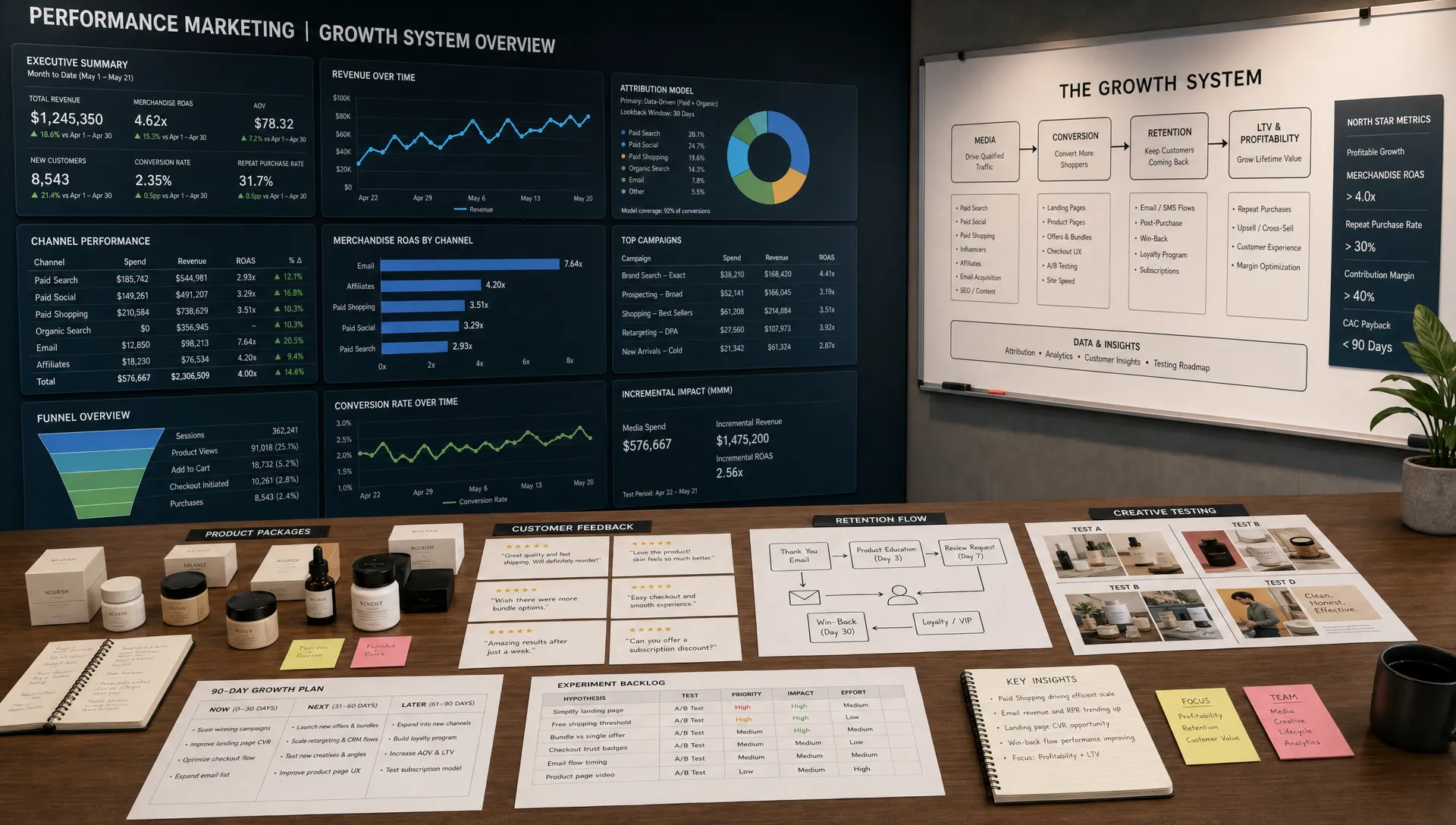
For ecommerce, D2C, CPG, sports, fitness, and wellness brands, performance marketing services now need to connect media, creative, conversion, retention, measurement, and business strategy. Paid ads still matter, but they are only one part of the growth system. If the offer is weak, the landing page is slow, the creative is generic, or retention is ignored, even the best media buyer will hit a ceiling.
That is why evaluating performance marketing services in 2026 should start with a bigger question: does the partner help you buy traffic, or do they help you build a measurable engine for profitable growth?
Why performance marketing services have changed in 2026
The biggest shift is that platforms have become more automated while customer journeys have become more fragmented. Meta, Google, TikTok, Amazon, and retail media networks rely heavily on machine learning. That means the old advantage of manually tweaking every setting is less durable than it used to be.
The new advantage is strategic input quality. Platforms need stronger creative, clearer audiences, better offers, cleaner conversion data, and tighter post-click experiences. In other words, the best campaigns are not won only inside the ad account.
At the same time, founders are under more pressure to grow efficiently. Venture-backed growth at any cost has given way to margin-aware scaling. Brands need to understand contribution margin, payback periods, repeat purchase rate, inventory constraints, and lifetime value before increasing spend.
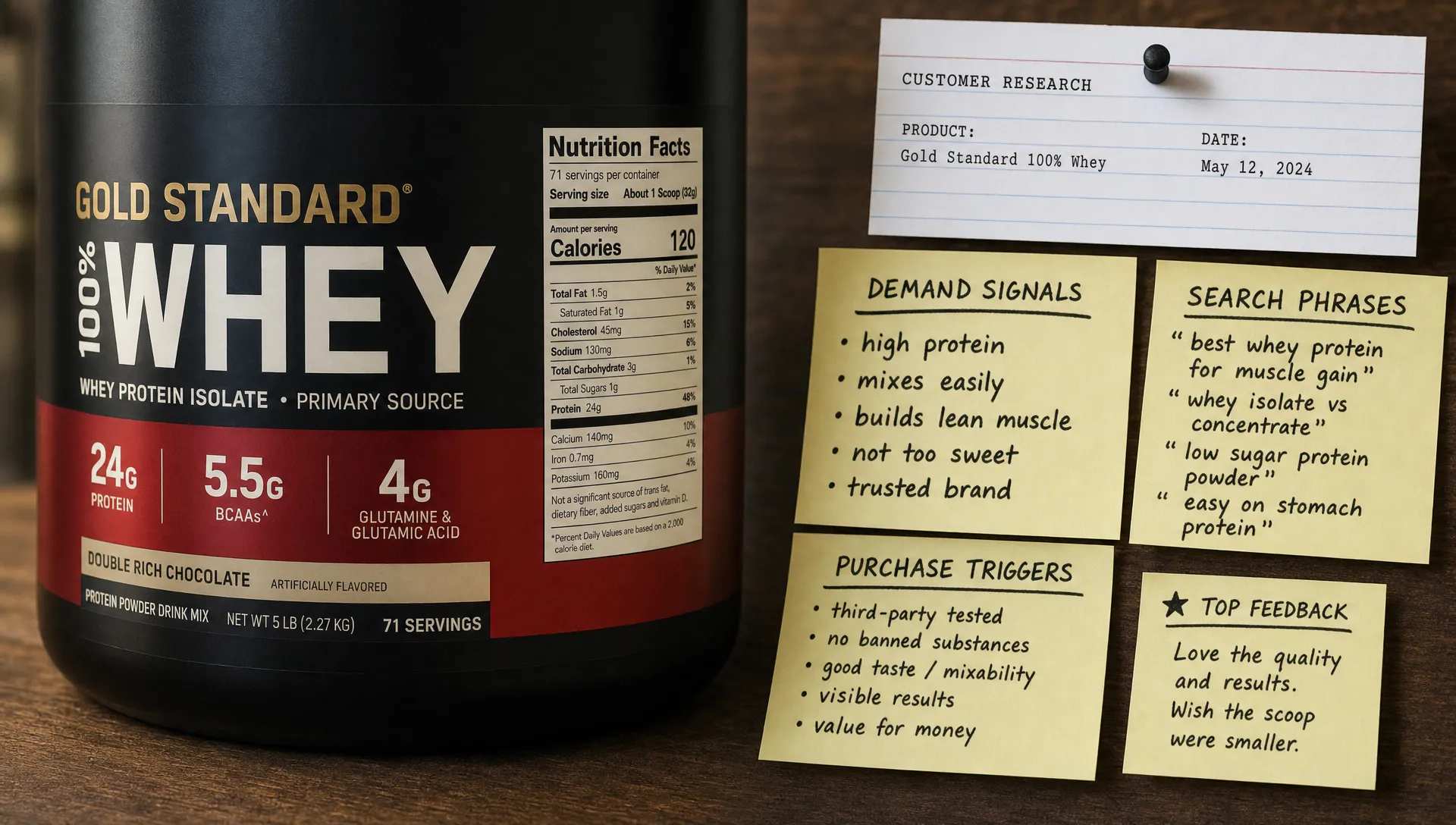
For sports, fitness, and wellness brands, the challenge is even sharper. Customers are emotionally motivated, but skeptical. They want proof, identity, community, and outcomes. A campaign selling supplements, recovery tools, performance apparel, or training equipment has to do more than generate a click. It has to build belief.
If you are comparing vendors, it helps to understand what to look for in a performance marketing agency before you sign a scope of work. In 2026, the right scope should include the following services.
1. Business strategy and KPI architecture
Performance marketing should begin before campaign setup. A serious partner should understand how your business makes money, where margin is created, and which metrics actually indicate health.
At minimum, this includes reviewing average order value, gross margin, shipping costs, fulfillment constraints, repeat purchase behavior, customer acquisition cost, and payback period. If you sell a subscription product, replenishable consumable, or high-consideration item, the KPI structure should reflect that.
The goal is to avoid optimizing for the wrong number. A campaign with a low CPA may still be unprofitable if it attracts discount-only customers. A campaign with a higher CPA may be valuable if those customers reorder, join a subscription, or purchase premium bundles.
Strong performance marketing services should define a measurement hierarchy that includes both platform metrics and business metrics. Platform return on ad spend can be useful, but it should not be the only source of truth. Blended MER, new customer revenue, contribution margin, retention, and cash flow timing often matter more to founders.
2. Audience, positioning, and offer strategy
In 2026, targeting is less about selecting endless interest groups and more about giving platforms the right message-market fit. That starts with understanding who the customer is, what they believe, what they have tried before, and why they should trust your brand now.
A performance partner should help clarify the customer segments worth pursuing. For example, a recovery brand may sell to competitive athletes, weekend warriors, physical therapy patients, and wellness-focused professionals. Those groups may buy the same product for completely different reasons.
Positioning work should turn those differences into clear messaging. What pain point are you solving? What is the promise? What proof supports it? What objections must be answered before purchase?
Offer strategy is part of this, too. Discounts are not the only lever. Bundles, starter kits, trials, guarantees, subscriptions, limited drops, educational lead magnets, and post-purchase incentives can all improve conversion without weakening brand equity.
This is where performance marketing overlaps with broader growth strategy. A useful partner will not simply ask, “What should we promote this week?” They will help determine which offer gives the brand the best chance to acquire the right customers at the right economics.
3. Paid media strategy across the right channels
Paid social and paid search remain core performance channels, but channel selection should be based on intent, creative fit, category maturity, and budget.
For many ecommerce brands, Meta and TikTok are still strong discovery channels. Google Search and Shopping capture active demand. YouTube can educate and retarget. Amazon or other marketplaces may matter for CPG and wellness products. Retail media can help brands already selling through major retailers.
The key is not being everywhere. The key is sequencing channels intelligently.
A startup with limited budget may need to prove one or two channels before expanding. A more mature brand may need a portfolio approach that balances prospecting, retargeting, branded search, non-branded search, creator whitelisting, and marketplace ads.
A complete paid media service should include campaign structure, budget allocation, testing plans, bid strategy, audience signals, feed optimization when relevant, and ongoing spend recommendations tied to business performance.
It should also include honest channel diagnosis. If a brand has weak conversion rates, low average order value, poor product-market fit, or limited creative, the answer is not always “spend more.” Sometimes the best media strategy is to fix the inputs first.
4. Creative strategy and asset production
Creative is one of the biggest performance levers in 2026. Platform automation has made the ad itself more important, not less. The algorithm can find pockets of demand, but it still needs creative that earns attention, communicates value, and drives action.
Performance marketing services should include a clear creative testing system. This goes beyond making ads look polished. It means testing different hooks, formats, objections, proof points, offers, testimonials, product demonstrations, founder stories, athlete use cases, and educational angles.
For sports, fitness, and wellness brands, strong creative often blends aspiration with credibility. A training product may need demonstration. A supplement may need education and trust signals. Apparel may need identity, lifestyle, and fit proof. A recovery tool may need before-and-after context, expert validation, or routine-based content.
The service should also account for creative fatigue. Winning ads rarely last forever. A performance partner should plan for a steady pipeline of new concepts, not emergency asset production after results decline.
Good creative production in 2026 is not just “more content.” It is structured learning. Each asset should test a hypothesis about what customers care about, what they resist, and what motivates them to buy.
5. Landing pages, ecommerce development, and CRO
Traffic quality matters, but the post-click experience often determines profitability. If a shopper clicks from an ad promising a specific benefit and lands on a generic homepage, momentum drops.
Performance marketing services should include conversion rate optimization, also called CRO. This may involve landing page strategy, product page improvements, checkout review, site speed recommendations, mobile optimization, offer placement, social proof, trust signals, and analytics review.
For ecommerce brands, the product detail page is often the most important sales asset. It should answer the shopper’s biggest questions quickly: what is it, who is it for, why is it different, how does it work, what proof exists, and what should I do next?
CRO does not always require a complete redesign. Sometimes small improvements make a major difference: clearer above-the-fold messaging, stronger product imagery, better bundle framing, more visible reviews, simpler navigation, or a more persuasive guarantee.
If an agency manages ad spend but ignores landing pages, they are leaving performance exposed. In 2026, media and conversion should be managed together.
6. Measurement, attribution, and KPI reporting
Reporting should do more than summarize what happened. It should help founders make decisions.
A modern performance marketing service should include clean KPI reporting across paid media, ecommerce, email, organic search, and overall revenue. That reporting should distinguish between platform-reported performance and business-level performance.
Attribution will never be perfect. Privacy changes, delayed purchases, cross-device journeys, dark social, influencer exposure, and retail purchases all complicate measurement. The answer is not to pretend one dashboard has the full truth. The answer is to triangulate.
A strong reporting process may include platform data, GA4, ecommerce analytics, CRM data, post-purchase surveys, cohort analysis, incrementality tests, and blended performance metrics. The point is to understand directionally what is working, what is wasteful, and where the next investment should go.
A good agency should also translate numbers into action. If the report shows rising CPA, the discussion should identify whether the issue is creative fatigue, audience saturation, landing page conversion, offer weakness, inventory problems, or seasonality.

7. Email, SMS, and retention marketing
Performance marketing cannot stop at acquisition. For many ecommerce brands, profitability depends on what happens after the first order.
Email and SMS should be part of the performance system because they improve payback, increase lifetime value, and reduce dependence on paid media. A brand that retains customers well can afford to acquire more aggressively. A brand that does not retain customers will feel constant pressure to replace lost revenue.
Core retention services may include welcome flows, abandoned cart flows, post-purchase education, replenishment reminders, winback campaigns, product launch campaigns, segmentation, and loyalty messaging.
For fitness and wellness brands, education is especially important. Customers may need help understanding how to use a product, when to expect results, how to build it into a routine, or which complementary products make sense. The better the customer experience after purchase, the stronger the second-order performance.
Retention also feeds acquisition. Reviews, testimonials, user-generated content, referrals, and community stories can all become fuel for paid campaigns.
8. SEO and demand capture
Paid media can create demand, but SEO helps capture and compound it. In 2026, performance marketing services should not treat organic search as separate from growth.
Search behavior reveals what customers want to know before they buy. They compare products, look for routines, search symptoms, evaluate brands, and ask practical questions. Those searches can become content, landing pages, product education, and paid search strategy.
For emerging brands, SEO is not only about publishing blog posts. It can include technical site health, collection page optimization, product page copy, buyer guides, comparison content, local search where relevant, and content that supports the full customer journey.
The highest-value SEO strategy often connects directly to paid learnings. If ads reveal that a specific benefit or objection drives conversions, that insight can shape content. If search data shows rising demand for a problem your product solves, that can shape creative and landing pages.
This is why performance thinking should extend beyond ads. For sports and fitness companies, performance thinking helps connect creative, media, ecommerce, and measurement instead of treating each channel as a separate project.
9. Experimentation and growth consulting
A performance marketing partner should bring a testing mindset to the entire business. This does not mean random experiments. It means disciplined hypotheses, clear success criteria, and fast learning loops.
Useful experiments might involve testing a new bundle, a higher free-shipping threshold, a subscription incentive, a quiz funnel, a creator landing page, a new product angle, or a seasonal campaign concept.
Growth consulting is where the agency helps connect marketing activity to broader business decisions. For example, a campaign may reveal that one customer segment has better retention. That insight could influence product development, merchandising, partnerships, or wholesale strategy.
This is especially important for entrepreneurs who are still finding scale. The best performance partners do not just execute tasks. They help founders understand which levers are worth pulling next.
If you are building a plan from the ground up, it may also help to study how a marketing strategy agency builds smarter growth by aligning economics, positioning, funnel design, and measurement.
10. Operational alignment and scalability planning
Marketing cannot be separated from operations. If campaigns scale demand faster than the business can fulfill it, customer experience suffers. If inventory is limited, ads may need to shift toward waitlists, pre-orders, or higher-margin products. If shipping costs are high, offer strategy may need to reflect that.
This is true across many physical product categories, not only traditional ecommerce. Even companies selling premium shipping containers with nationwide delivery need marketing that accounts for geography, delivery logistics, buyer intent, and lead quality, not just traffic volume.
For D2C and CPG brands, operational alignment may include inventory planning, product launch timing, retailer coordination, seasonality, cash conversion cycles, and fulfillment capacity. A campaign that looks great in-platform can still create problems if it promotes the wrong SKU at the wrong time.
In 2026, performance marketing services should include conversations about what the business can actually support. Growth is only valuable if the customer experience and unit economics hold up as demand increases.
What deliverables should you expect each month?
A strong monthly performance marketing engagement should produce both execution and insight. You should not be left wondering what happened, what was tested, or what comes next.
Typical deliverables may include:
- A prioritized growth roadmap tied to business goals.
- Paid media management and budget recommendations.
- Creative testing briefs, concepts, and performance analysis.
- Landing page or product page recommendations.
- CRO tests or ecommerce improvements.
- Email and retention campaign planning.
- SEO priorities when search is part of the scope.
- KPI reporting with clear interpretation.
- A next-month action plan based on learnings.
The exact deliverables depend on budget, stage, and scope. A startup spending $15,000 per month on ads does not need the same structure as an established brand spending $500,000 per month. But both need clarity, accountability, and a system for learning.
Red flags in a performance marketing service package
Not every agency offering performance marketing services is built for modern growth. Some are still structured around channel execution alone.
Be cautious if the service package focuses only on campaign setup and weekly optimization. That may not be enough if your real bottleneck is creative, conversion, retention, positioning, or measurement.
Other red flags include vague reporting, no creative testing plan, overreliance on platform ROAS, no discussion of margins, generic strategy decks, limited understanding of ecommerce economics, and unwillingness to challenge assumptions.
A partner should not promise effortless scale. Performance marketing is iterative. Even strong brands face failed tests, changing platform conditions, creative fatigue, competitive pressure, and seasonal swings. The difference is that a strong partner knows how to diagnose those issues and respond with a plan.
How to choose the right scope for your brand
The right scope depends on your stage.
Early-stage brands often need positioning, offer development, creative testing, landing page improvements, and initial channel validation. Spending heavily before those pieces are clear can waste budget.
Growth-stage brands may need more structured media scaling, lifecycle marketing, CRO, reporting, and creative production. At this stage, the goal is usually to increase spend without breaking efficiency.
Mature ecommerce brands may need deeper measurement, incrementality testing, retail media, channel diversification, retention strategy, forecasting, and creative systems built for volume.
The most important thing is to match the service package to the real constraint. If your ads get clicks but no purchases, CRO may be the priority. If your conversion rate is strong but acquisition costs keep rising, creative and audience strategy may be the issue. If first purchases are profitable but revenue is inconsistent, retention may be underbuilt.
Performance marketing in 2026 is not about buying a fixed menu of services. It is about building the right growth system for your economics, category, customer, and stage.
Frequently Asked Questions
What are performance marketing services? Performance marketing services are growth services tied to measurable outcomes, typically including paid media, creative testing, CRO, ecommerce strategy, retention marketing, SEO, reporting, and growth consulting.
What should performance marketing services include in 2026? They should include business strategy, KPI planning, paid media, creative production, landing page optimization, retention marketing, measurement, reporting, SEO, and ongoing experimentation.
Is paid advertising still the main part of performance marketing? Paid advertising is still important, but it should not stand alone. In 2026, paid media works best when connected to strong creative, conversion-focused pages, retention systems, and accurate reporting.
How should ecommerce brands measure performance marketing? Ecommerce brands should look at platform metrics and business metrics together. ROAS, CPA, conversion rate, MER, contribution margin, customer lifetime value, repeat purchase rate, and payback period all matter.
When should a brand hire a performance marketing agency? A brand should consider hiring an agency when it has a clear product, enough margin to support acquisition, a willingness to test, and a need for structured growth across media, creative, conversion, and retention.
Build a performance marketing system that can scale
The best performance marketing services in 2026 are not limited to ad account management. They connect strategy, creative, media, ecommerce, retention, reporting, and growth consulting into one accountable system.
For sports, fitness, wellness, D2C, and CPG brands, that system is what turns attention into revenue and revenue into sustainable growth.
If your brand is ready to move beyond disconnected tactics, OPTYO helps performance-driven companies build smarter growth across marketing strategy, paid media, ecommerce, creative, CRO, email, SEO, reporting, and consulting.