.png)



Choosing an email marketing agency for ecommerce is not just about finding someone who can design newsletters or schedule weekly promotions. For a growing brand, email should be a measurable retention system that increases repeat purchases, protects margins, improves customer education, and turns first-time buyers into long-term customers.
That matters even more in sports, fitness, and wellness, where customers often need guidance before they buy and support after they purchase. A supplement brand may need education around ingredients and routines. A fitness equipment brand may need onboarding content. An athletic apparel brand may need sizing confidence, launch campaigns, and winback flows. In each case, email is not a side channel. It is part of how the brand builds trust and increases lifetime value.
The challenge is that many agencies sound similar on the surface. They promise better campaigns, prettier templates, and more revenue from your list. The right partner goes deeper. They understand ecommerce economics, customer journeys, deliverability, creative testing, segmentation, and how email fits into the broader growth engine.
Here is what to look for before you hire one.
Start With Business Strategy, Not Email Volume
A strong email marketing agency should begin by asking how your ecommerce business actually makes money. If the first conversation is only about how many campaigns they will send per month, that is a warning sign.
Before recommending flows or campaigns, the agency should want to understand your average order value, gross margins, repeat purchase rate, purchase cycle, product mix, discount strategy, paid media spend, and customer acquisition cost. Email is most valuable when it improves the economics of the whole business, not when it simply adds more messages to the calendar.
For example, a brand with a high first-order CAC may need email to increase second-purchase rate and accelerate payback. A brand with strong repeat purchase behavior may need better replenishment flows and loyalty messaging. A brand with low margins may need to reduce discount dependency and use education, bundles, and social proof to drive conversion.
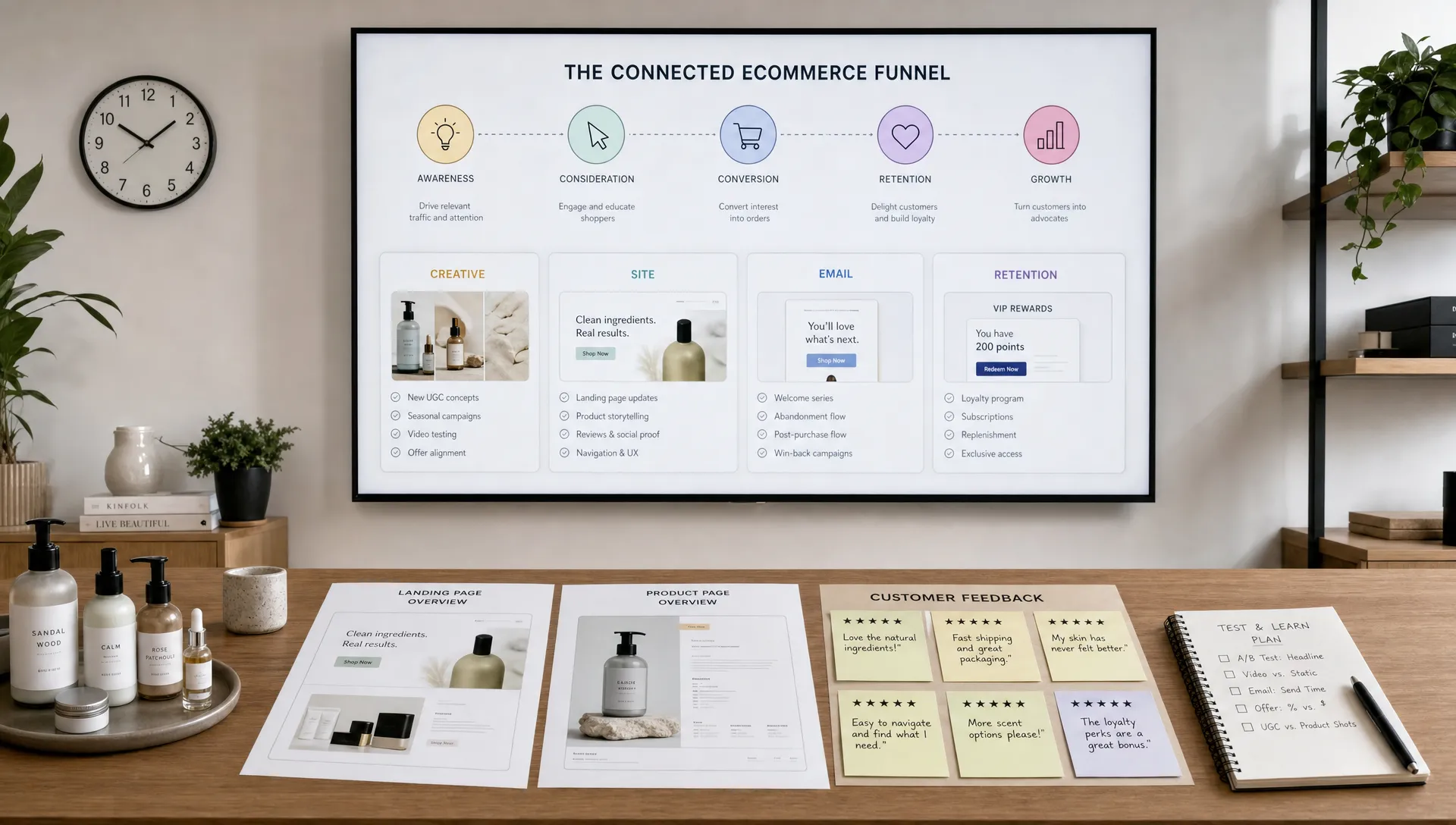
This is why email should not be evaluated in isolation. It should work alongside acquisition, conversion rate optimization, creative, and brand positioning. If you are comparing agency models more broadly, OPTYO’s guide on how an ecommerce agency helps brands scale efficiently explains how these channels should support each other instead of operating in silos.
Look for Ecommerce Lifecycle Expertise
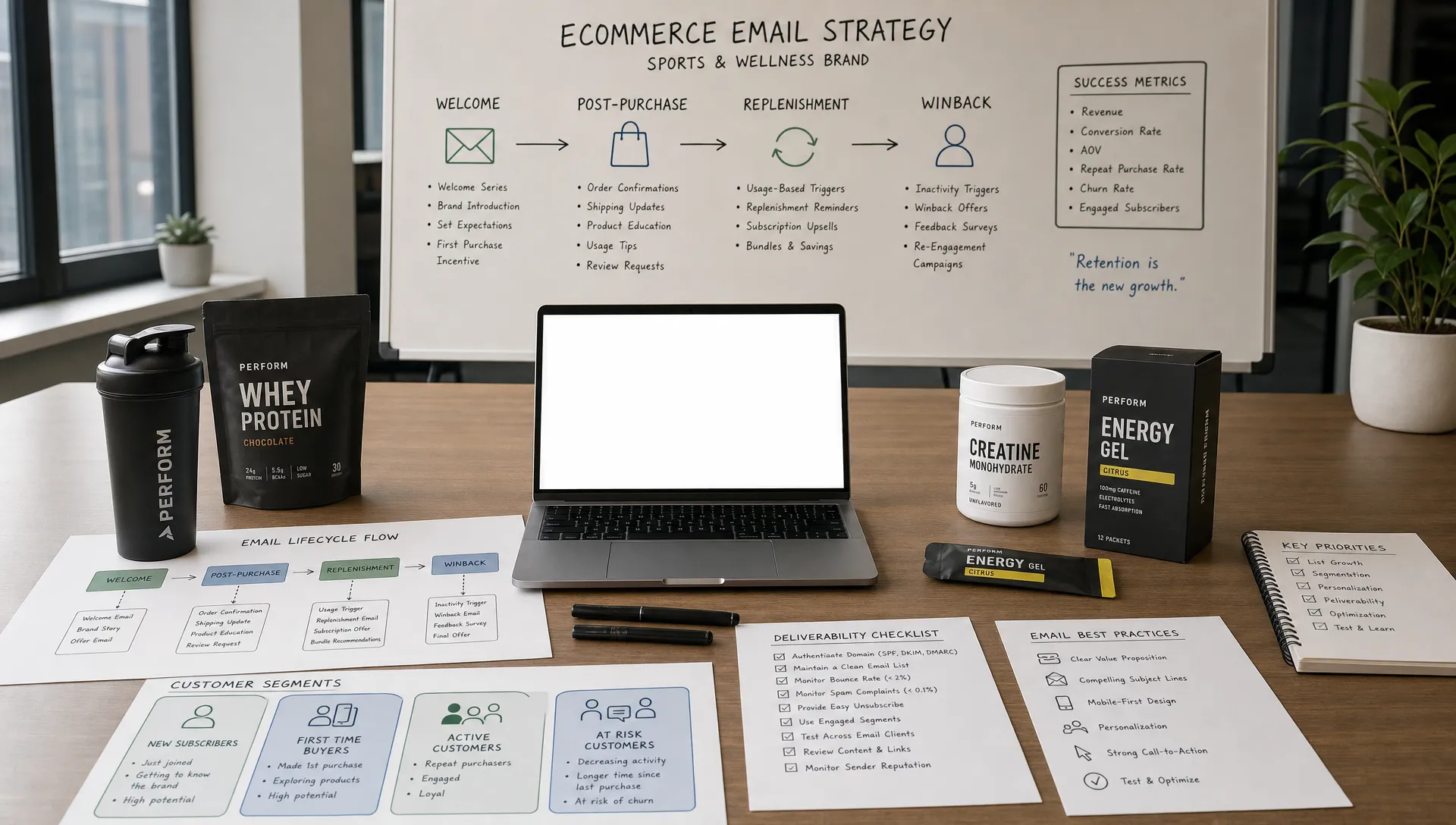
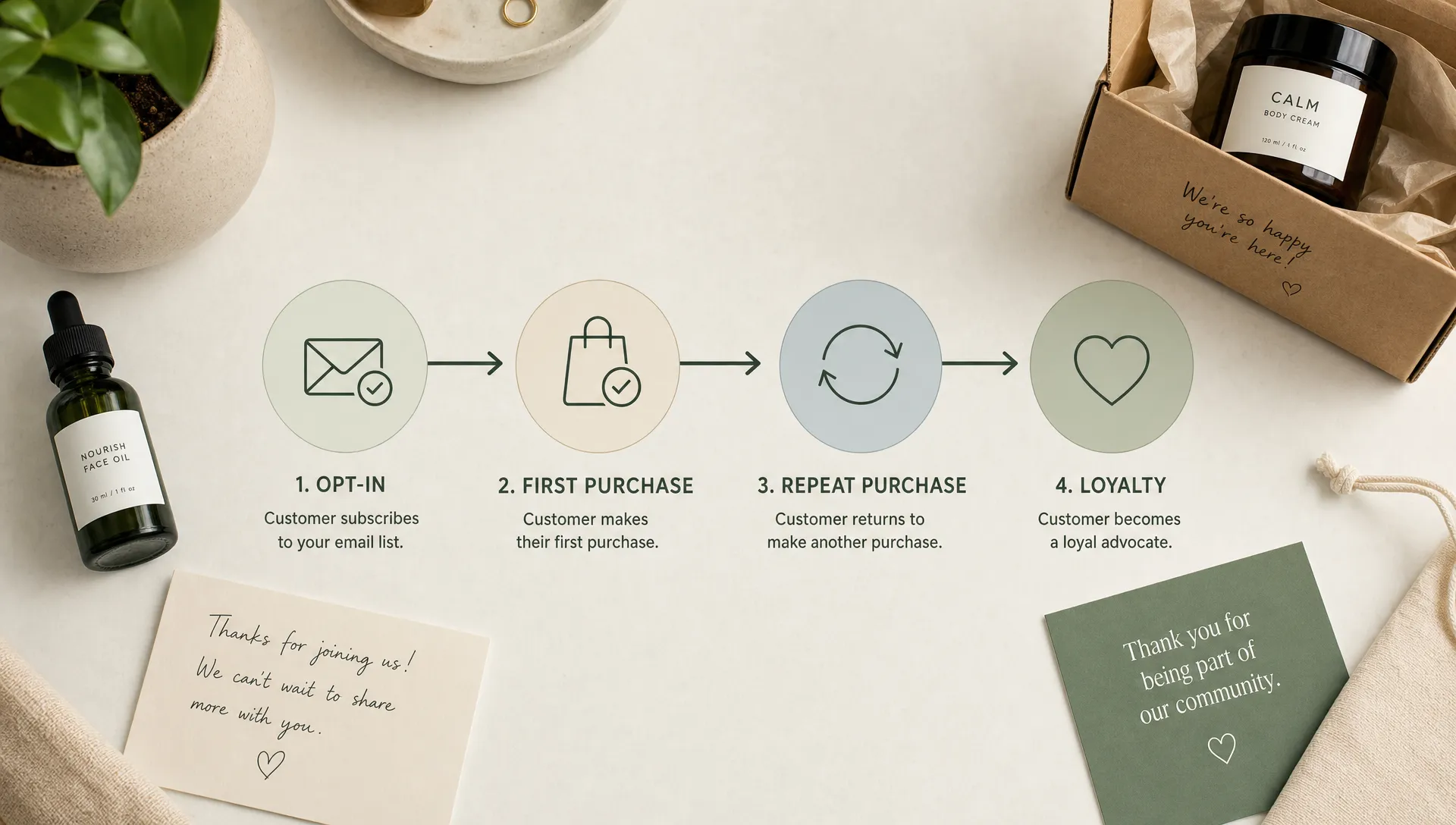
An ecommerce email agency should be fluent in the customer lifecycle. That means they should know how to build messaging around the moments that matter most, from first opt-in to repeat purchase and winback.
At minimum, they should be able to audit and improve core automated flows such as welcome, browse abandonment, cart abandonment, checkout abandonment, post-purchase, replenishment, product education, review request, cross-sell, subscription support, and winback. The exact mix depends on your products, sales cycle, and platform, but the agency should be able to explain why each flow exists and what behavior it is designed to influence.
Good lifecycle strategy is not just “send more emails.” It is about sending the right message at the right stage of intent. Someone who just joined your list needs a different message than someone who viewed a product three times, bought once, or has not purchased in six months.
For sports and wellness brands, lifecycle email can also reduce friction after purchase. Customers may need usage tips, training content, sizing guidance, ingredient education, recovery routines, or care instructions. When that content is handled well, email supports both revenue and customer satisfaction.
Prioritize Segmentation Over One-Size-Fits-All Campaigns
The best agencies do not treat your list like one audience. They segment based on behavior, purchase history, engagement, preferences, and customer value.
Segmentation should be practical, not unnecessarily complex. A great agency can identify simple but profitable audience splits, such as first-time buyers versus repeat buyers, VIP customers versus discount-only buyers, engaged subscribers versus at-risk contacts, and category-specific shoppers.
This matters because the wrong message can weaken your list. A loyal customer who buys full price should not always receive the same discount-heavy campaign as a cold lead. A customer who bought running gear may not respond to the same content as someone who bought recovery tools. A customer who has not opened in months should not be treated the same as someone who clicked yesterday.
Ask how the agency thinks about segmentation. If they only mention demographics, they may not be ecommerce-focused enough. Behavioral data is usually more useful because it reflects what shoppers actually do, not just who they are.
Evaluate Copywriting and Creative Quality
Email performance depends heavily on copy and creative. Templates matter, but the real question is whether the agency can communicate your brand’s value in a way that drives action without damaging trust.
For ecommerce, strong email copy should be clear, specific, and persuasive. It should help customers understand what makes the product different, why it matters, how to use it, and what risk is removed from the buying decision. Great creative should support that message with visuals that match your brand and product positioning.
This is especially important if your products require education. A protein powder, mobility tool, running shoe, wearable, or recovery product often needs more than a discount code. Customers may need proof, routine ideas, comparison content, testimonials, or guidance on which product fits their needs.
Great lifecycle email is also clear about risk reversal and next steps. You can learn from high-consideration service pages outside ecommerce, too. For instance, Homeward Australia’s relocation support page makes its promise, process, proof, and buyer anxieties visible before asking families to take action. Ecommerce emails should do the same for shipping concerns, sizing uncertainty, subscriptions, product claims, and first-purchase hesitation.
Make Deliverability a Non-Negotiable
Email revenue only matters if messages reach the inbox. An agency that focuses on design and campaigns but ignores deliverability can put a major revenue channel at risk.
A qualified agency should understand sender reputation, authentication, list hygiene, engagement signals, spam complaint rates, bounce management, domain warming, suppression logic, and modern bulk sender requirements. They should also know how to spot deliverability issues before they become major revenue problems.
This has become increasingly important as inbox providers continue tightening standards for bulk senders. Google’s email sender guidelines, for example, emphasize authentication, low spam rates, and easy unsubscribe options. If an agency cannot explain how they protect these fundamentals, they may not be ready to manage a serious ecommerce program.
Deliverability is not only a technical issue. It is also tied to strategy. Over-mailing unengaged subscribers, relying too heavily on promotions, buying lists, or ignoring consent can hurt performance over time. For a deeper look at this specific area, OPTYO’s article on how an email deliverability agency protects revenue breaks down the risks that ecommerce brands often overlook.
Ask How They Measure Incremental Revenue
Many agencies report email revenue based on platform attribution. That can be useful, but it is not the whole story. Email platforms often attribute revenue to campaigns or flows when a customer clicked or opened within a certain window, but that does not always prove the email caused the purchase.
A more mature agency will discuss revenue quality. They should look at trends in repeat purchase rate, revenue per recipient, purchase frequency, customer lifetime value, unsubscribe rates, spam complaints, and margin impact. They should also be willing to test whether certain messages are creating incremental lift or simply taking credit for purchases that would have happened anyway.
This is especially important with discounts. A campaign may generate a spike in revenue, but if it trains customers to wait for promotions or erodes margin, the business may not actually be healthier. A strong agency can help you balance promotional pushes with product education, launches, bundles, community content, and value-based messaging.
Make Sure Email Connects With Paid Media and CRO
Email should not live in a vacuum. Your agency should understand how subscribers enter your funnel, what promises they saw in ads, which landing pages they visited, and where they dropped off.
If paid social is driving traffic to a lead capture offer, the welcome flow needs to continue the same story. If a landing page emphasizes a specific product benefit, the follow-up emails should reinforce that benefit with proof and urgency. If customers abandon checkout because of shipping concerns, email should address that objection directly.
The strongest ecommerce teams connect paid acquisition, onsite conversion, and retention. Email data can also inform other channels. If a specific product angle performs well in email, it may inspire ad creative. If a post-purchase email reveals common confusion, it may point to a product page issue. If a winback campaign only works with deep discounts, that may signal a positioning or offer problem.
When you evaluate an agency, ask whether they collaborate across performance marketing, creative, and conversion strategy. If you want a broader hiring framework for growth partners, OPTYO’s guide on what to look for in a performance marketing agency covers the full-funnel thinking ecommerce brands should expect.
Review Their Testing Process
Testing is one of the biggest differences between a basic email vendor and a real growth partner. The right agency should have a structured way to test ideas, learn from results, and apply those learnings across future campaigns and flows.
They should test more than subject lines. Subject lines are useful, but the bigger gains often come from testing offer strategy, message angle, audience segment, product positioning, email length, creative format, send frequency, call to action, timing, and flow structure.
Ask how they decide what to test first. Strong agencies prioritize tests based on business impact and confidence, not random curiosity. They should be able to explain what they expect to learn and how that learning will influence future decisions.
A healthy testing program should create a sharper understanding of your customers over time. You should learn which objections matter, which benefits drive action, which products create repeat behavior, and which segments are most valuable.
Expect Clear Reporting, Not Vanity Metrics
Reporting should help you make better decisions. It should not be a dashboard full of numbers that look impressive but do not connect to business outcomes.
Useful ecommerce email reporting often includes:
- Revenue by flow and campaign, with context around attribution limits
- Revenue per recipient and conversion rate by segment
- Repeat purchase rate and purchase frequency trends
- List growth quality by source
- Unsubscribe, spam complaint, bounce, and deliverability indicators
- Flow performance by step, not just total flow revenue
- Promotion performance by margin impact, not only sales volume
- Learnings from tests and the next actions based on those learnings
Open rates can still provide directional signals, but they are less reliable than they used to be because of privacy changes and automated opens. A good agency will not treat open rate as the primary measure of success.
Reporting should also be understandable. As a founder or marketing leader, you should leave reporting calls knowing what happened, why it likely happened, what the agency is doing next, and how it affects revenue, margin, or customer behavior.
Watch for Red Flags Before You Sign
Some agencies can produce polished sales decks but struggle to run a profitable ecommerce email program. Look carefully for signs that the agency is more tactical than strategic.
Common red flags include:
- They promise a specific revenue lift before auditing your data
- They focus only on campaign volume and template design
- They do not ask about margins, CAC, repeat purchase, or product economics
- They rely heavily on discounts as the main conversion lever
- They cannot explain deliverability or list hygiene clearly
- They report platform-attributed revenue without discussing quality or incrementality
- They use the same flow structure for every brand
- They do not have a process for testing and documenting learnings
- They avoid talking about compliance, consent, or unsubscribe practices
You do not need an agency that makes email sound complicated for the sake of it. You need one that can translate complexity into clear decisions and profitable execution.
Questions to Ask an Email Marketing Agency for Ecommerce
Before hiring, use the sales process to evaluate how the agency thinks. Their answers will reveal whether they understand ecommerce growth or simply manage email calendars.
Ask questions such as:
- How do you audit an ecommerce email account before making recommendations?
- Which lifecycle flows would you prioritize for our brand and why?
- How do you think about segmentation for first-time buyers, repeat buyers, and VIP customers?
- What metrics do you use beyond attributed email revenue?
- How do you protect deliverability and sender reputation?
- How do you balance promotional campaigns with brand-building and education?
- What does your testing process look like over a 90-day period?
- How do you collaborate with paid media, creative, and CRO teams?
- How do you adjust strategy for products with long consideration cycles or high education needs?
The best agencies will answer with nuance. They will not pretend every brand needs the same playbook. They will ask follow-up questions. They will talk about tradeoffs. They will connect email decisions back to your business model.
What a Strong First 90 Days Should Look Like
A good agency relationship usually starts with diagnosis before execution. The first 90 days should not be chaos, but it also should not be slow. You want a partner that can quickly identify revenue opportunities while building a stronger foundation.
In the first month, the agency should audit your current flows, campaigns, list health, segmentation, deliverability, forms, offers, and reporting. They should also review your product economics and customer journey.
In the second month, they should begin implementing priority improvements. That might include rebuilding a welcome flow, improving cart abandonment, launching post-purchase education, cleaning segments, or creating a more strategic campaign calendar.
By the third month, you should see a clearer operating rhythm. Campaigns should be planned around business priorities, tests should be documented, reporting should be tied to meaningful metrics, and the agency should have a roadmap for the next phase.
The goal is not perfection in 90 days. The goal is to know that the agency understands your business, can execute reliably, and is building an email program that gets smarter over time.
Frequently Asked Questions
What does an email marketing agency for ecommerce do? An email marketing agency for ecommerce builds and manages campaigns, automated flows, segmentation, testing, reporting, and deliverability practices designed to increase customer retention and revenue.
How do I know if my ecommerce brand is ready to hire an email agency? You may be ready if you have consistent traffic, a growing customer list, repeat purchase potential, and limited internal capacity to manage strategy, creative, execution, and testing properly.
Should an email agency manage both campaigns and flows? In most cases, yes. Campaigns drive timely revenue and product storytelling, while flows capture behavior-based opportunities automatically. The strongest programs use both together.
How much should I rely on discounts in ecommerce email? Discounts can be useful, but they should not be the only lever. A strong agency will also use education, social proof, bundles, product launches, community content, and personalized recommendations to drive revenue.
What is the most important metric for ecommerce email marketing? There is no single metric. Revenue matters, but it should be evaluated alongside revenue per recipient, repeat purchase rate, margin impact, deliverability, unsubscribe rate, spam complaints, and customer lifetime value.
Build an Email Program That Supports Real Growth
The right email marketing agency for ecommerce should act like a growth partner, not just a campaign scheduler. They should understand your customer journey, protect your deliverability, improve your lifecycle strategy, test meaningful ideas, and connect email performance to the economics of your business.
For sports, fitness, and wellness brands, that combination is especially powerful. Email can educate customers, support product usage, increase repeat purchases, and strengthen the brand relationship long after the first sale.
If you want a partner that connects email marketing with performance strategy, creative, ecommerce development, conversion optimization, and growth consulting, OPTYO helps ecommerce brands build smarter systems for scalable growth.