.png)


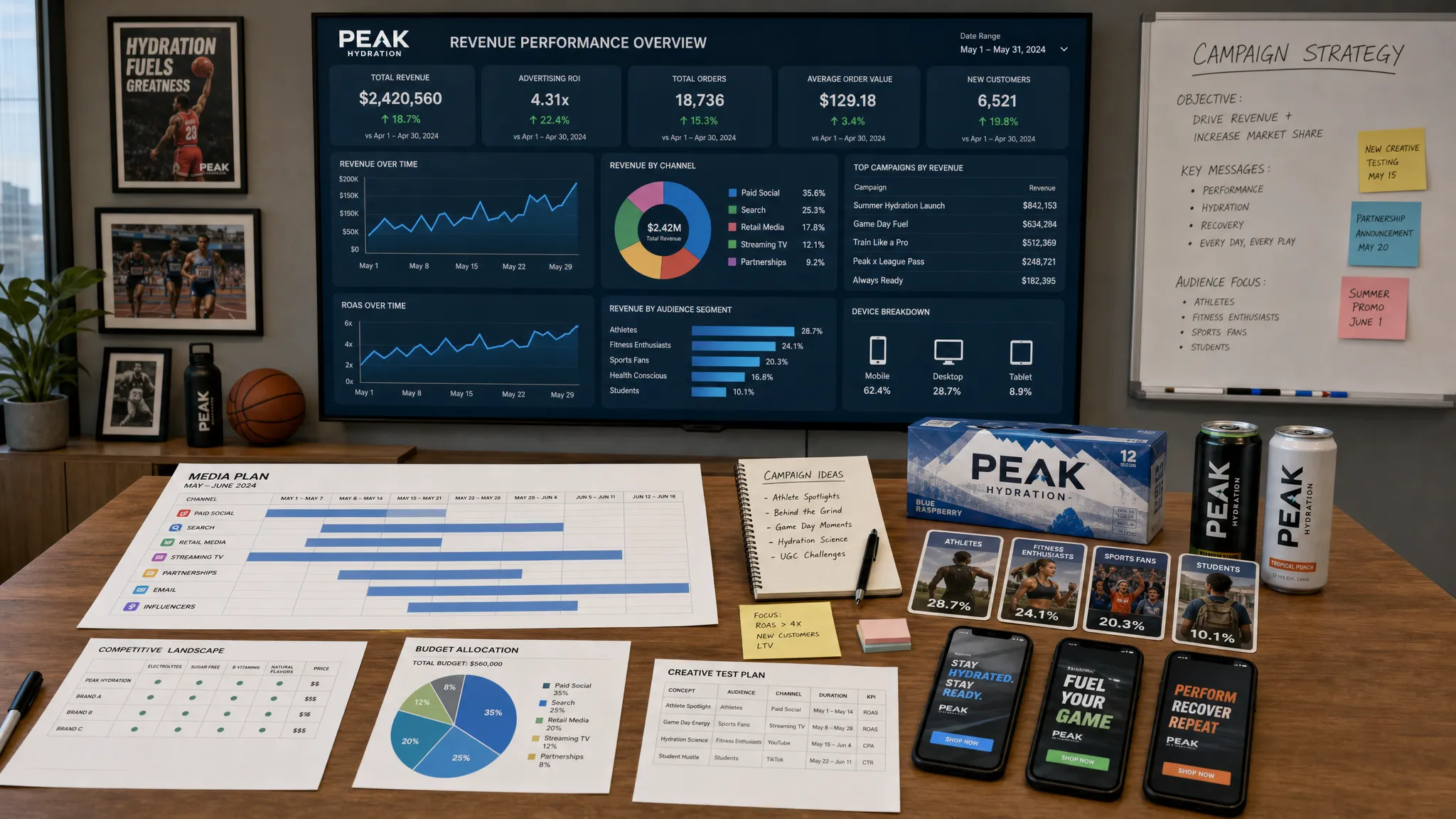

Sports advertising has always been good at creating attention. A great athlete partnership, a high-energy product video, or a campaign tied to competition season can make people stop scrolling. But for ecommerce founders, attention is not the finish line. Sales are.
That is where a modern sports advertising agency earns its place. The job is not simply to make a brand look bigger. It is to connect audience insight, creative, media buying, conversion rate optimization, and retention into a system that can be measured against revenue.
For sports, fitness, and wellness brands, this matters more than ever. Customers are comparing products, reading reviews, watching demonstrations, checking ingredient panels, and looking for brands that match their goals. A campaign has to do more than inspire. It has to reduce friction, answer buying questions, and turn demand into profitable orders.
What Makes Sports Advertising Different When Sales Are the Goal
Sports and fitness buying decisions are emotional, but they are rarely random. People buy running gear because they want performance and identity. They buy supplements because they want confidence in what they put in their body. They buy training equipment because they are committing to a goal.
That creates a unique challenge. The creative has to carry energy and aspiration, while the funnel has to provide proof. If a campaign only sells the dream, shoppers may engage without buying. If it only lists features, the brand may feel flat and interchangeable.
A sales-focused sports advertising agency balances both sides. It understands that the best campaigns often combine motivation, credibility, and clear commercial intent. The audience should feel, “This brand gets me,” and also, “This product solves my problem better than the alternatives.”
Start With the Revenue Model, Not the Campaign Idea
Measurable sales begin before the first ad is launched. A strong agency will first look at the business model behind the marketing. That includes average order value, gross margin, repeat purchase rate, customer acquisition cost targets, and the payback window the brand can tolerate.
This is especially important for ecommerce entrepreneurs. A campaign can produce revenue and still be unhealthy if discounts erase margin or if acquisition costs climb faster than customer lifetime value. The right question is not “Can we get purchases?” It is “Can we acquire the right customers at a cost that supports growth?”
A sports advertising agency should help define the commercial guardrails for growth, such as:
- Target customer acquisition cost by product line or offer
- New customer revenue versus returning customer revenue
- Contribution margin after ad spend, discounts, shipping, and fulfillment
- Conversion rate by landing page, device, and traffic source
- Repeat purchase rate, replenishment timing, and email revenue share
This is where performance thinking separates real growth from vanity metrics. OPTYO has written more about why sports marketing firms need performance thinking, especially when brand activity needs to translate into business outcomes.
Build Audience Strategy Around Buyer Intent
Sports advertising is not just demographic targeting. “Men 25 to 44 interested in fitness” is not a strategy. A useful audience plan looks at intent, motivation, product maturity, and the buying context.
For example, a recovery product might speak to endurance athletes, weekend warriors, physical therapy customers, and older active adults. Each group may care about a different promise. One wants faster training recovery. Another wants pain-free movement. Another wants a credible alternative to generic wellness products.
A sales-focused agency studies these differences before scaling media. Audience research may include ecommerce data, search queries, customer reviews, competitor messaging, social comments, influencer content, and category media. For wellness and fitness brands, it can also be useful to monitor broader lifestyle and health resources, including regional publishers such as yo.gr, to understand how consumers frame topics like nutrition, energy, recovery, and daily wellbeing.
The goal is to turn audience insight into campaign angles. Instead of one generic message, the brand can test specific hooks based on real buying motivations. That makes creative more relevant and gives the media team clearer signals about what actually drives purchase intent.
Translate Positioning Into Sales-Ready Creative
In sports and fitness, creative is not just decoration. It is one of the biggest drivers of paid media performance. A strong video, image, or landing page hero can lower acquisition costs because it communicates value faster.
Sales-ready creative usually does three things well. First, it captures attention with a hook that feels native to the audience. Second, it shows the product in a real use case. Third, it gives the shopper enough confidence to take the next step.
For an ecommerce sports brand, that might mean showing how the product performs under stress, how it fits into a training routine, or why it is different from cheaper alternatives. For a CPG wellness brand, it might mean clarifying ingredients, taste, usage occasions, or customer outcomes.
A smart creative testing system often includes:
- Problem-led hooks that call out a pain point or goal
- Demonstration videos that show the product in motion
- Founder or expert-led content that builds credibility
- Comparison angles that explain why the product is different
- Review-based ads that turn customer language into proof
The mistake many brands make is judging creative only by engagement. Likes, saves, and comments can be useful signals, but sales-focused advertising looks deeper. The real test is whether the creative improves click quality, landing page behavior, purchase rate, and customer acquisition cost.
Turn Paid Media Into a Controlled Acquisition Engine
Paid social, paid search, and shopping campaigns each play a different role in measurable sales. Paid social is often best for demand creation, especially when the product needs education or emotional storytelling. Search and shopping are usually stronger for capturing existing intent, especially when shoppers are comparing solutions.
A sports advertising agency should not treat these channels as isolated campaigns. The strongest results come when media planning connects the funnel. A Meta ad may introduce the brand. A Google search campaign may capture the shopper later. Email may convert them after they compare products. Retargeting may bring them back when they are ready to buy.
This connected approach also prevents overreliance on one channel. If a brand scales only through paid social, performance can become volatile. If it relies only on search, it may be limited by existing demand. A balanced acquisition engine gives the brand more ways to create, capture, and convert demand.
For founders evaluating paid acquisition, OPTYO’s guide on how a paid social agency improves customer acquisition goes deeper into the relationship between audience strategy, creative testing, offers, and landing pages.
Improve the Destination, Not Just the Ad
Even the best ad cannot fix a weak buying experience. If the landing page is slow, unclear, or full of friction, paid traffic becomes expensive quickly. That is why conversion rate optimization is central to measurable sales.
For sports and wellness ecommerce brands, the product page has to do a lot of work. It needs to explain who the product is for, why it is credible, how it works, what makes it different, and why the shopper should buy now. It also needs to handle practical concerns like sizing, shipping, subscriptions, guarantees, reviews, and usage instructions.
A good agency looks for the gaps between ad promise and page experience. If the ad talks about recovery, the landing page should immediately reinforce that benefit. If the ad targets competitive athletes, the page should show performance proof. If the shopper is coming from mobile social, the page needs to communicate quickly without requiring too much scrolling or guesswork.

Small improvements can compound. A clearer headline, stronger review placement, better offer structure, faster page speed, or more relevant product imagery can increase conversion rate without increasing media spend. That means the same traffic can produce more revenue.
Measure the Full Path to Purchase
Attribution is imperfect, but measurement is still essential. A modern sports advertising agency should not rely on a single platform dashboard to decide what is working. Platform data, analytics tools, ecommerce backend data, customer surveys, and controlled tests all tell part of the story.
This matters because sports and fitness buyers often need multiple touchpoints before purchasing. A shopper may see a product in a training video, search for reviews, visit the website, join an email list, and buy during a later promotion. If measurement only credits the final click, the brand may underinvest in the creative and channels that created the demand.
A more useful measurement approach looks at blended performance alongside channel-level results. That includes metrics like media efficiency ratio, new customer revenue, customer acquisition cost, conversion rate, average order value, returning customer revenue, and contribution margin.
The goal is not perfect attribution. The goal is better decision-making. If spend increases and total new customer revenue grows profitably, the system is working. If platform ROAS looks strong but total revenue is flat, the brand may be paying to retarget customers who would have bought anyway.
Use Retention to Make Acquisition More Profitable
Measurable sales do not end at the first order. For many sports, fitness, and wellness brands, retention is what makes acquisition scalable. A supplement brand, apparel brand, equipment company, or recovery product can often increase profitability by improving repeat purchase, cross-sell, and customer education.
Email marketing is especially important here. After a customer buys, the brand can help them get value from the product, explain how to use it correctly, introduce complementary products, and invite them into a larger brand community. This is not just retention for retention’s sake. It improves lifetime value, which can give the brand more room to acquire customers profitably.
Retention also creates better creative. Reviews, user stories, objections, and product usage insights from existing customers can feed the next round of advertising. In strong growth systems, acquisition and retention are not separate departments. They inform each other.
Why the Agency Model Matters for Entrepreneurs
Many ecommerce founders try to solve growth by hiring one specialist at a time. A media buyer handles ads. A designer makes creative. A developer edits the site. Someone else sends emails. Each person may be good at their craft, but sales can still stall if no one owns the full system.
A sports advertising agency is valuable when it connects the pieces. The media plan should influence creative. Creative learnings should influence landing pages. Conversion data should influence offers. Customer feedback should influence positioning. Retention should influence acquisition targets.
That integration is particularly important for emerging brands with limited capital. Waste is expensive. Founders need to know which levers are actually improving revenue and which activities only create noise.
For a practical example, OPTYO’s MX Select case study shows how a data-driven, multi-channel approach supported growth for a premium fitness equipment brand.
What a Sales-Focused First 90 Days Can Look Like
A sports advertising agency does not need months of abstract strategy before making progress. The first 90 days should create clarity, testing momentum, and measurable learnings.
In the first phase, the agency should audit the brand’s current funnel. That includes creative assets, ad account structure, analytics, landing pages, email flows, product economics, and historical campaign performance. The goal is to find the biggest constraints to profitable growth.
Next, the team should launch structured tests. That might include new creative angles, revised offers, landing page improvements, search campaign cleanup, email flow updates, or clearer segmentation between prospecting and retargeting. Each test should have a reason and a measurement plan.
By the end of the period, the brand should know more than whether sales went up or down. It should understand which audiences respond, which messages convert, which products or bundles are easiest to scale, and which parts of the funnel need more work.
Red Flags When Choosing a Sports Advertising Agency
Not every agency that works in sports is built to drive measurable sales. Some are stronger in sponsorships, events, PR, or brand awareness. Those can be valuable, but ecommerce brands need to know whether an agency can connect marketing activity to revenue.
Watch for warning signs such as:
- Reporting that focuses heavily on impressions, reach, or engagement without sales context
- No clear discussion of margins, payback period, or customer acquisition cost
- Creative strategy based only on aesthetics instead of conversion learning
- Channel plans that do not connect paid media, ecommerce, email, and analytics
- A reluctance to discuss testing structure, measurement limits, or failed experiments
The best agency partners are transparent about what they can control and what they need to learn. They do not promise that every campaign will win. They build a system that increases the odds of finding winners and scaling them responsibly.
Frequently Asked Questions
What does a sports advertising agency do? A sports advertising agency helps sports, fitness, and wellness brands plan, launch, measure, and optimize campaigns. For ecommerce companies, that often includes paid media, creative testing, conversion rate optimization, email marketing, SEO, and growth strategy.
How does a sports advertising agency drive measurable sales? It connects audience research, sales-focused creative, paid acquisition, landing page optimization, retention, and reporting. Instead of measuring only awareness, it tracks how campaigns influence revenue, customer acquisition cost, conversion rate, and repeat purchase behavior.
How long does it take to see results from sports advertising? Some improvements can appear within weeks, especially from better creative, paid media structure, or landing page fixes. Sustainable growth usually takes longer because the agency needs to test messaging, offers, audiences, and retention systems.
Should a sports brand prioritize brand awareness or performance marketing? Both matter, but they should not be separated. Brand creates trust and demand, while performance marketing turns that demand into measurable action. The strongest growth systems make brand activity accountable to commercial outcomes.
What metrics should ecommerce sports brands track? Important metrics include new customer revenue, customer acquisition cost, conversion rate, average order value, media efficiency ratio, returning customer revenue, repeat purchase rate, and contribution margin after ad spend.
Turn Sports Advertising Into a Measurable Growth System
If your sports, fitness, or wellness brand is generating attention but not enough profitable revenue, the problem may not be your market. It may be the way your marketing system connects creative, media, ecommerce, and retention.
OPTYO helps performance-driven brands build smarter growth systems with strategy, paid advertising, creative, ecommerce optimization, email marketing, SEO, reporting, and consulting. For entrepreneurs who want sales they can measure, the right agency partner can turn advertising from a cost center into a scalable growth engine.