.png)



If your brand refresh starts and ends with a new logo, you may get a cleaner storefront without solving why shoppers hesitate, forget you or choose a cheaper alternative.
For ecommerce founders, especially in sports, fitness and wellness, brand design has to do more than look polished. It needs to help a customer understand what you sell, why it matters, who it is for and why they should believe you. That is where effective design agency branding separates itself from surface-level visual work.
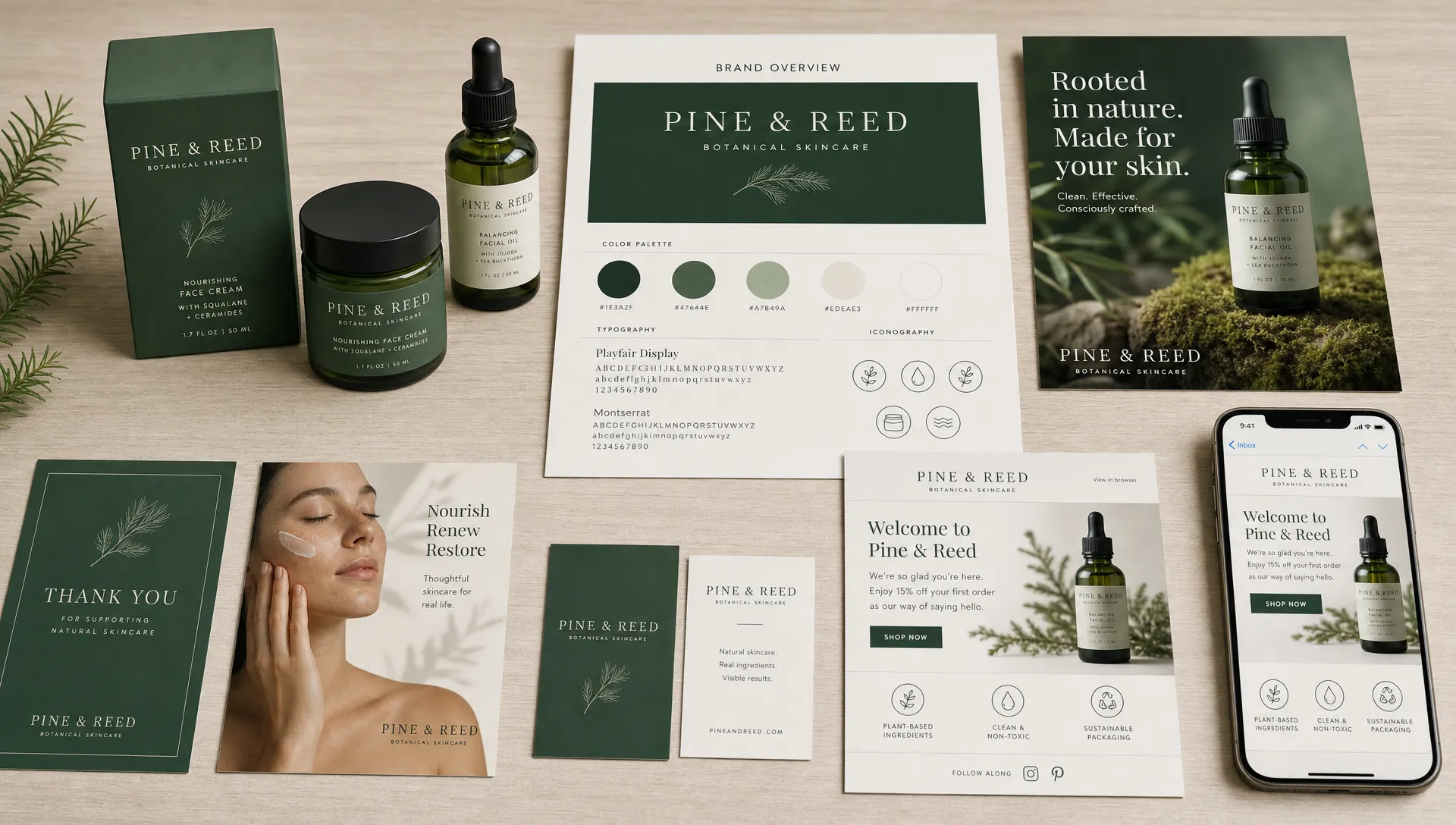
A logo is one asset. Branding is the operating system behind recognition, trust and conversion. When it is done well, your ads feel connected to your product pages, your packaging reinforces the promise, your emails sound like the same company and your creative team can move faster without making every campaign from scratch.
Why logo-first branding often falls short
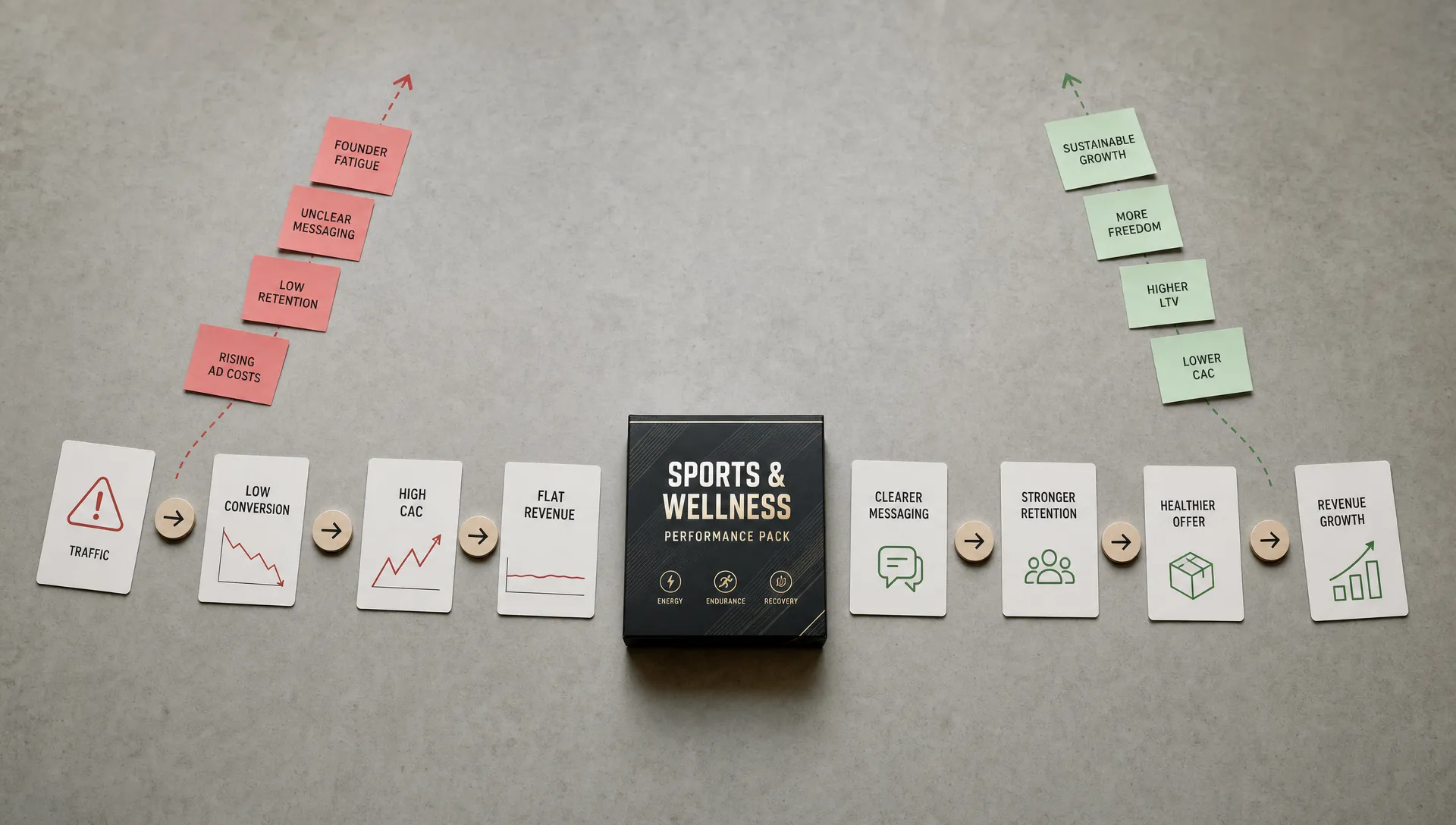
Many ecommerce brands decide they need a redesign when performance starts to slip. Paid social costs rise. Conversion rate stalls. Competitors begin to look similar. The founder feels the brand has outgrown its early visuals.
A new logo can help in some cases, but it rarely fixes the underlying issue by itself. If customers cannot explain what makes your hydration mix, training app, recovery tool or functional snack different, a sharper icon will not carry that weight alone.
Logo-first projects tend to miss three practical business problems.
First, they do not clarify the buying reason. A customer needs to know why your product belongs in their routine instead of another product that claims similar benefits.
Second, they do not create enough consistency across revenue channels. Ecommerce brands live across Meta ads, TikTok videos, Amazon listings, Shopify pages, retail pitch decks, email flows and packaging. If every touchpoint feels like a different brand, recognition suffers.
Third, they do not create a useful creative system. Founders often walk away with a logo file, color palette and brand book, then struggle to turn those assets into new ads, landing pages and retention campaigns.
A design agency can still own the visual craft, but the work has to be connected to positioning, messaging and channel execution. If you want a deeper look at the strategic layer behind that work, OPTYO’s guide on what a brand strategy agency actually does breaks down the role of research, positioning and messaging in brand decisions.
What design agency branding should actually solve
Good branding should make the brand easier to choose. That does not mean every visual decision must be purely conversion-driven, but it does mean the identity should support the way customers discover, compare and buy.
For an ecommerce company, the brand system should answer questions like these:
- What should customers remember after seeing one ad?
- What makes the product credible in a crowded category?
- Which visual and verbal assets should appear repeatedly so the brand becomes recognizable?
- How should the brand show up differently on ads, product pages, email and packaging?
- What proof should be visible before a buyer reaches checkout?
- How can creative production become faster without becoming generic?
The strongest branding projects build assets that help both the customer and the internal team. Customers get clarity and consistency. The company gets a repeatable system for making decisions.
| Branding element | What it should clarify | Business impact for ecommerce |
|---|---|---|
| Positioning | Who the product is for and why it is different | Stronger relevance in ads and product pages |
| Messaging | The core promise, proof points and objections | Clearer copy across acquisition and retention |
| Visual identity | Recognition cues such as color, typography, layout and graphic style | More memorable creative across channels |
| Creative system | Templates and rules for campaigns, launches and evergreen content | Faster asset production with more consistency |
| Ecommerce application | How the brand appears on PDPs, bundles, email, packaging and checkout support | Better trust and fewer disconnects in the buying journey |
The logo sits inside this system. It should be distinctive, flexible and appropriate for the category, but it cannot do the job of the whole brand.
The difference between looking premium and being persuasive
Many founders ask for a “premium” redesign. That can mean different things: cleaner typography, more negative space, muted colors, editorial photography or minimalist packaging. Those choices may be right, but only if they support the buyer’s decision.
The Nielsen Norman Group describes the aesthetic-usability effect as the tendency for people to perceive attractive designs as easier to use. For ecommerce, that matters. A polished brand can increase perceived credibility and reduce friction. Yet attractive design can also become a problem when it makes a product less clear, hides key benefits or blends into every other modern brand in the category.
A premium supplement brand still needs to make dosage, benefits, ingredients and trust signals easy to understand. A fitness apparel brand still needs to communicate fit, use case, durability and lifestyle context. A wellness device still needs to show how it works, who it helps and what result the buyer can expect.
The goal is not simply to look better. The goal is to make the right customer feel, “This is made for me, I understand the value and I trust this brand enough to buy.”
The brand system behind high-performing ecommerce creative
Design agency branding that works beyond a new logo usually includes five connected layers: strategy, identity, messaging, creative application and measurement.
Strategy before style
Before a design direction is chosen, the agency should understand the category, customer behavior, competitive set and growth goals. A brand selling protein snacks to busy parents needs a different system from a brand selling strength equipment to competitive athletes.
This is where founders should expect hard questions. What is the strongest reason customers buy today? Which claims are overused in the category? What objections show up in reviews, support tickets or abandoned checkout surveys? Which competitors own the obvious visual codes, and where is there room to stand apart?
Strategy does not need to become a 90-page document nobody uses. It should give the creative team sharper inputs and help the founder make tradeoffs.
Identity that creates recognition
A logo may be the most visible part of the identity, but recognition usually comes from repeated patterns. Color, typography, photography style, graphic devices, packaging structure, iconography, motion behavior and copy style all contribute to memory.
For ecommerce brands, distinctiveness matters because most customers do not buy the first time they see an ad. They might encounter the brand several times across social, search, email, creator content and retail shelves before making a decision. If those touchpoints do not feel connected, you lose the compounding value of exposure.
OPTYO has covered this relationship between brand consistency and recall in its article on branding and advertising that make ecommerce more memorable. The key idea is simple: paid media works harder when people can recognize the brand again later.
Messaging that reduces hesitation
Visual identity attracts attention, but messaging often closes the clarity gap. A strong brand system should define the main value proposition, supporting benefits, proof points, customer language and objection-handling copy.
This matters in sports, fitness and wellness because buyers are often skeptical. They have seen exaggerated claims, miracle transformations and vague wellness language before. Clear messaging gives design something useful to amplify.
For example, “fuel your potential” may sound polished, but it does not tell a shopper much. A stronger message might connect the product to a specific use case, such as sustained energy for long training sessions, a cleaner post-workout recovery routine or a more convenient way to hit protein goals during workdays. The right message depends on the product, proof and audience.
Channel-specific creative assets
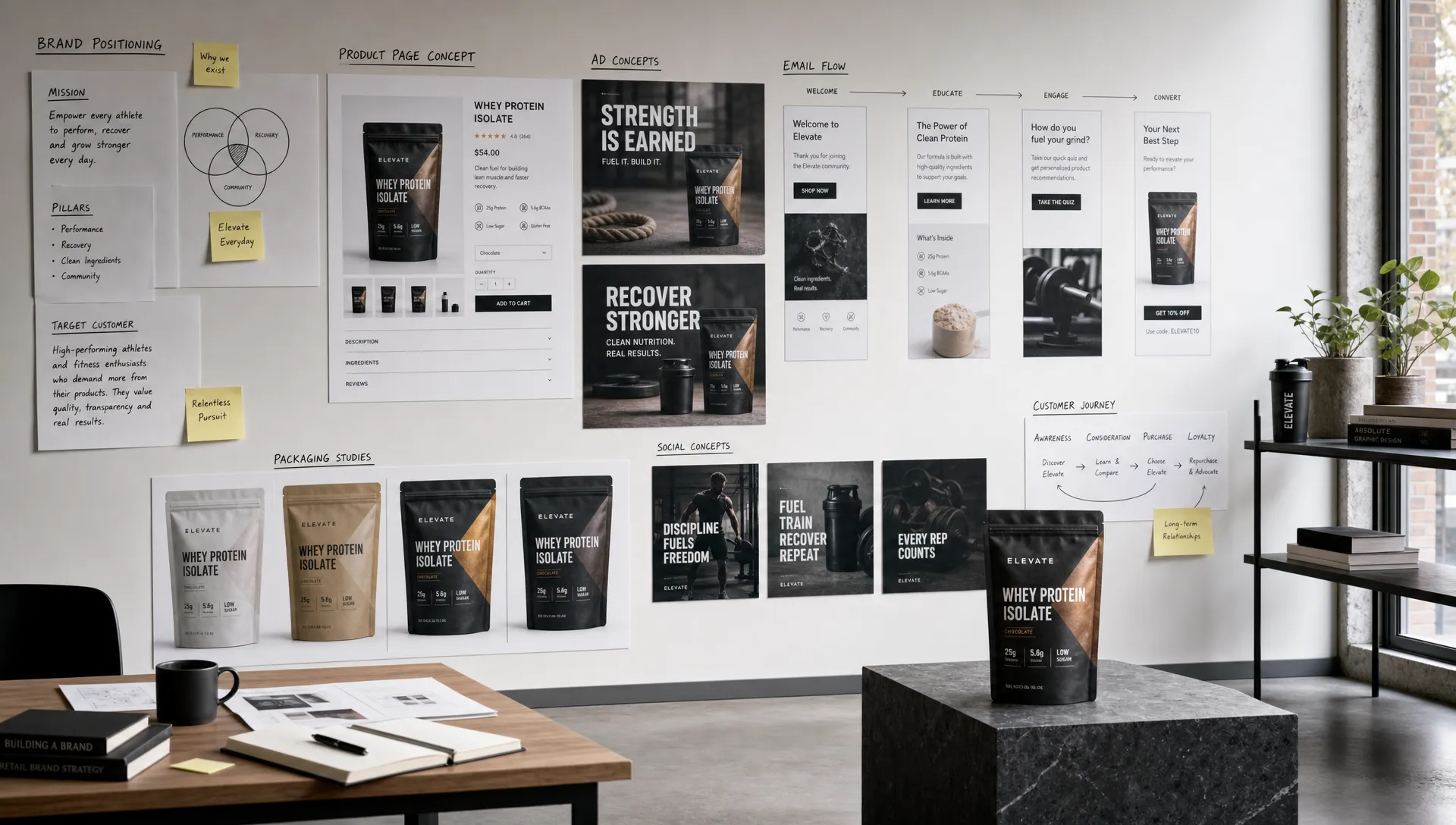
A brand book is useful, but ecommerce teams need assets they can deploy. The design system should translate into ad templates, landing page sections, PDP modules, email headers, product benefit graphics, creator briefing examples and packaging applications.
Each channel has a different job. A paid social ad needs to stop attention and communicate quickly. A product page needs to deepen belief. An email flow needs to reinforce timing, urgency and relevance. Packaging has to work both as a shelf asset and a post-purchase trust builder.
This is where many branding projects break down. The agency creates beautiful identity work, but the growth team has to figure out how to turn it into performance creative. A better process considers application from the start.
Trust signals built into the experience
Trust is not only a review widget or a guarantee badge. It is the cumulative effect of clear claims, consistent design, transparent information, proof and a professional buying experience.
This is true in ecommerce, but it also applies to service businesses where the buying decision carries more perceived risk. A company offering local property management in Jacksonville and St. Augustine, for example, needs to communicate reliability through tenant screening, rent collection, maintenance coordination and reporting. The same principle applies to an ecommerce wellness brand: design has to make the customer feel that the company can deliver on its promise.
For D2C and CPG brands, trust signals may include clinical references when appropriate, ingredient transparency, athlete or expert credibility, product demonstrations, usage instructions, shipping clarity, return policies and customer reviews. The design system should make those signals easy to find instead of treating them as afterthoughts.
How to evaluate a design agency branding process
A strong agency process should feel both creative and commercial. If the conversation is only about aesthetics, you may end up with attractive assets that do not help growth. If the conversation is only about metrics, you may end up with generic direct-response creative that weakens long-term brand equity.
Look for an agency that can connect both sides. Before signing, ask how the team moves from research to positioning, from positioning to identity and from identity to ecommerce execution. Ask what deliverables you will receive and how those deliverables will be used by your internal team, media buyers, developers and content creators.
Good signs include a discovery process that reviews customer insights, competitive patterns, current channel performance, creative fatigue and conversion barriers. The agency should also be able to explain why a design direction supports the business, not just why it looks good.
Weak signs include vague mood boards with no strategic rationale, a logo package with no channel applications, a brand voice section that sounds interchangeable with competitors or a final brand guide that nobody on your team knows how to use.
If you are weighing brand work as a long-term growth investment, OPTYO’s article on how a brand development agency builds long-term value explains how positioning, trust and creative consistency can strengthen a company beyond a single campaign.
What should be included beyond the logo
Every project scope is different, but an ecommerce brand looking for more than a cosmetic refresh should expect the work to cover both strategic and practical outputs.
A useful engagement may include customer and competitor research, positioning, messaging architecture, visual identity, creative direction, ecommerce design guidance, ad creative templates, email design direction, packaging application and a launch plan. The exact mix depends on the brand’s stage, category and internal capabilities.
The important part is that the deliverables connect. A positioning statement should influence homepage messaging. The photography direction should support the product’s use case. The ad templates should borrow from the same identity system as the product page. The email design should sound and look like the same brand a customer saw before purchase.
When these pieces connect, branding becomes more than a launch moment. It becomes an operating advantage.
How sports, fitness and wellness brands can stand out
Sports, fitness and wellness categories are crowded with similar claims: better performance, cleaner ingredients, faster recovery, more confidence, improved energy and healthier routines. Many brands also lean on the same visual cues, such as bold typography for performance, soft neutrals for wellness or scientific minimalism for supplements.
Standing out does not require being loud for the sake of it. It requires choosing a specific position and reinforcing it with discipline.
A running nutrition brand might own convenience for long-distance training. A gym accessories brand might own durability for serious lifters. A wellness beverage might own a calming daily ritual rather than broad “better for you” language. Each position leads to different design choices, copy patterns, photography and creative formats.
For entrepreneurs, this is the practical value of design agency branding. It helps you stop making creative decisions based on taste alone and start making them based on the customer, category and growth plan.
When a new logo is enough
Sometimes a logo refresh really is the right project. If your positioning is clear, your messaging works, your conversion rate is healthy and your existing identity only needs refinement, a focused logo and visual update can be efficient.
A logo project may also make sense when there are technical problems: the mark does not work at small sizes, the files are inconsistent, the identity fails on packaging or the brand needs a more professional look for retail conversations.
But if the business problem is weak differentiation, poor trust, inconsistent creative or rising acquisition costs, the logo is only one part of the fix. In that case, you need a broader system that connects brand strategy with execution.
Frequently Asked Questions
What is design agency branding? Design agency branding is the process of shaping how a company looks, sounds and presents itself across customer touchpoints. It can include logo design, visual identity, messaging, creative direction, packaging, ecommerce design guidance and brand systems for marketing channels.
Is branding more important than performance marketing? Branding and performance marketing do different jobs, but they work best together. Performance marketing drives traffic and tests demand, while branding makes the business easier to recognize, trust and remember. For ecommerce, the strongest growth systems usually connect both.
How do I know if my ecommerce brand needs more than a new logo? You likely need more than a logo if customers struggle to understand your value, your ads and website feel disconnected, your category looks crowded or your creative team lacks a consistent system. A logo refresh helps visuals, but it will not solve unclear positioning by itself.
What should I ask a design agency before hiring them? Ask how they approach customer research, competitive analysis, positioning, messaging and channel application. You should also ask what assets your team will receive and how those assets will support ads, product pages, email, packaging and future campaigns.
How long does ecommerce branding take to show results? Some improvements, such as clearer product pages or stronger ad creative, can influence performance soon after launch. Broader benefits like recognition, trust and repeat purchase behavior take longer because they build through consistent customer exposure over time.
Build a brand system that can support growth
A new logo can make your brand feel refreshed, but a complete brand system can make your business easier to understand, remember and buy from.
For ecommerce entrepreneurs in sports, fitness and wellness, the best branding work connects creative direction with growth strategy. It gives your team the language, visuals and channel-ready assets needed to compete with more clarity.
If your brand needs more than a cosmetic update, OPTYO helps performance-driven ecommerce brands align marketing, creative and growth execution so the brand works beyond the logo.