.png)



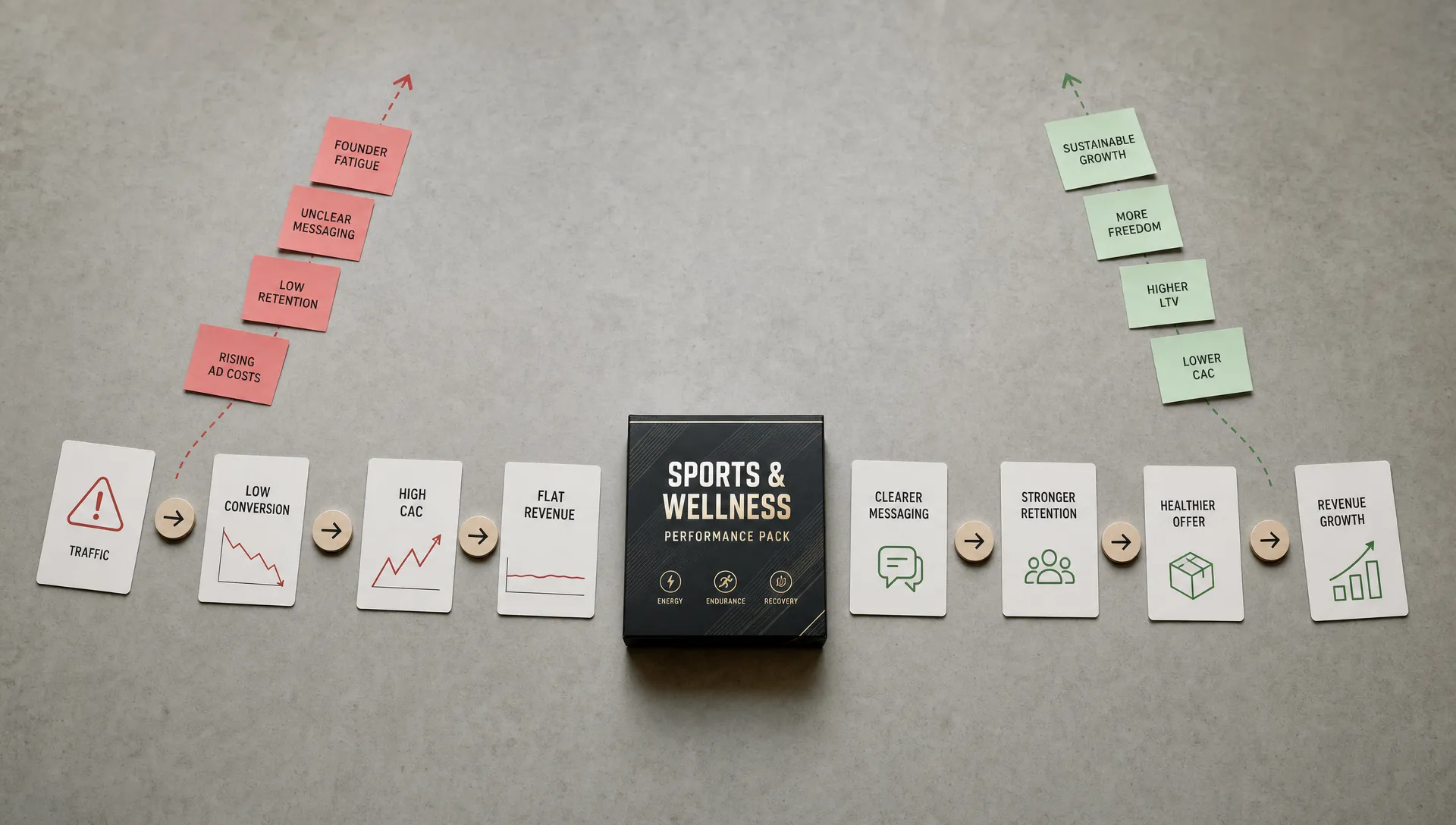
In ecommerce, the phrase “marketing agency” can sound narrower than the job actually requires. Many founders picture ad accounts, content calendars, email campaigns, and reporting dashboards. Those things matter, but they are only one part of the growth equation.
A marketing agency needs more than marketing because modern growth is not created by promotion alone. It is created by the connection between positioning, product, creative, conversion, retention, operations, and financial discipline. If those pieces are misaligned, more traffic simply exposes the cracks faster.
For sports, fitness, and wellness brands, this is especially true. Customers are not just buying a product. They are buying trust, identity, performance, routine, and sometimes a promise about how they will feel or improve. That raises the standard for what an agency must understand before it starts scaling campaigns.
The Old Definition of a Marketing Agency Is Too Small
The old agency model was built around execution. A brand would hire a team to run ads, design graphics, write copy, publish content, or manage a channel. The assumption was simple: if you get more visibility, you get more sales.
That assumption breaks down quickly in competitive D2C categories. Paid social costs fluctuate. Search results are crowded. Consumers compare products instantly. Reviews, shipping speed, landing page clarity, influencer credibility, and post-purchase experience all influence whether a campaign becomes profitable.
A campaign can be technically well-run and still fail if the offer is weak, the landing page is confusing, the brand story is generic, or the margins cannot support acquisition costs. That is why a growth-focused agency has to look beyond channel performance and ask a bigger question: what does the business need in order to scale profitably?
A modern marketing agency is closer to a growth partner than a media vendor. It still needs deep executional skill, but it also needs the judgment to diagnose bottlenecks outside the ad account.
Growth Is a System, Not a Campaign
When founders say “we need marketing,” they often mean “we need more revenue.” But revenue rarely comes from one isolated lever. It comes from a system where every part reinforces the next.
For example, a fitness equipment brand might have strong Meta ads but poor product page education. A supplement brand might have impressive email flows but weak trust signals for first-time buyers. An activewear startup might generate traffic through creator content but lose customers because sizing, returns, and product differentiation are unclear.
In each case, marketing is not the whole problem. The agency must understand the growth system.
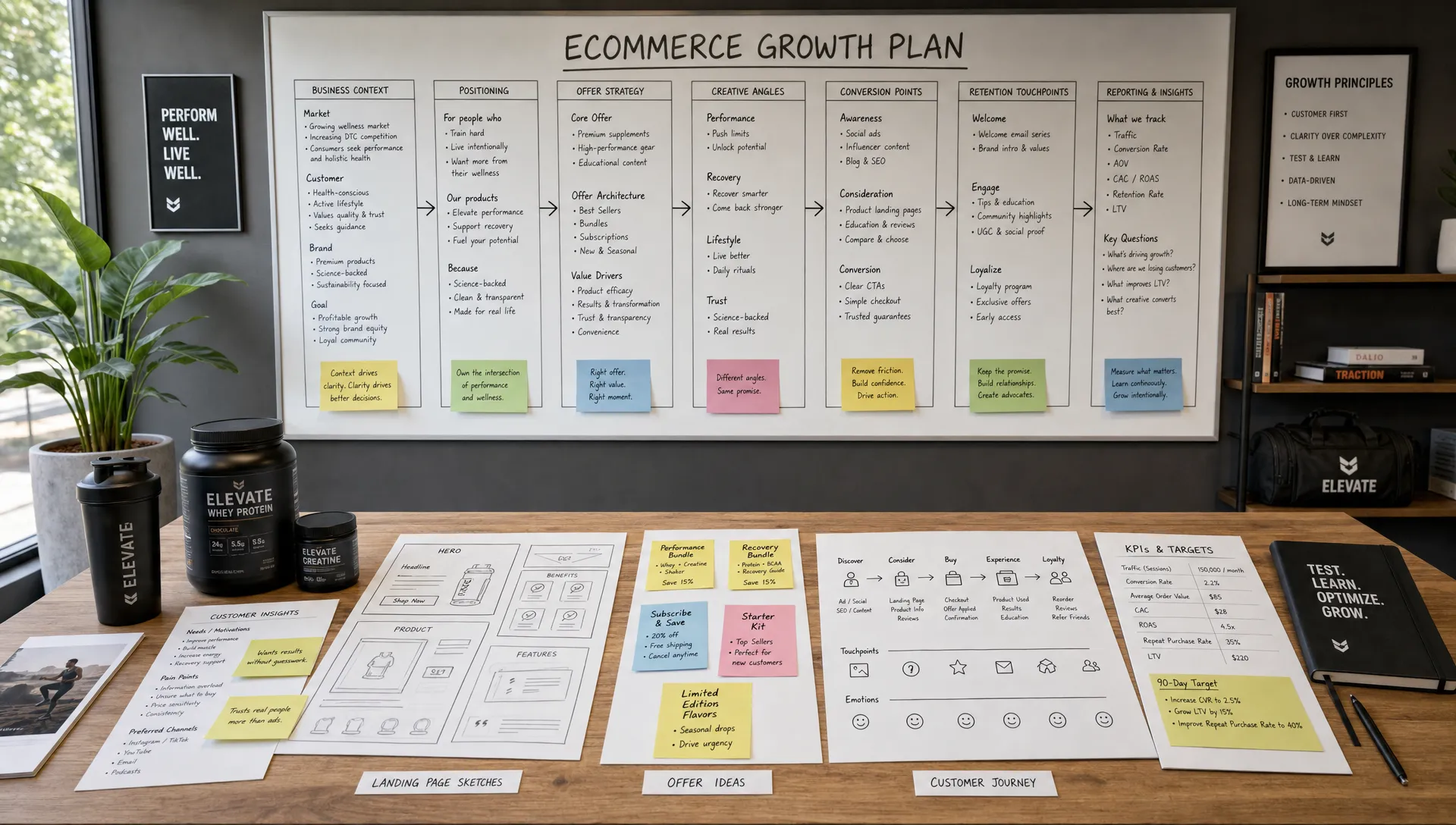
That system usually includes:
- Positioning that makes the brand immediately understandable and differentiated.
- Offer strategy that gives customers a clear reason to buy now.
- Creative testing that turns customer insight into messages, visuals, and angles.
- Conversion rate optimization that reduces friction from landing page to checkout.
- Retention strategy that increases repeat purchases and customer lifetime value.
- Measurement discipline that connects marketing activity to business outcomes.
This is why strategy and execution cannot be separated. As OPTYO has explained in its article on how a marketing strategy agency builds smarter growth, sustainable scale comes from connecting the moving parts, not treating each channel like a separate project.
Strategy Comes Before Spend
The fastest way to waste budget is to scale before the strategy is clear. More impressions will not fix vague messaging. Bigger budgets will not compensate for a product page that does not answer buyer objections. More emails will not create loyalty if the customer experience feels transactional.
Before launching or scaling campaigns, a serious agency should understand the brand’s fundamentals. Who is the highest-value customer? What problem are they solving? What alternatives are they comparing? What proof do they need before they buy? What makes the product meaningfully different?
This matters even more in sports, fitness, and wellness because buyers are often skeptical. They have seen exaggerated claims. They may have tried products that did not work. They may need education before they trust a new brand. Strategy helps turn that skepticism into a clear path to purchase.
Good strategy also prevents overdependence on a single channel. If a brand only grows when one ad format works, it is fragile. If the brand has a clear message, a differentiated offer, strong creative, useful content, and an owned audience, it becomes much harder to copy.
Performance Marketing Needs Business Context
Performance marketing is powerful because it creates feedback. You can test hooks, audiences, offers, landing pages, and creative formats. You can learn which messages drive attention and which ones drive purchases.
But performance data is only useful when interpreted in context. A low cost per click does not matter if the clicks never convert. A strong return on ad spend can still be misleading if refunds are high, contribution margin is thin, or customers never come back. A campaign that looks inefficient on day one may become valuable if it brings in loyal repeat buyers.
That is why a marketing agency needs to understand business economics. It should care about contribution margin, average order value, customer acquisition cost, payback period, lifetime value, inventory constraints, and retention potential.
This does not mean every agency has to act as a CFO. It does mean that marketing decisions should not be made in a vacuum. When the agency understands how money flows through the business, it can make better recommendations about what to scale, what to pause, and what to improve before increasing spend.
Creative Is Not Decoration, It Is a Growth Lever
Creative is often treated like a visual deliverable. In reality, creative is one of the strongest sources of learning in modern ecommerce.
The right creative tests reveal what customers care about. Do they respond to performance benefits, lifestyle identity, scientific proof, founder story, social proof, or convenience? Do they need a demonstration? Do they want comparison content? Are they motivated by transformation, community, status, or simplicity?
For sports and wellness brands, this is critical. A running accessory, protein product, recovery tool, or training app cannot rely only on polished product shots. Buyers often need to see the product in context. They need to understand how it fits into their routine and why it is better than doing nothing or choosing a competitor.
Strong agencies build creative systems, not just one-off assets. They develop angles, test concepts, analyze results, and feed insights back into the next round. Over time, this creates a creative learning loop that improves both marketing and brand positioning.
Conversion Problems Are Marketing Problems
Some founders separate traffic and website performance into different buckets. Ads are “marketing,” while the site is “web.” Customers do not think that way. Their experience is continuous.
If an ad promises better recovery, the landing page must make that benefit believable. If a creator video introduces a new supplement, the product page must answer ingredient, usage, safety, and comparison questions. If an email promotes a bundle, the checkout process must make the savings obvious.
This is why conversion rate optimization belongs inside the growth conversation. A marketing agency that ignores conversion is only managing the top of the funnel. It may drive attention, but it cannot fully control whether that attention turns into revenue.
Many D2C brands do not need more traffic first. They need help identifying the friction that prevents existing traffic from buying. That can include unclear offers, weak product education, slow pages, poor mobile layout, missing trust signals, confusing subscriptions, or checkout obstacles. OPTYO covers this broader view in its breakdown of what a direct to consumer marketing agency should fix.

Retention Is Where Scale Gets Stronger
Acquisition gets a lot of attention because it is visible and measurable. But retention often determines whether growth is sustainable.
A brand that constantly pays to acquire one-time buyers is under pressure forever. A brand that increases repeat purchases, builds community, improves customer experience, and creates useful lifecycle communication has more room to scale. It can afford to acquire customers more competitively because each customer is worth more over time.
For fitness and wellness brands, retention can come from habit formation. Customers may need reminders, education, replenishment prompts, training tips, progress tracking, or community touchpoints. For sports brands, retention may be tied to seasonality, product drops, team identity, events, or performance goals.
A marketing agency needs to understand this post-purchase journey. Email marketing, SMS, content, loyalty initiatives, and customer education are not afterthoughts. They are part of the growth engine.
The best agencies think beyond “How do we get the sale?” They also ask, “What happens after the sale that makes the next one more likely?”
Partnerships and Distribution Matter Too
Paid media is not the only way to grow. Some brands need wholesale relationships, athlete partnerships, creator collaborations, affiliate programs, sponsorships, retail strategy, events, or community activations.
This does not mean every brand should do everything. It means an agency should be able to recognize when distribution is the constraint. A niche fitness brand might grow faster through credible coaches than through generic ads. A sports nutrition brand might need ambassadors who can explain the product authentically. A founder-led wellness company might benefit from content partnerships that build trust before the first purchase.
Creator and sponsorship ecosystems can also reveal useful market signals. For example, brands studying YouTube partnerships can use tools that help creators find sponsorships to understand which companies are actively investing in creator-led acquisition and what kinds of channels attract sponsors.
A marketing agency that understands partnerships can help brands think beyond media buying. It can evaluate where credibility already exists in the market and how the brand can participate in those communities without feeling forced.
Reporting Should Answer Business Questions
A reporting dashboard is not automatically useful. Metrics only matter when they help the team make better decisions.
A shallow report says what happened. A valuable report explains what it means and what to do next. If acquisition costs increased, was it due to creative fatigue, audience saturation, a weaker offer, seasonal demand, landing page issues, or a tracking change? If email revenue increased, did it come from better segmentation, heavier discounting, a product launch, or a larger list?
The agency should be able to translate numbers into priorities. That requires a mix of analytical skill and business judgment.
Good reporting connects marketing metrics to questions like these:
- Which customer segments are most profitable?
- Which products create the best first purchase?
- Which creative angles deserve more investment?
- Which landing pages are limiting conversion?
- Which channels are building durable demand, not just short-term sales?
When reporting is tied to decisions, it becomes a growth tool. When it is only a performance recap, it becomes a ritual.
What Founders Should Look for in a Marketing Agency
If you are an ecommerce founder evaluating an agency, do not only ask what channels they manage. Ask how they think.
A capable agency should be able to explain how it diagnoses growth problems before prescribing tactics. It should ask about margins, inventory, customer behavior, creative history, positioning, offer structure, and retention. It should be comfortable saying when the issue is not simply “more ads.”
Look for a partner that can connect performance marketing, creative, ecommerce development, conversion rate optimization, email marketing, SEO, KPI reporting, and brand strategy into one coherent plan. You do not need a bloated team, but you do need aligned thinking.
Also pay attention to whether the agency understands your category. Sports, fitness, and wellness customers often have different buying triggers than general consumer categories. Proof, credibility, aspiration, routine, and community all influence conversion. An agency that understands those dynamics can create sharper strategy and better execution.
Most importantly, choose a partner that is willing to challenge assumptions. The right agency should not blindly spend your budget. It should help you identify the highest-leverage path to stronger growth.
The Future Agency Is Part Marketer, Part Operator
In 2026, ecommerce growth is too complex for a purely channel-based approach. Platforms change. Creative fatigue happens faster. AI has increased content volume, which makes differentiation more important. Consumers expect better experiences, clearer proof, and more authentic brand communication.
That reality raises the bar for agencies. A marketing agency needs more than marketing because the founder needs more than activity. They need clarity, prioritization, execution, and learning. They need a partner that can see the whole business and understand how marketing decisions affect growth, profitability, and brand equity.
The agency of the future is not just buying attention. It is helping brands turn attention into trust, trust into purchase, and purchase into long-term value.
Frequently Asked Questions
Why does a marketing agency need more than marketing skills? Because ecommerce growth depends on more than promotion. Strategy, positioning, creative, conversion, retention, business economics, and customer experience all affect whether marketing activity becomes profitable revenue.
What should an ecommerce founder expect from a modern marketing agency? A founder should expect strategic diagnosis, clear prioritization, channel execution, creative testing, conversion improvements, retention thinking, and reporting that connects performance to business decisions.
Is paid advertising still important for D2C brands? Yes, paid advertising remains important, but it works best when supported by strong positioning, compelling creative, effective landing pages, clear offers, and a retention system that increases customer lifetime value.
How can a sports or wellness brand choose the right agency? Look for an agency that understands category-specific buying behavior, including trust, proof, identity, routine, and community. The right partner should be able to connect performance marketing with brand strategy and ecommerce fundamentals.
Build a Growth System, Not Just a Campaign
If your brand is ready to scale, the goal is not simply to “do more marketing.” The goal is to build a system where strategy, creative, media, conversion, retention, and reporting all work together.
OPTYO helps sports, fitness, and wellness brands approach growth with that broader lens, combining performance marketing with brand acceleration, creative, ecommerce, CRO, email, SEO, KPI reporting, and growth consulting. If you are looking for a partner that understands both marketing execution and the business context behind it, OPTYO can help you find the next best move.