.png)



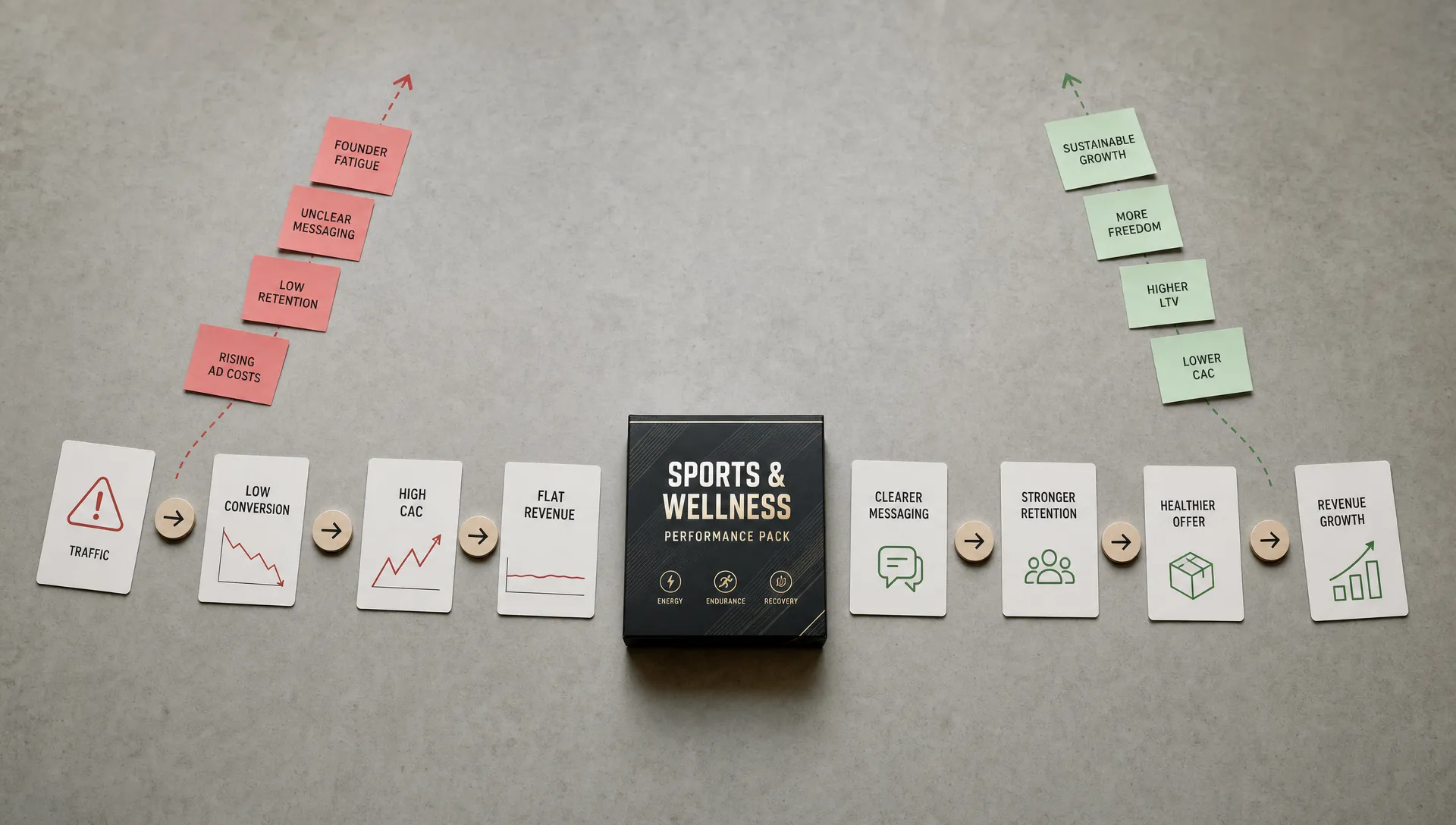
Search shorthand like “email mktg” makes the channel sound simple: collect emails, send offers, make sales. For a fast-growing ecommerce brand, the reality is more strategic. Email is where your acquisition spend, brand story, customer data, retention economics, and product education all meet.
That matters because growth exposes weak systems. A small store can get by with occasional campaigns and a basic welcome email. A scaling D2C or CPG brand cannot. As order volume rises, paid media gets more expensive, inventory decisions become more complex, and customers expect more relevant communication. Email marketing becomes one of the most controllable ways to increase repeat revenue without depending entirely on new customer acquisition.
The goal is not to send more emails. The goal is to build an email system that earns attention, improves conversion, and supports long-term customer value.
Why email matters more as ecommerce brands scale
Fast-growing ecommerce brands often feel acquisition pressure first. Meta, TikTok, Google, creators, affiliates, and retail partnerships can all drive demand, but those channels usually get more expensive as a brand scales. Email helps turn that demand into owned audience value.
When someone joins your list, abandons a cart, buys a product, or reviews an order, they are giving you a signal. Email lets you respond to that signal with timing, context, and relevance. That is why email is not just a retention channel. It is a profit lever across the customer journey.
For sports, fitness, and wellness brands, email can be especially powerful because customers often need education before and after the purchase. They may want to understand sizing, ingredients, training use cases, recovery routines, subscription timing, product bundles, or performance benefits. Email gives you space to explain what a product does, who it is for, and how to get the best result from it.
Email also works best when it is connected to the rest of your marketing. If your paid social creative introduces a product benefit, your landing page supports the claim, and your email flow reinforces the same message, customers experience a coherent brand. OPTYO’s guide on how email and marketing work better together goes deeper on why email should not be treated as a disconnected channel.
Start with the right email marketing goals
Many brands start by asking, “How much revenue should email generate?” That is useful, but incomplete. Revenue attribution can be inflated by platform settings, discount-heavy campaigns, and customers who would have purchased anyway.
A stronger email program balances revenue with customer behavior and list health. The most important goals usually include:
- Growing a qualified list, not just a large list
- Converting first-time visitors into first-time buyers
- Increasing repeat purchase rate and customer lifetime value
- Improving purchase confidence through education and social proof
- Reducing dependence on blanket discounts
- Maintaining strong deliverability and engagement
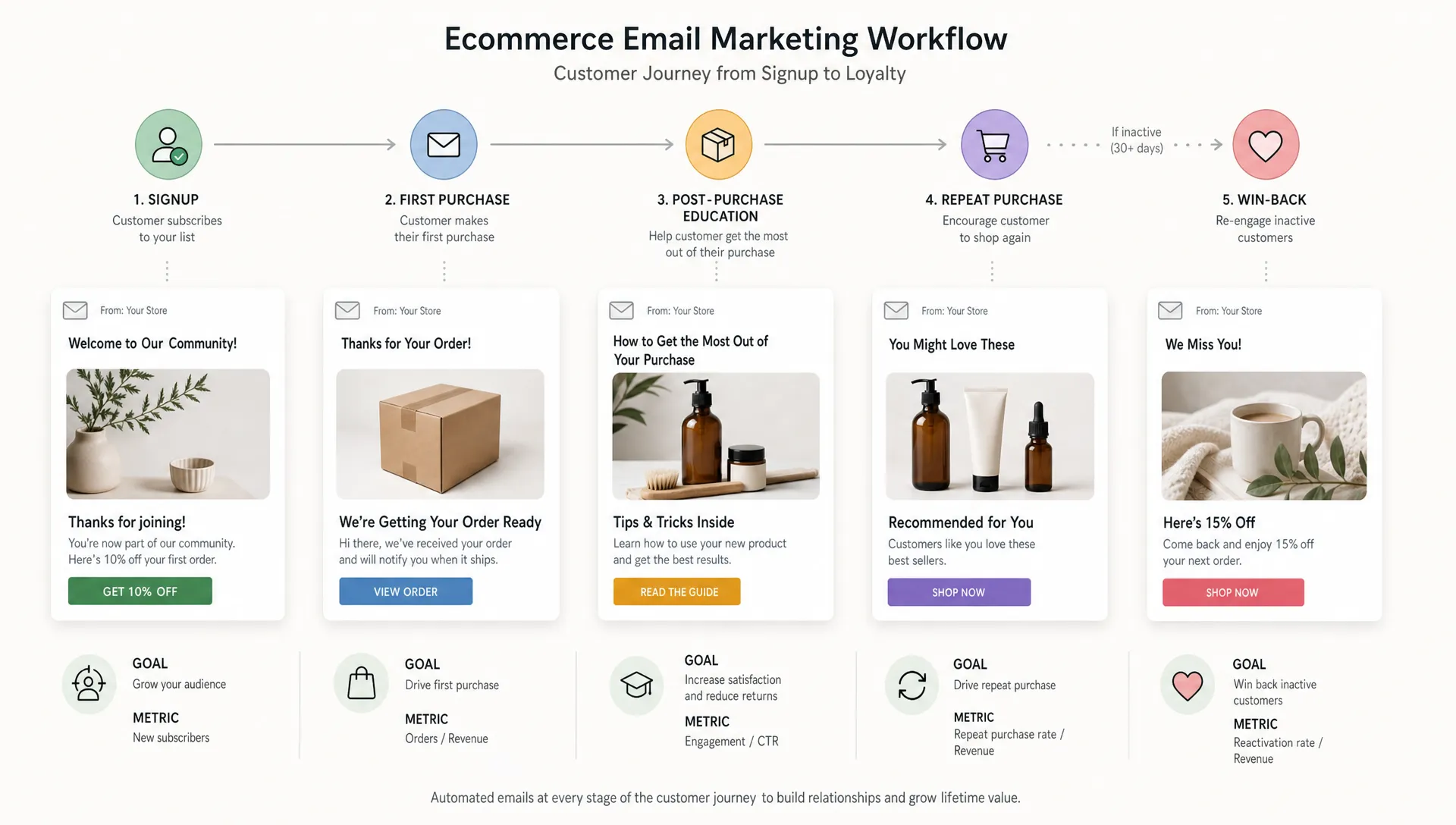
For a fast-growing ecommerce brand, email should become a lifecycle engine. It should welcome new subscribers, recover high-intent shoppers, support customers after the first order, encourage repeat purchases, and bring inactive customers back when the timing is right.
If your team only tracks campaign revenue, you may miss whether the program is actually strengthening the business. A discount campaign can create a temporary spike while training customers to wait for promotions. A well-built post-purchase flow may generate less immediate revenue but improve product satisfaction, reviews, referrals, and repeat orders.
Build the foundation before sending more
Before scaling campaigns, make sure the fundamentals are solid. More sending volume will not fix poor data, weak consent, or deliverability issues. It usually makes those problems worse.
Permission and list capture
The best email programs begin with clear permission. Your forms should explain what subscribers will receive, whether that is product drops, training tips, exclusive offers, nutrition education, community stories, or early access.
Avoid vague popups that promise “updates” without giving customers a reason to care. Strong list capture connects directly to the brand’s value proposition. A running apparel brand might offer a fit guide. A supplement brand might offer a routine builder. A fitness equipment brand might offer training plans or setup tips.
The offer matters, but quality matters more. A massive list of low-intent discount seekers can hurt engagement. A smaller list of high-intent customers is often more profitable.
First-party data
Email gets more powerful when you know something useful about the customer. That does not mean collecting unnecessary personal information. It means capturing signals that help you send more relevant messages.
Examples include product interest, training goal, preferred category, purchase history, subscription status, replenishment timing, geography, and engagement level. A customer shopping for recovery tools should not receive the exact same messaging as someone browsing high-intensity training gear.
Use data to improve customer experience, not to make emails feel invasive. Relevance should feel helpful.
Deliverability
Deliverability is the ability to land in the inbox consistently. It depends on technical setup, sender reputation, engagement, spam complaints, bounce rates, authentication, and list quality.
Fast-growing brands can run into deliverability problems when they import old lists, over-send to disengaged contacts, use aggressive subject lines, or rely on too many promotional blasts. Once inbox providers see poor engagement, recovery can take time.
Healthy deliverability habits include authenticating your sending domain, cleaning inactive contacts, segmenting campaigns by engagement, avoiding misleading subject lines, and monitoring spam complaints. It is less glamorous than creative, but it protects the entire email revenue engine.
Measurement
Attribution settings vary by platform, so do not rely on one revenue number alone. Track a mix of performance indicators: open rate trends, click rate, conversion rate, unsubscribe rate, spam complaint rate, revenue per recipient, repeat purchase rate, and list growth quality.
For lifecycle flows, measure performance by purpose. A welcome flow should drive first purchases and preference collection. A post-purchase flow should support satisfaction and repeat behavior. A win-back flow should reactivate customers without damaging margin.
The core flows every fast-growing store needs
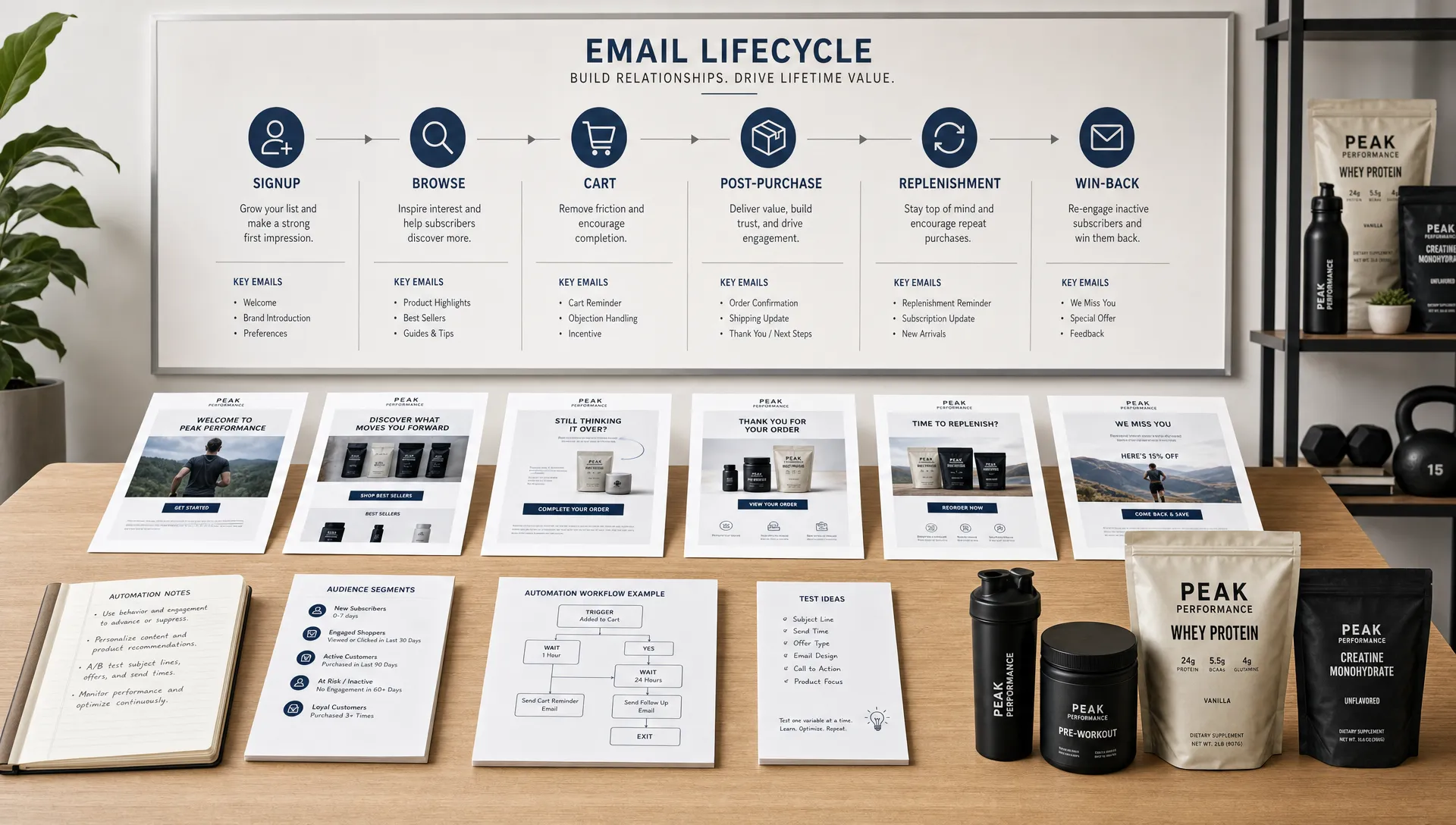
Automated flows are the backbone of ecommerce email marketing. Campaigns are scheduled sends, while flows trigger based on customer behavior. For a scaling brand, flows create consistent revenue and customer support even when your team is focused on product launches, paid media, or operations.
The essential flows include:
- Welcome flow: Introduces the brand, sets expectations, explains the product value, shares social proof, and guides subscribers toward a first purchase.
- Browse abandonment flow: Follows up when someone views a product or collection but does not add to cart. It should answer questions, reduce hesitation, and highlight benefits.
- Cart or checkout abandonment flow: Targets high-intent shoppers who started the purchase process. Use urgency carefully, and focus on trust builders like shipping clarity, reviews, guarantees, and product fit.
- Post-purchase flow: Helps customers use the product successfully. This can include setup instructions, care guidance, routine tips, community content, or review requests.
- Cross-sell and replenishment flow: Recommends the next best product based on what someone bought, when they bought it, and what they are likely to need next.
- Win-back flow: Re-engages customers who have not purchased in a while. The message should reflect purchase cycle, product category, and margin, not just a generic discount.
The strongest flows feel like a thoughtful customer experience, not a sequence of sales pushes. If someone buys protein powder, they may need usage tips, flavor ideas, subscription reminders, and complementary products. If someone buys training shorts, they may need fit reassurance, care instructions, seasonal gear recommendations, and social proof from athletes or customers.
Campaigns: what to send beyond discounts
Campaigns are still important, but many ecommerce brands rely on them too heavily. If every campaign is a sale, customers learn that your brand is only worth opening when there is a discount.
A healthy campaign calendar mixes commercial moments with brand-building and education. Product launches, seasonal promotions, limited bundles, and back-in-stock announcements can drive revenue. But they should sit alongside useful content: training guides, ingredient education, athlete stories, customer transformations, product comparisons, founder notes, routines, and community highlights.
For sports, fitness, and wellness brands, this is where email can create differentiation. Customers are not only buying a product. They are often buying into a goal: running faster, recovering better, feeling healthier, training more consistently, or building confidence. Your campaigns should speak to that goal.
A practical cadence depends on your list size, engagement, product category, and content capacity. Some brands can send multiple times per week. Others should send less often but with stronger segmentation. The key is to watch engagement by segment. Your most engaged customers may welcome frequent updates, while inactive subscribers should receive fewer and more intentional messages.
Segmentation basics for better relevance
Segmentation means dividing your audience into groups based on behavior, attributes, or intent. For fast-growing ecommerce brands, segmentation prevents your list from becoming a blunt instrument.
Start simple. You do not need dozens of segments on day one. The most useful early segments often include new subscribers, non-buyers, first-time buyers, repeat buyers, VIP customers, product category interest, recent browsers, recent cart abandoners, and disengaged subscribers.
Once the basics are in place, segmentation can become more strategic. A wellness brand might segment by goal, such as sleep, energy, recovery, or digestion. A fitness apparel brand might segment by activity, such as running, training, yoga, or outdoor. A sports equipment brand might segment by skill level, sport, or product ownership.
The purpose is not complexity. The purpose is relevance. If segmentation does not change the message, offer, timing, or product recommendation, it may not be useful yet.
Creative and copy basics that improve conversion
Email creative should make buying easier. That means clear hierarchy, strong product visuals, concise copy, and obvious calls to action. Customers should understand the message quickly, especially on mobile.
For ecommerce brands, every email needs one primary job. A launch email should launch. A review request should request a review. A replenishment email should make reordering simple. When an email tries to do too many things, performance usually suffers.
Strong ecommerce email copy often includes:
- A subject line that earns attention without misleading the reader
- A preview text line that adds context instead of repeating the subject
- A clear opening message that explains why the email matters now
- Product benefits tied to customer outcomes
- Specific proof, such as reviews, use cases, press mentions, or customer results
- A call to action that matches the intent of the email
Creative should also match the buying stage. Early-stage subscribers may need education and trust. Cart abandoners need friction removed. Recent buyers need confidence and guidance. VIP customers may respond to exclusivity, early access, or community-driven moments.
Testing without slowing the team down
Testing is important, but it should not become random. Changing subject lines every week without learning anything will not build a better email program.
Fast-growing brands should test the variables that can change customer behavior: offer structure, product positioning, creative angle, audience segment, send time, landing page destination, and flow timing. Subject line testing is useful, but it is rarely the whole story.
A good test starts with a hypothesis. For example, “Customers buying recovery products may respond better to educational post-purchase content than immediate cross-sells.” That hypothesis can lead to a flow test where one version sends usage guidance before product recommendations, while another sends a cross-sell sooner.
Document the results. Over time, your email program should develop institutional knowledge about what customers care about, which objections slow purchases, and which messages increase repeat buying.
Choosing the right email tools
Your platform should fit your stage, ecommerce stack, data needs, and team capacity. Many fast-growing brands need reliable ecommerce integrations, automation, segmentation, reporting, template flexibility, and deliverability support.
Do not choose a tool only because it is popular. Choose it because your team can use it well. A powerful platform with messy implementation will underperform a simpler platform with clean data, strong flows, and disciplined campaign planning.
If you are comparing options, OPTYO’s breakdown of the best marketing email platforms for ecommerce brands can help you evaluate tools through the lens of growth, not just features.
Compliance and customer trust
Email marketing touches privacy, consent, consumer protection, and sometimes sensitive customer data. This is especially important for wellness, fitness, and health-adjacent brands that may collect preference data, goal data, or product usage information.
At a minimum, brands should understand the rules that apply to their markets, maintain clear opt-in practices, include unsubscribe options, respect customer preferences, and avoid deceptive claims. If you operate internationally, sell into multiple jurisdictions, or collect data beyond basic contact information, involve qualified legal guidance. Firms with experience in data privacy and compliance, such as Henlin Gibson Henlin, can help businesses think through risk in the markets where they operate.
Compliance is not just about avoiding penalties. It is part of brand trust. Customers are more likely to share data when they believe a brand will use it responsibly.
When to bring in outside email marketing support
At some point, a fast-growing brand may outgrow its internal email setup. That does not always mean hiring an agency immediately, but it does mean asking whether the channel has enough strategic ownership.
Warning signs include stagnant repeat revenue, weak flows, inconsistent campaign planning, poor deliverability, unreliable reporting, low creative output, or a team that only has time to send last-minute promotions. Email performance often improves when strategy, copy, design, segmentation, testing, and analytics work together.
If you are evaluating partners, it helps to know what strong support should actually include. OPTYO’s guide on what to look for in an email marketing agency for ecommerce explains the strategic, creative, and technical capabilities that matter most.
A simple email marketing roadmap for the next 90 days
If your brand is growing quickly and email feels underdeveloped, do not try to fix everything at once. Build the system in phases.
In the first 30 days, audit your current list health, forms, consent practices, deliverability, attribution settings, and core flows. Identify quick wins, such as missing abandoned checkout emails, weak welcome content, or campaigns going to the entire list without segmentation.
In days 31 to 60, improve the flows with the highest revenue and customer experience impact. For most brands, that means welcome, abandoned checkout, post-purchase, and replenishment or cross-sell. Update creative, clarify messaging, and align offers with margin.
In days 61 to 90, build a more intentional campaign calendar and testing process. Segment the audience, diversify content beyond discounts, and document what you learn. By the end of the 90 days, email should feel less reactive and more like a structured growth channel.
The basics are not basic because they are easy. They are basic because everything else depends on them.
Frequently Asked Questions
What does email mktg mean? Email mktg is shorthand for email marketing. For ecommerce brands, it includes list growth, automated flows, campaigns, segmentation, creative, deliverability, compliance, and performance measurement.
How often should an ecommerce brand send emails? It depends on list engagement, product category, content quality, and customer expectations. Many growing brands send one to three campaigns per week, plus automated flows, but the right cadence should be based on engagement and revenue per recipient, not guesswork.
What email flows should a fast-growing ecommerce brand build first? Start with a welcome flow, abandoned checkout flow, post-purchase flow, and win-back or replenishment flow. These cover the most important lifecycle moments: signup, purchase intent, customer success, and repeat revenue.
Should ecommerce emails always include discounts? No. Discounts can work, but overusing them can reduce margin and train customers to wait. Mix promotions with education, social proof, product launches, founder content, customer stories, and helpful usage guidance.
How do I know if email marketing is working? Look beyond attributed revenue. Track list growth quality, revenue per recipient, click rate, conversion rate, unsubscribe rate, spam complaints, repeat purchase rate, and flow performance by customer journey stage.
Build an email program that can scale with your brand
Email marketing is one of the highest-leverage channels for fast-growing ecommerce brands, but only when it is built with strategy. The brands that win are not simply sending more. They are using customer data, lifecycle timing, creative, and testing to make every message more relevant.
OPTYO helps sports, fitness, and wellness ecommerce brands connect performance marketing, creative, CRO, email marketing, SEO, and growth consulting into a stronger growth system. If your email program needs to become more profitable, more strategic, and more aligned with the rest of your marketing, connect with OPTYO to start the conversation.