.png)


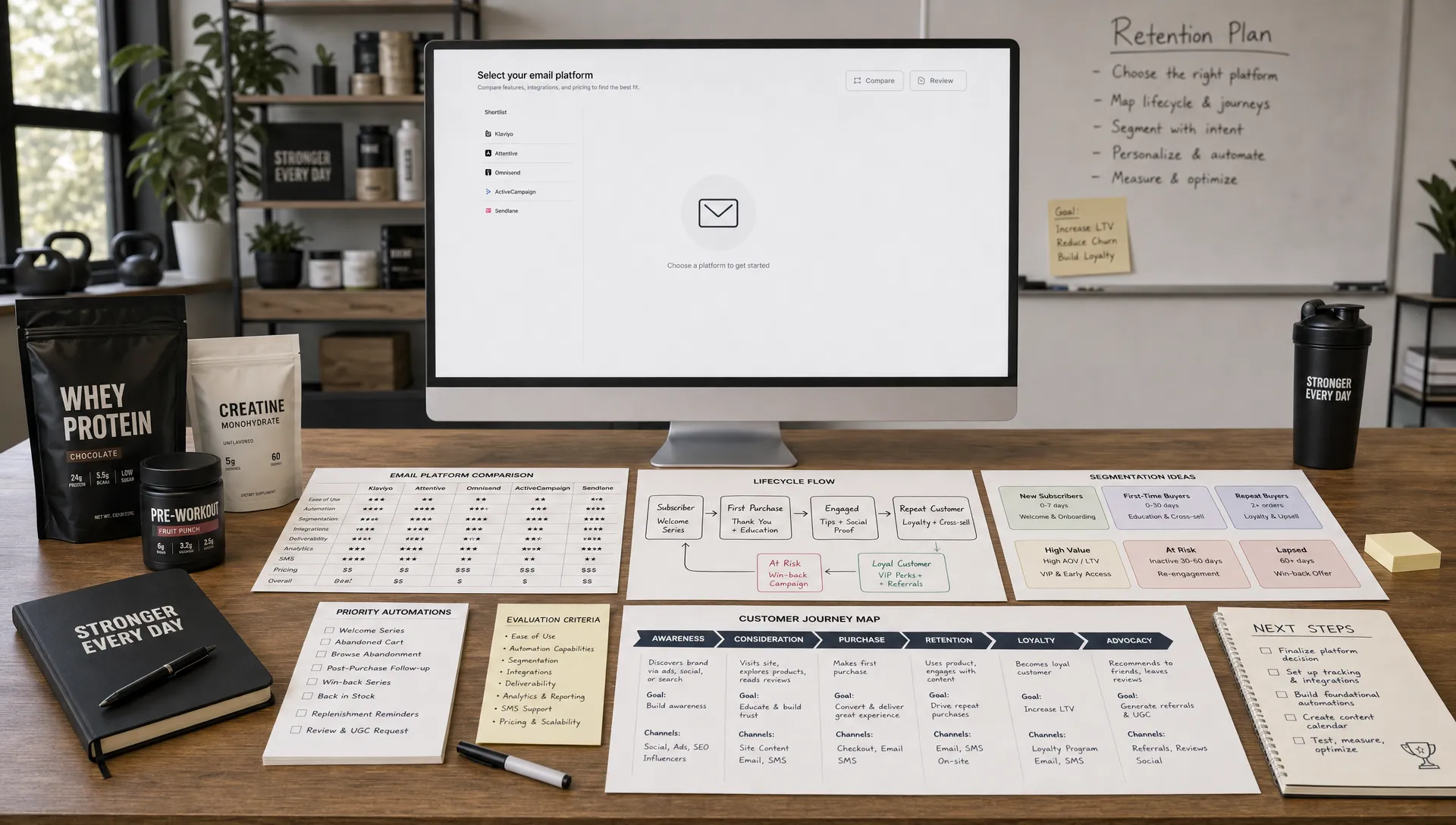

Email should not be treated as a cheap channel you bolt onto a paid media strategy. For ecommerce brands, it is one of the few channels where you can build a first-party audience, guide customers through education, and grow repeat revenue without paying for every impression.
The hard part is choosing the right platform. Most marketing email platforms promise automation, segmentation, and personalization. In practice, the best fit depends on your store platform, product catalog, customer journey, technical resources, and how aggressively you plan to scale.
For sports, fitness, and wellness brands, the decision matters even more. Your customers may need product education, replenishment reminders, challenge-based community content, subscription flows, drop announcements, and post-purchase coaching. A generic batch-and-blast tool will not carry that workload for long.
Below is a practical breakdown of the best marketing email platforms for ecommerce brands, what each is strongest at, and how to choose based on your growth stage.
What ecommerce brands should look for in a marketing email platform
Before comparing tools, define what the platform needs to do for your business model. A supplement brand with subscription refills has different needs than a performance apparel brand launching seasonal drops or a fitness equipment brand with a longer consideration cycle.
The strongest ecommerce email platforms usually do seven things well:
- Connect cleanly with your ecommerce store, product catalog, customer data, and order history
- Segment customers by behavior, purchase history, lifetime value, engagement, and predicted intent
- Trigger automated flows for welcome, browse abandonment, cart abandonment, post-purchase, replenishment, winback, loyalty, and VIP journeys
- Support strong creative testing across subject lines, offers, product positioning, and content formats
- Provide deliverability controls that help protect sender reputation and inbox placement
- Report revenue clearly without hiding margin, discounting, or attribution limitations
- Scale into SMS, loyalty, referrals, direct mail, or CRM integrations when the brand is ready
The best platform is not always the one with the longest feature list. It is the one your team can actually use to improve customer lifetime value, retention, and profitability.
Best marketing email platforms for ecommerce brands
1. Klaviyo, best overall for scaling D2C ecommerce
Klaviyo is often the default choice for growing direct-to-consumer brands, especially those using Shopify, Shopify Plus, BigCommerce, WooCommerce, or other ecommerce-first stacks. Its biggest advantage is how deeply it connects customer behavior, product data, and campaign performance.
For ecommerce brands, Klaviyo shines in segmentation and lifecycle automation. You can build flows based on product viewed, product purchased, category affinity, predicted next order date, average order value, discount behavior, and engagement level. That makes it a strong fit for brands that want to move beyond basic welcome and abandoned cart flows.
Klaviyo is especially useful for sports and wellness brands that need educational sequences. A running gear brand can separate trail runners from road runners. A supplement brand can trigger replenishment based on average consumption timing. A fitness apparel brand can build VIP segments around repeat buyers and early access launches.
The tradeoff is that Klaviyo can become expensive as your list and send volume grow. It also rewards strategy. If you simply migrate old campaigns into Klaviyo without improving segmentation, offers, creative, and deliverability, you will not get the full value.
Best for brands that want a serious ecommerce lifecycle engine and have enough customer data to use it well.
2. Shopify Email, best for simple Shopify stores and early-stage brands
Shopify Email is a practical option for founders who need to send clean campaigns without adding another complex tool to the stack. If your store is early, your list is small, and your main needs are basic product announcements, seasonal promotions, and simple automation, it can be enough.
The biggest benefit is simplicity. Because it lives inside Shopify, you can access products, discounts, and customer groups without a heavy integration process. For a founder still validating product-market fit, this can be more valuable than having advanced features they will not use.
However, Shopify Email is not built to be the deepest lifecycle marketing platform. As your segmentation, testing, and automation needs expand, you may outgrow it. Brands that rely heavily on repeat purchase, subscriptions, or personalized product education often graduate to a more robust platform.
Best for early Shopify brands that need low-friction email execution before investing in a dedicated retention stack.
3. Omnisend, best value for ecommerce email and SMS
Omnisend is a strong option for ecommerce brands that want email and SMS in one platform without immediately jumping into a more expensive enterprise setup. It supports common ecommerce automations, segmentation, forms, campaigns, and multichannel messaging.
For lean teams, Omnisend can be appealing because it balances capability and usability. It is particularly useful for brands that want to test SMS alongside email, build basic lifecycle flows, and manage promotional campaigns from one interface.
Omnisend can work well for food, wellness, apparel, and fitness accessory brands with relatively straightforward purchase paths. It is not always the first choice for brands that need highly advanced data modeling, enterprise-level experimentation, or complex global operations, but it can be a very capable growth-stage tool.
Best for ecommerce teams that want a balanced email and SMS platform with a manageable learning curve.
4. Attentive, best for SMS-first retention with email support
Attentive is best known for SMS marketing, but it has expanded into email and broader customer messaging. For brands where mobile engagement is central, it can be a strong contender.
This is especially relevant for ecommerce brands built around drops, limited inventory, event-based promotions, and community energy. Think workout challenges, pre-workout restocks, exclusive capsule collections, athlete collaborations, or event weekend offers. SMS can create urgency when used responsibly.
The caution is that SMS costs more per message than email and customers are less forgiving of irrelevant texts. Attentive works best when brands have a strong consent strategy, clear segmentation, and a disciplined promotional calendar. If every message is a discount blast, performance will decay.
Best for brands that see mobile messaging as a major revenue channel and have the creative discipline to avoid overusing it.
5. Mailchimp, best for beginner-friendly campaigns and content-led brands
Mailchimp remains a familiar choice for small businesses because it is easy to use, widely recognized, and flexible for newsletters, basic automations, landing pages, and audience management. For ecommerce brands that are still developing their voice, it can be a useful starting point.
Mailchimp is especially relevant for founder-led brands that blend commerce and content. A wellness coach selling products, a local fitness brand expanding online, or a small apparel brand with a strong community newsletter may appreciate its simplicity.
The limitation is ecommerce depth. Mailchimp can support ecommerce use cases, but many scaling D2C brands eventually want more advanced purchase-based segmentation, product recommendations, and lifecycle reporting. At that point, a more ecommerce-native platform may be a better fit.
Best for small ecommerce brands that prioritize ease of use, newsletters, and basic automation over advanced retention strategy.
6. Drip, best for lean teams that want segmentation without bloat
Drip is a solid option for ecommerce brands that want stronger segmentation and automation than entry-level tools, but do not want an overly complex enterprise platform. It is designed around customer journeys, behavior-based triggers, and revenue-focused automation.
For lean teams, Drip can be attractive because it offers useful ecommerce logic without requiring a large marketing operations team. You can build behavior-based workflows, personalize campaigns, and create segments based on purchase and engagement data.
Drip may be a good fit for niche sports and wellness brands with clear audience segments. For example, a brand selling training accessories could separate customers by sport, experience level, product category, and purchase frequency.
Best for brands that want a capable lifecycle platform with a smaller-team feel.
7. HubSpot, best for ecommerce brands with CRM, wholesale, or content-heavy sales motions
HubSpot is not always the first platform ecommerce operators think of for email, but it can be valuable when the business is more than a simple D2C storefront. If your brand has wholesale accounts, affiliate relationships, gyms, studios, corporate wellness partners, coaches, or B2B buyers, a CRM-connected marketing platform can make sense.
HubSpot is strong when email needs to connect with sales pipelines, lead nurturing, content marketing, service workflows, and customer records. A fitness equipment brand selling both direct to consumer and to training facilities, for instance, may benefit from a platform that can manage both ecommerce campaigns and longer B2B buying cycles.
The tradeoff is that HubSpot may require more setup and strategic planning to make it ecommerce-specific. If your only goal is product-triggered D2C lifecycle marketing, a platform like Klaviyo or Omnisend may be more direct.
Best for brands that combine ecommerce with CRM-driven growth, partnerships, wholesale, or education-led sales.
8. Iterable and Braze, best for enterprise-level lifecycle marketing
Iterable and Braze are stronger fits for larger ecommerce or consumer brands with sophisticated data infrastructure, mobile apps, international audiences, and advanced lifecycle requirements. These platforms can support complex cross-channel journeys across email, SMS, push notifications, in-app messaging, and more.
For most early and mid-stage ecommerce brands, these tools may be more than necessary. They require stronger data operations, technical support, and a clear lifecycle strategy. But for brands with high volume, multiple markets, and app-based customer engagement, they can offer the flexibility needed to orchestrate advanced journeys.
Best for larger consumer brands with mature data systems, multiple channels, and technical marketing operations support.
How to choose the right platform for your growth stage
A platform that is perfect at one stage can become restrictive at the next. Choosing well means being honest about your current capabilities and the business you are building toward.
If you are pre-scale, prioritize speed and simplicity
If you are still proving demand, you do not need the most advanced platform. You need clean list capture, a welcome flow, cart recovery, a basic post-purchase flow, and consistent campaigns.
Shopify Email, Mailchimp, or Omnisend can be enough at this stage. Your biggest wins will usually come from message clarity, offer testing, and list growth rather than complex automation.
If you are scaling D2C, prioritize segmentation and lifecycle revenue
Once you have steady traffic, repeat customers, and enough order history, the platform needs to help you turn data into more relevant journeys. This is where Klaviyo, Drip, Omnisend, and Attentive become more compelling.
At this stage, you should be thinking beyond one-off campaigns. Build flows for education, replenishment, cross-sell, winback, VIP early access, reviews, referrals, and loyalty. For a deeper look at how retention content becomes repeat revenue, OPTYO breaks down the role of first-party data and lifecycle programs in this guide to how a newsletter marketing agency grows repeat revenue.
If you are mid-market, prioritize integrations and operational visibility
As your brand grows, email performance depends on more than the email platform itself. Inventory, fulfillment, ERP, subscription data, finance systems, customer support, and ecommerce analytics all affect the customer experience.
This is where integration quality matters. If customer data is duplicated, delayed, or inaccurate, your flows can send the wrong message at the wrong time. For brands using NetSuite as part of a larger commerce operation, working with specialists in AI automation and NetSuite integration support can help reduce operational blind spots before they affect marketing execution.
Mid-market brands should also think carefully about ownership. The marketing team may own campaigns, but data engineering, finance, operations, and ecommerce teams all influence whether the platform works as intended.
If you are enterprise, prioritize data flexibility and governance
Enterprise brands often need more control over data models, permissions, localization, testing frameworks, and cross-channel orchestration. Iterable, Braze, HubSpot, and customized Klaviyo setups may all be relevant depending on the stack.
At this level, the platform decision should involve marketing, ecommerce, analytics, engineering, legal, and customer experience teams. The cost of poor implementation is higher, but so is the upside of getting it right.
Common mistakes when choosing marketing email platforms
The first mistake is choosing based only on price. A cheaper platform that limits segmentation, slows down campaigns, or creates messy reporting can cost more in lost revenue than it saves in software fees.
The second mistake is choosing based on what another brand uses. A large apparel brand with a full retention team may thrive on a platform that overwhelms a founder-led supplement brand. Match the tool to your team, not just to your ambition.
The third mistake is ignoring deliverability. More automation does not help if your emails land in spam or promotions folders with weak engagement. Sender reputation, list hygiene, authentication, frequency, and engagement strategy all matter. If inbox placement is already hurting revenue, this OPTYO article on how an email deliverability agency protects revenue explains what to diagnose before blaming the platform.
The fourth mistake is relying on platform attribution without asking deeper profitability questions. Email may show strong attributed revenue, but you still need to account for discounts, margin, inventory constraints, returns, and whether emails are creating incremental purchases or simply capturing orders that would have happened anyway.
The fifth mistake is underestimating creative. Even the best automation logic cannot save generic copy, weak product positioning, or repetitive promotions. Email is still a brand channel. It should educate, persuade, build trust, and make the customer feel understood.
What to set up after you pick a platform
Once you choose a platform, avoid the temptation to rebuild everything at once. Start with the revenue and experience foundations.
Your first priority should be list capture. Create forms that match the customer journey, not just popups offering a discount. A performance apparel brand might offer early access to drops. A supplement brand might offer a training or recovery guide. A fitness brand might invite customers into a challenge or community.
Next, build the core lifecycle flows. A strong ecommerce email foundation usually includes welcome, browse abandonment, cart abandonment, checkout abandonment, post-purchase education, product review, cross-sell, replenishment, winback, and VIP flows.
Then improve campaigns. Campaigns should not only announce promotions. They should tell product stories, explain use cases, feature athletes or customers, address objections, launch bundles, share education, and create timely reasons to buy.
Finally, measure what matters. Look at repeat purchase rate, customer lifetime value, flow revenue, campaign engagement, unsubscribe rate, spam complaints, revenue per recipient, average order value, and profit after discounts. If you are evaluating whether to build in-house or get strategic support, this guide to what to look for in an email marketing agency for ecommerce can help clarify the capabilities that matter most.
Frequently Asked Questions
What is the best email marketing platform for ecommerce? Klaviyo is often the best overall choice for scaling D2C ecommerce brands because of its deep segmentation, automation, and ecommerce integrations. However, Shopify Email, Omnisend, Drip, Attentive, Mailchimp, HubSpot, Iterable, and Braze can all be better fits depending on stage, budget, and complexity.
Is Klaviyo better than Mailchimp for ecommerce? Klaviyo is generally stronger for ecommerce-specific segmentation, lifecycle automation, and purchase-based personalization. Mailchimp can still be a good choice for smaller brands, content-led businesses, and teams that need a simple starting point.
Should ecommerce brands use email and SMS in the same platform? It depends on your strategy. A combined email and SMS platform can simplify execution, but SMS requires tighter consent management, stronger segmentation, and more restraint. If your brand relies on launches, drops, or urgent restocks, SMS can be valuable when used carefully.
When should an ecommerce brand switch email platforms? Consider switching when your current platform limits segmentation, slows down campaign execution, creates unreliable reporting, lacks key integrations, or cannot support the lifecycle flows your growth strategy requires. Avoid switching just because a platform is popular.
How much should ecommerce brands rely on email revenue attribution? Email attribution is useful, but it should not be the only metric. Brands should also measure incremental revenue, margin after discounts, customer lifetime value, repeat purchase rate, unsubscribe rates, deliverability, and revenue per recipient.
Turn your email platform into a growth system
The best marketing email platforms can help ecommerce brands grow, but software alone does not create retention. Your results come from the strategy behind the tool, the quality of your customer data, the strength of your creative, and the discipline of your testing process.
OPTYO helps sports, fitness, and wellness ecommerce brands connect email with performance marketing, creative, CRO, SEO, and growth strategy. If your email channel feels underbuilt, underperforming, or disconnected from the rest of your acquisition engine, the next step is not just picking a platform. It is building a retention system that supports profitable growth.