.png)



Hiring a sports marketing consultancy can feel like a big leap, especially if you are an ecommerce founder trying to turn early traction into predictable growth. You may already have a product people love, a few strong campaigns, and a sense that your brand belongs in a bigger conversation. The challenge is knowing what kind of outside partner can help you get there.
A strong consultancy should not simply give you a list of campaign ideas or suggest that you spend more on ads. It should help you understand where growth is being blocked, which opportunities are worth pursuing, and how your brand can compete in a market where customers are flooded with fitness, wellness, outdoor, team sport, and performance lifestyle options.
For sports, fitness, and wellness brands, this matters because purchase decisions are rarely just functional. Customers are buying identity, goals, confidence, community, and progress. A sports marketing consultancy should understand that emotional layer while still keeping the business grounded in ecommerce economics, channel performance, creative testing, and customer retention.
What a sports marketing consultancy actually does
A sports marketing consultancy helps brands clarify how they should grow in the sports market and then turns that direction into practical marketing action. Depending on the engagement, that can include brand positioning, paid media strategy, creative direction, ecommerce conversion improvements, email marketing, SEO, campaign planning, sponsorship evaluation, and reporting.
The key word is “consultancy.” A consultant should not only execute tasks. They should diagnose, prioritize, and guide decisions. If an agency runs ads without asking about your margins, inventory, product lifecycle, average order value, or repeat purchase rate, it may be acting more like a vendor than a strategic partner.
For ecommerce entrepreneurs, the best sports marketing partners bring together three forms of thinking: category understanding, brand judgment, and performance discipline. They know that a running supplement brand, a recovery tool, and a youth sports apparel company may all live in the broader sports ecosystem, but they require very different audiences, messages, offers, and acquisition strategies.
Expect a diagnosis before recommendations
The first phase should feel like an investigation. Before discussing campaign concepts, a serious consultancy will want to understand what is already working, what has failed, and what your business can realistically support.
That diagnosis often includes a review of your website, product pages, advertising accounts, email performance, customer reviews, creative assets, organic search presence, and sales data. It may also include competitor research and customer research. The goal is not to create a long report that sits in a folder. The goal is to identify the few problems that are most limiting growth.
For example, your paid ads might not be the real issue. You could be attracting the right audience but sending them to product pages that do not clearly explain the benefit. Or your conversion rate may be fine, but your customer acquisition cost is too high because your creative is too similar to every other brand in the category. In another case, you may have strong first purchases but weak retention because email marketing is underdeveloped.
This is why a good consultancy will ask uncomfortable but useful questions, such as:
- Which products have the strongest margins and the fewest operational issues?
- What makes customers choose you instead of a cheaper alternative?
- Where are you seeing repeat purchase, referrals, or organic demand?
- Which channels are producing profitable customers, not just traffic?
- What constraints exist around budget, inventory, creative production, or fulfillment?
If those questions are missing, be cautious. Strategy without diagnosis usually becomes guesswork.
Expect brand strategy and performance strategy to work together
Sports marketing is often associated with hype, athletes, sponsorships, events, and big creative moments. Those can be valuable, but they only matter if they support a clear commercial objective. For an ecommerce brand, awareness without a path to purchase can burn budget quickly.
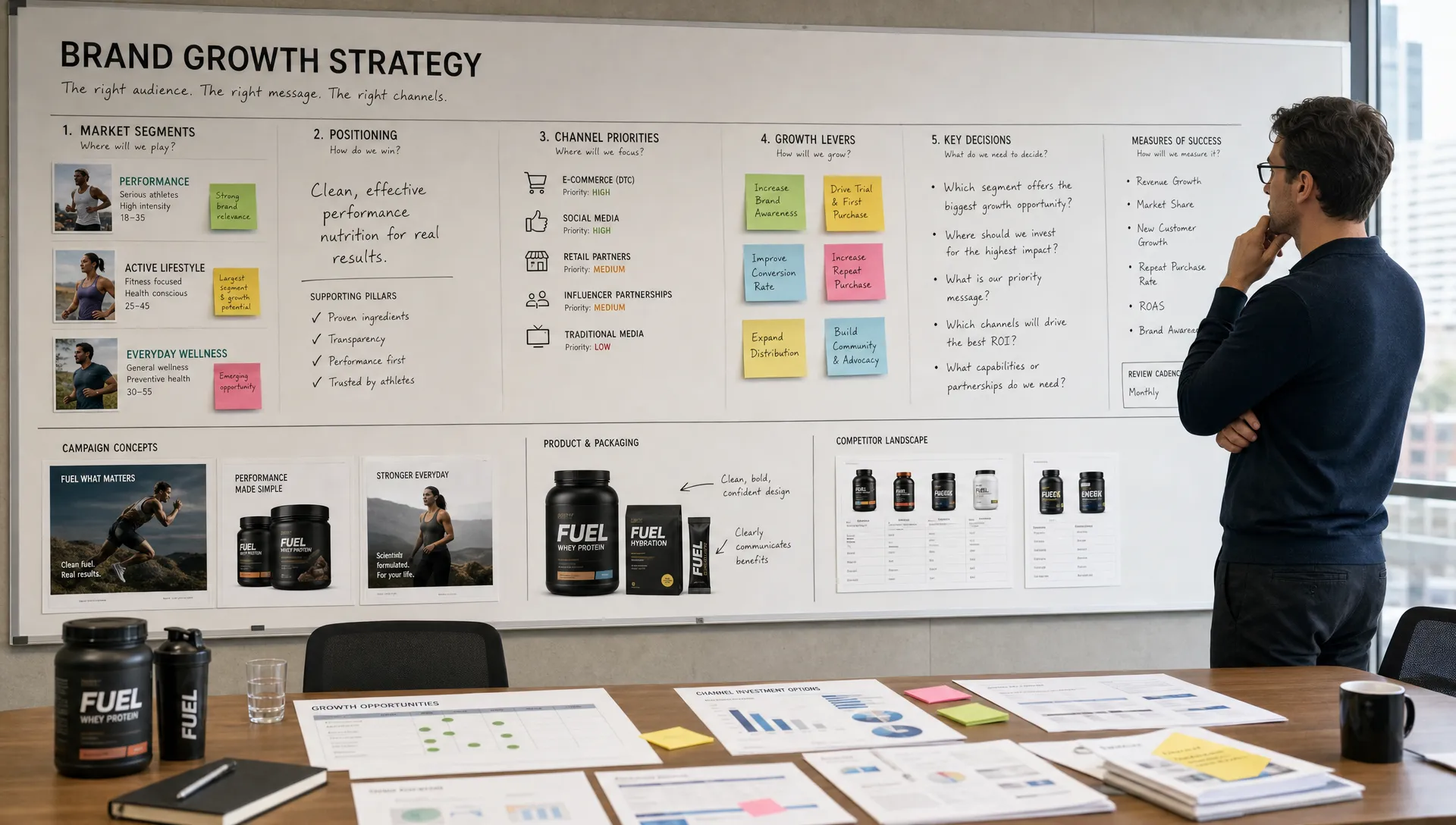
A sports marketing consultancy should help you connect brand and revenue. That means defining who the brand is for, what problem it solves, what emotional territory it owns, and how that message becomes measurable across channels.
This is especially important in crowded categories. A hydration brand cannot simply say it supports performance. A training apparel brand cannot rely on generic claims about comfort. A wellness brand cannot expect customers to understand its value without clear education. Positioning needs to show up in ads, landing pages, email flows, product descriptions, influencer briefs, packaging, and customer support language.
If your team needs to clarify the strategic foundation before scaling campaigns, it may be useful to understand what a brand strategy agency actually does and how that work supports growth across the funnel.
From there, performance strategy turns positioning into a testable system. That includes audience hypotheses, channel priorities, creative angles, landing page tests, retention campaigns, and KPI targets. The strongest consultancies do not treat brand and performance as separate departments. They use brand clarity to make performance marketing more efficient.
Expect a full-funnel view of the customer journey
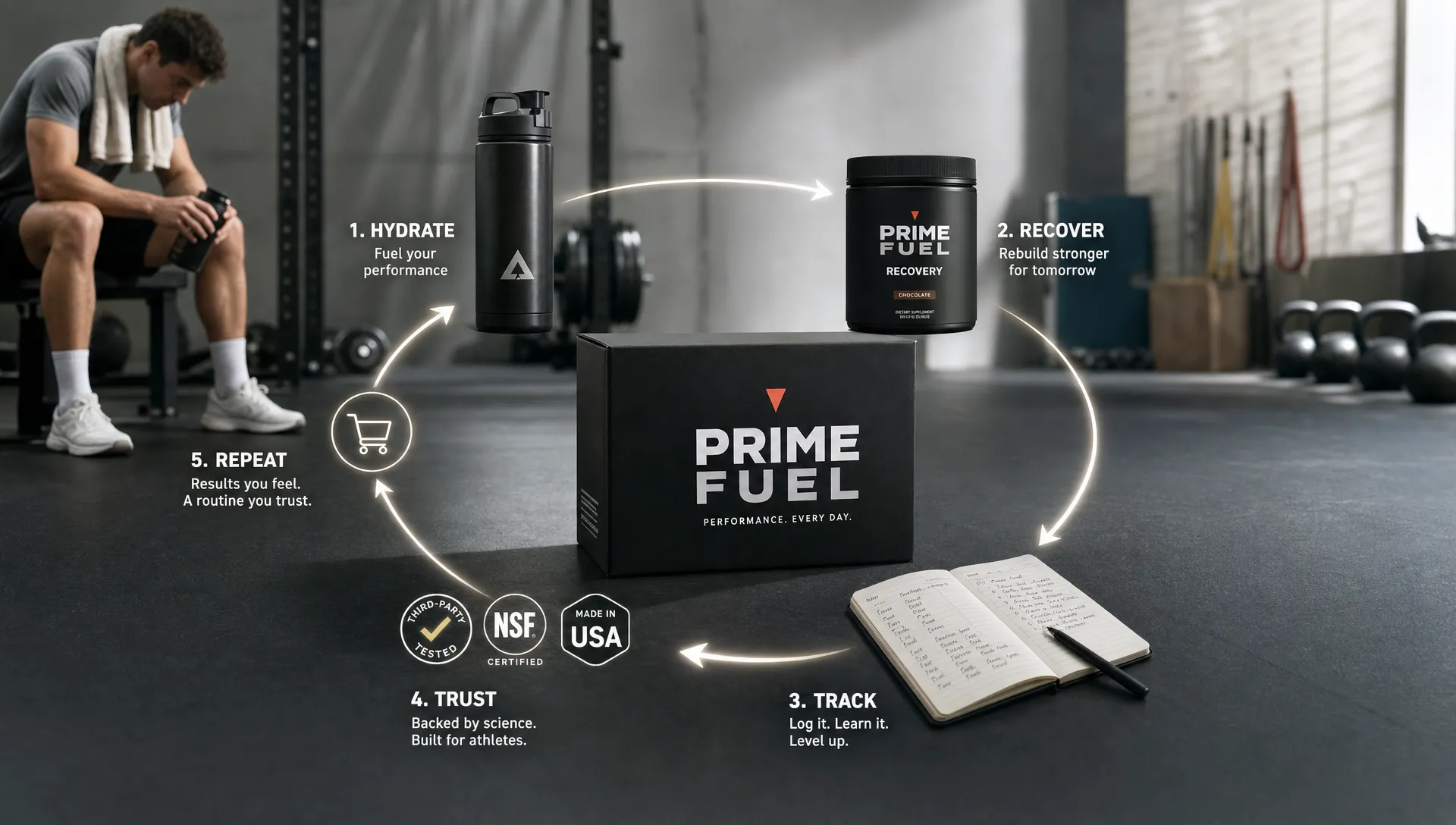
A sports customer may discover your brand on TikTok, compare you through Google search, read reviews on your product page, abandon cart, receive an email, return through a retargeting ad, and buy a week later. If your consultancy only looks at one piece of that journey, you will miss important growth opportunities.
A full-funnel approach considers the stages a customer moves through before and after purchase. At the top of the funnel, your brand needs creative that earns attention and communicates relevance quickly. In the middle, it needs education, social proof, comparison content, and clear offers. At the bottom, it needs frictionless product pages, trust signals, checkout clarity, and remarketing that helps people decide. After purchase, it needs email, customer experience, and retention strategy that encourages repeat orders and referrals.
This is where sports marketing becomes more than advertising. It becomes an operating system for growth. A consultancy may recommend new ad creative, but it may also recommend product page updates, better product bundles, stronger post-purchase email sequences, SEO content, or improved measurement.
OPTYO’s view is that sports marketing firms need to think beyond surface-level awareness and connect every effort to business outcomes. That idea is explored more deeply in why sports marketing firms need performance thinking.
Common services included in a consultancy engagement
Not every sports marketing consultancy offers the same scope, so you should clarify what is strategic guidance, what is execution, and what is outside the engagement. Still, there are several areas you can expect to discuss.
Market and customer research
Research helps the consultancy understand your competitive environment, customer motivations, category language, and whitespace. In sports and wellness, this is especially important because customers often define themselves by goals and communities. A marathon runner, a CrossFit athlete, a weekend golfer, and a parent shopping for youth sports gear may respond to very different triggers.
Positioning and messaging
A consultancy may help refine your value proposition, campaign messaging, product benefit hierarchy, and brand voice. The objective is to make your brand easier to understand and harder to confuse with competitors.
Paid social and creative strategy
For many ecommerce brands, paid social remains a major testing ground. A consultancy should help define creative angles, formats, hooks, proof points, and testing priorities. The strongest partners will look beyond whether an ad is attractive and ask whether it communicates a reason to buy.
Ecommerce and conversion rate optimization
Traffic is expensive. If your product pages, collection pages, landing pages, or checkout flow create confusion, your marketing spend becomes less efficient. A consultancy may review page structure, messaging, calls to action, reviews, visual hierarchy, offer clarity, and mobile experience.
Email marketing and retention
Email is often where profitable growth becomes more realistic. A sports marketing consultancy may evaluate welcome flows, abandoned cart emails, post-purchase education, replenishment timing, product launches, and customer segmentation. For consumable wellness products, retention may be central. For equipment or apparel brands, cross-sell and community-building may matter more.
SEO and content strategy
Sports, fitness, and wellness customers search for advice, comparisons, training support, product education, and problem-solving content. SEO can help capture that demand while supporting brand credibility. A consultancy may recommend content topics, technical improvements, product page optimization, and internal linking strategies.
Expect clear deliverables, not vague strategy
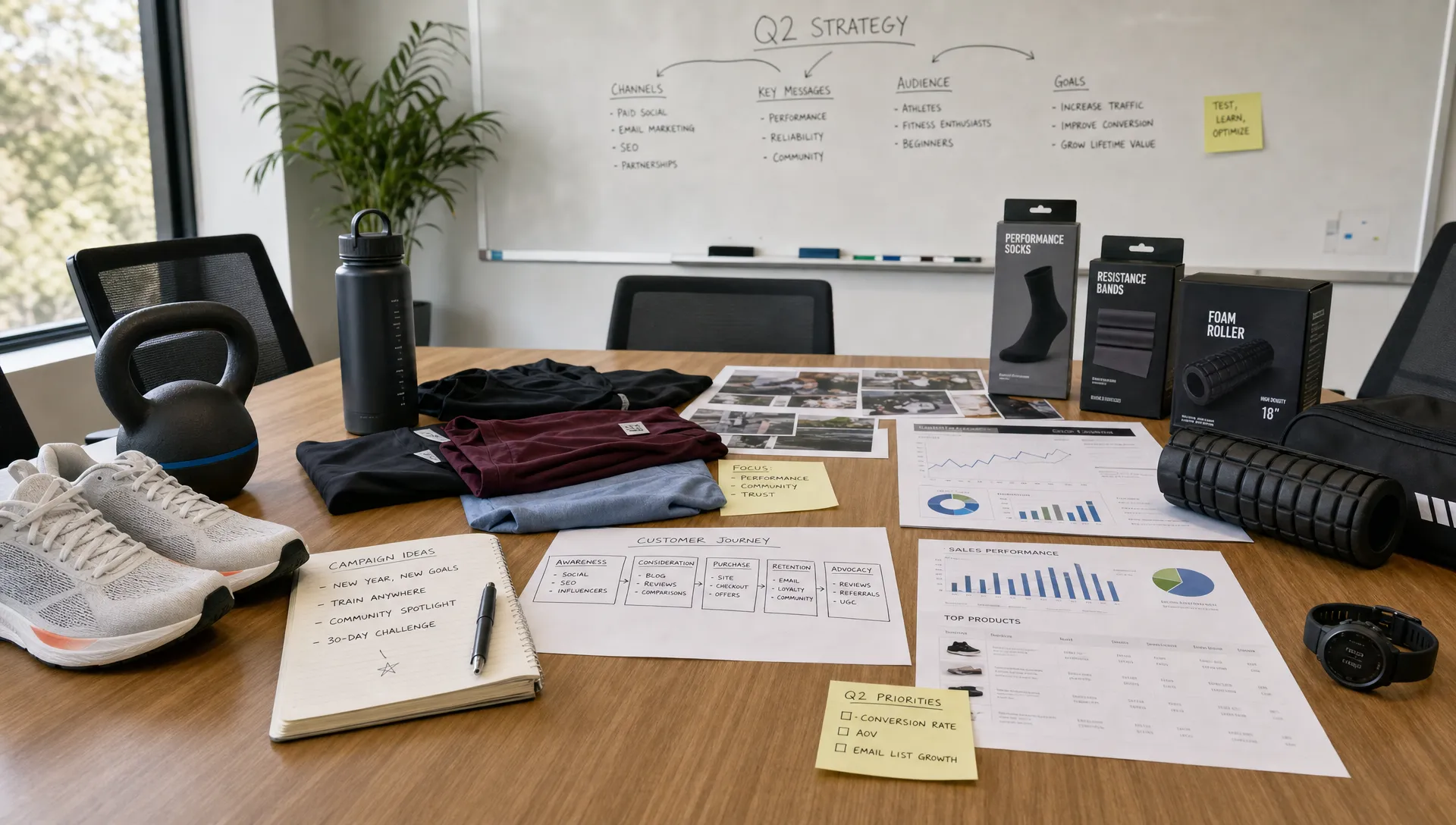
A useful consultancy engagement should produce tangible outputs. You should not walk away with only abstract advice like “build community” or “improve storytelling.” Those ideas may be valid, but they need to become specific decisions.
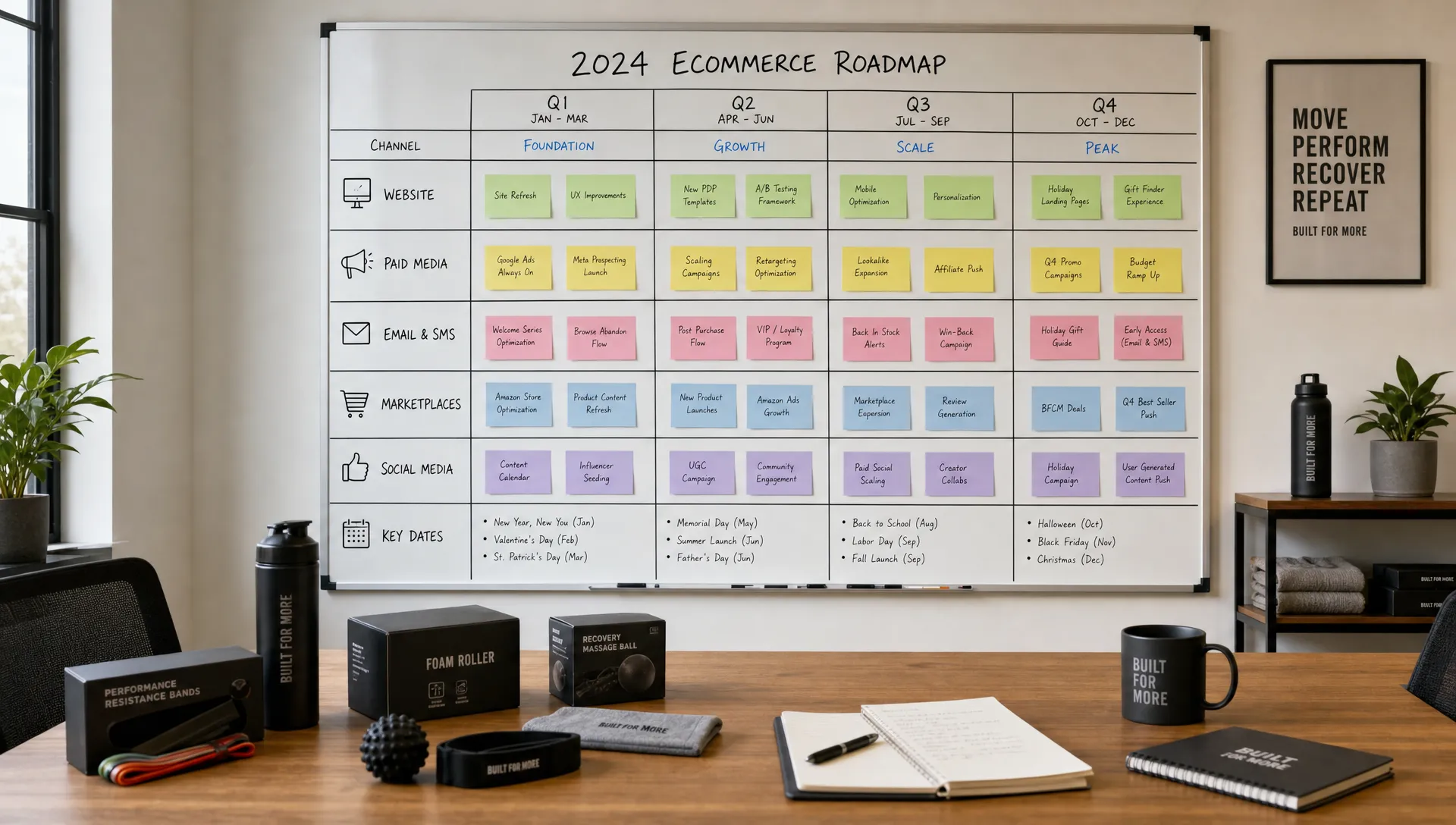
Typical deliverables may include a growth audit, channel roadmap, customer persona refinement, creative testing plan, messaging framework, website conversion recommendations, email marketing plan, campaign briefs, KPI reporting structure, and a prioritized action plan.
The most important deliverable is prioritization. Founders usually have more ideas than capacity. A consultancy should help you decide what matters now, what can wait, and what is not worth pursuing. For example, an athlete partnership might sound exciting, but if your website conversion rate is weak and your product pages lack proof, fixing the ecommerce foundation may create a better return.
A good roadmap should answer practical questions:
- What should we do first?
- Who owns each initiative?
- What resources are required?
- How will success be measured?
- When will we revisit the decision?
Without that level of clarity, strategy can become motivational rather than operational.
Expect disciplined measurement and reporting
Sports marketing can generate many numbers, but not all numbers are useful. Follower growth, impressions, reach, and engagement can be helpful indicators, but they do not always translate into profitable growth. A consultancy should help you separate leading indicators from business outcomes.
For ecommerce brands, common metrics include customer acquisition cost, return on ad spend, conversion rate, average order value, lifetime value, repeat purchase rate, email revenue, organic traffic, contribution margin, and marketing efficiency ratio. The exact scorecard depends on your business model, product category, and stage of growth.
The point is not to obsess over one metric. ROAS can look strong while total revenue is flat. CAC can look acceptable while customer quality declines. Conversion rate can improve while average order value falls. A consultancy should explain the tradeoffs and help your team make better decisions with context.
Reporting should also include learnings, not just charts. You should know which creative angles worked, which audiences showed promise, which landing page changes mattered, and which assumptions were disproven. Strong reporting makes your company smarter over time.
Expect recommendations that match your stage of growth
A startup generating its first consistent sales does not need the same plan as an established ecommerce brand trying to expand into new markets. A good sports marketing consultancy should tailor recommendations to your stage rather than forcing a preset playbook.
Early-stage brands may need positioning clarity, lean creative testing, product page improvements, and founder-led storytelling. Growth-stage brands may need deeper media buying structure, conversion rate optimization, email segmentation, SEO content, and a more consistent creative production process. More mature brands may need expansion strategy, channel diversification, customer research, and more advanced reporting.
This matters because premature complexity slows teams down. You may not need a large influencer program, a retail activation concept, or a complicated marketing tech stack if your core offer is not yet converting efficiently. Conversely, if you have strong demand and operational capacity, staying too conservative can limit growth.
If your search overlaps with hiring a broader growth partner, this guide on what to look for in a performance marketing agency can help you compare capabilities and avoid common selection mistakes.
What a consultancy will need from you
A consulting partner can bring expertise, but it cannot replace founder clarity. The more transparent you are, the better the recommendations will be.
Expect to share access to relevant analytics, ad account performance, email metrics, product margins, best-selling SKUs, customer feedback, historical campaigns, creative assets, and business goals. You should also be ready to discuss what has not worked. Failed campaigns often reveal as much as successful ones.
Your consultancy will also need timely feedback. Sports marketing moves quickly, especially when testing creative or launching seasonal campaigns. If approvals stall for weeks, the engagement loses momentum. Treat the consultancy as a strategic partner, not an outsourced task list.
It is also useful to be honest about constraints. If your budget is limited, say so. If your team cannot produce video assets every week, say so. If inventory is inconsistent, say so. The right plan should reflect the business you actually have, not the business you hope to have six months from now.
Red flags to watch for
Not every partner is the right fit. When evaluating a sports marketing consultancy, watch for signs that the work may be too shallow, too generic, or too disconnected from business outcomes.
Be cautious if a consultancy guarantees viral success, focuses only on followers or impressions, avoids talking about margins, recommends channels before reviewing your data, or treats creative as an afterthought. You should also be wary of partners that cannot explain how they measure success or how often they report learnings.
Another red flag is a one-size-fits-all sports playbook. Sports culture is not one market. Training, recovery, nutrition, outdoor, youth sports, lifestyle apparel, and performance technology each have different buying behaviors. A partner should understand the nuance of your category.
During your search, it can be useful to benchmark how other managed service providers communicate scope, setup, and optimization responsibilities, for example this managed service overview from Brand Builders' Collective, then use those comparisons to ask sharper questions about ownership, reporting, and deliverables.
What you should not expect
A sports marketing consultancy is not a magic fix for weak product-market fit. If customers do not understand the product, do not trust the claims, or do not see enough value at the price point, marketing can reveal those problems but not always solve them alone.
You also should not expect instant certainty. Good strategy reduces guesswork, but marketing still requires testing. Creative performance changes, customer behavior shifts, platform costs fluctuate, and competitors react. A consultancy should bring structure to uncertainty, not pretend uncertainty does not exist.
Finally, you should not expect the consultancy to chase every trend. Some sports brands benefit from short-form video. Some benefit from search. Some benefit from partnerships. Some need email and conversion work before they scale acquisition. The right partner will help you focus on what is most likely to move your business, even if that recommendation is less flashy than a big campaign idea.
How to know if a sports marketing consultancy is right for your brand
A consultancy is usually a strong fit when you have a real product, some evidence of demand, and a desire to grow with more discipline. You may be ready if your ads are inconsistent, your brand message feels unclear, your ecommerce conversion rate is under pressure, your team is too close to the business to see the bottlenecks, or your growth has plateaued despite effort.
You may not be ready if you are still validating the basic product, have no understanding of your margins, cannot commit to implementation, or are looking for someone to “make the brand famous” without building the commercial foundation underneath.
The best engagements happen when both sides are clear. The consultancy brings market knowledge, strategic structure, and execution guidance. The founder brings product insight, customer access, operational honesty, and decision-making speed. Together, that combination can turn sports marketing from a collection of tactics into a growth system.
Frequently Asked Questions
What does a sports marketing consultancy do? A sports marketing consultancy helps sports, fitness, and wellness brands develop strategies for growth. This can include positioning, paid media, ecommerce optimization, creative strategy, email marketing, SEO, campaign planning, and performance reporting.
How is a sports marketing consultancy different from a general marketing agency? A sports-focused consultancy understands the motivations, communities, buying behaviors, and seasonal patterns that shape sports and wellness customers. A general agency may offer similar channels, but it may not bring the same category-specific context.
Do I need a consultancy if I already have someone running ads? Possibly. Media buying is only one part of growth. If your ads are not supported by strong positioning, creative testing, product pages, email retention, and clear measurement, a consultancy can help improve the system around your ad spend.
How long does it take to see results? It depends on the scope and the current state of your business. Some improvements, such as landing page fixes or creative tests, can create faster learning. Bigger changes involving positioning, retention, SEO, or channel expansion usually take longer to compound.
What should I prepare before hiring a sports marketing consultancy? Prepare your sales data, ad account history, website analytics, email performance, product margins, customer reviews, past campaign examples, and growth goals. The more context you provide, the more useful the recommendations will be.
Should a consultancy handle execution too? Some consultancies focus on strategy, while others combine strategy and execution. For ecommerce founders, the best choice depends on internal capacity. If your team lacks time or specialized skills, a partner that can support implementation may be more valuable.
Build a sports marketing system that can scale
The right consultancy should give you more than opinions. It should help you understand your customer, sharpen your brand, improve your ecommerce foundation, and measure what actually drives growth.
OPTYO works with sports, fitness, and wellness brands to connect performance marketing, creative, ecommerce development, conversion rate optimization, email marketing, SEO, KPI reporting, and growth consulting. If your brand is ready to move from scattered tactics to a more disciplined growth system, connect with OPTYO to explore what that next stage could look like.