.png)



Hiring a performance marketing agency is not just a media buying decision. For an ecommerce founder, it is a decision about how quickly your brand can learn, how efficiently you can acquire customers, and whether growth can scale without destroying margin.
The right agency should help you build a measurable growth system. That system includes audience strategy, paid acquisition, creative testing, conversion rate optimization, email retention, reporting, and the discipline to make decisions based on business outcomes rather than vanity metrics.
If you are comparing agencies, the goal is not to find the loudest promise or the cheapest retainer. The goal is to identify a partner that understands your economics, your customer, your category, and the levers that turn marketing spend into profitable revenue.
Start with strategy, not channel promises
Many brands start looking for an agency when ads stop working the way they used to. CAC rises, ROAS becomes inconsistent, creative fatigue sets in, or a new product launch needs more demand. In that moment, it is tempting to hire the agency that seems most confident about Meta Ads, Google Ads, TikTok, or SEO.
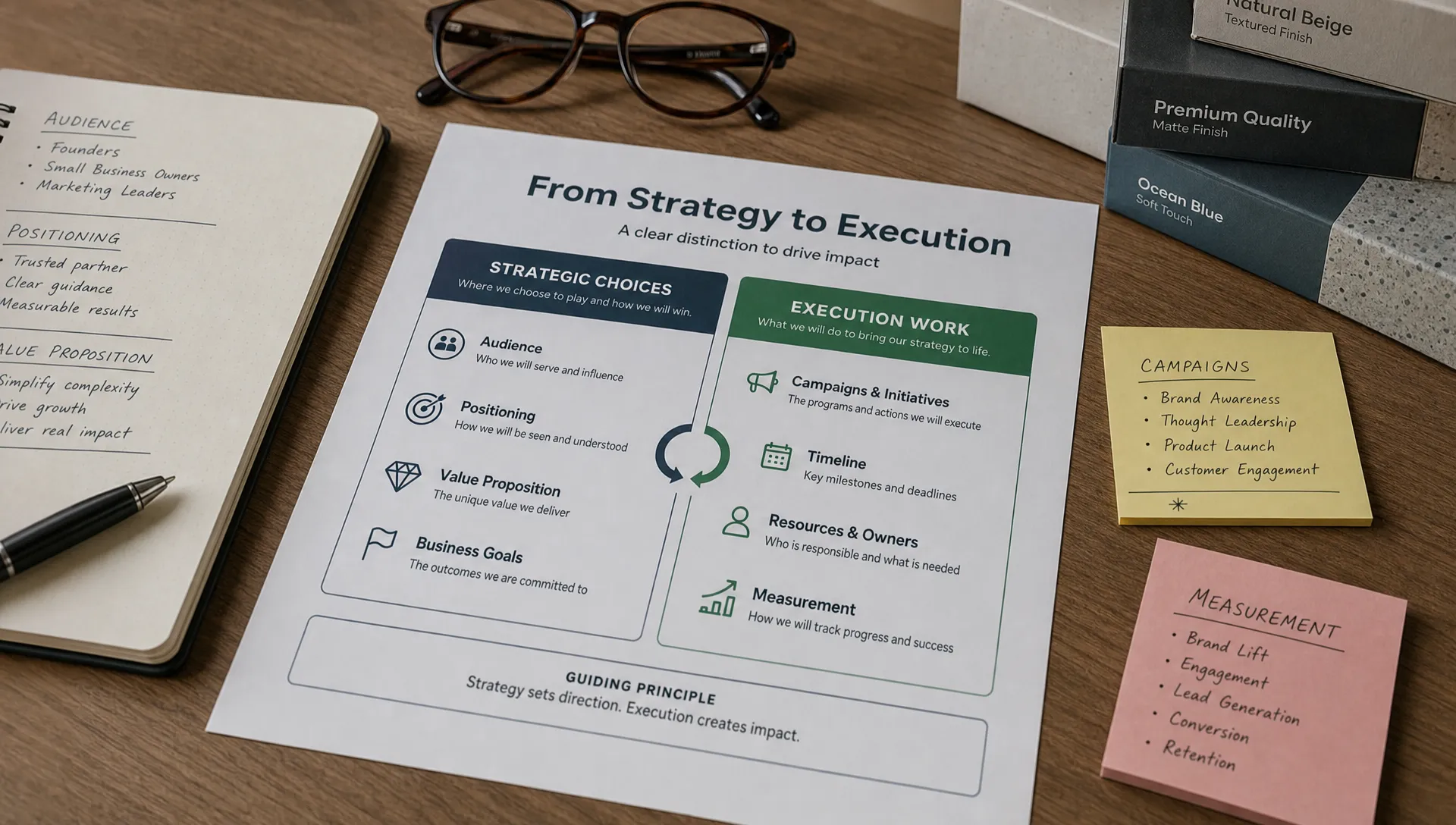
But a strong performance marketing agency should begin with the business model before it recommends channels. Paid media is only effective when it is connected to the economics of the company.
A serious agency should ask about gross margin, contribution margin, fulfillment costs, average order value, repeat purchase behavior, inventory constraints, best-selling products, customer objections, and your current conversion rate. Those details determine what kind of growth is actually possible.
For example, a subscription wellness brand, a premium fitness equipment company, and a sports apparel brand with seasonal drops all need different acquisition strategies. The right agency will not force the same playbook onto each business. It will build a plan around your offer, price point, buying cycle, and path to profitability.
If an agency recommends a large budget increase before understanding your margins and funnel, that is a warning sign. Strategy should come before scale.
Look for full-funnel thinking
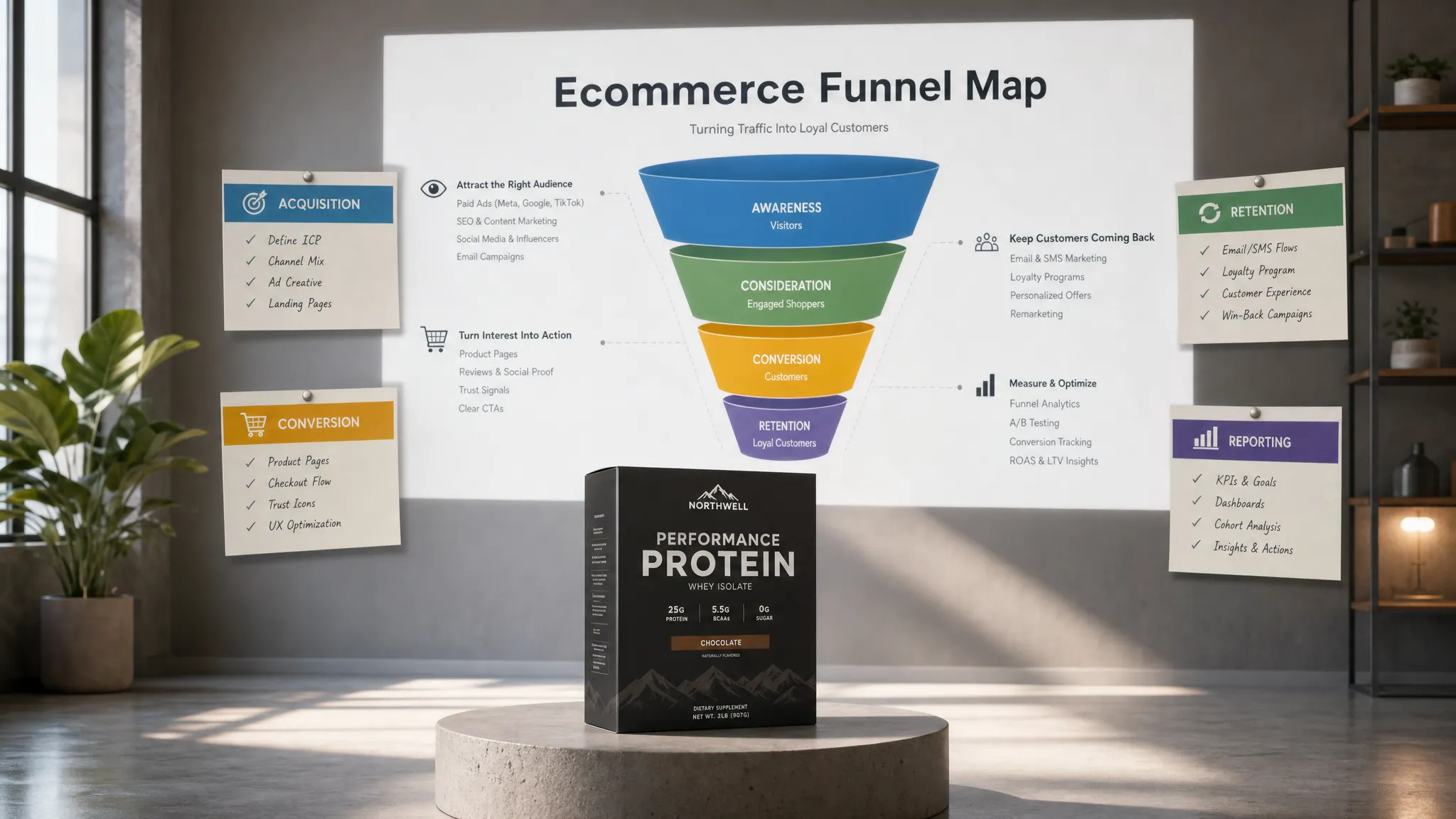
A performance marketing agency should know how to drive traffic, but that is only one part of the job. Ecommerce growth depends on what happens before and after the click.
A customer might discover your brand through a paid social ad, search for reviews, visit a product page, abandon cart, receive an email, compare competitors, then return through branded search. If your agency only optimizes one touchpoint, it may miss the real reason performance is stuck.
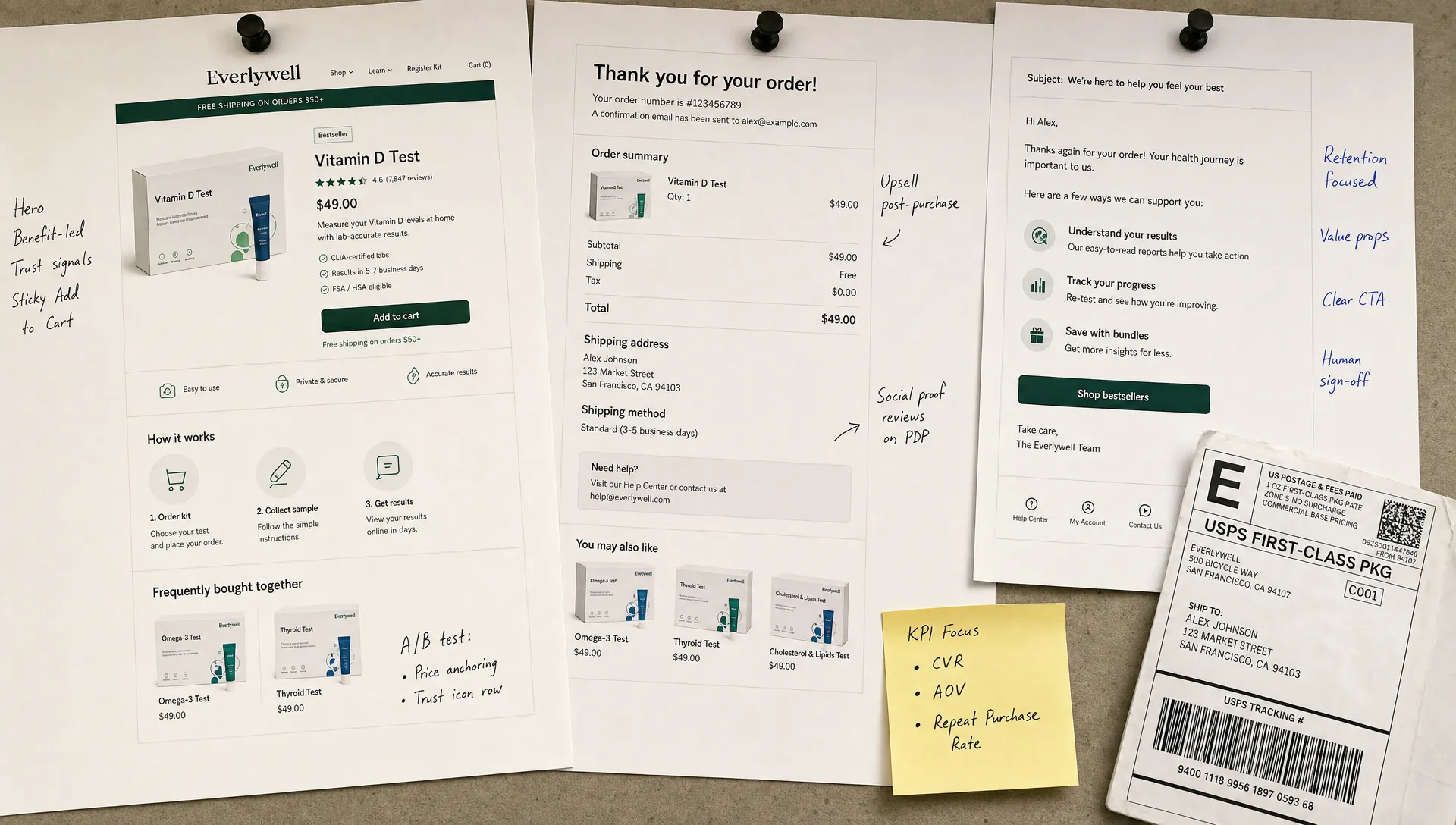
The best agencies connect acquisition with the rest of the funnel. That can include paid social, paid search, SEO, landing pages, product pages, email flows, creative testing, and conversion rate optimization. Sometimes the biggest growth unlock is not a new campaign. It is a clearer offer, stronger product page, better post-click experience, faster site, or more persuasive lifecycle flow.
This is also why specialization matters. Different markets require different growth systems. A local medical practice, for instance, may need a specialized healthcare marketing agency because patient acquisition, local SEO, reviews, and appointment automation are very different from ecommerce funnels. A sports, fitness, or wellness D2C brand needs a partner that understands product-led demand, creative volume, customer education, community, retention, and channel economics.
Prioritize a clear testing methodology
Performance marketing is not guessing with a bigger budget. It is structured experimentation.
When you evaluate an agency, ask how it tests. You are looking for a process that separates disciplined learning from random activity. A good agency should explain what it tests, why it tests it, how results are measured, and how learnings are applied across the account.
Strong testing usually includes audience positioning, creative hooks, offers, landing pages, product bundles, search intent, email flows, and merchandising. The key is that each test should have a hypothesis. Testing a founder story against a product demonstration is useful if the team is trying to learn whether trust or product education is the bigger conversion barrier.
Be careful with agencies that describe testing as simply launching more ads. Creative volume matters, especially on paid social, but random variation can create noise. You want a partner that builds a learning loop, where each test improves the next decision.
Evaluate creative capability, not just media buying
Ad platforms have become more automated, which means creative quality has become one of the biggest drivers of performance. Campaign structure still matters, but even the best media buyer will struggle if the ads do not earn attention or communicate value quickly.
A strong performance marketing agency should understand direct response and brand building. For ecommerce brands, that means creative should stop the scroll, show the product clearly, address objections, create trust, and move the shopper toward a purchase without cheapening the brand.
For sports and fitness brands, creative often needs to show performance, transformation, durability, lifestyle, and proof. For wellness brands, clarity and trust are especially important because customers may need more education before buying. In both cases, the agency should know how to turn customer insights into creative concepts.
Ask how the agency develops new angles. Do they study reviews, customer service questions, competitor messaging, founder insights, product use cases, and post-purchase feedback? Do they evaluate which hooks drive qualified traffic, which ads lead to purchases, and which messages attract customers who actually repeat?
A creative agency that cannot measure performance may produce attractive assets that do not sell. A media buying agency with no creative process may keep optimizing weak ads. You want both capabilities working together.
Demand reporting that explains decisions
Reporting should do more than show screenshots and platform dashboards. A useful report explains what happened, why it likely happened, what the team is doing next, and how performance connects to business goals.
The agency should define KPIs before launch and separate leading indicators from financial outcomes. Click-through rate, hook rate, landing page view rate, conversion rate, AOV, CAC, ROAS, MER, and repeat purchase rate all tell different parts of the story. MER, or marketing efficiency ratio, is especially useful because it helps you evaluate total revenue against total marketing spend rather than relying only on platform attribution.
A mature agency will also be honest about attribution. Meta, Google, Shopify, Klaviyo, GA4, and post-purchase surveys can all show different versions of performance. No single platform gives the full truth. A strong agency uses multiple signals to make better decisions instead of pretending attribution is perfect.
Good reporting should clarify channel performance, blended performance, creative learnings, funnel bottlenecks, budget recommendations, and the reasoning behind each next step. If every report ends with the same recommendation to spend more, the agency may be optimizing for ad budget rather than business performance.
Make sure they understand conversion rate optimization
Many ecommerce brands think they have an ad problem when they actually have a conversion problem. If traffic is qualified but visitors are not buying, the issue may be product page clarity, pricing, shipping expectations, trust signals, page speed, mobile experience, reviews, or checkout friction.
A performance marketing agency with CRO experience can help you get more value from the traffic you already have. This matters because conversion improvements can change the math of paid acquisition. If more visitors buy, your CAC improves without needing cheaper CPMs or a dramatic change in media buying.
Ask whether the agency reviews landing pages, product pages, collection pages, cart experience, checkout flow, and post-purchase journeys. Ask how it prioritizes CRO opportunities. A thoughtful answer should include both quantitative and qualitative inputs, such as analytics, heatmaps, customer feedback, product reviews, and support questions.
The best agencies do not treat CRO as a one-time website audit. They treat it as an ongoing process of removing friction, strengthening persuasion, and matching the post-click experience to the promise made in the ad.
Look for retention and lifecycle marketing experience
Acquisition gets most of the attention, but retention often determines whether scaling is profitable. This is especially true in categories where customers can reorder, subscribe, buy accessories, join a community, or purchase related products over time.
A performance marketing agency should not treat email and SMS as afterthoughts. Lifecycle marketing can increase revenue from existing traffic, improve payback periods, and help paid media scale more efficiently.
Important flows often include welcome, abandoned cart, browse abandonment, post-purchase education, replenishment, winback, product recommendation, and loyalty campaigns. For fitness and wellness brands, educational content can be especially valuable because customers may need guidance on how to use a product, when to expect results, and what to buy next.
Retention insights can also improve acquisition. Reviews, FAQs, objections, repeat purchase behavior, and customer success stories can become stronger ad creative and landing page messaging. A good agency uses the entire customer journey as a source of growth intelligence.
Review category fit and team structure
No agency is equally strong in every market. A B2B SaaS agency, a local services agency, a marketplace agency, and a D2C ecommerce agency may all use performance channels, but the growth problems are different.
For sports, fitness, and wellness companies, look for signs that the agency understands how to balance aspiration, proof, product education, and compliance-conscious messaging. The agency should be able to discuss customer transformation, product usage, seasonality, influencer assets, community signals, reviews, and the tension between scaling fast and protecting brand equity.
Also ask who will actually work on your account. The pitch team is not always the delivery team. You should know who owns strategy, media buying, creative direction, reporting, copy, design, SEO, email, and development work.
A lean expert team can outperform a large but unclear account structure. What matters is ownership, senior oversight, and communication. Ask how often you will meet, how priorities are managed, what response time to expect, and how the agency collaborates with your internal team.
Great performance marketing requires information from both sides. The brand brings product knowledge, customer insight, inventory updates, margin realities, and business priorities. The agency brings strategy, execution, testing, and channel expertise. The relationship works when those inputs move both ways.
Protect data and account ownership
Before working with any agency, confirm that your brand owns its ad accounts, analytics properties, website, email platform, creative files, customer lists, and historical data. The agency can manage access, but the business should retain ownership.
This protects your learning history, pixel data, reporting continuity, creative assets, and customer relationships. If you switch partners later, you should not have to rebuild from zero.
You should also clarify access levels, security practices, permissions, and offboarding expectations before the engagement begins. A professional agency will have no issue with transparency. If an agency insists on owning your ad account or limiting visibility into performance data, proceed carefully.
Understand pricing in relation to value
Agency pricing can vary widely. Some agencies charge a flat retainer, some charge a percentage of ad spend, some separate strategy from execution, and some bundle creative, development, or email into a broader scope.
There is no single best model, but there should be a clear relationship between scope, expertise, workload, and expected value. The cheapest agency is rarely the best choice if it lacks strategy, creative capability, or senior oversight. At the same time, a high fee does not automatically mean better performance.
Before signing, clarify what is included, what is out of scope, whether creative production is included, whether CRO and email are included, how reporting is handled, and what happens if priorities change. If the agency cannot clearly explain what you are paying for, that lack of clarity may create friction later.
Watch for red flags
A good agency will be confident, but honest. Be cautious if the sales process feels too simple for the complexity of your business.
Common red flags include:
- Guaranteed ROAS before the agency understands your margins or funnel
- Strategy based only on increasing ad spend
- No clear testing methodology
- Little interest in your customer, product, or positioning
- Reporting that focuses only on platform metrics
- Reluctance to introduce the team working on your account
- No discussion of creative, CRO, SEO, email, or retention
- Pressure to move fast without proper discovery or access
- Agency ownership of your ad account or customer data
- One-size-fits-all packages with no strategic reasoning
The best agencies set expectations carefully. They can explain upside, risk, assumptions, and timelines. They also know when a brand is not ready to scale because the offer, website, product-market fit, or margins need work first.
Know what the first 90 days should look like
The first 90 days with a performance marketing agency should create clarity, momentum, and learning. It may not solve every growth challenge immediately, but you should see a disciplined operating system forming.
In the first month, expect discovery, analytics review, account audits, funnel analysis, creative planning, and priority setting. The agency should identify quick wins while building a strategy around your business economics.
In the second month, testing should become more active. New campaigns, creative concepts, landing page updates, email improvements, or SEO priorities may go live depending on the agreed scope. The team should begin connecting performance results to clear hypotheses.
By the third month, you should have a better view of which messages, audiences, products, and offers show promise. You should also understand the main constraints. Maybe paid social is working but product pages need improvement. Maybe Google is efficient but volume is limited. Maybe creative is improving CTR but conversion rate is holding back scale.
A strong agency does not hide from those findings. It uses them to refine the plan.
Questions to ask before hiring a performance marketing agency
Use the sales process as a preview of how the agency thinks. Strong questions will reveal whether the agency is strategic, operationally sound, and honest about what it can control.
Ask questions like:
- How would you evaluate whether our brand is ready to scale?
- What metrics would you prioritize for our business model?
- How do you diagnose whether performance issues are caused by ads, offer, website, or retention?
- What does your creative testing process look like?
- How do you balance platform ROAS with blended performance?
- What should we expect in the first 30, 60, and 90 days?
- How do you collaborate with internal teams?
- What information do you need from us to do your best work?
- What types of brands are not a good fit for your agency?
- How do you handle underperformance?
The last question is especially important. Every account faces hard periods. You want a partner that diagnoses problems, communicates clearly, and adjusts intelligently instead of making excuses.
Frequently Asked Questions
What does a performance marketing agency do? A performance marketing agency helps brands grow through measurable marketing channels and conversion-focused strategies. Depending on the agency, this can include paid social, paid search, SEO, email marketing, creative testing, CRO, ecommerce development, and KPI reporting.
How do I know if my brand is ready to hire a performance marketing agency? You may be ready if you have a validated product, clear margins, enough budget to test, basic conversion tracking, and a willingness to improve the full funnel. If your offer, website, or product-market fit is still unclear, the agency may need to start with strategy before scaling ad spend.
Should I choose a niche agency or a generalist agency? A niche agency can be valuable when your category has unique customer behavior, creative needs, compliance concerns, or funnel dynamics. For sports, fitness, and wellness ecommerce brands, category familiarity can help with positioning, proof, creative direction, and retention strategy.
What metrics should a performance marketing agency report on? Useful reporting should include channel metrics and business metrics. Look for CAC, ROAS, MER, conversion rate, AOV, revenue, spend, email revenue, creative performance, and customer quality indicators when available.
How long does it take to see results from a new agency? Some improvements can happen quickly, especially with tracking fixes, creative changes, or landing page updates. More durable growth usually takes several months because the agency needs time to test, learn, optimize, and build a stronger growth system.
Choose a partner that can improve the whole growth system
The right performance marketing agency should bring more than campaign management. It should help you understand your numbers, sharpen your positioning, improve creative, increase conversion, retain customers, and make smarter growth decisions.
For ecommerce entrepreneurs, especially in sports, fitness, and wellness, the goal is not just more traffic. The goal is profitable, repeatable, brand-building growth.
OPTYO is a performance marketing and brand accelerator agency for D2C and CPG brands. Our team supports growth through performance marketing strategies, ecommerce development, conversion rate optimization, email marketing, creative asset production, growth consulting, paid social advertising, search engine optimization, KPI reporting, and brand strategy consulting. If you are looking for a partner that connects strategy with execution, connect with OPTYO to start the conversation.