.png)




An experience marketing agency helps fitness brands turn workouts, products and communities into memorable customer journeys that drive measurable growth. For ecommerce founders, that matters because fitness buyers rarely purchase from one ad alone. They compare routines, question quality, look for proof, imagine identity change and decide whether a brand fits the life they want to build.
For sports, fitness and wellness companies, experience marketing is not only about events or flashy activations. It connects brand strategy, creative, paid media, ecommerce, email and retention into one system. When done well, every touchpoint makes the customer feel closer to the outcome your product promises, whether that is strength, energy, confidence, recovery or consistency.
What an experience marketing agency means for fitness brands
Experience marketing focuses on what a customer feels, understands and does at each point of contact with your brand. A gym apparel company might create that experience through try-on pop-ups, athlete-led content, product education, landing pages and post-purchase training tips. A supplement brand might do it through sampling, creator proof, quizzes, subscription flows and email programs that keep customers consistent.
The difference is integration. A typical campaign may chase reach or clicks. In practice, an experience marketing agency maps the full journey, then aligns every channel around a clear promise and a commercial goal. The work might include a physical activation, but it can also live entirely online through product pages, paid social, creator content, SEO and lifecycle marketing.
Fitness brands benefit because the category is emotional and habit-based. People do not only buy resistance bands, protein powder or recovery tools. They buy the belief that a better routine is possible and they need enough trust to act now.
Why fitness brands need more than impressions
Fitness marketing is crowded, and many offers sound interchangeable. Better performance, better recovery, better body composition and better energy are common claims. If your advertising stops at those claims, your brand risks being compared only on price, discounts or influencer popularity.
A stronger approach starts with the buyer's motivation. Some customers want visible progress. Some want athletic performance. Others want convenience, longevity or the feeling of belonging to a community. OPTYO's guide to fitness advertising that motivates customers to buy goes deeper into this link between motivation, messaging and conversion.
For a D2C fitness company, an experience marketing agency can translate those motivations into a journey that feels specific instead of generic. The pre-purchase experience answers doubts. The purchase experience reduces friction. The post-purchase experience reinforces the customer's choice and encourages the next step.
What the agency can do across the customer journey
The strongest work usually starts before media buying. If the offer, audience and proof points are unclear, spending more only amplifies confusion. Experience marketing creates a system where positioning, creative and performance support one another instead of competing for attention.
| Journey stage | What the agency improves | Fitness brand example |
|---|---|---|
| Awareness | Brand concept, hooks, creator angles, activation ideas | A recovery brand uses athlete routines to show real use cases |
| Consideration | Product education, comparison pages, social proof, objections | A supplement brand explains ingredients, timing and expected use |
| Conversion | Landing pages, offers, CRO, checkout flow, paid social testing | An apparel brand tests size guidance and bundle offers |
| Retention | Email flows, loyalty moments, community prompts, replenishment | A nutrition brand builds reorder reminders and habit-based content |
Digital infrastructure matters too. If a fitness brand needs a custom training portal, high-performance storefront or interactive product experience, the marketing team may coordinate with a specialized Next.js expert agency while keeping the offer, message and conversion strategy aligned.
Practical examples for fitness and wellness businesses
A fitness apparel startup might use experience marketing to bridge the gap between social inspiration and ecommerce action. Instead of sending ad traffic to a generic collection page, the brand could build campaign-specific landing pages for running, lifting or recovery. Each page would show relevant products, creator proof, size guidance and a clear next purchase step.
A CPG wellness brand might focus on trial. Sampling at studios, gyms or wellness events can introduce the product, but the experience should continue afterward. QR codes, welcome offers, educational email flows and paid retargeting can turn a free sample into a first order, then a subscription or repeat purchase.
A connected fitness or training brand might use experience marketing to reduce hesitation. Prospects may wonder whether the program fits their schedule, skill level or goals. The brand can answer those questions through quizzes, demo content, user stories, onboarding emails and product experiences that make the first week feel achievable.

How it connects brand, creative and performance marketing
The right experience marketing agency does not treat creative as decoration or media buying as a standalone lever. In fitness, creative must make the outcome feel real. Performance marketing must identify which outcomes, claims and proof points drive profitable action. Brand strategy must keep the company from chasing every trend at once.
This is where positioning becomes practical. A clear market position tells the agency what to emphasize, what to ignore and which customers are most worth attracting. If that foundation is weak, a brand can produce strong individual assets that still fail to add up to a memorable identity. OPTYO's breakdown of what a brand strategy agency actually does is a useful companion if your brand still lacks a sharp point of view.
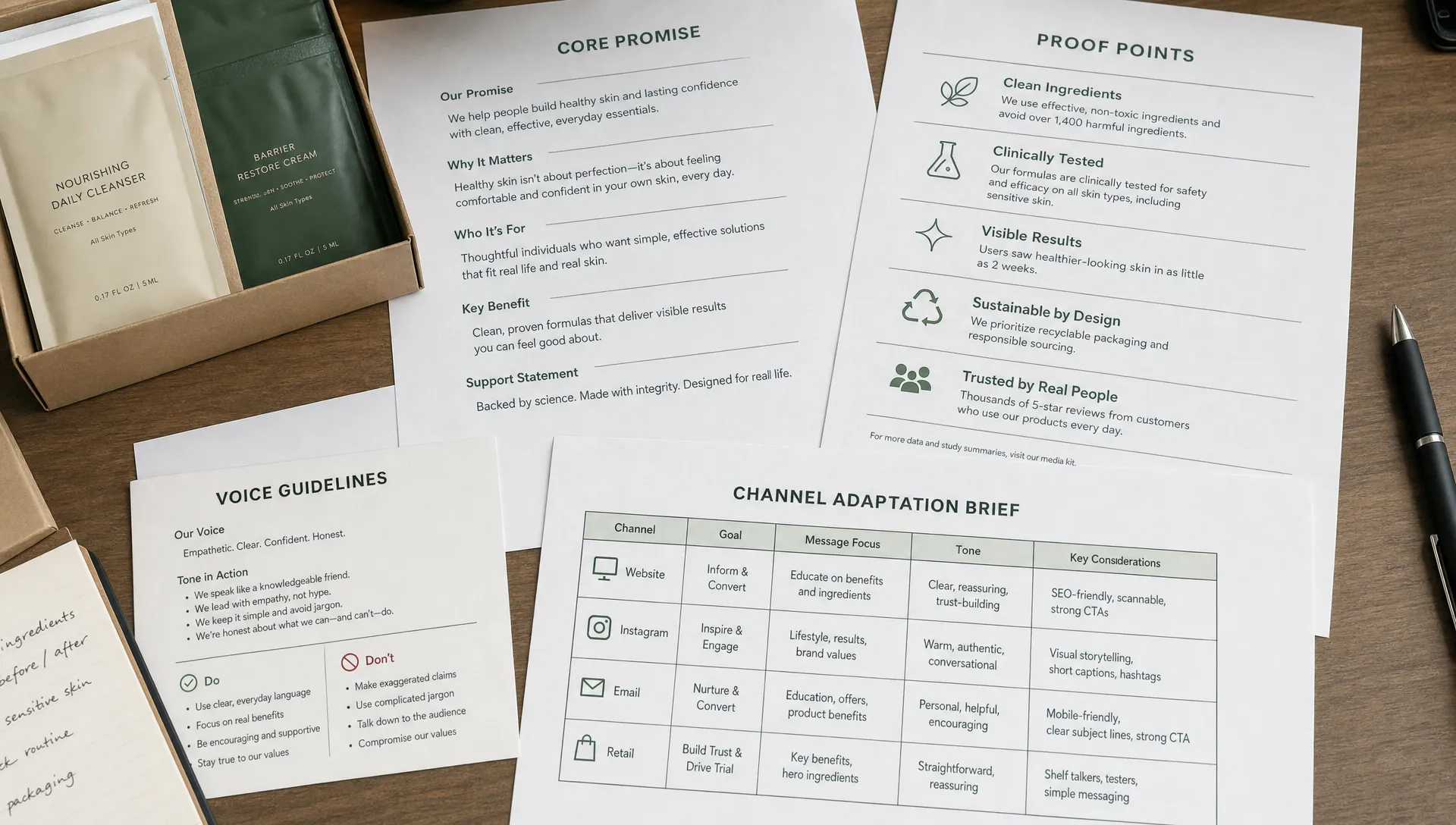
Once the strategy is clear, the agency can turn it into channel-specific work: paid social concepts, landing page copy, creator briefs, email flows, SEO content, product education and retention campaigns. The goal is not sameness across every channel. The goal is coherence, so the customer keeps receiving the same core promise in the right format for the moment they are in.
What should be measured
A useful experience marketing agency should be comfortable discussing both brand signals and revenue metrics. Fitness founders need creativity, but they also need to know whether that creativity improves business performance. The measurement plan should match the journey, not just the ad account.
| Goal | Metrics to watch | What it reveals |
|---|---|---|
| Build demand | Branded search, direct traffic, engagement quality | Whether people remember and seek out the brand |
| Improve conversion | Conversion rate, add-to-cart rate, checkout completion | Whether the experience reduces hesitation |
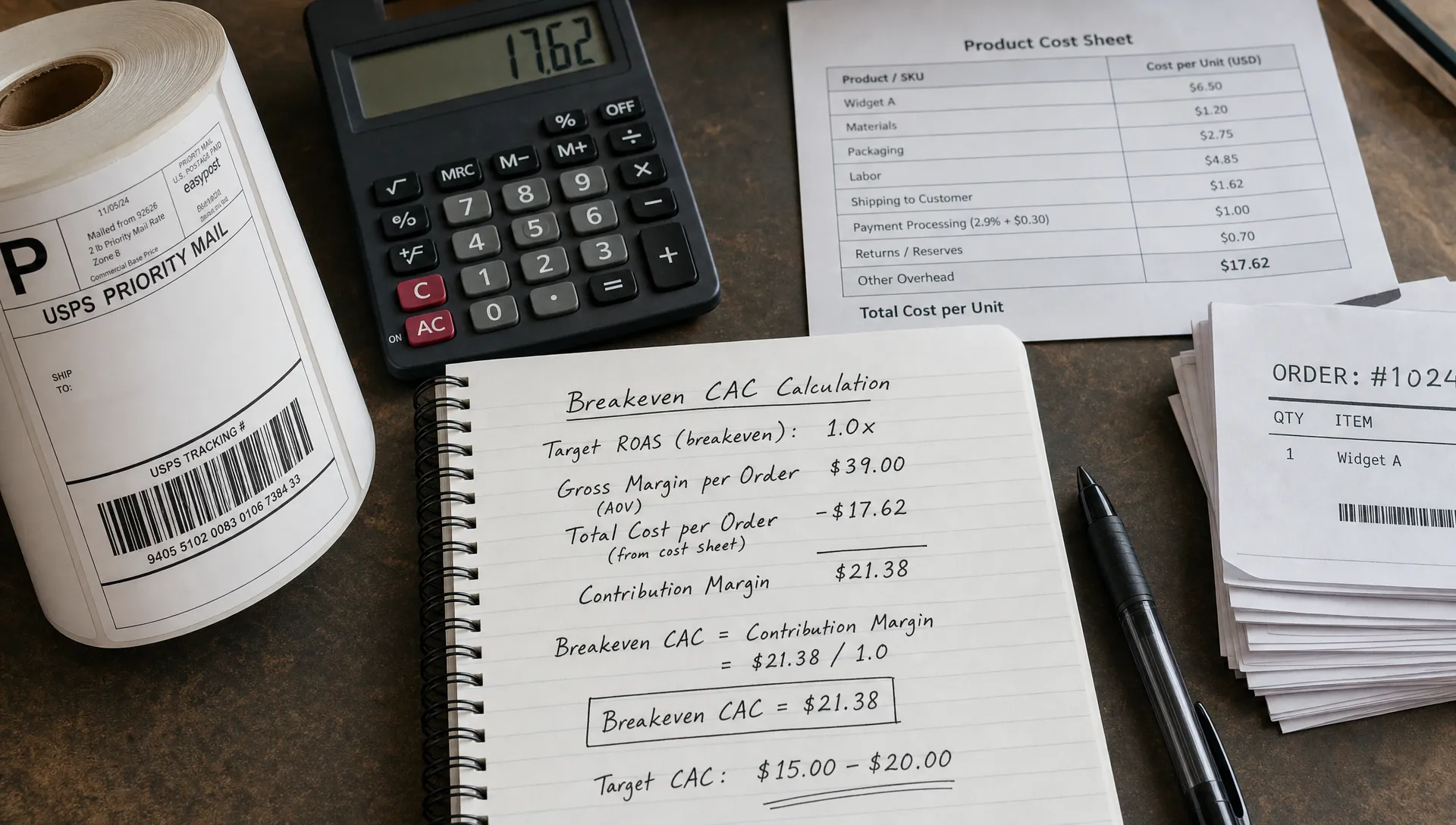
| Lower acquisition waste | CAC, MER, ROAS by campaign, creative fatigue | Whether spend is turning into efficient revenue |
| Increase retention | Repeat purchase rate, subscription retention, email revenue | Whether customers keep using and trusting the brand |
| Strengthen loyalty | Reviews, referrals, UGC volume, community participation | Whether customers identify with the brand |
Measurement should also influence creative decisions. If a workout equipment brand learns that beginner-friendly content converts better than elite athlete messaging, that insight should shape landing pages, email education and future content. If customers engage with recovery education but do not buy, the next test may need stronger proof, clearer bundles or a more direct offer.
How to choose the right partner
When you evaluate an experience marketing agency, look for category understanding and commercial discipline. Fitness customers have specific buying triggers, including identity, proof, habit formation, convenience and trust. An agency that understands those triggers can create stronger work than one applying generic ecommerce templates.
Ask how the agency connects strategy to execution. A credible partner should be able to explain how an audience insight becomes a campaign idea, how that idea becomes creative assets, how those assets drive traffic to a conversion path and how performance data informs the next round of testing.
It also helps to ask what the agency will not do. Good strategy requires tradeoffs. If every audience, channel and message is treated as equally important, the experience becomes diluted. Fitness brands win when they know who they are for, what transformation they own and why customers should believe them.
Common mistakes fitness brands should avoid
One common mistake is separating brand moments from revenue systems. A pop-up, athlete partnership or challenge campaign can generate attention, but if the follow-up path is weak, the brand loses momentum. Every activation should have a capture mechanism, a nurture plan and a conversion path.
Another mistake is overloading the customer with claims. Many fitness brands try to say everything at once: premium quality, science-backed, community-driven, sustainable, high performance and affordable. A cleaner experience usually performs better because the buyer can quickly understand why the product matters.
Finally, some founders measure too narrowly. ROAS matters, but it does not explain everything. If a campaign raises branded search, increases email signups and improves returning customer revenue, it may be strengthening the business even before the next ad test fully matures.
Frequently Asked Questions
What does an experience marketing agency do for a fitness brand? It designs and improves the customer journey across brand, creative, ecommerce, paid media, activations and retention so customers understand the value of the product and feel motivated to buy.
Is experience marketing only for in-person events? No. Events can be part of the work, but experience marketing also includes landing pages, email flows, creator campaigns, product education, community programs and ecommerce optimization.
How is this different from a performance marketing agency? Performance marketing usually focuses on paid acquisition and measurable results. Experience marketing includes those goals but also looks at how the entire brand journey shapes trust, conversion and retention.
When should a fitness startup hire this type of agency? It is most useful when the brand has a real product, early customer signals and a need to scale more consistently across channels. It can also help before a major launch, repositioning effort or retail expansion.
Build a fitness brand experience that converts
Fitness customers do not want another disconnected campaign. They want a brand that understands their goals, reduces doubt and helps them take the next step. If your ecommerce business needs sharper positioning, stronger creative, better conversion paths and clearer KPI reporting, OPTYO can help connect performance marketing with brand acceleration for sports, fitness and wellness growth.