.png)



A direct to consumer marketing agency should not be hired simply to “run ads.” For an ecommerce brand, especially in sports, fitness, wellness, or CPG, the real value is in identifying the constraints that keep growth expensive, inconsistent, or hard to repeat.
When a D2C brand is stuck, the problem is rarely one isolated metric. CAC is usually connected to positioning. Conversion rate is connected to creative quality. Retention is connected to the product experience, offer strategy, and lifecycle marketing. A good agency should understand those relationships instead of treating every issue as a media buying problem.
If you are evaluating a direct to consumer marketing agency, here are the areas it should be able to diagnose and improve.
The real job of a direct to consumer marketing agency
The D2C model gives brands more control over the customer relationship, but it also puts more pressure on the brand to get every part of the growth system right. You own the storefront, the offer, the creative, the data, the post-purchase experience, and the repeat purchase strategy.
That means a direct to consumer marketing agency should help fix the full path from first impression to profitable repeat purchase. It should look at how your brand earns attention, how it creates trust, how it converts shoppers, and how it gets customers to come back without relying only on more paid traffic.
For founders and ecommerce teams, this matters because the wrong agency can make growth look like progress while quietly increasing risk. Spend goes up, dashboards look active, but contribution margin, payback periods, and retention do not improve. The right agency should help you see where the system is broken before scaling what is already inefficient.
1. Blurry positioning that makes every channel more expensive
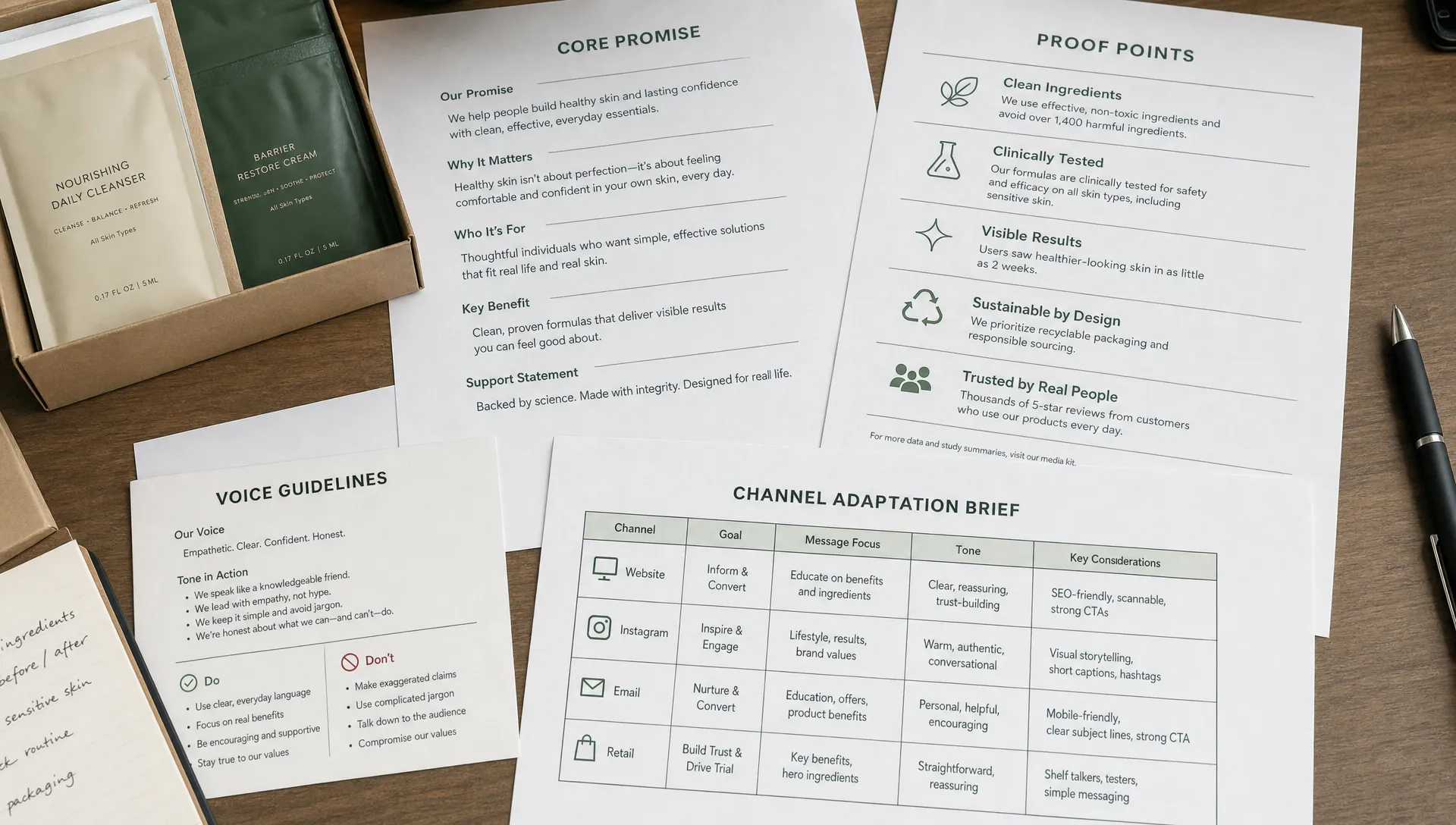
Before media budgets, campaigns, or influencer partnerships, a D2C brand needs a clear reason to exist in the customer’s mind. If your positioning is vague, every channel has to work harder. Paid social becomes less efficient. Product pages feel generic. Email campaigns sound interchangeable. SEO content struggles because the brand has no distinct point of view.
For sports, fitness, and wellness brands, this problem is especially common. Many products promise performance, recovery, energy, durability, comfort, or confidence. Those are useful benefits, but they are not always differentiated. A stronger position answers more specific questions.
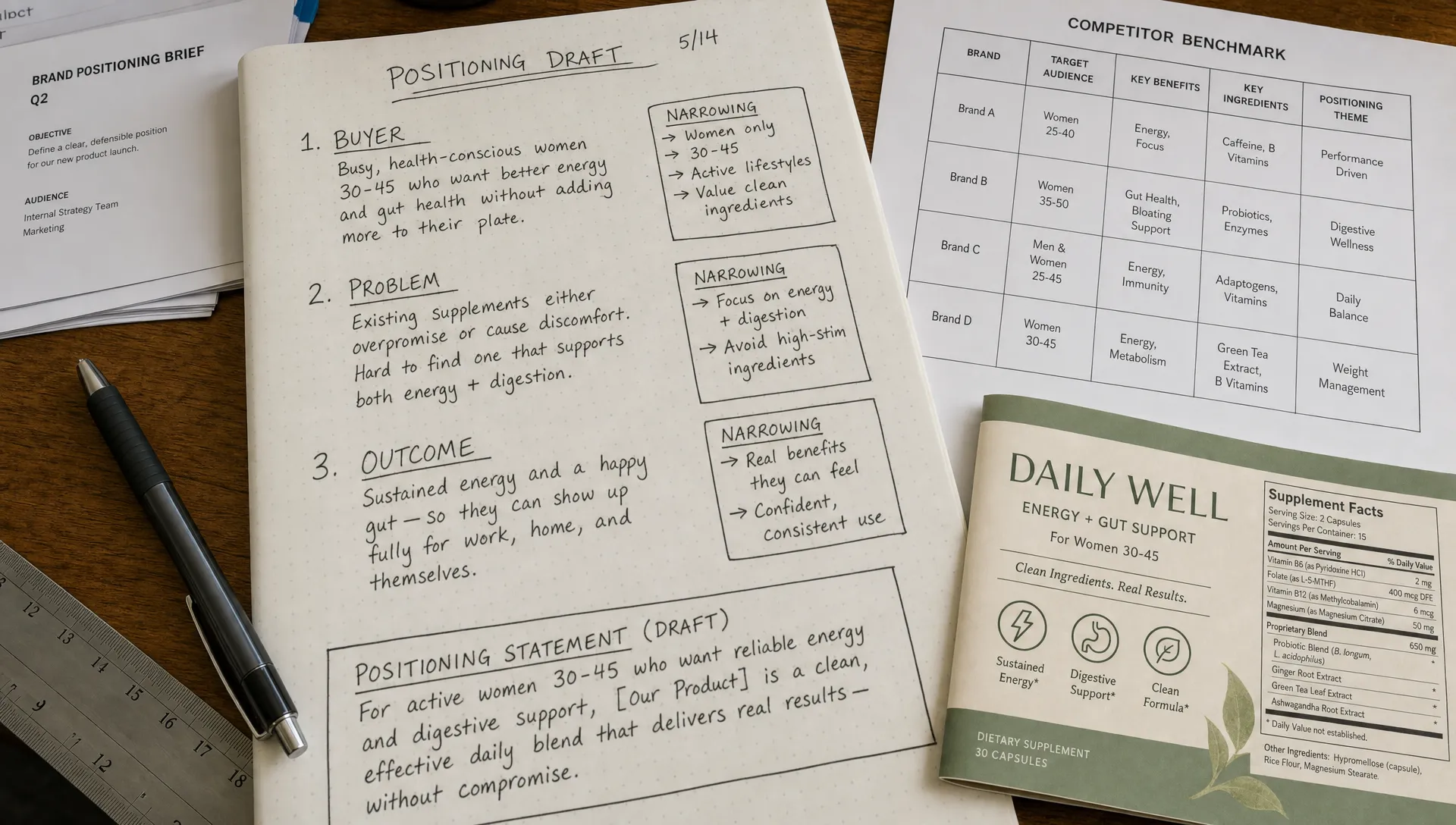
Who is the product really for? What moment or problem does it solve better than alternatives? Why should someone believe the claim? What does the brand stand for beyond the product category? How does the offer reduce hesitation for a first-time buyer?
A strong agency should be able to pressure-test your audience, messaging, claims, and competitive angle. It should help turn a broad product benefit into a sharper buying reason. That work may not look as exciting as launching a new campaign, but it often improves everything downstream.
2. Paid media that scales spend before it scales learning
Paid media is still a major growth lever for D2C brands, but platforms have changed. Tracking is less clean, attribution is less certain, and creative fatigue can hit quickly. If an agency’s only plan is to increase budget on a few winning ads, it is not enough.
A capable agency should fix the learning system behind paid media. That includes how audiences are structured, how creative tests are designed, how landing pages support campaigns, and how performance is judged beyond platform-reported ROAS.
The question is not just “Which ad won?” It is “What did this test teach us about the customer?” A strong test might reveal that shoppers care more about comfort than technical specs, or that a founder-led product demo outperforms a polished lifestyle video, or that a bundle offer attracts higher-value customers than a discount code.
If you want a deeper breakdown of this evaluation process, OPTYO’s guide on what to look for in a performance marketing agency explains why strategy, creative testing, reporting, and CRO need to work together.
3. Creative that looks good but does not remove buying friction
D2C creative has a job to do. It needs to earn attention, but it also needs to reduce uncertainty. Many brands have attractive photography and polished videos, yet still underperform because the creative does not answer the questions customers are actually asking.
For a fitness product, shoppers may want to know how it feels during real use. For a supplement, they may want ingredient clarity, taste expectations, and proof points. For athletic apparel, they may care about fit, movement, sweat, durability, and returns. For wellness products, they may need reassurance around routine, safety, and consistency.
A direct to consumer marketing agency should help build creative around buying objections, not just aesthetics. That often means developing multiple creative angles, such as:
- Product demonstration that shows the item in real use
- Founder or expert-led explanation that builds trust
- Customer proof that reflects the target audience
- Comparison creative that clarifies why the product is different
- Offer-focused creative that makes the first purchase feel easier
Great creative does not have to be overproduced. In many D2C categories, clarity beats polish. The best agency partners know how to turn customer research, reviews, objections, and performance data into creative assets that keep improving over time.
4. Product pages that leak qualified traffic
If you are paying to send shoppers to your website, your product page cannot be an afterthought. A weak product page makes every acquisition channel more expensive because it wastes traffic that already showed intent.
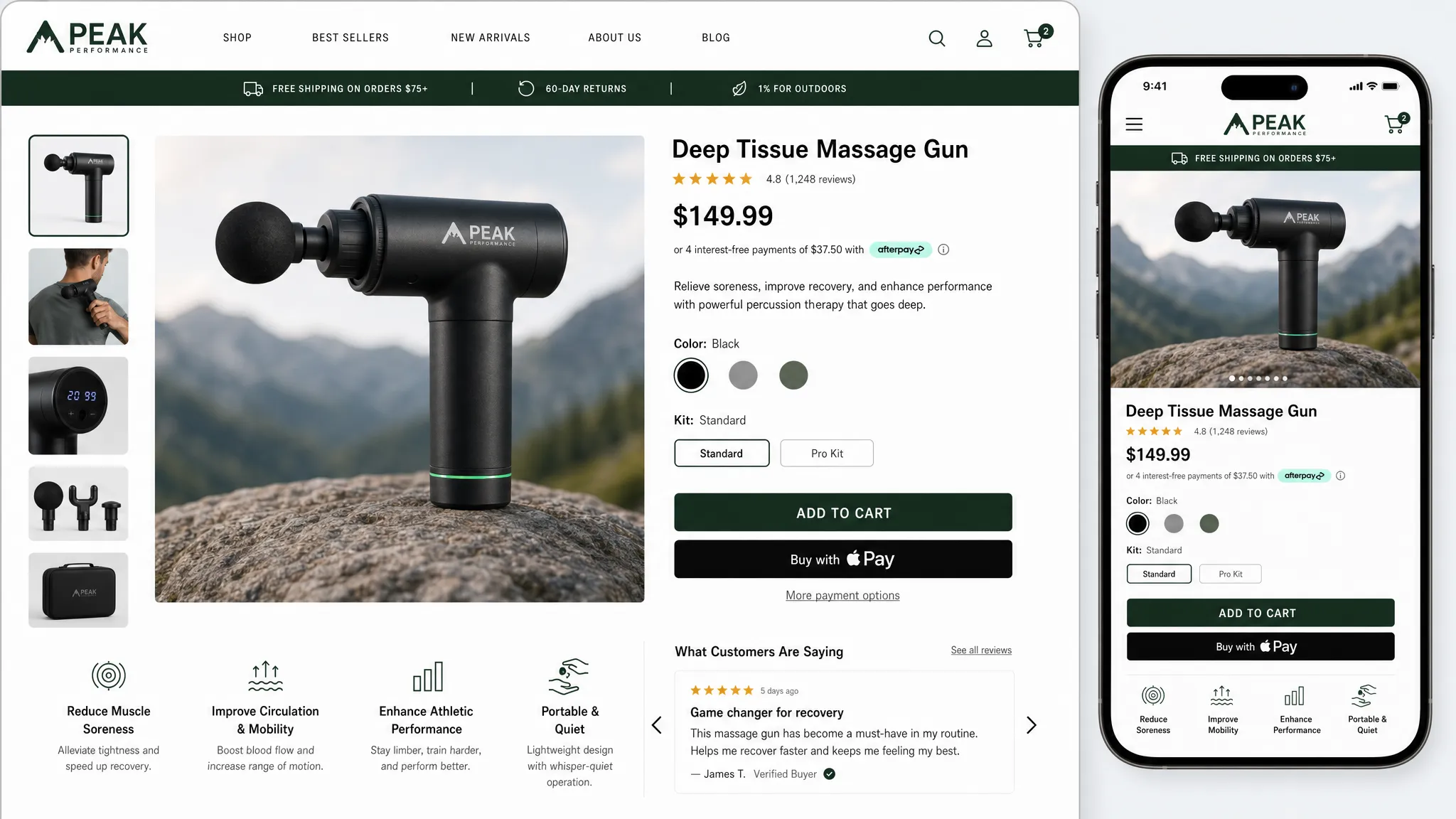
A D2C agency should review the product page experience with fresh eyes. This includes mobile usability, page speed, above-the-fold messaging, image order, product descriptions, reviews, FAQs, shipping and returns visibility, payment options, and offer clarity. In many cases, conversion rate optimization is not about one dramatic redesign. It is about removing small hesitations that add up.
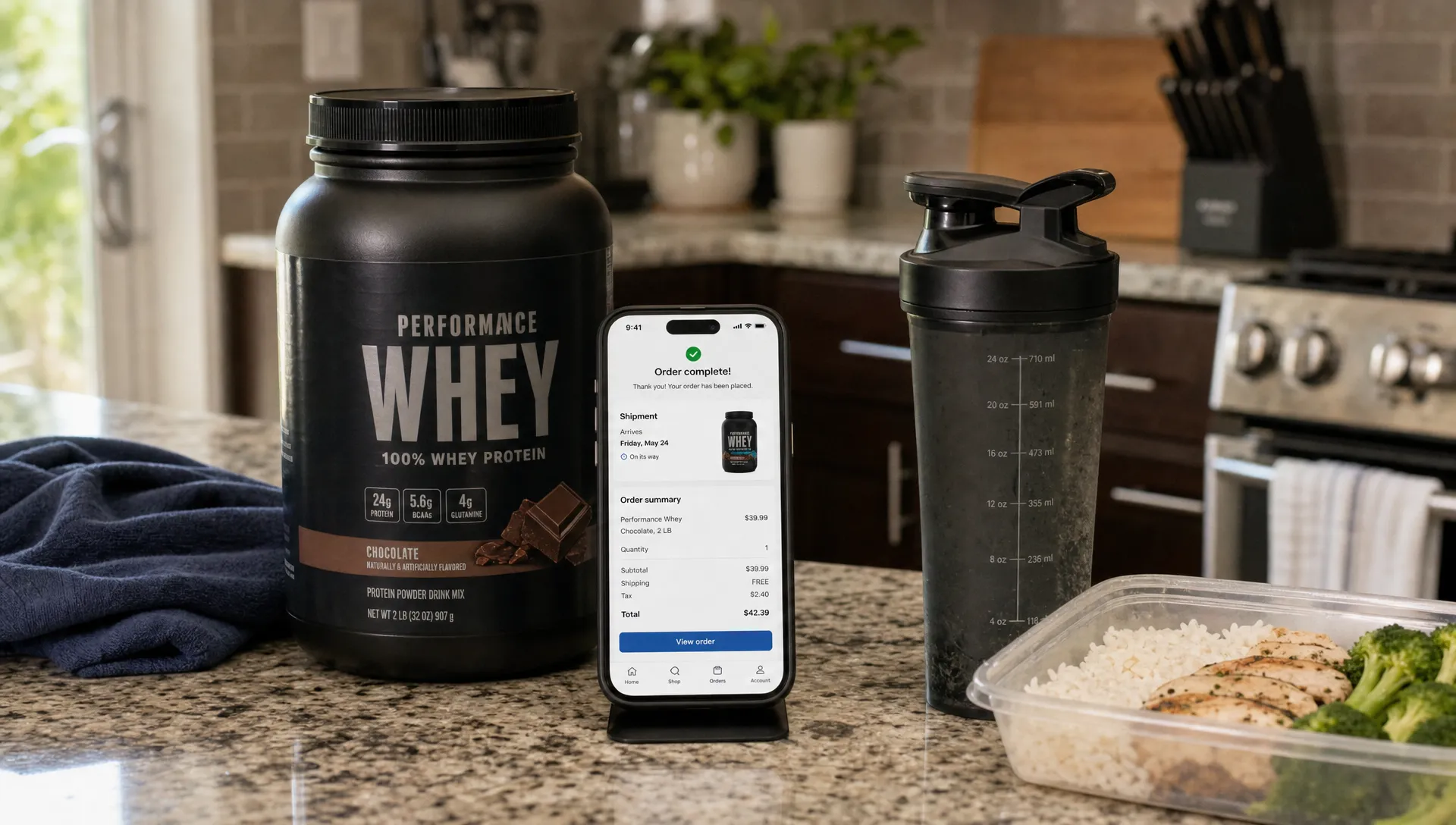
For example, a shopper may be interested but unsure about size, taste, compatibility, subscription terms, delivery timing, or whether the product is right for their specific goal. If those questions are not answered quickly, the customer may leave, even if the ad did its job.
The best agencies connect CRO to acquisition strategy. If a paid campaign emphasizes recovery after training, the landing page should support that promise. If an SEO page ranks for a problem-aware query, the page should help the visitor understand the solution before pushing them to buy. Channel strategy and website experience should not operate in separate silos.
5. Weak retention that forces the brand to keep buying the same customer
Customer acquisition gets most of the attention, but retention is often where D2C profitability is won or lost. If your brand constantly needs new customers to replace one-time buyers, paid media becomes harder to scale profitably.
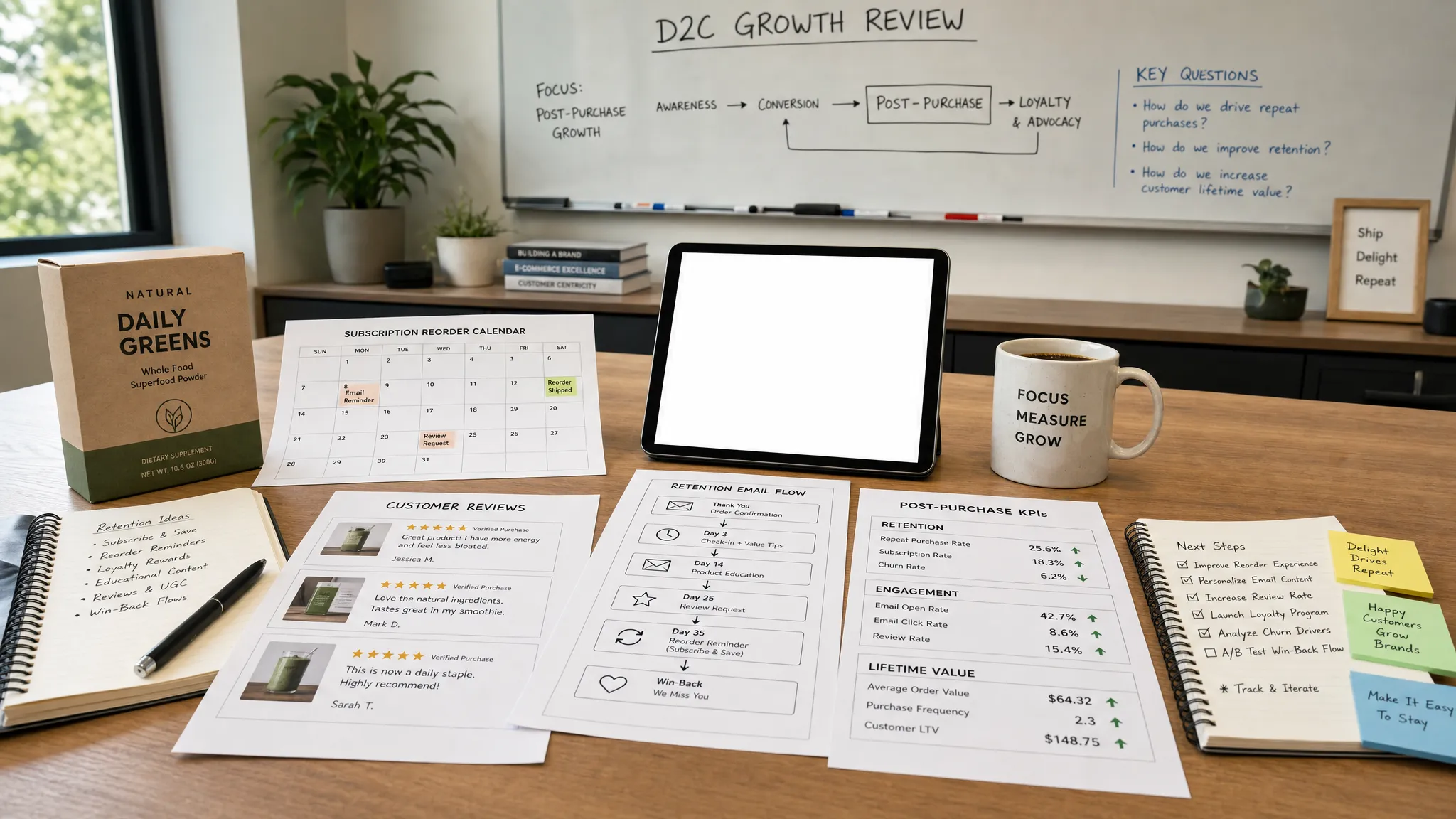
A direct to consumer marketing agency should look at what happens after the first purchase. That includes email flows, SMS strategy if applicable, replenishment timing, cross-sell opportunities, loyalty concepts, education, community, and customer support feedback.
For consumable products, the agency should understand expected usage cycles and reorder windows. For apparel or gear, it should think about seasonal needs, product drops, bundles, and customer segments. For wellness brands, it should help build routines and trust so customers understand how to use the product consistently.
Retention is not just sending more emails. It is creating a better customer relationship. The welcome flow should reinforce the customer’s decision. Post-purchase messaging should reduce buyer’s remorse. Education should help people get better results. Winback campaigns should be timed around realistic behavior instead of arbitrary discounts.
When retention improves, the brand can afford to be more competitive on acquisition because each customer is worth more over time.
6. SEO and content gaps that leave demand to competitors
D2C brands often over-rely on paid acquisition because SEO feels slower. But organic search can capture demand that already exists, especially when customers are researching problems, comparing products, or looking for category education.
A strong agency should identify where SEO can support the full funnel. That may include product and collection page optimization, educational content, comparison pages, buying guides, technical improvements, and content that reflects how customers actually search.
For sports, fitness, and wellness brands, search behavior is often highly specific. People search around goals, symptoms, routines, product types, ingredients, use cases, and comparisons. A brand that answers those questions clearly can build trust before the customer is ready to purchase.
SEO should not be treated as a separate content calendar that lives away from the rest of the business. The best organic strategy reinforces positioning, supports paid media insights, improves conversion pages, and creates assets that can be repurposed across channels. OPTYO’s article on how a search engine optimization agency grows D2C brands explores this connection in more depth.
7. Reporting that hides the real economics
A D2C agency should make performance easier to understand, not harder. If reporting is limited to platform dashboards, your team may miss the bigger picture.
Useful reporting should connect channel metrics to business outcomes. ROAS still matters, but it should be viewed alongside blended CAC, MER, AOV, contribution margin, new versus returning revenue, payback period, cohort behavior, and inventory realities. A campaign that looks strong in-platform may not be profitable after discounts, shipping, returns, and cost of goods are considered.
The agency should also be clear about what can and cannot be known from attribution data. Modern measurement requires judgment. That may include platform data, analytics data, post-purchase surveys, incrementality thinking, and trend analysis. The goal is not perfect attribution. The goal is making better decisions with the evidence available.
For entrepreneurs, transparent reporting is especially important because cash flow matters. Scaling too aggressively without understanding margin can create operational strain even when revenue is growing.
8. Operational and commercial risks that limit growth
Marketing cannot fix every business problem. Sometimes a growth ceiling comes from inventory, fulfillment, pricing, merchandising, product-market fit, or commercial structure. A strong agency should be willing to call that out.
For example, a campaign may drive demand for a product that is frequently out of stock. A subscription offer may fail because the usage cycle does not match the reorder timing. A discount strategy may increase first purchases while training customers to wait for promotions. A retail expansion may require different messaging than D2C acquisition.
Brands with partnerships, athlete collaborations, music usage, licensed content, or proprietary creative also need to protect the assets that make the brand valuable. If IP, licensing, or rights management is part of your growth model, tools that help with monitoring, enforcing, and licensing IP use can support commercial opportunities beyond direct ecommerce sales.
The agency does not need to solve every legal, operational, or finance issue. But it should understand when those issues are affecting marketing performance and help the founder prioritize the right next step.
How to know if an agency is fixing the right problems
When you are evaluating a direct to consumer marketing agency, listen for how it diagnoses problems. A surface-level agency starts with tactics. A stronger partner starts with the growth system.
Good signs include a focus on customer research, funnel analysis, creative testing, offer strategy, website conversion, retention, and business-level reporting. The agency should ask about margins, inventory, best-selling products, customer segments, repeat purchase rate, and past test results. It should want to understand the business before prescribing the channel plan.
Be cautious if the pitch is centered only on ad spend, vague promises, or isolated channel wins. D2C growth is interconnected. If the agency cannot explain how acquisition, conversion, creative, retention, and reporting work together, it may not be equipped to fix the real bottlenecks.
Frequently Asked Questions
What does a direct to consumer marketing agency do? A direct to consumer marketing agency helps ecommerce brands acquire, convert, and retain customers through channels such as paid media, SEO, email, creative, CRO, and growth strategy. The best agencies connect these efforts to profitability rather than managing each tactic in isolation.
When should a D2C brand hire an agency? A brand should consider hiring an agency when it has some evidence of demand but needs a stronger system to scale. That might mean improving paid performance, fixing conversion issues, building better creative, developing retention programs, or creating clearer reporting.
What should a D2C agency fix first? The first fix depends on the bottleneck. If traffic is expensive, positioning and creative may need work. If traffic is qualified but sales are weak, the product page or offer may be the issue. If revenue is growing but profit is not, reporting, retention, margin, or discount strategy may need attention.
How should founders judge agency performance? Founders should look beyond channel metrics. Useful indicators include contribution margin, blended CAC, MER, repeat purchase rate, AOV, conversion rate, payback period, creative learning velocity, and whether the agency is helping the team make better decisions.
Build a D2C growth system that can scale
A direct to consumer marketing agency should fix the issues that make growth harder than it needs to be. That means more than launching campaigns. It means sharpening the brand, improving the website, building better creative, strengthening retention, and reporting on the metrics that actually matter.
For sports, fitness, wellness, and ecommerce brands looking for a partner across performance marketing, creative, CRO, email, SEO, and growth consulting, OPTYO helps connect the pieces into a more scalable growth system.