.png)


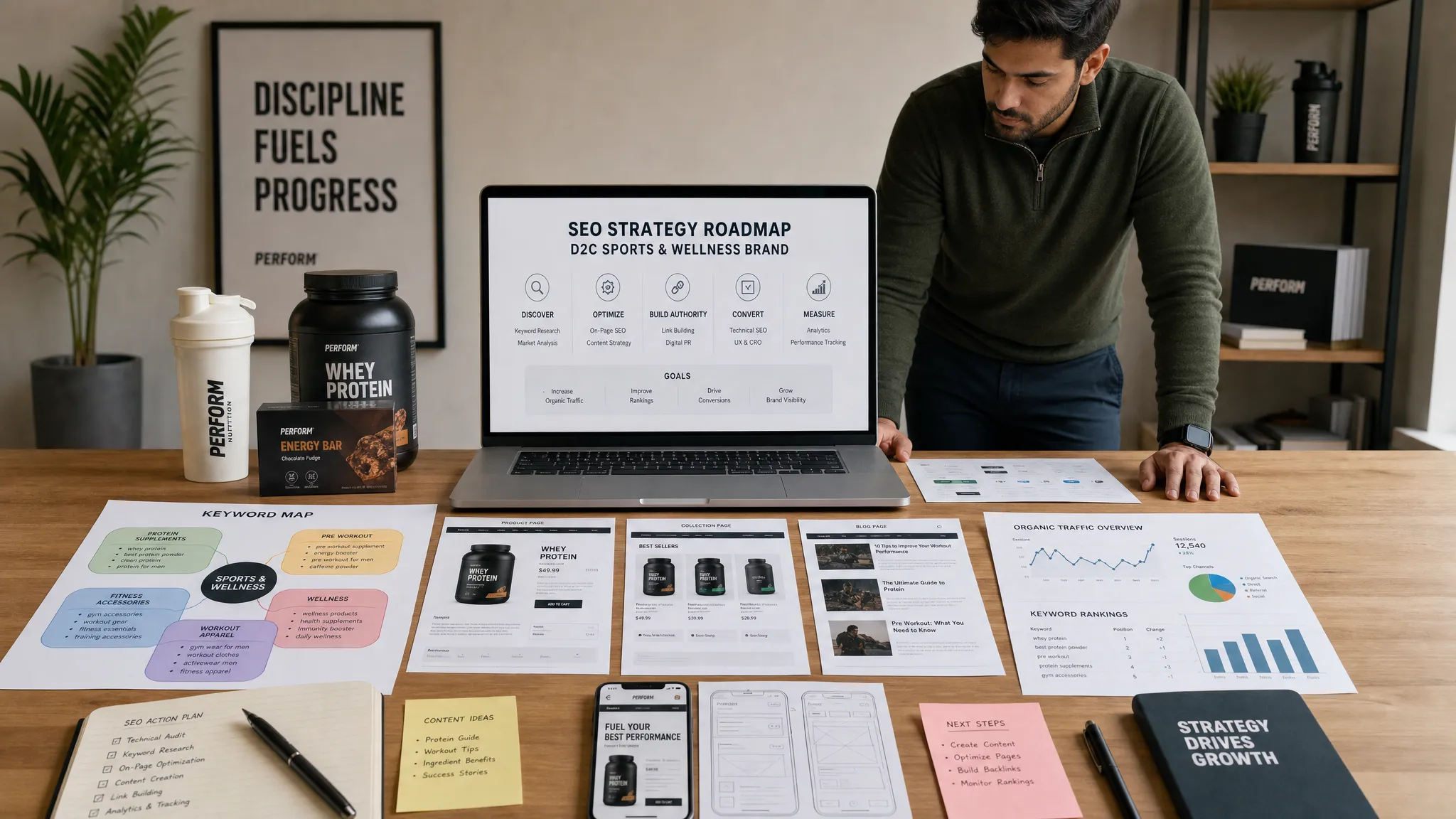

For many D2C founders, SEO feels less urgent than paid social, influencer campaigns, or retail expansion. Paid ads can generate traffic today. SEO takes longer, requires more cross-functional work, and can feel harder to forecast.
But that is exactly why organic search can become a serious advantage. When a D2C brand builds visibility for high-intent searches, it creates a channel that compounds over time, lowers dependency on paid media, and supports every stage of the customer journey, from problem awareness to purchase comparison.
A strong search engine optimization agency does not just chase rankings. It connects search demand to product positioning, site architecture, content, technical performance, conversion rate optimization, and revenue reporting. For D2C brands in competitive categories like sports, fitness, wellness, supplements, apparel, equipment, and consumer packaged goods, that integrated approach is what turns SEO from a content task into a growth engine.
Why SEO matters for D2C growth
D2C brands are built on direct relationships with customers, but customer acquisition has become more expensive and fragmented. Shoppers discover products through TikTok, Instagram, Google, YouTube, marketplaces, Reddit, email, and word of mouth. They rarely buy after one touchpoint.
Organic search plays a unique role in that journey because it captures intent. Someone searching “best adjustable dumbbells for small apartment,” “electrolyte powder without sugar,” or “running recovery tools” is not passively scrolling. They are actively looking for a solution.
That intent matters because SEO can support several critical growth goals at once:
- Increase qualified traffic without paying for every click
- Reduce overreliance on Meta, Google Ads, or affiliate promotions
- Improve product and category page discoverability
- Build trust through educational and comparison content
- Support paid campaigns with better landing pages and stronger messaging
- Create a more defensible brand presence in competitive search results
Google’s own SEO Starter Guide emphasizes making content useful, crawlable, and aligned with what people need. For D2C brands, that means SEO is not about gaming an algorithm. It is about making your products easier to find, understand, and buy.

What a search engine optimization agency actually does for D2C brands
A D2C SEO program is different from a local SEO campaign, a B2B SaaS content plan, or a publisher growth strategy. Ecommerce SEO has to account for product margins, inventory, seasonality, collection pages, product variants, customer reviews, brand positioning, and conversion behavior.
A search engine optimization agency that understands D2C growth will typically focus on several connected areas.
Search demand and customer intent research
Before optimizing pages, the agency needs to understand how customers search. This goes beyond collecting keywords with high volume. The goal is to map search behavior to buying intent.
For example, a fitness equipment brand might find that “home gym equipment” is broad and competitive, while “compact cable machine for home gym” has clearer purchase intent. A hydration brand might discover separate search demand for endurance athletes, low-sugar shoppers, and people comparing electrolyte ingredients.
Good intent research answers questions like:
- What problems are customers trying to solve before they know the product exists?
- Which search terms indicate someone is ready to compare or buy?
- What objections appear in search results, reviews, forums, and competitor content?
- Which product categories deserve dedicated collection pages?
- Which topics can educate shoppers before paid retargeting or email capture?
This research becomes the foundation for site architecture, content planning, ad messaging, and product page improvements.
Technical SEO for ecommerce sites
D2C websites often run on platforms like Shopify, WooCommerce, BigCommerce, or custom headless setups. These platforms can be powerful, but ecommerce sites also create technical SEO challenges quickly.
Product variants, filters, out-of-stock pages, duplicate collections, pagination, slow media files, and app scripts can all affect crawlability and performance. If search engines struggle to understand the site, even strong content may underperform.
A capable agency will review areas such as crawl paths, indexation, internal linking, canonical tags, site speed, mobile usability, structured data, image optimization, and URL structure. For ecommerce brands, product structured data is especially important because it helps search engines understand product information such as price, availability, reviews, and shipping details when implemented correctly. Google provides specific guidance for product structured data.
Technical SEO is not glamorous, but it protects the foundation of growth. If a brand has hundreds of product URLs but search engines only surface a handful of them, the site is leaving demand uncaptured.
Product and collection page optimization
For D2C brands, the highest-value SEO assets are often product detail pages and collection pages. These are the pages most directly tied to revenue.
A search engine optimization agency helps improve these pages by aligning them with how customers evaluate products. That can include clearer page titles, more useful product descriptions, better internal links, stronger FAQs, comparison copy, review integration, and content that addresses objections.
The goal is not to stuff keywords into a product page. The goal is to make the page more relevant and persuasive.
For example, a product page for a recovery tool should not only describe dimensions and materials. It may need to explain who it is for, how it supports recovery routines, what makes it different from cheaper alternatives, and how it fits into a training plan. A collection page for workout supplements should help shoppers navigate benefits, ingredients, flavors, use cases, and customer goals.
This is where SEO and conversion rate optimization overlap. Organic traffic only matters if the page helps visitors move closer to purchase.
How SEO supports the full D2C funnel
A common mistake is treating SEO as only a top-of-funnel content channel. Blog posts can be valuable, but D2C SEO works best when every funnel stage has a purpose.
At the awareness stage, content helps shoppers understand a problem. A wellness brand might publish guides about hydration during endurance training, while a fitness brand might explain how to build a home gym without wasting space.
At the consideration stage, content helps shoppers compare options. This could include buyer guides, ingredient explainers, product comparisons, sizing guides, use-case pages, or category education.
At the conversion stage, SEO strengthens product and collection pages so that shoppers can confidently buy. This includes clear copy, reviews, trust signals, shipping information, FAQs, and internal links from supporting content.
At the retention stage, organic content can support post-purchase education. Care guides, routine ideas, recipe content, training plans, and troubleshooting pages can improve customer experience and create more opportunities for repeat engagement.
This full-funnel approach is especially powerful for sports, fitness, and wellness brands because customers often need education before they purchase. They want to know whether a product fits their goals, body, routine, performance level, lifestyle, or dietary needs.
The agency process: from SEO audit to growth roadmap
A D2C SEO engagement usually starts with a diagnostic phase. The agency needs to understand where the brand is now, what is holding it back, and which opportunities are most likely to create business impact.
The first step is a business-focused SEO audit
An SEO audit should not be a generic checklist. It should connect site issues to revenue opportunities. A strong audit looks at organic traffic, keyword visibility, technical health, page speed, analytics accuracy, content quality, internal linking, backlink profile, ecommerce UX, and competitor positioning.
For a D2C brand, the audit should also consider:
- Best-selling products and highest-margin categories
- Paid media performance and landing page data
- Email capture opportunities from organic traffic
- Product launch calendar and seasonal demand
- Inventory constraints and out-of-stock patterns
- Customer reviews, objections, and support questions
This matters because the “best” SEO opportunity is not always the keyword with the most search volume. It is the opportunity that aligns with demand, margin, conversion potential, and brand strategy.
The next step is prioritization
SEO can produce a long list of recommendations. The agency’s job is to prioritize the work that matters most.
A D2C brand may not need 40 new blog posts right away. It may need better collection pages, a cleaner internal linking structure, improved product schema, and stronger copy on revenue-driving URLs. Another brand may already have a strong technical foundation but lack educational content that captures shoppers earlier in the journey.
Prioritization keeps SEO tied to growth instead of activity for activity’s sake.
Then comes implementation and testing
SEO growth requires implementation across content, development, design, analytics, and merchandising. This is why D2C SEO works best when the agency can collaborate with the people responsible for paid media, creative, email, and ecommerce operations.
At OPTYO, this integrated view matters because SEO is one part of a broader growth system that can include performance marketing strategies, ecommerce development, conversion rate optimization, email marketing, creative asset production, paid social advertising, KPI reporting, and brand strategy consulting. When these functions work together, insights from one channel can improve the others.
For example, paid search data can reveal which commercial terms convert before SEO invests months into organic rankings. Customer comments from paid social can inspire FAQ sections on product pages. Email performance can show which benefits resonate enough to feature in search landing pages.
Content that helps D2C brands win search and trust
Content is still central to SEO, but quality matters more than volume. Google’s guidance on creating helpful, reliable, people-first content is particularly relevant for D2C brands because thin, generic articles rarely build trust or revenue.
A D2C content strategy should be built around customer decisions, not just keyword lists.
For sports, fitness, and wellness brands, useful content might include training guides, product education, comparison resources, ingredient explainers, recovery routines, sizing help, maintenance guides, and expert-backed answers to common customer questions.
The best content often comes from the brand’s actual customer intelligence. Reviews, support tickets, surveys, returns data, founder insights, coach input, athlete feedback, and sales objections can all reveal what shoppers need before they buy.
A strong agency turns those insights into pages that are discoverable, credible, and conversion-aware.
SEO and paid media should not operate separately
Many D2C brands start with paid acquisition because it is faster to launch and easier to control. SEO then gets added later when paid costs rise. The problem is that teams often manage the two channels separately.
That creates missed opportunities.
SEO can make paid media more efficient by improving landing page quality, strengthening product messaging, and identifying high-intent search themes. Paid media can make SEO smarter by validating offers, headlines, creative angles, and product benefits quickly.
For example, if a Meta ad angle around “apartment-friendly strength training” consistently drives purchases, that insight may support SEO content and collection page optimization around compact fitness equipment. If a Google Ads campaign shows strong conversion rates for a specific product modifier, the SEO team can evaluate whether a dedicated landing page or collection page should exist.
This is one reason performance marketing and SEO are stronger together. Organic search compounds over time, while paid media provides fast feedback. D2C brands need both.
OPTYO’s case study with MX Select shows how a data-driven, multi-channel growth strategy can support scale for a premium fitness equipment brand. The campaign combined targeted Google and Meta ads, landing page optimization, email automation, and budget testing, resulting in over $1M in revenue and a 7+ ROAS on major channels. You can read more in the MX Select case study.
Measuring SEO like a growth channel
If SEO reporting stops at rankings and impressions, it will not earn a serious seat at the growth table. D2C founders need to know whether SEO is creating business value.
Rankings can be useful directional indicators, but they are not the final outcome. A search engine optimization agency should help connect organic visibility to traffic quality, assisted conversions, revenue, customer acquisition cost, and lifetime value where tracking allows.
Important SEO KPIs for D2C brands may include organic revenue, non-branded traffic, collection page traffic, product page sessions from organic search, email signups from organic visitors, conversion rate by landing page, revenue from SEO-assisted journeys, and growth in rankings for commercial-intent terms.
It is also important to separate branded and non-branded performance. Branded organic traffic usually reflects demand created by other channels. Non-branded growth shows whether the brand is capturing new search demand from people who may not already know the company.
Good reporting should answer three practical questions:
- Are more qualified shoppers finding the brand organically?
- Are those shoppers engaging with product and collection pages?
- Is organic search contributing to revenue, retention, or lower acquisition costs?
How long does SEO take for a D2C brand?
SEO is not instant, but it also should not be vague. The timeline depends on competition, site authority, technical health, content quality, implementation speed, and the age of the domain.
In the first 30 to 60 days, most brands should expect research, auditing, prioritization, technical fixes, and initial on-page improvements. Within 90 days, early indicators may include improved crawlability, better rankings for lower-competition terms, stronger engagement on optimized pages, and clearer search visibility trends.
More competitive growth, especially for commercial category keywords, often takes six months or more. That does not mean SEO is inactive during that period. It means the compounding effects of content, authority, technical improvements, and user behavior need time to build.
The key is to measure leading indicators while staying focused on revenue outcomes. SEO should be patient, but not passive.
What to look for in a D2C search engine optimization agency
Not every SEO provider is built for D2C ecommerce. A good fit should understand both organic search and the realities of selling products online.
Look for an agency that can speak clearly about search intent, ecommerce architecture, product page optimization, technical SEO, content strategy, analytics, and conversion rate optimization. They should also understand how SEO interacts with paid media, email, creative, and brand positioning.
Strong signs include practical prioritization, transparent reporting, experience with ecommerce platforms, comfort working across teams, and a willingness to connect recommendations to business outcomes. Be cautious of agencies that promise instant rankings, push high-volume blog production without strategy, or focus only on traffic without discussing conversion quality.
For D2C founders, the right agency should feel like a growth partner, not just a vendor sending monthly keyword reports.
Why D2C SEO is especially important for sports, fitness, and wellness brands
Sports, fitness, and wellness customers are research-driven. They compare materials, ingredients, routines, benefits, reviews, certifications, performance claims, and personal fit. They also care about trust.
That makes SEO a strong channel for brands that can educate well. A fitness equipment brand can help customers choose the right setup. A wellness CPG brand can explain ingredient differences. A recovery brand can teach use cases. A performance apparel brand can guide sizing, care, and activity-specific selection.
When this content is connected to product pages and supported by a technically sound ecommerce experience, it does more than attract traffic. It helps customers make confident decisions.
That is where a search engine optimization agency can create meaningful leverage. It can turn existing product expertise into an organic growth system that supports acquisition, conversion, and brand authority.
Frequently Asked Questions
What does a search engine optimization agency do for a D2C brand? A search engine optimization agency helps D2C brands improve organic visibility, technical site health, product and collection page performance, content strategy, internal linking, structured data, and SEO reporting. The goal is to attract qualified shoppers and turn organic search into measurable growth.
Is SEO worth it for ecommerce brands that already run paid ads? Yes, because SEO and paid ads solve different problems. Paid ads can create immediate traffic, while SEO builds compounding visibility and can reduce dependence on paid acquisition over time. SEO also improves landing pages, product education, and conversion quality.
How long does ecommerce SEO take to show results? Some technical and on-page improvements can show early movement within a few months, but meaningful growth in competitive categories often takes six months or more. The timeline depends on competition, site quality, content depth, authority, and implementation speed.
Should D2C brands focus on blog content or product pages first? It depends on the site. Many D2C brands should optimize product and collection pages first because those pages are closest to revenue. Blog and educational content become more powerful when they support a clear path to relevant products.
How does SEO help sports, fitness, and wellness brands specifically? These categories often involve research-heavy purchases. SEO helps brands answer customer questions, explain product benefits, compare options, build trust, and capture shoppers who are actively searching for solutions.
Turn organic search into a scalable D2C growth channel
For D2C brands, SEO is no longer just a marketing checklist. It is a way to capture demand, strengthen the customer journey, improve conversion paths, and build a more durable acquisition system.
The brands that win organic search are usually not the ones publishing the most content. They are the ones that understand their customers, structure their ecommerce sites around real buying intent, and connect SEO with paid media, creative, email, CRO, and brand strategy.
If your sports, fitness, or wellness brand is ready to make SEO part of a broader growth system, connect with OPTYO to explore how performance marketing and brand acceleration can work together to scale your next stage of growth.