.png)


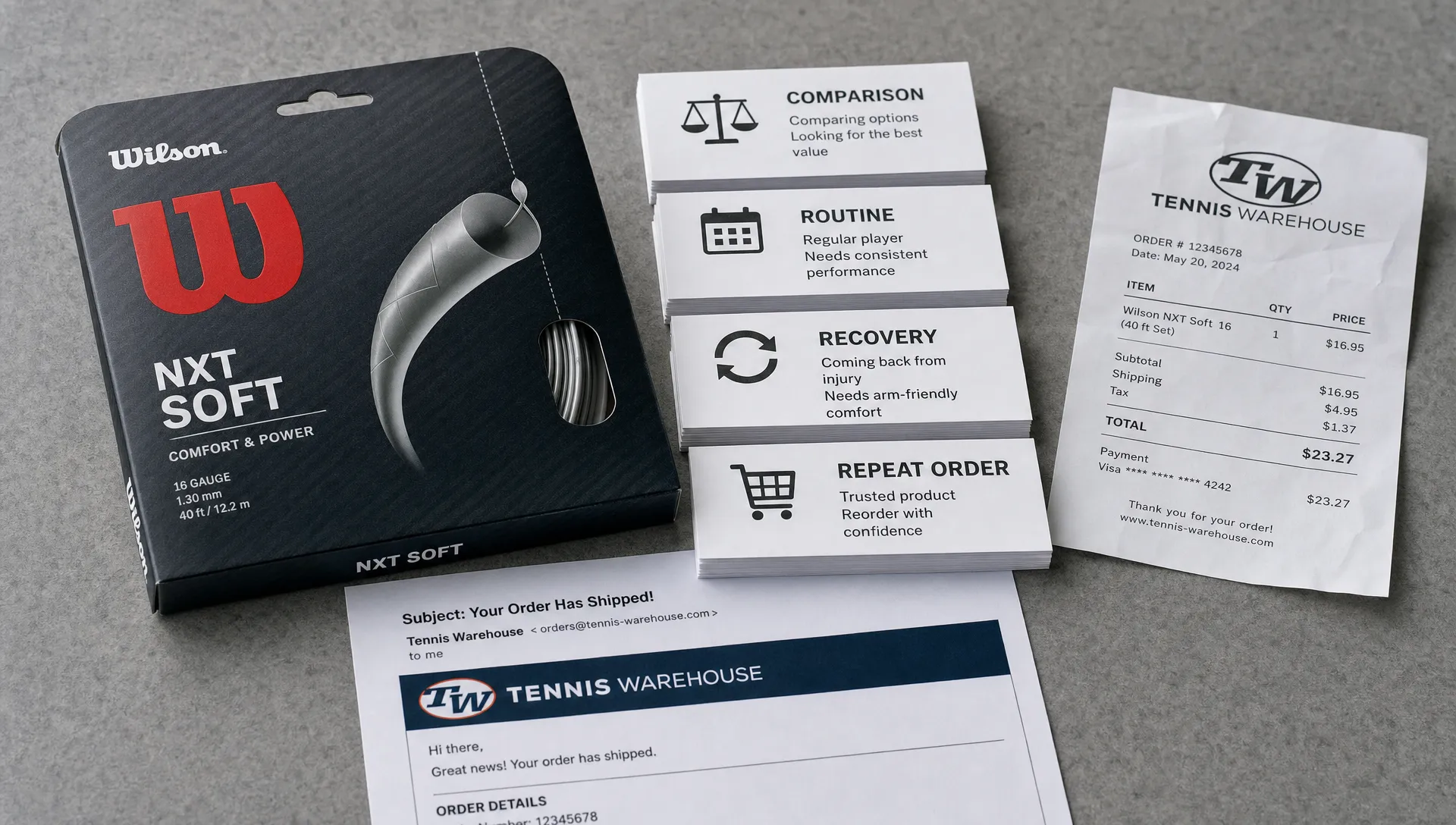

Fan attention is powerful, but it is not the same as purchase intent. A sports marketing agency earns its value by turning the energy around a sport, team, athlete, training goal or lifestyle into a clear path to revenue.
For ecommerce entrepreneurs in sports, fitness and wellness, this matters because the audience is already emotionally engaged. They follow creators, join communities, train for events, watch competitions, track progress and spend money on products that help them feel closer to the identity they want. The challenge is not only reaching those fans. The challenge is moving them from interest to trust, then from trust to checkout.
A strong agency does that by connecting brand strategy, creative, media, ecommerce, email and measurement. Instead of chasing attention for its own sake, it builds a system where every campaign answers one commercial question: what would make this fan ready to buy now?
Fans are not one audience
Sports fans are often grouped too broadly. A runner training for a first 10K, a parent buying youth soccer gear, a gym enthusiast comparing supplements and a wellness customer trying to improve energy all behave differently. They may interact with similar content, but their motivations, objections and buying triggers are not the same.
A sports marketing agency starts by separating the crowd into meaningful segments. That means looking beyond demographics and asking what the customer is trying to achieve. Is the purchase about performance, recovery, confidence, identity, convenience or belonging?
| Fan signal | What it can reveal | Better marketing angle |
|---|---|---|
| Follows athletes or creators | Aspirational identity | Show how the product fits the routine behind the result |
| Searches product comparisons | Active evaluation | Use proof, benefits and clear differentiation |
| Engages with training content | Goal-driven intent | Connect the product to progress, consistency or recovery |
| Joins event or challenge communities | Time-sensitive motivation | Build campaigns around preparation, launch windows or milestones |
| Repeats purchase in a category | Habit-based buying | Use subscriptions, bundles or retention offers |
This segmentation prevents one-size-fits-all marketing. It also improves creative testing because each ad, landing page or email has a clearer job.
Start with the buying moment, not the campaign idea
Many sports brands begin with a big creative concept, then try to make the sales journey fit around it. A performance-minded agency works in the opposite direction. It identifies the buying moment first, then builds the campaign around that moment.
For example, a fitness apparel brand may see stronger purchase intent before a seasonal training push, after a creator posts a workout routine or when customers need gear for a specific event. A wellness brand might find demand around new habits, recovery concerns or a health goal. A sports equipment company may convert best when buyers are comparing features before a new season.
Once the buying moment is clear, the agency can shape messaging around three questions:
- What is the customer trying to improve or solve?
- What proof do they need before they trust the product?
- What friction could stop them from checking out?
This keeps campaigns grounded in commercial behavior rather than vague awareness. The fan may love the sport already, but the brand still has to show why this product belongs in their routine.
Creative turns identity into proof
Sports and fitness purchases are rarely purely functional. Customers are buying performance, status, confidence, discipline, community or a better version of themselves. Good creative respects that emotion without relying on hype alone.
The agency’s job is to turn identity into proof. That can mean showing the product in real training environments, demonstrating how it solves a specific problem or using credible voices who already have trust with the audience. For some brands, that voice may be an athlete. For others, it may be a coach, practitioner, creator, customer or founder.
The best creative usually blends several forms of evidence. Product demonstrations show how the item works. User-generated content makes the product feel attainable. Expert-led content adds authority. Founder stories explain why the brand exists. Comparison assets help customers choose. Reviews reduce risk.
This is where sports marketing becomes more than branding. The creative has to carry the customer forward. A video might earn attention, but the next step may be a landing page that expands the claim, an email that handles objections or a product page that makes sizing, ingredients, shipping and guarantees easy to understand.
The funnel has to connect from fan attention to checkout
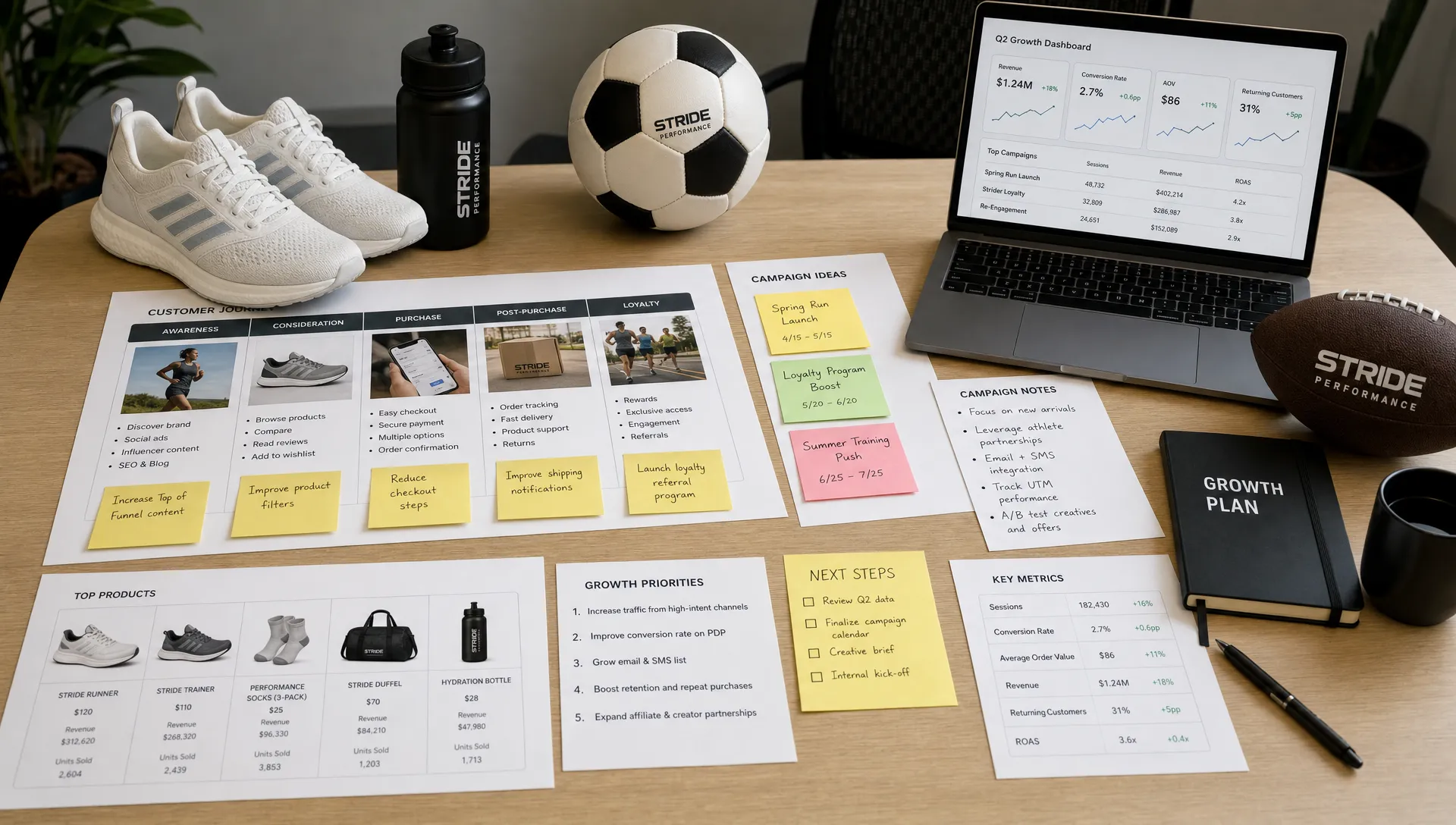
A fan may see your brand on Instagram, search for reviews later, browse your site on mobile, abandon cart, return through email and buy during a promotion. If those touchpoints feel disconnected, conversion suffers.
A sports marketing agency looks for gaps across the full journey. The ad promise must match the landing page. The product page must support the claim made in the creative. The checkout must be fast and trustworthy. Email and SMS should continue the story instead of sending generic discounts.
If your brand is struggling with traffic that does not convert, it may be a funnel issue rather than an audience issue. OPTYO has written more on how agencies connect the ecommerce funnel from first touch to repeat purchase, which is often where sports, fitness and wellness brands find hidden growth.
Channels work best as a system
Paid social, paid search, SEO, influencer partnerships, email, content and ecommerce optimization each play a different role. The mistake is treating them as separate campaigns instead of one customer journey.
Paid social can introduce the product through emotion and proof. Search captures active demand when customers compare solutions. SEO builds durable visibility around questions, product education and category intent. Email turns subscribers into buyers and buyers into repeat customers. Conversion rate optimization makes sure paid traffic is not wasted once it reaches the site.
For sports brands, the strongest channel mix often follows the fan’s behavior. A customer may discover a product through a training clip, search for the brand name, read a comparison, sign up for a discount or buy after seeing product proof in a follow-up email. The agency’s role is to make those steps feel natural.
That is also why creative and media cannot be separated. Better targeting will not save weak creative. Better creative will not perform if the offer, landing page or timing is wrong. For a closer look at the advertising side of this system, OPTYO’s guide to how sports advertising turns attention into sales covers the revenue logic behind campaign planning.
Trust is especially important in wellness and performance categories
Sports, fitness and wellness brands often operate in categories where customers care deeply about results. That creates opportunity, but it also raises the standard for claims. If a product touches performance, nutrition, recovery, body composition or health, credibility matters.
A smart agency helps the brand avoid generic promises and build trust through useful education, responsible messaging and relevant authority. This can include practitioner input, transparent product information, customer stories and content that helps buyers make informed choices.
For wellness brands, the wider ecosystem of credible guidance also matters. A nutrition-focused company, for instance, can strengthen its content strategy by respecting the role of qualified professionals and resources such as personalized nutrition guidance from Tracey Warren Nutrition when audiences need more individual support.
The goal is not to make every brand sound clinical. The goal is to make the marketing believable. In performance categories, trust is a conversion asset.
Turning first-time buyers into repeat customers
The first purchase is only part of the commercial picture. Many sports and wellness products have natural repeat purchase patterns, whether that is supplements, apparel, accessories, consumables, coaching add-ons or seasonal gear.
A sports marketing agency should think about retention from the start. Post-purchase email can teach customers how to get the best result from the product. Replenishment flows can remind buyers when it is time to reorder. Community content can keep customers engaged between purchases. Loyalty offers and bundles can increase lifetime value without relying on constant discounting.
Retention also feeds acquisition. Reviews, testimonials, customer content and referral behavior all come from the customer experience after purchase. If the post-purchase journey is weak, the brand has to keep paying to replace customers who should have stayed.
Measurement separates fan engagement from business growth
Likes, views and comments can be useful signals, but they are not enough. The real question is whether fan engagement is creating profitable growth.
A performance-focused agency ties brand activity to ecommerce metrics. That does not mean every campaign must produce an immediate purchase, but every campaign should have a measurable role in the customer journey.
| Marketing activity | What to measure | Why it matters |
|---|---|---|
| Creator or athlete content | Assisted revenue, traffic quality and new customer rate | Shows whether borrowed attention attracts buyers |
| Paid social campaigns | CAC, ROAS, contribution margin and creative fatigue | Reveals whether ads scale profitably |
| SEO and content | Organic revenue, qualified traffic and email capture | Builds long-term demand beyond paid media |
| Product page testing | Conversion rate, add-to-cart rate and checkout completion | Turns more visitors into buyers |
| Email retention | Repeat purchase rate, revenue per recipient and churn signals | Increases customer lifetime value |
This is where entrepreneurs should expect clarity. Reports should not bury the business in dashboards. They should explain what was tested, what was learned, what changed and what happens next.
What a sports marketing agency actually brings to the table
The best agencies combine category fluency with commercial discipline. They understand why people care about sport and wellness, but they also understand paid media economics, ecommerce conversion, creative testing and retention.
For a D2C or CPG founder, that mix can be difficult to build in-house early on. You may have a strong product and a passionate audience, but still lack the structure to scale efficiently. A specialized agency can help translate demand into a repeatable growth system.
OPTYO works at that intersection as a performance marketing and brand accelerator agency for sports, fitness and wellness companies. The work can span performance marketing strategies, paid social advertising, ecommerce development, conversion rate optimization, email marketing, SEO, creative asset production, KPI reporting and growth consulting. The value is not one isolated tactic. It is the coordination of those tactics around growth.
When should an ecommerce brand hire a sports marketing agency?
A brand does not need to wait until growth stalls. In many cases, the right time is when the founder has proof of demand but not yet a reliable engine for scaling.
Common signs include strong social engagement but weak conversion, paid ads that work only in short bursts, a loyal niche audience that has not expanded, product pages that do not match the strength of the brand or launches that spike revenue without improving repeat purchase.
Hiring an agency also makes sense when the market becomes more competitive. As customer acquisition costs rise, sports brands need better creative, stronger positioning, cleaner measurement and a funnel that wastes less traffic. Fan attention is still valuable, but only when the brand knows how to capture, convert and retain it.
Frequently Asked Questions
What does a sports marketing agency do for ecommerce brands? A sports marketing agency helps sports, fitness and wellness brands turn audience attention into revenue through strategy, creative, paid media, ecommerce optimization, SEO, email marketing and performance measurement.
How does sports marketing turn fans into customers? It connects emotional interest with a clear buying reason. The agency identifies the customer’s motivation, builds proof-based creative, sends traffic to the right ecommerce journey and uses retention marketing to encourage repeat purchases.
Is sports marketing only for brands with athlete partnerships? No. Athlete partnerships can help, but they are not required. Many brands grow through customer stories, founder-led content, coach education, product demonstrations, SEO, paid social and strong ecommerce fundamentals.
What metrics should sports brands track? Useful metrics include customer acquisition cost, conversion rate, average order value, repeat purchase rate, contribution margin, email revenue, organic revenue and creative performance. Engagement metrics matter only when they help explain buyer behavior.
Can a small sports or wellness brand benefit from an agency? Yes, if the brand has product-market demand and needs a clearer growth system. A specialized agency can help prioritize the highest-leverage improvements instead of spreading budget across disconnected tactics.
Ready to turn fan attention into customers?
If your sports, fitness or wellness brand has an engaged audience but needs stronger ecommerce growth, the next step is building a system that connects creative, media, conversion and retention.
You can talk to OPTYO about scaling your sports, fitness or wellness brand and explore how a performance marketing and brand acceleration approach can turn fan energy into measurable customer growth.