.png)


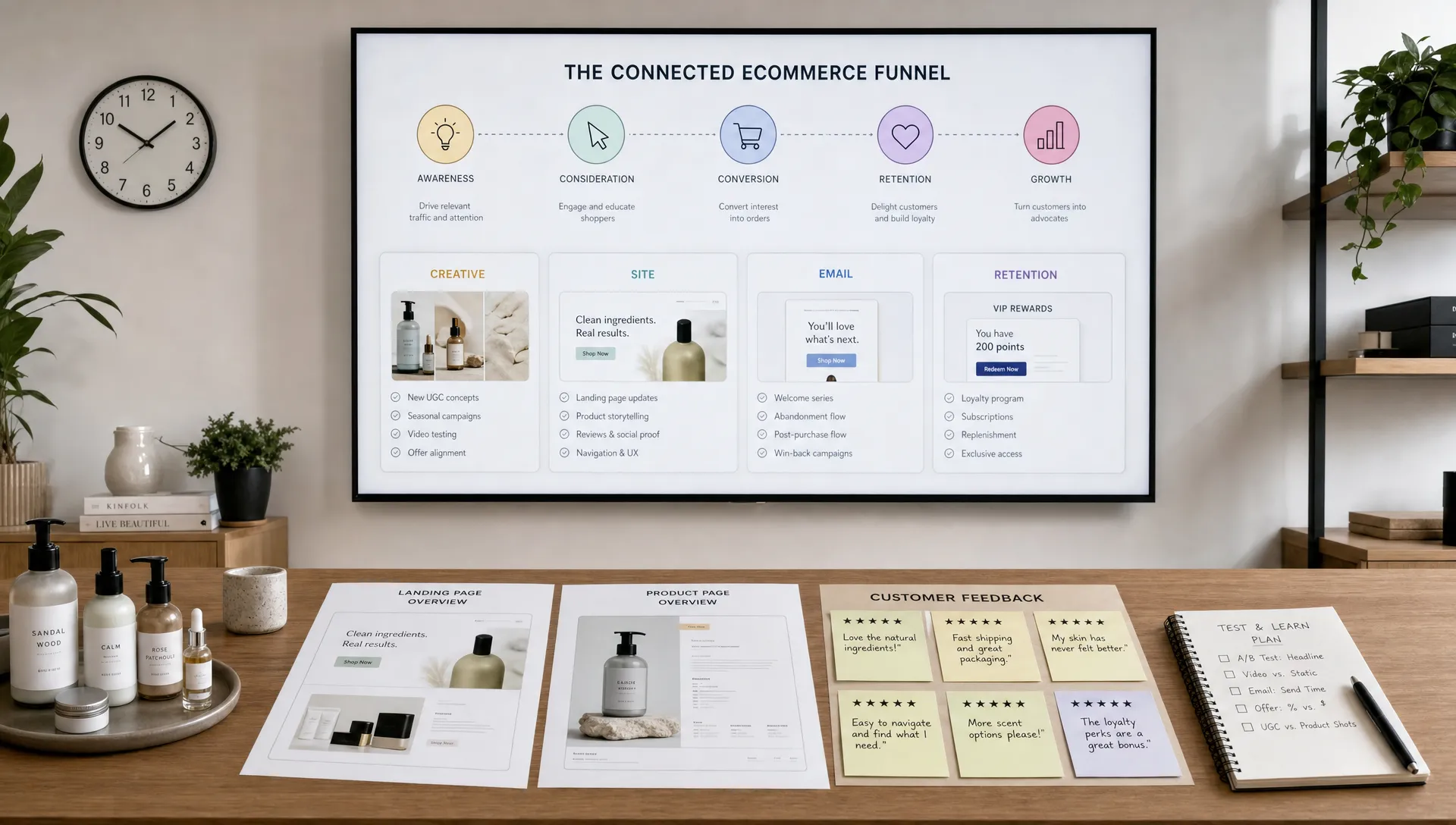

A funnel is not just a sequence of ads, landing pages and emails. For an ecommerce brand, the funnel is the full path a customer takes from first noticing a product to trusting it enough to buy, use, reorder and recommend it.
That path breaks easily. A paid social ad promises one thing, the product page says another, the checkout creates doubt and the post-purchase flow goes silent. When this happens, more media spend only pushes more people into the same leaks.
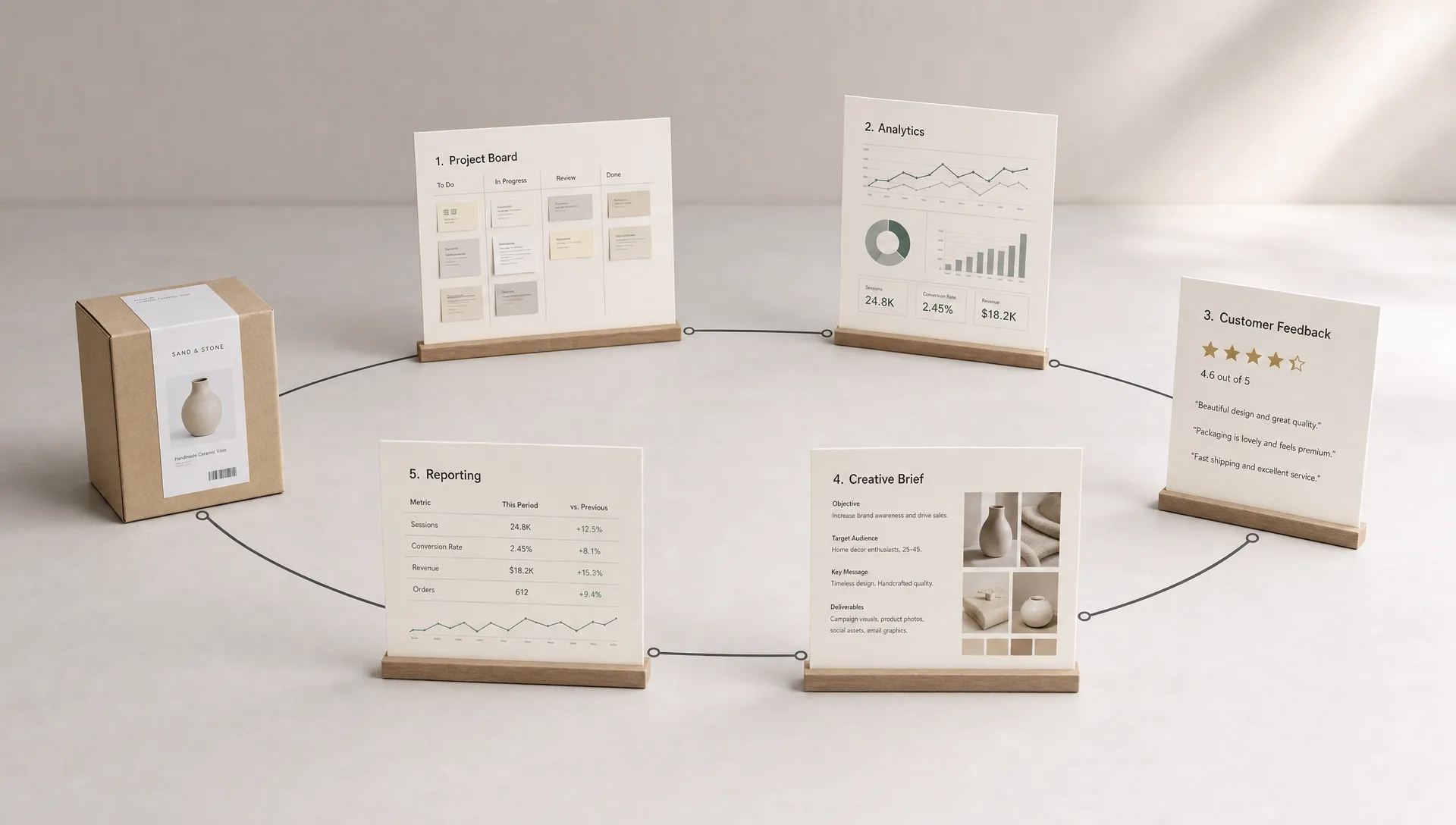
A strong marketing and advertising agency connects the funnel by making every customer touchpoint work from the same strategy. Brand, creative, paid media, SEO, ecommerce experience, conversion rate optimization and retention are not treated as separate workstreams. They are connected around one question: what does the customer need to believe, feel and do next?
For sports, fitness and wellness brands, that connection matters even more. Buyers are often purchasing into an outcome, a healthier routine, a performance goal, a team identity or a lifestyle. If the funnel does not carry that motivation clearly from first touch to repeat purchase, growth becomes expensive and inconsistent.
What it means to connect the funnel
Connecting the funnel does not mean running campaigns on every channel. It means aligning the customer journey so each stage creates momentum for the next one.
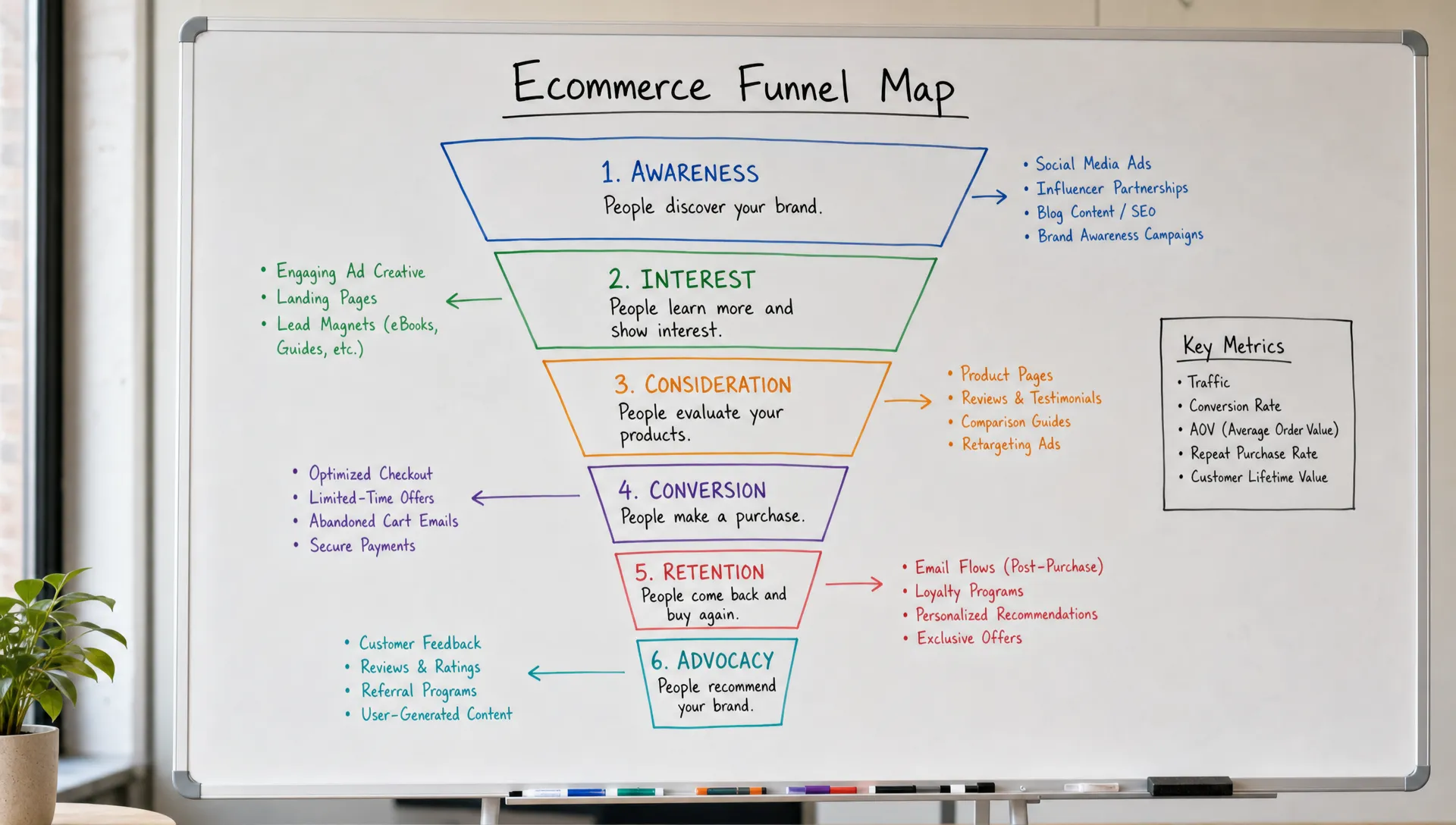
At the awareness stage, the job is not just to generate impressions. It is to introduce the right promise to the right person. At the consideration stage, the job is to turn curiosity into confidence through proof, education, reviews, comparisons and offer clarity. At conversion, the job is to remove hesitation. After the first order, the job becomes usage, satisfaction, repeat purchase and advocacy.
Many ecommerce brands build these stages in fragments. A media buyer optimizes ad sets. A designer makes creative. A developer updates the site. An email platform sends flows. Each person may do competent work, but the customer does not experience the funnel as departments. They experience it as one brand.
That is why the modern agency role has changed. As OPTYO has covered in its breakdown of what a digital marketing agency should deliver today, the work has to go beyond launching ads. The agency should understand the business model, positioning, customer intent, website experience and measurement system behind the marketing.
Where ecommerce funnels usually disconnect
Most funnel problems do not start with a single broken tactic. They come from mismatched signals.
An ad might lead with a bold performance claim, but the landing page may bury the proof that supports it. A product page may list features, but never explain why they matter to a specific athlete, parent, coach or wellness buyer. A checkout flow may ask for trust before the brand has answered basic questions about sizing, shipping, returns or product use.
Creative testing can also become isolated. A brand learns that one hook, angle or visual style drives better click-through rates, but that learning never reaches the website, email strategy or product education. The funnel keeps generating data, but the data does not travel.
Retention is another common disconnect. Many brands focus heavily on acquisition, then send generic post-purchase emails that do little to help the customer succeed with the product. For a supplement brand, that may mean no guidance on consistency. For a fitness equipment company, it may mean no onboarding routine. For sports apparel, it may mean no styling, care or seasonal cross-sell strategy.
Physical experience can be part of the funnel too. If a customer buys a premium wellness product and receives damaged, wasteful or forgettable packaging, the brand promise weakens after the sale. In categories where unboxing, sustainability or product protection matter, even choices like working with a custom corrugated packaging partner can support the customer experience beyond the website.
A connected funnel closes these gaps by making sure every touchpoint answers the next customer objection before it becomes a reason to leave.
How an agency connects the funnel from first touch to repeat purchase
A funnel becomes connected when strategy, execution and measurement share the same operating system. That starts before campaign launch.
Start with business economics, not channel tactics
Before deciding how much to spend on Meta, Google, TikTok, SEO or email, an agency needs to understand the economics of growth. Average order value, gross margin, contribution margin, repeat purchase rate, purchase frequency and cash flow all shape what good performance looks like.
A brand with high repeat purchase potential can often justify a different acquisition target than a brand built around one-time equipment purchases. A wellness subscription offer needs different funnel logic than a limited-edition sports apparel drop. A premium product with strong margins may need more education and proof before conversion, while a lower-priced impulse item may rely more heavily on speed, offer clarity and creative volume.
When the agency knows the business model, channel decisions become more disciplined. The goal is no longer cheap traffic. The goal is profitable customer acquisition and a path to long-term value.
Build a message architecture
A connected funnel needs a clear message architecture. This is the map of what the brand says, to whom, at which stage and with which proof.
For example, a recovery product for runners may need one message for marathon training, another for injury prevention and another for daily mobility. A functional beverage may need to separate taste, ingredients, use occasion and lifestyle identity. A fitness apparel brand may need to speak differently to performance buyers, casual customers and gift shoppers.
A useful message architecture usually clarifies:
- The core promise customers should remember
- The strongest proof points behind that promise
- The objections that prevent purchase
- The emotional and practical motivations behind the category
- The offer, guarantee or incentive that makes action easier
Once this is defined, the same logic can guide ads, product pages, email flows, SEO content, SMS, influencer briefs and sales promotions.
Use creative as research
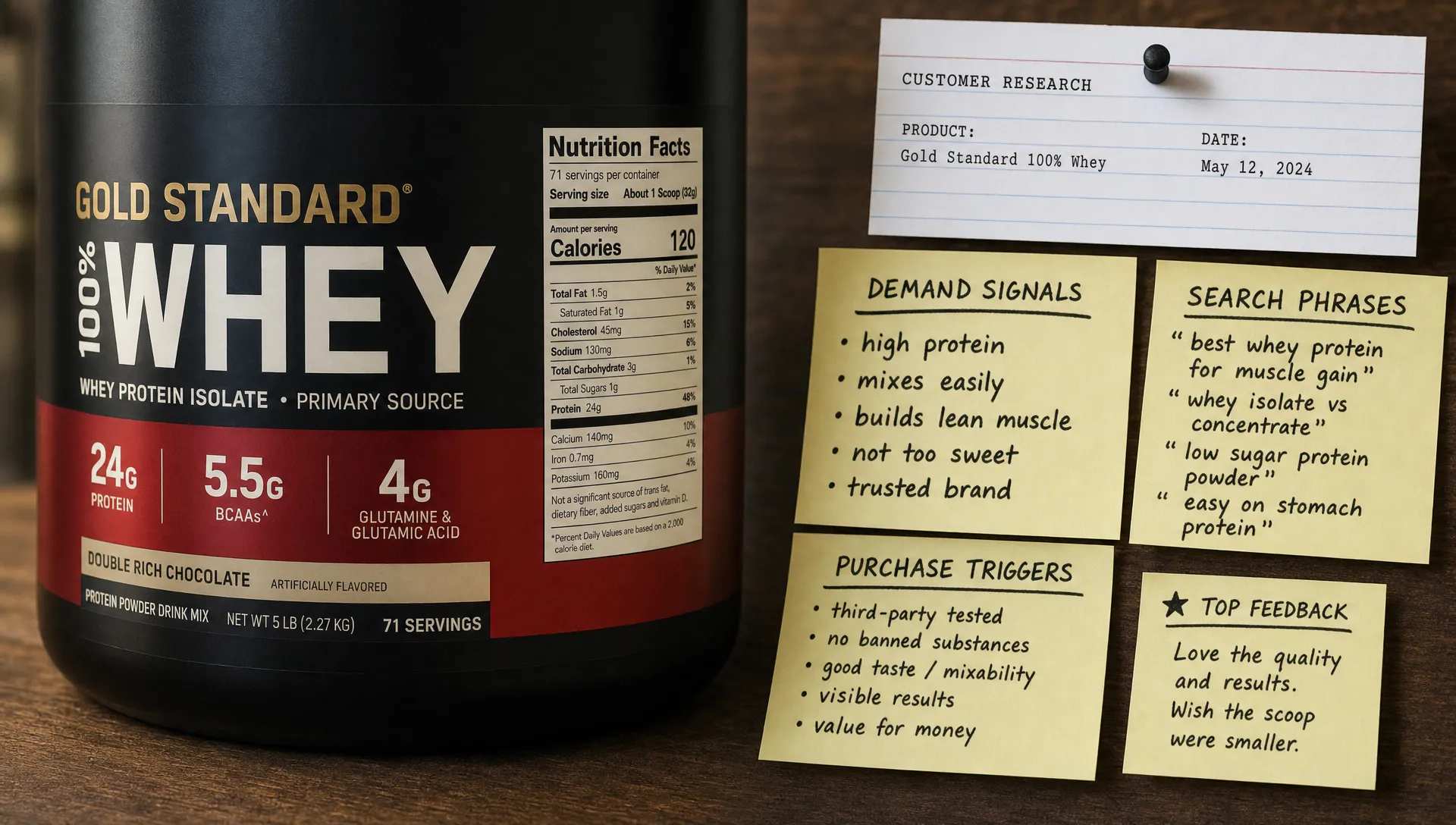
Creative is often treated as output, but it should also be treated as market research. Every hook, visual, testimonial, demo, comparison and founder story teaches the brand something about customer motivation.
If a video showing product use outperforms a lifestyle montage, the product page may need stronger demonstrations. If a customer testimonial about confidence beats a feature-focused ad, email flows may need to lean into emotional outcomes. If comparison creative performs well, the brand may need an SEO page or landing page that helps customers evaluate alternatives.
This is where a marketing and advertising agency can add value beyond buying media. It can turn creative results into funnel improvements. Paid social becomes a testing environment for positioning, objections and proof, not just a distribution channel.
Make the website continue the ad
The landing page should feel like the next logical step after the ad, not a restart. If an ad speaks to busy parents trying to stay active, the landing page should not open with generic brand copy. If an ad promotes a new product drop, the page should make availability, sizing, benefits and urgency easy to understand.
For ecommerce brands, the product detail page often carries too much responsibility with too little structure. Strong pages usually answer who the product is for, what problem it solves, why it is different, how to choose the right option and what customers say after using it.
CRO is not just button color testing. It is the process of reducing doubt and increasing clarity. That can include offer structure, page speed, navigation, product education, social proof, checkout experience, quiz flows, bundles and post-click landing pages.
Let paid media, SEO and retention play different roles
A connected funnel does not expect every channel to do the same job.
Paid media is strong for demand creation, testing angles and scaling proven offers. Search engine optimization captures intent that already exists, especially when customers are comparing products, researching problems or looking for education. Email and SMS help convert leads, support first-time customers and increase repeat purchases.
The mistake is measuring every channel only by last-click revenue. SEO may assist consideration before a paid social conversion. Email may turn paid traffic into first purchases over several days. Retention may make the original acquisition spend profitable over months.
A better approach is to assign each channel a clear role in the funnel, then measure whether that role is working.
Turn the first purchase into the next purchase
The funnel does not end at checkout. In many D2C categories, the most profitable growth comes after the first order.
A connected post-purchase system helps customers use the product successfully. That might include onboarding emails, how-to content, routine guidance, replenishment reminders, loyalty incentives, product education and review requests. It should also feed learning back into acquisition.
If customers repeatedly ask the same support question, that question belongs on the product page and in pre-purchase emails. If reviews mention a benefit the brand has not emphasized, that language should be tested in ads. If repeat customers buy a specific bundle, that bundle may deserve a dedicated offer strategy.
The data layer that keeps the funnel connected
A connected funnel needs measurement, but not endless dashboards. The agency and brand should agree on a small set of metrics that explain whether people are moving forward.
At the top of the funnel, useful signals may include thumb-stop rate, video hold rate, click-through rate, qualified traffic and creative-level engagement. These numbers do not prove profitability, but they help identify which angles earn attention.
In the middle of the funnel, the focus shifts to product page views, scroll depth, quiz starts, email signups, review engagement, add-to-cart rate and time to purchase. These metrics show whether interest is becoming consideration.
At conversion, the key measures include conversion rate, revenue per session, checkout completion, cost per acquisition, average order value and contribution margin. For operators, margin matters because revenue without profit can hide weak economics.
After purchase, the funnel should track repeat purchase rate, days between orders, subscription retention if applicable, refund rate, customer support themes, review quality and cohort profitability.
Attribution will never be perfect. Privacy changes, cross-device behavior and platform reporting gaps make certainty difficult. A practical agency uses multiple views: platform data, ecommerce analytics, blended CAC, cohort analysis, incrementality tests where possible and customer feedback. The goal is not to win an attribution argument. The goal is to make better decisions.
What this looks like for sports, fitness and wellness brands
Sports, fitness and wellness brands often sell more than a product. They sell progress, identity, discipline, recovery, confidence or belonging. That makes funnel connection especially important.
A customer buying running gear may care about durability, comfort, weather conditions, training goals and brand values. A customer buying a supplement may need ingredient transparency, usage guidance, trust signals and consistency reminders. A customer buying home fitness equipment may need space requirements, setup support, workout ideas and proof that the product will not become clutter.
A connected funnel accounts for those motivations at each step. Ads introduce the outcome. Landing pages prove the product can deliver it. Emails educate and reduce hesitation. Post-purchase communication helps the customer build the habit. Retention campaigns offer the next logical product or replenishment at the right time.
Seasonality also matters. Fitness demand often spikes around New Year planning, spring routines and seasonal sports calendars. Apparel may depend on launches, weather and cultural moments. Wellness buying can be influenced by travel, stress, sleep patterns and life transitions. A connected agency plans creative, inventory, promotions and retention around those cycles instead of reacting after performance changes.
For brands trying to diagnose their own gaps, OPTYO’s guide on what a direct-to-consumer marketing agency should fix is a useful companion because many funnel issues show up as paid media problems before the root cause is obvious.
How to evaluate whether an agency can connect your funnel
When choosing a partner, ecommerce founders should look beyond channel certifications and case study screenshots. A good agency should be able to explain how the funnel works as a system.
Ask questions that reveal how they think:
- How do you diagnose funnel issues before increasing media spend?
- How do creative learnings move into landing pages, email and retention?
- Which metrics do you use to separate traffic problems from conversion problems?
- How do you account for margin, repeat purchase and payback period?
- How do paid media, SEO, CRO and email work together in your process?
- What customer research do you use before building campaigns?
The answers should be specific. If every problem is solved with more ad testing, the agency may be too narrow. If every recommendation is strategic but never operational, execution may suffer. The right partner connects both.
That is the point of full-funnel growth work. It gives ecommerce founders a clearer view of where revenue is created, where it leaks and which improvements will compound over time.
Frequently Asked Questions
What does a marketing and advertising agency do in the funnel? A marketing and advertising agency connects strategy, creative, paid media, website experience, SEO, email and retention so customers move from awareness to purchase and repeat purchase with fewer gaps.
Why do ecommerce funnels break? Funnels usually break when channels are managed separately. Ads may create interest, but product pages, checkout, email flows or post-purchase experiences fail to continue the same message or answer the next objection.
Is paid advertising enough to scale a D2C brand? Paid advertising can drive demand, but it is rarely enough by itself. Sustainable scale usually depends on strong positioning, conversion rate optimization, retention, creative testing and clear measurement.
How can an agency improve conversion without just changing ads? An agency can improve conversion by refining landing pages, strengthening product education, clarifying offers, improving social proof, reducing checkout friction and using customer feedback to address hesitation.
When should a brand hire an agency to connect the funnel? A brand should consider it when ad costs are rising, conversion rates are inconsistent, retention is weak or teams are making channel decisions without a shared growth strategy.
Build a funnel that compounds
A connected funnel makes every marketing dollar work harder. Creative teaches the brand what customers care about. Landing pages turn that learning into clarity. Email and retention turn first orders into stronger customer relationships. Measurement shows where to improve next.
For sports, fitness and wellness brands, this is where performance marketing and brand building meet. If your ecommerce business needs a partner that can connect strategy, creative, paid media, CRO, email, SEO and growth consulting, OPTYO helps brands build a more disciplined path from attention to measurable growth.