.png)



A strong landing page does more than look polished. It turns attention into action. For ecommerce founders, especially in sports, fitness, and wellness, that action might be a first purchase, a subscription sign-up, a quiz completion, a wholesale inquiry, or an email capture that later becomes revenue.
The challenge is that traffic is expensive. If your Meta, Google, influencer, or SEO traffic lands on a page that does not answer the buyer’s immediate questions, every click becomes harder to monetize. A landing page agency helps fix that gap by aligning strategy, messaging, design, creative, and testing around one goal: improving conversion rates without simply spending more on acquisition.
For growing D2C and CPG brands, this is often where profitable scale starts. Before increasing ad budgets, brands need to make sure the page receiving that traffic is doing its job.
Why Landing Pages Matter More as You Scale
Early-stage brands often treat landing pages as a design task. They need a page for a campaign, product launch, seasonal offer, or paid social test, so they build something quickly and send traffic to it. That can work for validation, but it usually breaks down once spend increases.
At higher traffic levels, small conversion rate changes have a major impact. If a page converts at 2% and an agency helps lift it to 3%, that is a 50% increase in buyers from the same traffic volume. The brand does not need more clicks to grow revenue. It needs more of the existing clicks to become customers.
This matters because landing pages sit at the intersection of four expensive parts of growth: paid media, creative production, website development, and customer acquisition. If the page is unclear, slow, generic, or misaligned with the ad, performance suffers across the entire funnel.
In ecommerce, friction is already high. Baymard Institute has long tracked documented cart abandonment across ecommerce studies, with the average hovering around the majority of shopping sessions. That does not mean every brand has the same problem, but it does show how easily intent can disappear when the buying path is not clear.
A landing page agency focuses on removing that friction before it turns into lost revenue.
What a Landing Page Agency Actually Does
A landing page agency is not just a design vendor. The best partners combine conversion strategy, copywriting, user experience, creative direction, analytics, and testing. Their job is to understand why visitors hesitate, then build pages that make the next step feel obvious and worthwhile.
For ecommerce brands, that often means creating dedicated pages for specific campaigns instead of sending every visitor to a standard product page. A cold prospect from a Meta ad may need education, credibility, product context, and social proof before they buy. A returning customer from email may need a faster path to the offer. A Google Shopping visitor may need clear comparisons, shipping details, and product specs.
The page should match the intent of the traffic source.
Message Match Between Ad and Page
One of the fastest ways to improve conversion rates is to make sure the landing page reflects the promise that earned the click. If an ad promotes “knee-friendly strength training at home,” the landing page should not open with a generic headline about premium fitness equipment. It should continue the same conversation.
Message match includes the headline, visuals, product positioning, offer, proof, and call to action. When these elements are consistent, visitors feel like they arrived in the right place. When they are inconsistent, visitors pause, second-guess, or leave.
For sports, fitness, and wellness brands, this is especially important because the customer often has a specific goal. They may want to recover faster, build strength, improve sleep, support hydration, reduce pain, or simplify nutrition. A high-converting landing page speaks to that goal directly, then shows why the product is a credible solution.
Offer Clarity and Page Structure
A page can fail even when the product is strong. If the offer is hard to understand, customers will not work to figure it out.
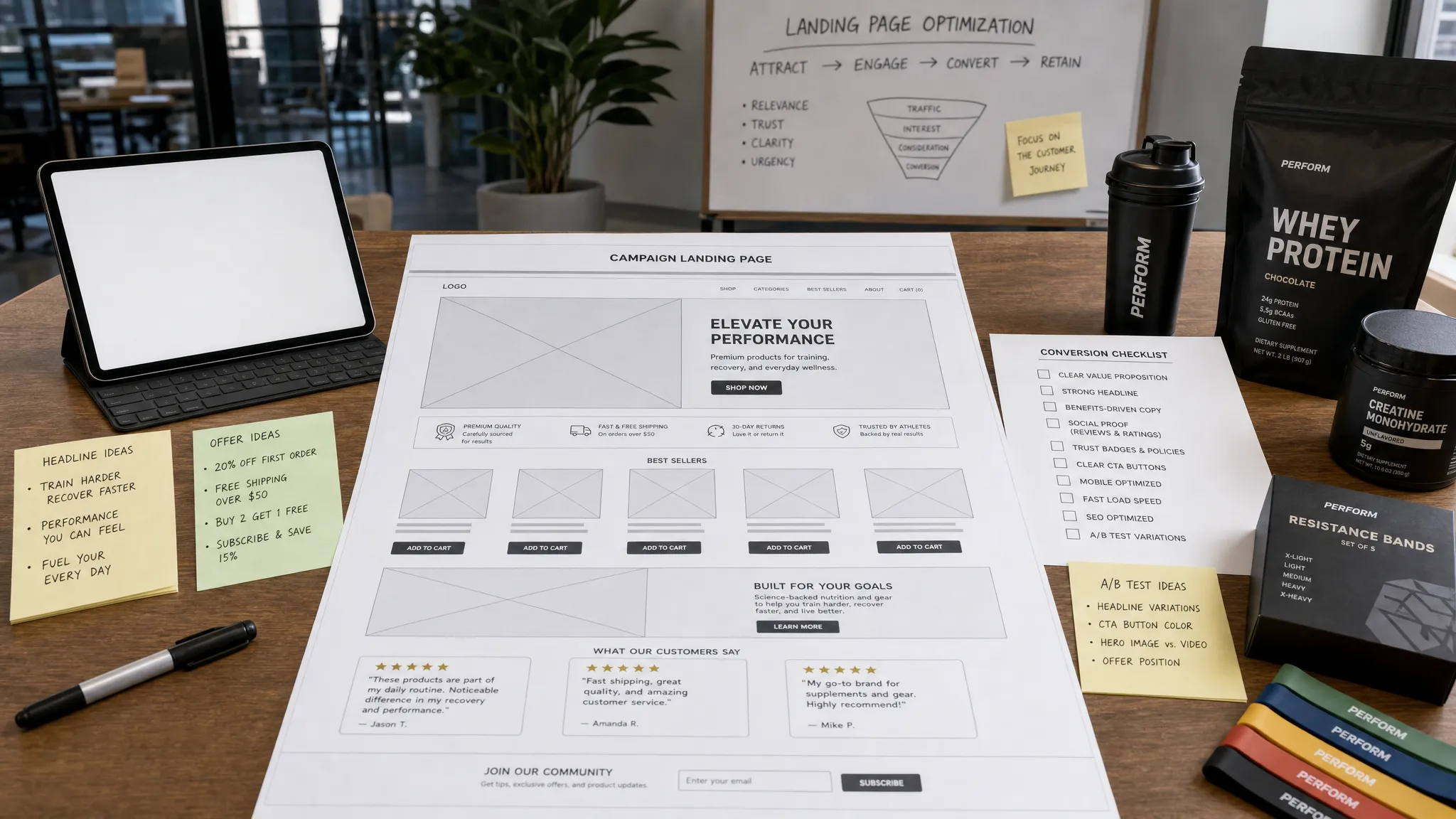
A landing page agency helps clarify what the visitor gets, why it matters, how it works, and what to do next. That includes structuring the page so information appears in the right order. The hero section should communicate the core promise quickly. The next sections should support that promise with benefits, product details, proof, comparison points, guarantees, or answers to objections.
The goal is not to cram every possible detail onto the page. The goal is to sequence the buying argument. A visitor should never have to hunt for the reason to keep reading.
For example, a wellness supplement landing page might need to explain ingredients, use cases, certifications, taste, subscription options, and customer reviews. A fitness equipment page might need to show durability, setup, size, training applications, financing, and results from real users. The structure should match the product’s level of complexity and the customer’s awareness level.
The Conversion Levers That Usually Move First
Not every landing page problem requires a full rebuild. Sometimes the biggest gains come from improving a few high-impact elements. An experienced agency will usually start with the areas most likely to influence behavior.
Common conversion levers include:
- Hero section clarity: The headline, subheadline, image, and call to action should explain the value proposition within seconds.
- Above-the-fold trust: Reviews, press mentions, athlete endorsements, certifications, or guarantees can reduce hesitation early.
- Call-to-action placement: Buttons should appear where intent naturally builds, not only at the top or bottom of the page.
- Objection handling: Shipping, returns, sizing, ingredients, warranty, results, and compatibility questions should be answered before they block the sale.
- Mobile usability: Most paid social traffic is mobile, so thumb-friendly layouts, short sections, readable text, and fast loading are critical.
These improvements sound simple, but they require judgment. A call-to-action button alone rarely fixes a weak offer. A beautiful video rarely saves unclear messaging. Conversion rate optimization works best when the page is treated as a system, not a collection of isolated design elements.
Creative Assets Can Make or Break the Page
Landing pages are visual sales environments. The visitor cannot touch the product, try it on, taste it, test it, or ask a salesperson questions in real time. Creative assets have to close that sensory gap.
For ecommerce brands, especially in fitness and wellness, this can include product photography, user-generated content, founder videos, demo clips, comparison graphics, before-and-after stories, and lifestyle imagery. The right creative makes the product easier to understand and easier to believe.
A landing page agency should know how to direct creative around conversion, not just aesthetics. A product demo should show the feature that matters most. A testimonial video should answer a real objection. A lifestyle photo should reinforce the customer identity the brand wants to own.
If video is central to the page, it can also be worth working with specialized production partners. For example, brands that need polished storytelling may benefit from a filmmaker experienced in cinematic business promo production when developing campaign assets that need to feel premium and credible.
Speed, Mobile Experience, and Technical Friction
A landing page can have strong copy and creative but still underperform if it loads slowly or feels clunky on mobile. This is a common issue for ecommerce teams that add apps, scripts, pop-ups, tracking pixels, reviews, quizzes, and media files without monitoring performance.
Page speed directly affects user behavior. Google has reported that as mobile page load time increases from one second to three seconds, the probability of bounce rises significantly, according to Think with Google. For paid traffic, those lost visitors still cost money.
A landing page agency should evaluate technical friction as part of the conversion process. That may include compressing media, simplifying layouts, reducing unnecessary scripts, improving checkout paths, and making sure the page works across common devices.
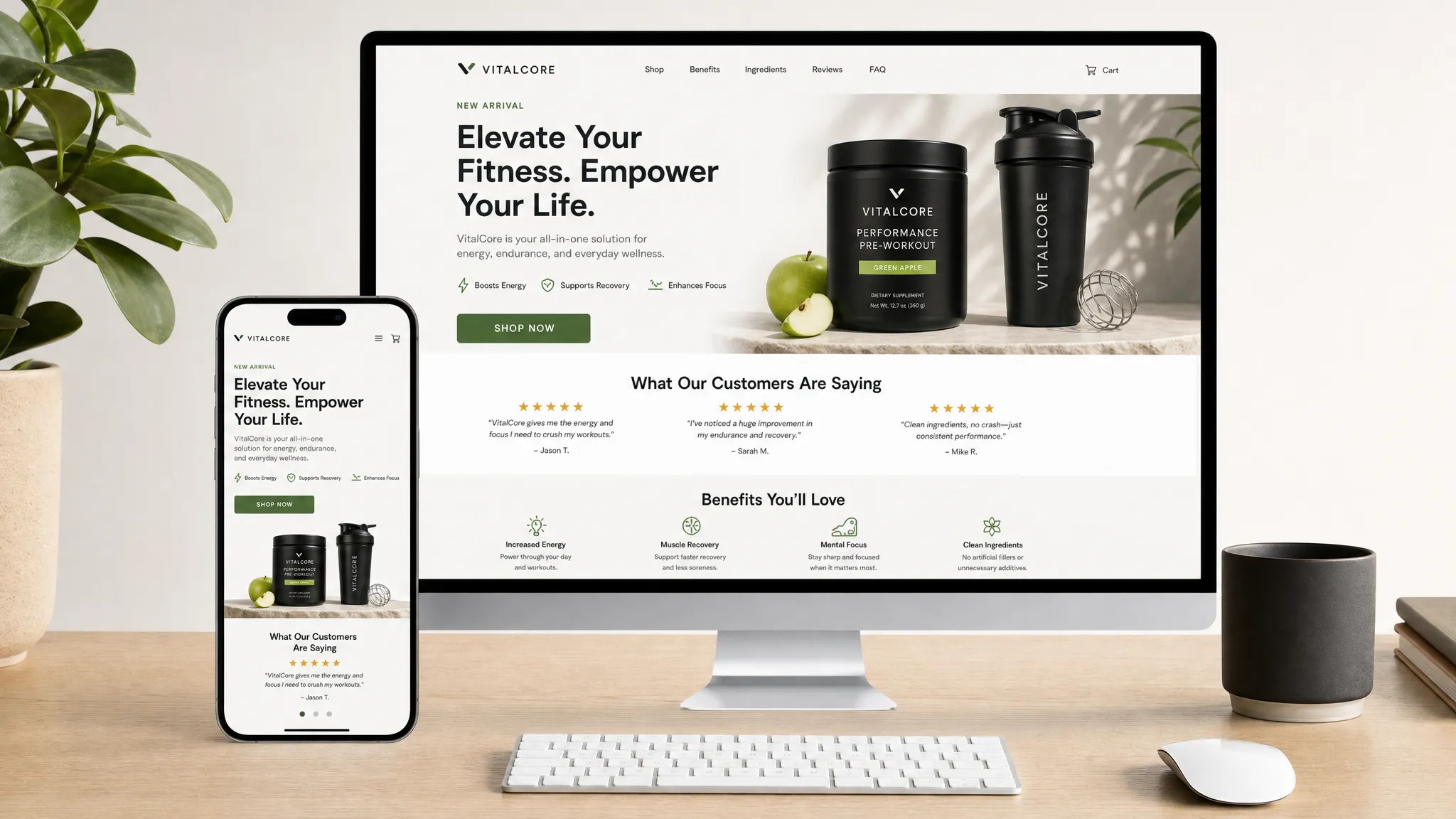
Mobile experience deserves special attention. A desktop landing page can look impressive in a presentation but fail on the device where most customers actually browse. Buttons may be too low, text may be too dense, images may crop awkwardly, or key proof may be buried. These small issues compound into lower conversion rates.
Testing Turns Opinions Into Evidence
Many landing page decisions are subjective until they are tested. Founders, designers, copywriters, and media buyers may all have strong opinions about what will convert. The market gets the final vote.
A landing page agency should build a testing process that prioritizes business impact. That does not mean testing random button colors. It means testing meaningful variables, such as positioning, offer structure, page length, proof, creative format, pricing presentation, bundles, quizzes, or checkout flow.
Good testing starts with a hypothesis. For example, “Cold paid social traffic does not understand the product fast enough, so a demo-led hero section should improve add-to-cart rate.” That hypothesis can then be tested against the current page or another variation.
The agency should also understand when not to test. If traffic volume is low, formal A/B tests may take too long to reach reliable conclusions. In those cases, qualitative analysis, session recordings, heatmaps, customer surveys, and directional performance data may be more useful.
The point is to create a feedback loop. Build, measure, learn, and improve.
How a Landing Page Agency Supports Paid Media Performance
Landing pages and paid ads should not operate separately. If the media team is testing hooks, audiences, offers, and creative angles, the landing page should reflect those learnings.
For example, suppose a sports recovery brand discovers that ads about “training harder without feeling wrecked the next day” outperform ads about general wellness. That insight should influence the landing page headline, testimonials, product education, and imagery. If the landing page still speaks broadly about health and balance, the brand wastes the insight from paid media.
This is where a performance-focused partner can create leverage. The landing page becomes part of the acquisition engine. Creative tests inform page iterations. Page behavior informs ad strategy. Email capture and post-purchase flows support the traffic that does not convert immediately.
OPTYO’s work with sports, fitness, and wellness brands often connects these disciplines: paid social, SEO, creative, ecommerce development, email marketing, CRO, and reporting. When these functions share the same growth strategy, conversion improvements are more likely to translate into revenue.
What to Look for Before Hiring a Landing Page Agency
The right agency should be able to explain how they think, not just show attractive page designs. A portfolio matters, but process matters more.
Before hiring, look for signs that the agency understands performance:
- They ask about economics: A serious partner wants to understand AOV, margins, CAC targets, repeat purchase rate, and traffic sources.
- They review existing data: Analytics, heatmaps, ad performance, customer reviews, surveys, and support tickets should inform the strategy.
- They write conversion-focused copy: Strong landing pages need clear messaging, not placeholder text wrapped in nice design.
- They understand ecommerce platforms: Implementation matters, especially when pages connect to product variants, subscriptions, bundles, carts, or checkout.
- They measure after launch: A page launch is the start of optimization, not the finish line.
Be cautious of agencies that promise a specific conversion rate before seeing your data. Conversion rates depend on traffic quality, offer strength, price point, brand awareness, page speed, product demand, and many other variables. A credible agency will talk in terms of hypotheses, benchmarks, and improvement plans rather than guarantees.
What Kind of Results Should You Expect?
A landing page agency can lift conversion rates, but the size and speed of improvement will vary. A brand with a confusing page, strong traffic, and a proven product may see meaningful gains quickly. A brand with weak demand, poor product-market fit, or unqualified traffic may need broader strategy work first.
The most useful metrics depend on the page goal. For ecommerce product pages, you might track conversion rate, add-to-cart rate, checkout initiation, revenue per session, average order value, and customer acquisition cost. For lead generation or wholesale pages, you might track form conversion rate, qualified inquiries, booked calls, and close rate.
It is also important to monitor downstream quality. A landing page that increases purchases by pushing aggressive discounts may hurt margin or attract low-retention customers. A better agency looks at profitable conversion, not just more conversions.
For D2C brands, the strongest landing page improvements often show up in multiple places at once: lower CAC, higher ROAS, better email capture, stronger creative learnings, and clearer customer positioning. That is why landing page work should be connected to the broader growth system.
Frequently Asked Questions
What does a landing page agency do? A landing page agency plans, writes, designs, builds, and optimizes campaign-specific pages that are designed to convert visitors into buyers, leads, subscribers, or qualified prospects.
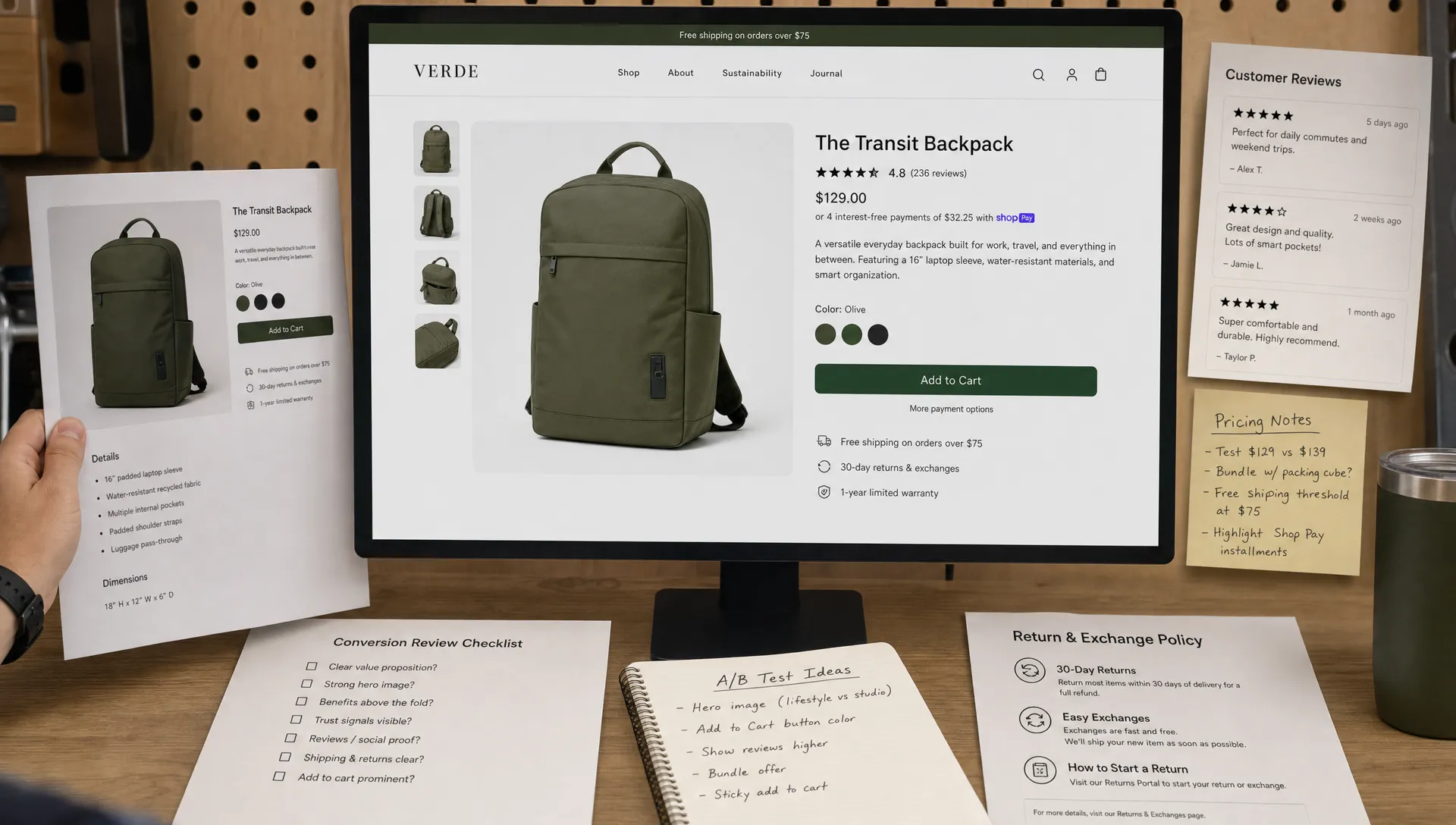
How is a landing page different from a product page? A product page usually serves many types of visitors and includes standard ecommerce details. A landing page is often built for a specific campaign, audience, offer, or traffic source, with a more focused conversion path.
Can a landing page agency improve conversion rates without increasing ad spend? Yes, that is often the point. By improving messaging, structure, creative, speed, trust, and checkout flow, a brand can convert more of the traffic it already has.
How long does landing page optimization take? A focused landing page build may take a few weeks, while optimization is ongoing. The timeline depends on page complexity, creative needs, development requirements, traffic volume, and testing goals.
What should ecommerce brands prepare before working with an agency? Helpful inputs include current analytics, ad performance data, customer reviews, product margins, customer research, brand guidelines, past creative, and any known objections from prospects or buyers.
Turn More Traffic Into Customers
If your ecommerce brand is spending on traffic but not seeing the conversion rates you need, the problem may not be the channel. It may be the page receiving the click.
A strong landing page agency helps you sharpen the offer, clarify the message, improve the buying path, and test what actually moves revenue. For sports, fitness, and wellness brands, that can be the difference between scaling spend and simply spending more.
OPTYO helps growth-focused brands connect performance marketing, creative, CRO, ecommerce development, email, SEO, and reporting into a system built for profitable scale. If your landing pages are holding back customer acquisition, it may be time to build pages that work as hard as your ads do.