.png)



Scaling ads too early is one of the fastest ways to turn a promising ecommerce brand into an expensive learning exercise. More spend does not create better economics, stronger positioning, clearer creative, or a smoother buying experience. It simply exposes whatever is already there.
That is why a serious advertising agency should not begin every engagement by asking, “How much budget can we spend?” The better question is, “What has to be fixed before more traffic becomes more profitable?”
For ecommerce founders, especially in sports, fitness, and wellness, paid media can be a powerful growth engine. But it only scales efficiently when the business has enough clarity, conversion strength, and measurement discipline to handle the extra volume. Before pushing budget higher, an agency should fix the foundations that determine whether ad spend compounds or leaks.
Scaling ads is not just a media buying problem
Ad platforms are not magic growth machines. They amplify signals. If the offer is weak, the product page is unclear, or the creative is stale, the platform will still spend your money. It may even find clicks and purchases, but that does not mean the business is scaling profitably.
A strong advertising agency should look beyond campaign structure. Yes, account setup matters. Audience strategy, bidding, creative testing, and campaign architecture all play a role. But scaling depends on the entire growth system, from the first impression to repeat purchase.
This is why the best agencies start with diagnosis. Before they increase spend, they evaluate whether the brand has the economics, positioning, creative pipeline, conversion rate, retention, and reporting needed to support growth. If you want a deeper look at the paid media side, OPTYO’s guide on how a social ad agency builds winning paid campaigns explains why strategy has to come before Ads Manager tactics.
Fix the economics before increasing spend
Before scaling ads, an agency should know what profitable growth actually means for your business. That sounds obvious, but many brands run campaigns without a clear answer to their maximum allowable customer acquisition cost.
For ecommerce, especially D2C and CPG brands, surface-level ROAS can be misleading. A campaign can look healthy in-platform while still underperforming after shipping, discounts, returns, payment processing, agency fees, creative production, and inventory costs are included.
An agency should help clarify the numbers that define your growth ceiling. At minimum, that includes gross margin, average order value, contribution margin, new customer CAC, repeat purchase rate, and payback window.
Metric to clarify    | What the agency should determine                                  | Why it matters before scaling
Gross margin         | How much profit remains after product costs and fulfillment       | Low-margin products need tighter CAC control
Average order value  | What a typical first purchase is worth                            | Higher AOV can support more aggressive acquisition
Contribution margin  | Profit after variable costs such as shipping, discounts, and fees | This gives a more realistic view of profitable spend
New customer CAC     | Cost to acquire a first-time buyer                                | Blended CAC can hide weak prospecting performance
Payback window       | How quickly the brand needs cash back from acquisition            | Long payback periods can strain inventory and cash flow
Repeat purchase rate | How often customers buy again | Strong retention can justify higher first-purchase CAC If a founder says, “We want a 3x ROAS,” a good agency should ask what that number means after costs. If the answer is unclear, the first fix is not a campaign rebuild. It is a financial model that defines what the business can afford.
Fix positioning and offer clarity
Once the economics are clear, the next question is simple: why should someone buy this now?
Weak positioning is one of the most common reasons ads stop scaling. Early adopters may buy because they know the founder, understand the niche, or are unusually motivated. But as spend increases, the brand reaches colder audiences. Those people need sharper messaging.
For sports, fitness, and wellness brands, positioning should connect the product to a specific outcome, identity, or pain point. A supplement is not just a supplement. A recovery tool is not just a device. Apparel is not just fabric. The customer is buying confidence, performance, consistency, comfort, recovery, or belonging.
Before scaling ads, an advertising agency should pressure-test:
- Whether the hero message is specific enough to stop the right customer
- Whether the offer is easy to understand within seconds
- Whether the product’s difference is obvious compared with alternatives
- Whether the ad promise matches the landing page experience
- Whether objections are answered before checkout
A generic offer can still generate sales at low spend, but it usually breaks as the audience broadens. More budget requires more clarity. If the brand cannot explain why it deserves attention, higher spend will simply pay for more people to ignore it.
Fix the conversion path before traffic gets expensive
Paid traffic is rented attention. Once you pay for the click, the website has to do its job.
Before scaling ads, an agency should audit the conversion path from ad to landing page to product page to checkout. This includes speed, mobile usability, product education, reviews, bundles, calls to action, shipping clarity, return policy visibility, and checkout friction.
Trust is especially important. A visitor who does not know your brand is looking for reasons to believe you. That is true in ecommerce, and it is true in high-trust service categories too. A local legal website, for example, has to communicate credibility quickly before someone contacts a personal injury lawyer in Tampa; an ecommerce brand has to create similar confidence before asking a first-time customer to buy.
For an ecommerce product page, that trust can come from customer reviews, founder story, ingredient or material transparency, certifications where applicable, clear product photography, social proof, and direct answers to common objections.
The agency should not treat conversion rate optimization as a minor add-on. CRO determines how efficiently paid traffic turns into revenue. If your conversion rate improves, your allowable CAC improves. If the site underperforms, the media buyer has to work harder just to maintain the same result.

Fix the creative system, not just the next ad
Scaling ads increases creative demand. A single winning ad rarely carries a brand forever. As spend rises, fatigue sets in, audiences overlap, and the platform needs fresh angles to keep learning.
A capable advertising agency should build a creative system before scaling budget. That means documenting what is being tested, why it is being tested, and what each result teaches the brand.
Creative testing should go beyond swapping colors or captions. It should test meaningful variables: hooks, pain points, product demonstrations, proof, objections, customer identity, offer framing, and formats.
Creative variable | What to test                            | Example for sports, fitness, or wellness brands
Hook              | The first idea that earns attention     | Performance goal, recovery problem, daily routine, identity-based message
Proof             | Why the viewer should believe the claim | Reviews, demonstrations, expert context, visible product details
Format            | How the message is delivered            | Founder video, customer story, product demo, comparison, static image
Objection         | What might stop someone from buying     | Price, taste, fit, durability, results, shipping, ease of use
Offer frame | How the purchase is packaged | Starter bundle, limited-time promotion, subscription option, free shipping thresholdWithout this discipline, scaling becomes guesswork. The brand keeps asking for “more creatives,” but nobody knows what has actually been learned.
Fix measurement and reporting
You cannot scale what you cannot measure with confidence. Before increasing spend, an agency should confirm that tracking is accurate enough to make decisions.
This does not mean attribution will ever be perfect. It will not. Platform data, analytics data, and actual sales data often tell slightly different stories. But the agency should create a reporting structure that helps the founder make better decisions despite those differences.
At minimum, the agency should review pixel setup, conversion events, UTMs, analytics configuration, post-purchase survey data if used, and reporting definitions. Everyone should agree on how performance will be judged before budget increases.
Important reporting questions include:
- Are we separating new customer revenue from returning customer revenue?
- Are we measuring blended MER alongside platform ROAS?
- Do we know which products are being acquired profitably?
- Are discounts making campaigns look stronger than they are?
- Are email, organic, paid social, search, and direct traffic being evaluated together?
This is where a growth partner should connect paid media with the rest of the business. OPTYO’s article on how an ecommerce marketing agency can scale revenue explains why revenue growth depends on aligning acquisition, CRO, email, SEO, creative, and reporting rather than managing each channel in isolation.
Fix retention before overpaying for new customers
Acquisition is only one part of scaling. If customers buy once and disappear, the brand must recover all profit on the first order. That creates pressure on paid media and limits how aggressively the business can grow.
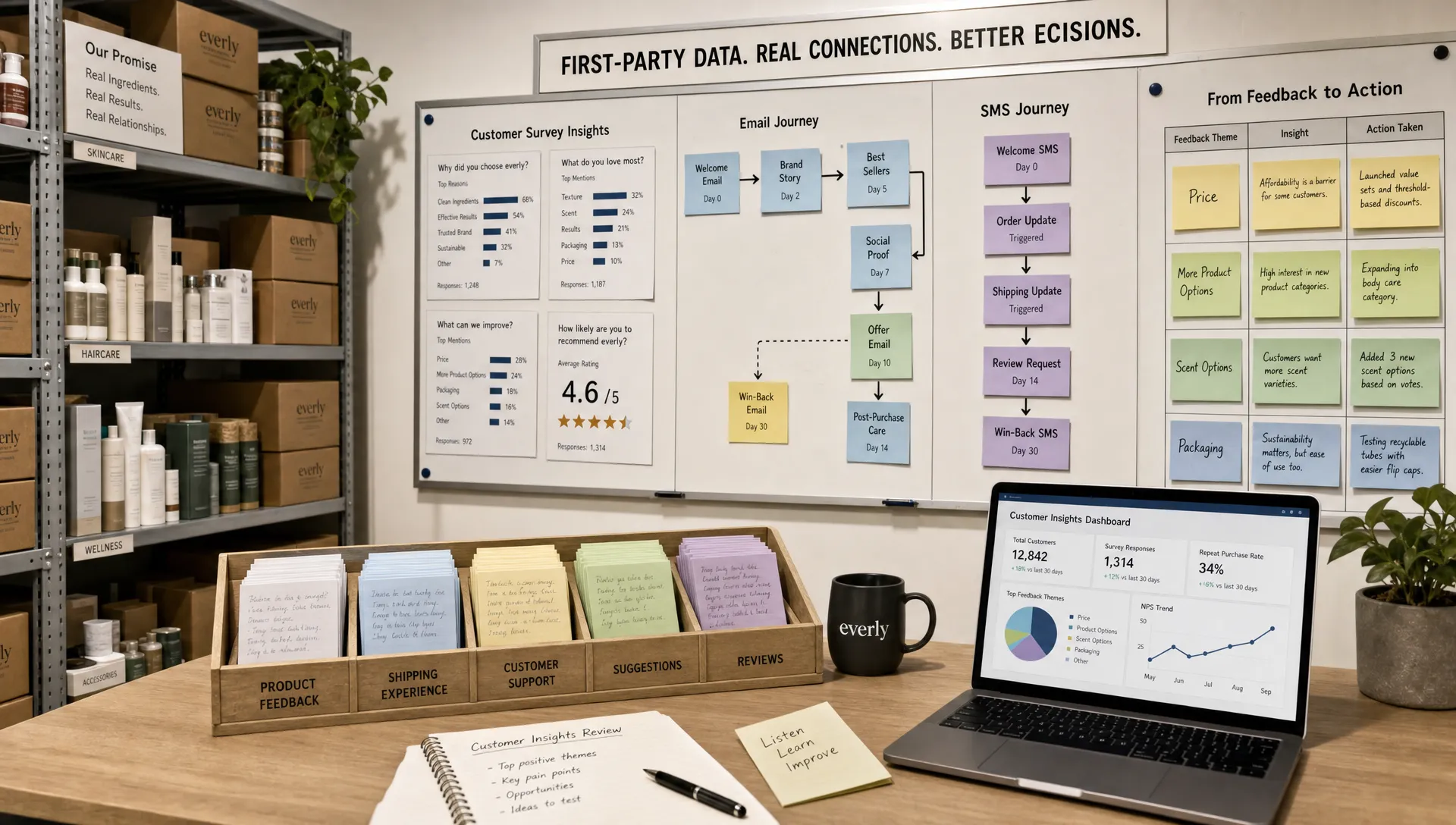
Before scaling ads, an agency should look at post-purchase revenue opportunities. Email marketing is especially important for ecommerce brands because it helps convert hesitant shoppers, educate new buyers, increase repeat purchases, and improve customer lifetime value.
The basics matter. A brand should have a strong welcome flow, abandoned cart flow, post-purchase education, review request flow, and relevant campaigns tied to launches, promotions, or seasonal moments. For consumable products, replenishment messaging can be critical. For apparel, accessories, equipment, and wellness products, cross-sell and education can increase the value of each acquired customer.
Retention does not make bad acquisition good, but it can make good acquisition scalable. When customers come back, the business can afford to invest more confidently in acquiring the right people.
Fix operational constraints before demand spikes
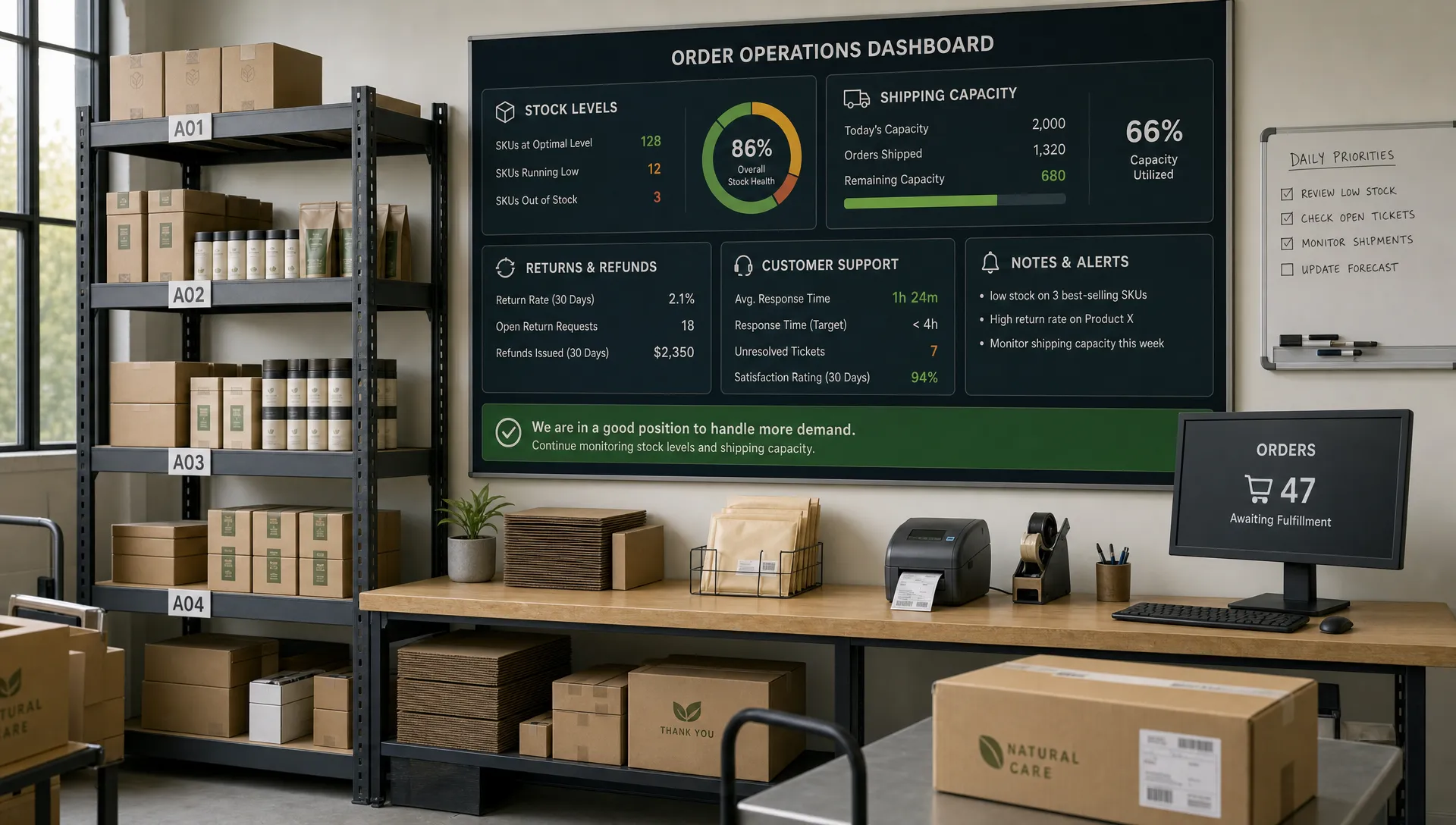
Ads can create demand faster than operations can support it. That is exciting until the brand runs out of inventory, delays shipping, overwhelms customer support, or creates a wave of poor reviews.
An agency should ask operational questions before scaling. Are best-selling SKUs in stock? Can fulfillment handle higher order volume? Are customer service responses fast enough? Are return reasons being tracked? Are reviews being collected and analyzed? Are there supply chain issues that could make a successful campaign risky?
This matters because marketing does not happen in a vacuum. If the agency scales demand into an operational bottleneck, the brand may win the click and lose the customer.
For founders choosing a partner, this is one of the signs that an agency understands business growth, not just ad accounts. OPTYO’s guide on how to choose a marketing agency that can actually scale breaks down how to evaluate agencies based on stage, economics, category fluency, and growth discipline.
Fix the scaling plan itself
Once the foundation is stronger, the agency should define how scaling will happen. “Spend more” is not a plan. A scaling plan should explain what budget increases are tied to, what metrics must hold, what creative volume is needed, and what the team will do if performance drops.
Good scaling is controlled. It usually involves gradual budget increases, clear test windows, creative refreshes, landing page experiments, and regular reviews of contribution margin. The agency should know when to push, when to pause, and when to shift budget toward a stronger product, offer, audience, or creative angle.
A strong agency should also be willing to say no. If the numbers do not support scaling, the honest answer is to fix the bottleneck first. That may not sound as exciting as doubling spend, but it protects the founder from buying unprofitable growth.
Red flags before scaling ads
If you are evaluating whether your brand is ready to scale, watch for these warning signs:
- Your agency cannot explain your target CAC in relation to margin
- Most creative tests are random rather than tied to a hypothesis
- The landing page has not been audited before budget increases
- Reporting focuses only on platform ROAS
- Email revenue and repeat purchase behavior are ignored
- Budget increases happen without a clear testing plan
- The agency blames the algorithm before reviewing the offer, site, and creative
One red flag does not mean the whole strategy is broken. But if several are present, scaling spend will likely magnify the problem.
Frequently Asked Questions
What should an advertising agency do before scaling ads? An advertising agency should review unit economics, positioning, offer clarity, creative performance, conversion rate, tracking, retention, and operational readiness before increasing budget.
How do I know if my ecommerce brand is ready to scale paid ads? Your brand is closer to ready when you know your allowable CAC, have a clear offer, convert cold traffic efficiently, produce fresh creative consistently, track performance accurately, and have a retention system in place.
Should an agency focus on ROAS before scaling? ROAS is useful, but it should not be the only metric. Brands should also evaluate contribution margin, new customer CAC, MER, average order value, repeat purchase rate, and payback window.
Why do ads stop working when spend increases? Ads often stop working at higher spend because the brand reaches colder audiences, creative fatigue increases, conversion leaks become more expensive, and weak positioning becomes more obvious.
Build a stronger foundation before you scale
The right agency does more than manage campaigns. It helps you build a growth system that can handle more demand profitably.
If you are scaling a sports, fitness, wellness, D2C, or CPG brand, OPTYO helps connect performance marketing with creative, ecommerce development, conversion optimization, email marketing, SEO, KPI reporting, and growth consulting so your ads have a stronger foundation to build on.