.png)




Most ecommerce brands do not fail because they lack tactics. They fail because the tactics are disconnected. Paid ads run before the offer is clear. Email gets added after the acquisition cost is already too high. Creative testing happens without a point of view. The website is treated as a design project instead of a conversion system.
A strong growth strategy solves that problem. It connects your business model, audience, positioning, channels, creative, website, retention, and reporting into one operating plan. For ecommerce founders, especially in sports, fitness, wellness, and CPG, that alignment is the difference between short-term sales spikes and scalable growth.
Below is a practical framework for building a growth strategy that can actually guide decisions, not just sit in a slide deck.
What a growth strategy means for an ecommerce brand
A growth strategy is not the same as a marketing calendar. It is not a list of channels you plan to test, and it is not a media buying budget with optimistic revenue targets attached.
For an ecommerce brand, a growth strategy defines how the business will acquire the right customers, convert them profitably, increase their lifetime value, and reinvest with confidence. It should answer a few hard questions:
- Who is the most valuable customer segment for the brand?
- Why should that customer choose this product over alternatives?
- Which channels can reach them efficiently at each stage of the funnel?
- What offer, creative, and website experience will convert attention into revenue?
- How will the brand increase repeat purchases, referrals, and customer value?
- Which metrics will determine whether the strategy is working?
If your brand is still preparing for launch, start with the fundamentals of market selection, offer design, and launch sequencing. OPTYO’s guide to building a go-to-market strategy for D2C brands is a useful companion before you move into ongoing growth planning.
Step 1: Start with the economics before the channels
The most common growth mistake is choosing channels before understanding the financial model. A brand might decide it needs Meta ads, TikTok creators, SEO, Amazon, retail partnerships, and email automations, but none of those choices matter if the economics cannot support acquisition.
Before deciding how to grow, calculate what growth can afford.
At minimum, your strategy should include a clear view of:
- Gross margin by product or bundle
- Average order value
- Contribution margin after shipping, fulfillment, discounts, and payment fees
- Repeat purchase rate
- Customer lifetime value
- Target customer acquisition cost
- Inventory constraints and production timelines
- Cash conversion cycle
This is where many ecommerce plans become more realistic. A supplement brand with 70 percent gross margin, strong subscription potential, and repeat purchases every 30 days can tolerate a different acquisition model than a premium fitness equipment brand with a high AOV but lower purchase frequency.
Your growth strategy should reflect those differences. If repeat purchase behavior is strong, you may be able to invest more aggressively in customer acquisition. If the product has a long replenishment cycle, your strategy may need to rely more on bundles, upsells, cross-sells, referrals, and content-driven demand generation.
The goal is not to chase the lowest possible acquisition cost. The goal is to understand what you can pay to acquire the right customer while protecting cash flow and profitability.
Step 2: Define the customer you can win with
Broad targeting creates vague messaging. Vague messaging creates weak creative. Weak creative drives up acquisition costs.
A useful ecommerce growth strategy starts with a specific customer profile, not just a demographic. For a sports or wellness brand, that might mean going deeper than active adults ages 25 to 44. You may need to know whether you are speaking to marathon beginners, competitive CrossFit athletes, postpartum women rebuilding strength, busy executives using recovery products, or high school athletes preparing for recruitment.
The best customer definition includes the context around the purchase. What are they trying to improve? What have they already tried? What frustrates them about existing products? What language do they use when describing the problem? What proof do they need before they buy?
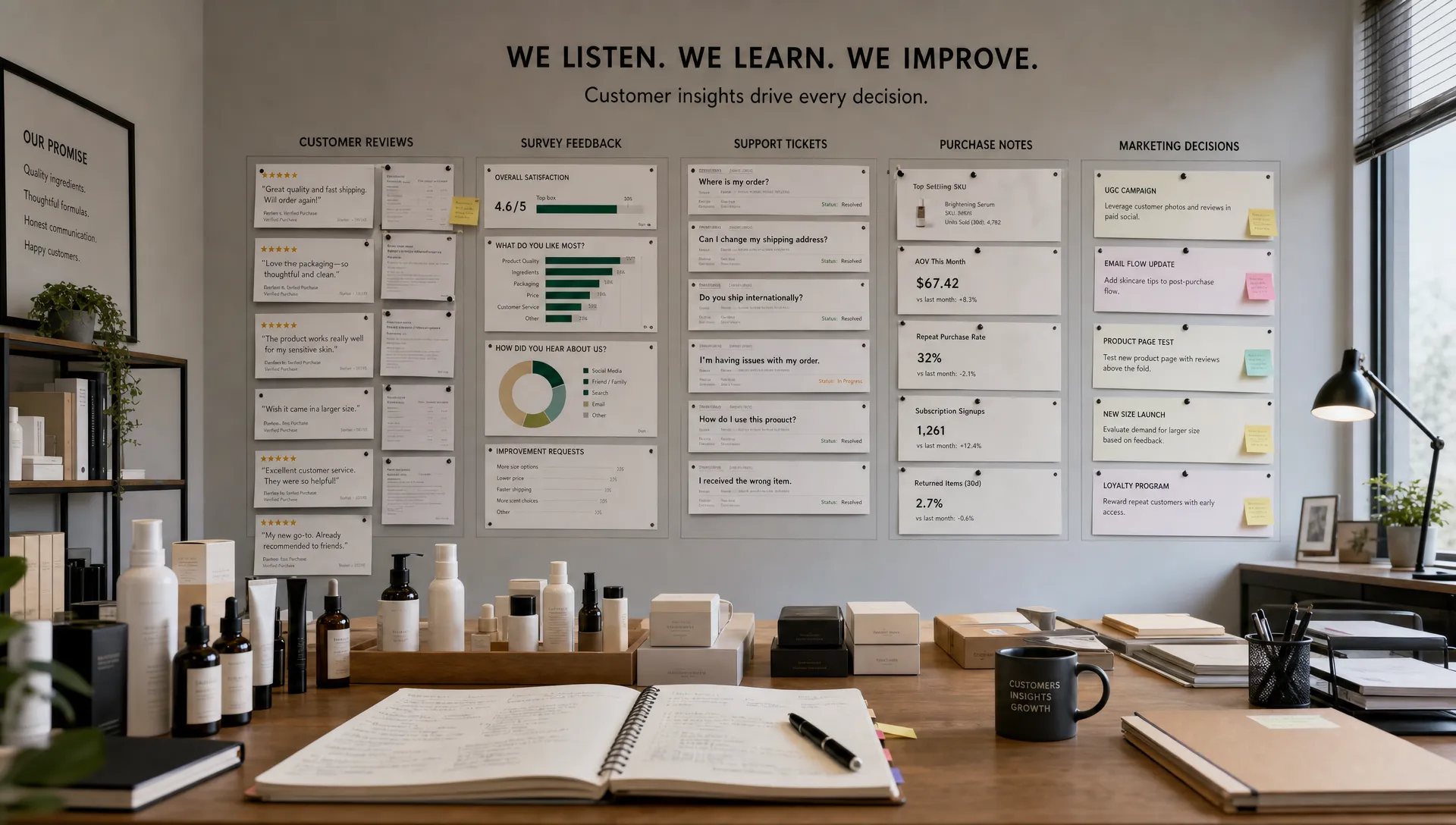
This research should come from multiple sources: customer interviews, post-purchase surveys, reviews, support tickets, competitor reviews, social comments, Reddit threads, creator feedback, and search data. Patterns matter more than isolated opinions.
Once you understand the customer, define your wedge. A wedge is the narrow market entry point where your brand has the strongest chance of winning. You can expand later, but early growth becomes much easier when your messaging is sharp enough for a specific audience to feel seen.
Step 3: Build positioning that makes the choice obvious
Positioning is the bridge between the product and the market. It explains why your brand matters, who it is for, and why it is different enough to earn attention.
For ecommerce, positioning should show up everywhere: homepage headline, product page copy, ad creative, landing pages, emails, packaging, influencer briefs, and post-purchase flows. If those touchpoints tell slightly different stories, your growth strategy will leak efficiency.
Strong positioning usually answers five questions:
- What problem does the product solve?
- Who is it built for?
- What makes it meaningfully different?
- What proof supports the claim?
- Why should the customer act now?
For example, a generic message like premium protein for active lifestyles is not as compelling as a sharper message built around a specific use case, ingredient standard, performance benefit, or athlete identity. The sharper the positioning, the easier it becomes to write hooks, build landing pages, recruit creators, and structure offers.
Positioning does not need to be complicated. It needs to be clear, credible, and consistent.
Step 4: Design the offer, not just the product
Customers rarely buy a product in isolation. They buy the offer around it. That offer includes the product, price, bundle, guarantee, incentive, payment options, shipping promise, and perceived risk.
A growth strategy should define the primary offer for each stage of the business. A launch offer might prioritize trial and urgency. A scaling offer might prioritize margin and AOV. A retention offer might prioritize replenishment, subscriptions, or bundles.
For example, an ecommerce brand might test:
- Starter kits for first-time customers
- Performance bundles built around a specific goal
- Subscribe and save options for replenishable products
- Free shipping thresholds that lift AOV
- Limited drops tied to seasonal training moments
- Guarantees that reduce purchase anxiety
The offer should be profitable, but it should also be easy to understand. If customers need too much explanation to see the value, conversion will suffer.
This is also where your merchandising strategy matters. Your best product for acquisition may not be your highest-margin product. Your best product for retention may not be the product that performs best in cold traffic. Treat each product as part of a growth system rather than a standalone SKU.
Step 5: Choose channels based on intent and stage
Channel strategy should follow the customer journey. Not every channel is meant to do the same job.
Paid social is often strong for demand creation, especially when creative can show the product in use, demonstrate a transformation, or tell a founder or athlete story. Paid search captures existing intent, especially for branded search, category terms, and competitor alternatives. SEO compounds over time by answering product education, comparison, and problem-aware searches. Email and SMS convert and retain owned audiences. Creators and affiliates can build trust through borrowed credibility and contextual product use.
The right channel mix depends on your category, margin, buying cycle, and proof requirements. A high-trust wellness product may need more education, expert validation, and customer proof before conversion. A fitness accessory with a visual use case may scale faster through short-form creative and creator demonstrations.
There is also a role for credibility building beyond performance channels. If your brand has a major product launch, retail partnership, fundraising milestone, athlete collaboration, or category innovation, press release distribution across established media outlets can support visibility, social proof, and branded search demand when used as part of a broader growth plan.
The key is to assign a job to every channel. If a channel is included in the strategy, define what it is responsible for and how success will be measured.
Step 6: Turn creative into a testing system
Creative is now one of the biggest levers in ecommerce growth. Media buying still matters, but platform algorithms need strong inputs. Your ads, landing pages, and content must give the system enough angles to find the right buyers.
A creative testing system starts with hypotheses, not random assets. Instead of asking what should we post this week, ask what belief we need to change for the customer to buy.
Common ecommerce creative angles include product demonstration, founder story, customer transformation, athlete endorsement, comparison, objection handling, ingredient education, problem agitation, social proof, and lifestyle identity. For sports, fitness, and wellness brands, creative also needs to respect credibility. Claims should be supportable, transformations should be realistic, and any health-related messaging should be handled carefully.
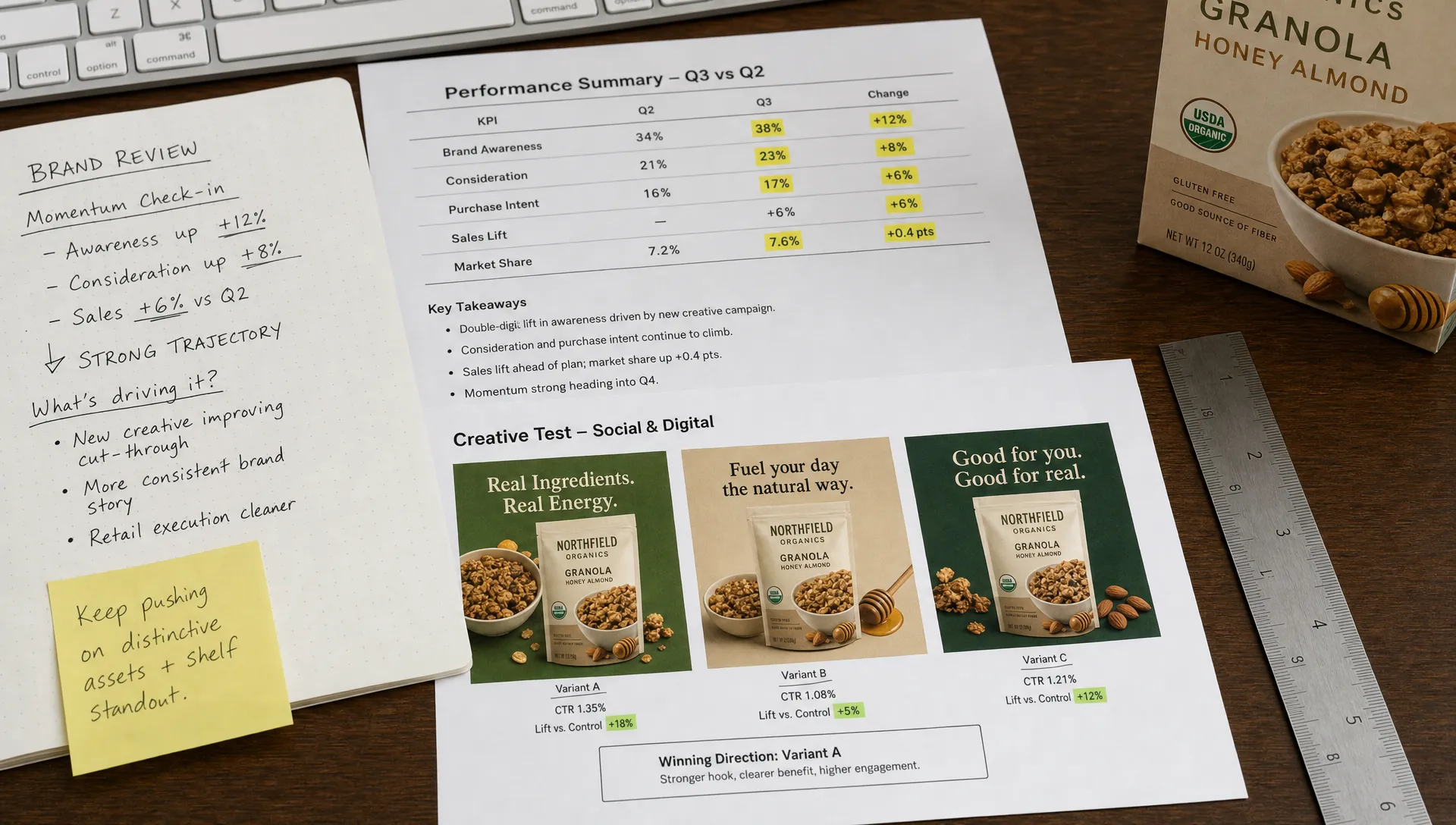
Build a simple testing cadence. Test hooks, formats, offers, proof points, and landing page alignment. Track why something worked, not just whether it worked. Over time, your creative learnings become a strategic asset that informs product pages, emails, SEO content, influencer briefs, and even product development.
Step 7: Fix conversion before scaling spend
Traffic does not solve a conversion problem. If your website is unclear, slow, confusing, or missing proof, more spend will simply expose the weakness faster.
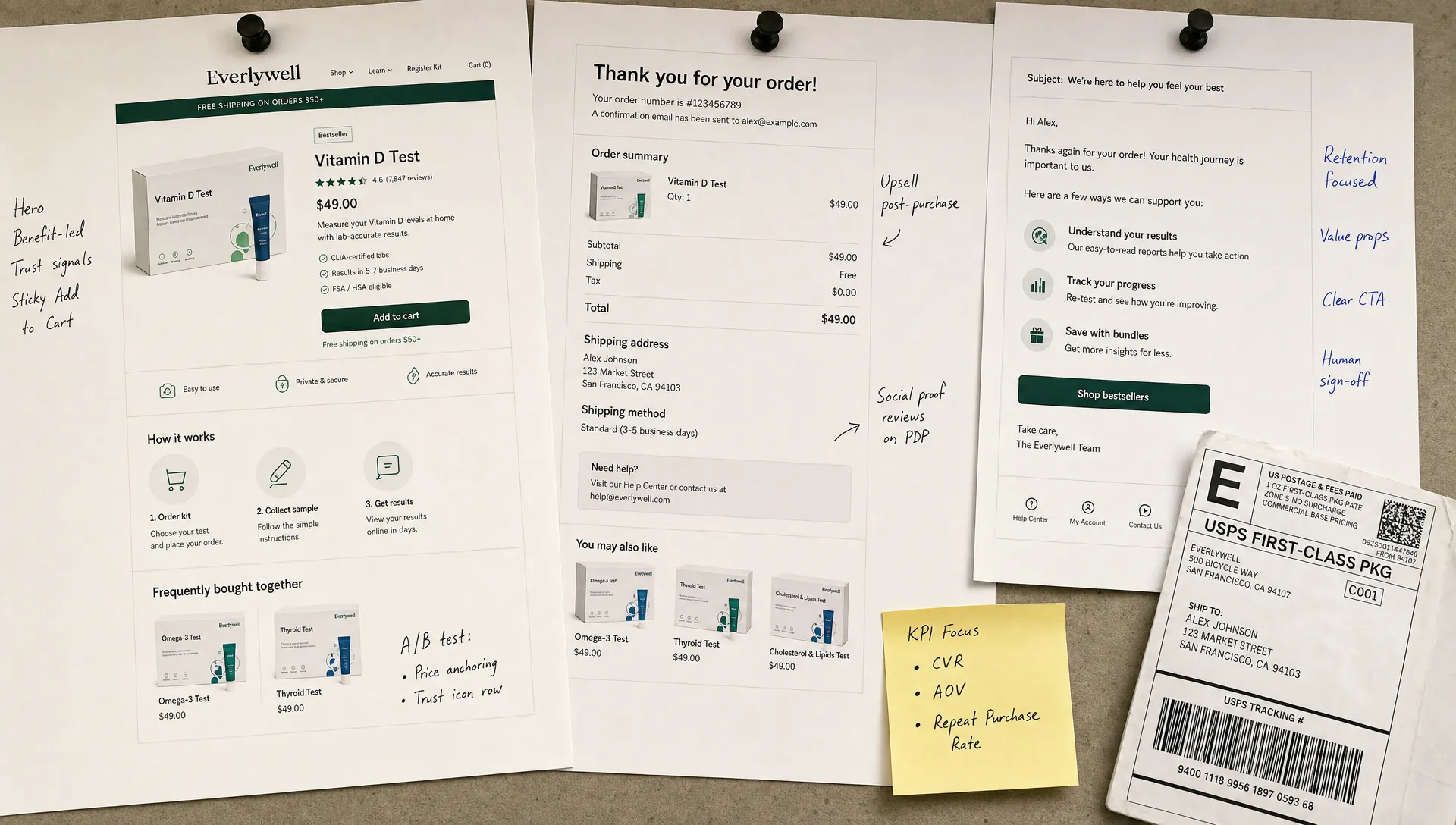
Conversion rate optimization should be part of the growth strategy from the beginning. For ecommerce, that usually means improving the homepage, product pages, collection pages, cart, checkout, post-purchase experience, and landing pages tied to campaigns.
Look closely at product page fundamentals. Is the value proposition clear above the fold? Are the product images and videos showing real use cases? Are reviews visible and specific? Are ingredients, materials, sizing, benefits, and shipping expectations easy to understand? Are objections answered before the customer leaves?
Checkout also matters. Baymard Institute research has consistently shown that cart abandonment remains a major ecommerce challenge, which means even small improvements in checkout clarity, trust, and friction can have meaningful revenue impact.
A good growth strategy does not separate acquisition and conversion. If paid social is driving traffic to a product page, the creative promise and landing page message need to match. If search is capturing high-intent traffic, the page needs to answer comparison and purchase questions quickly.
If your brand has traffic but inconsistent performance, OPTYO’s article on how an ecommerce agency helps brands scale efficiently breaks down how acquisition, conversion, retention, and reporting should work together.
Step 8: Build retention into the plan from day one
Retention is not something to fix after acquisition gets expensive. It is part of the acquisition model. When customers buy again, refer friends, join a subscription, or purchase a complementary product, your allowable CAC increases and your growth engine becomes more durable.
For ecommerce brands, retention usually comes from a mix of product experience, post-purchase education, email and SMS flows, loyalty incentives, community, replenishment reminders, and new product development.
A sports nutrition brand might use post-purchase emails to explain dosage, timing, stacking, and training use cases. A fitness apparel brand might segment customers by activity and recommend products based on climate, training frequency, or performance goals. A wellness brand might use education to help customers understand what to expect, how to build consistency, and when to reorder.
The first purchase should not be the end of the funnel. It should be the start of a customer relationship.
Step 9: Set metrics that guide decisions
A growth strategy becomes useful when it changes how the team makes decisions. That requires a clean measurement system.
Avoid relying on one blended metric. ROAS, MER, CAC, conversion rate, and revenue can all be useful, but each one has blind spots. Attribution is imperfect, especially as privacy changes and cross-channel journeys become more complex. Your reporting should combine platform data, ecommerce analytics, customer surveys, and financial performance.
Track metrics by stage of the funnel:
- Awareness: reach, impressions, video views, engaged sessions, branded search lift
- Acquisition: CAC, first-order contribution margin, new customer revenue, channel mix
- Conversion: conversion rate, AOV, checkout completion, landing page performance
- Retention: repeat purchase rate, subscription rate, time to second purchase, LTV
- Efficiency: MER, contribution margin, payback period, cash flow impact
The point is not to create a dashboard with every possible number. The point is to identify the few metrics that reveal whether the growth strategy is working.
Your review cadence matters too. Weekly reviews should focus on active tests and short-term performance. Monthly reviews should evaluate channel mix, creative learnings, offer performance, and financial health. Quarterly reviews should revisit positioning, customer segments, product roadmap, and growth priorities.
For a broader view of building a system that can scale beyond individual campaigns, see OPTYO’s guide to creating a scalable business marketing strategy.
A practical 90-day ecommerce growth strategy roadmap
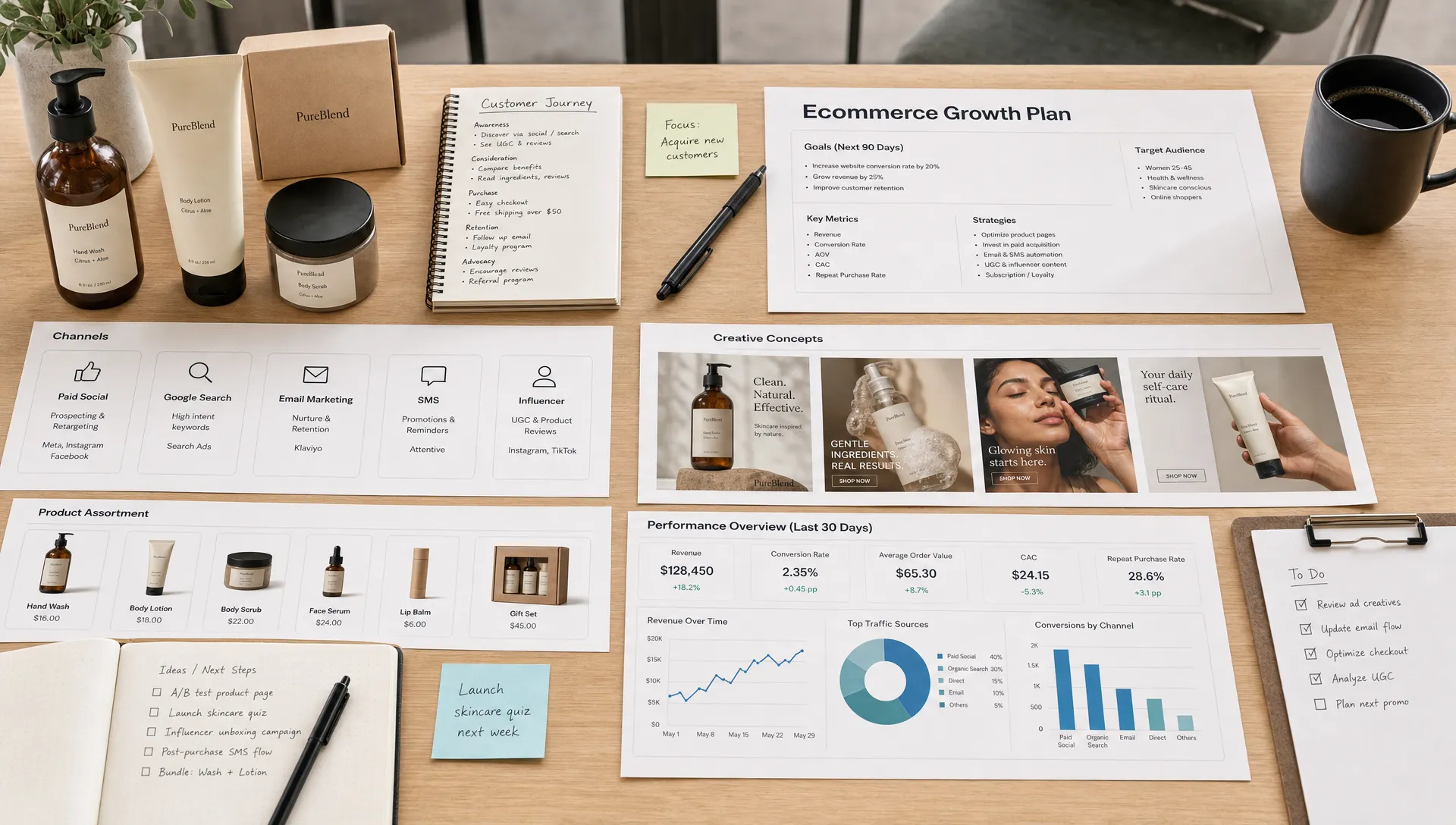
You do not need a perfect plan to begin. You need a focused plan with clear priorities. A 90-day roadmap is often enough to move from scattered activity to disciplined growth.
Days 1 to 15: Diagnose the current business
Review unit economics, customer segments, product performance, traffic sources, conversion rates, email revenue, repeat purchase behavior, and creative history. Identify the biggest constraint. It might be low traffic, poor conversion, weak retention, unclear positioning, or margin pressure.
Days 16 to 30: Define the strategic focus
Choose the audience, product, offer, and channels that give the brand the best chance of profitable growth. This is where you decide what not to do. A focused 90-day strategy is usually more effective than trying to improve every channel at once.
Days 31 to 45: Build the growth assets
Create the campaign structure, landing pages, email flows, creative briefs, product page updates, tracking setup, and reporting framework. Make sure the offer, creative, and website are aligned before increasing spend.
Days 46 to 70: Launch controlled tests
Run structured tests across your highest-priority channels. Test creative angles, audiences, offers, landing pages, and email flows. Keep budgets controlled enough to learn without creating unnecessary cash pressure.
Days 71 to 90: Scale what proves itself
Increase investment behind the combinations that show strong contribution margin, conversion quality, and customer value. Cut or revise tests that fail to produce useful signals. Document learnings so the next 90-day cycle starts stronger.
A good roadmap should be ambitious, but it should also be operational. If your team cannot execute it with the resources available, it is not a strategy. It is a wishlist.
Common growth strategy mistakes to avoid
Many ecommerce brands make growth harder than it needs to be by skipping the fundamentals. Watch for these traps:
- Scaling paid media before validating positioning and offer
- Measuring success only by platform ROAS
- Treating creative as production instead of strategy
- Ignoring retention until acquisition costs rise
- Sending all traffic to the same product page regardless of intent
- Discounting too aggressively without understanding margin impact
- Testing too many channels before one channel has a repeatable system
- Confusing revenue growth with profitable growth
The best growth strategy creates focus. It gives the team a shared understanding of what matters now, what can wait, and what must be true for the next stage of scale.
Frequently Asked Questions
What is a growth strategy for ecommerce? A growth strategy for ecommerce is a plan for acquiring, converting, retaining, and increasing the value of customers in a way that supports profitable scale. It connects positioning, channels, creative, website conversion, retention, and metrics.
How is a growth strategy different from a marketing strategy? A marketing strategy often focuses on audience, messaging, channels, and campaigns. A growth strategy includes those elements, but also ties them to unit economics, conversion, retention, customer lifetime value, and operational constraints.
Which channel should an ecommerce brand start with? The best starting channel depends on the product, margin, customer intent, and buying cycle. Paid social can work well for visual products and demand creation, search can capture existing intent, SEO compounds over time, and email improves conversion and retention.
How long does it take to build a growth strategy? A focused strategy can be built in a few weeks if the brand has clean data and clear goals. The first 90 days should usually focus on diagnosis, asset creation, controlled testing, and scaling the strongest signals.
What is the most important metric in ecommerce growth? There is no single metric that tells the whole story. Ecommerce brands should look at CAC, contribution margin, conversion rate, AOV, repeat purchase rate, LTV, MER, and payback period together.
Build a growth strategy that can actually scale
A strong ecommerce growth strategy is not about doing more. It is about aligning the right actions around the right customer, offer, channels, and economics.
If your sports, fitness, wellness, or CPG brand is ready to move from disconnected tactics to a clearer growth system, OPTYO helps ecommerce brands connect performance marketing, creative, conversion, retention, SEO, and growth consulting into a strategy built for scale.