.png)


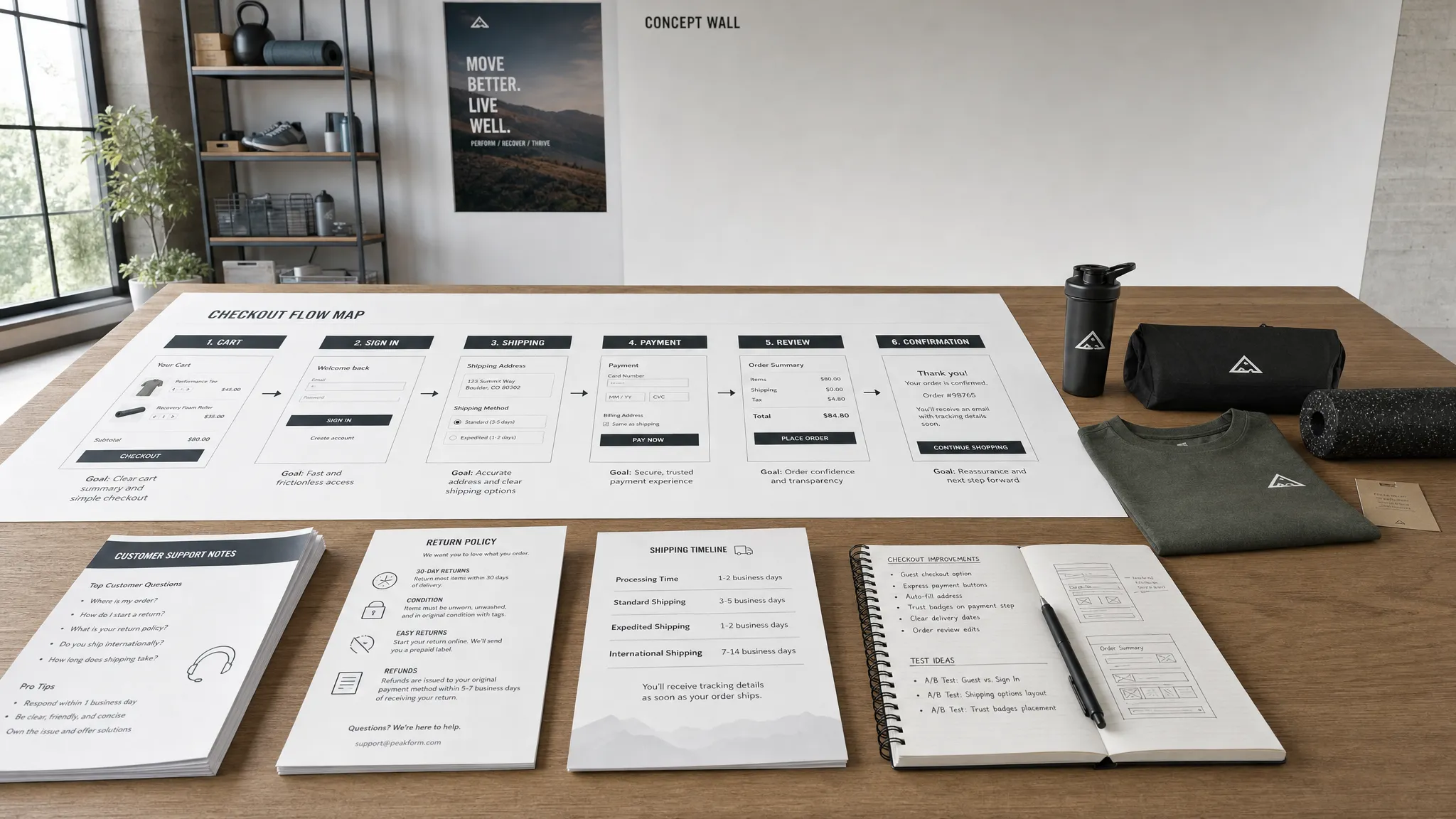

Rising ad costs have made one thing painfully clear for ecommerce founders: more traffic does not automatically mean more growth. If your store is already attracting the right visitors but too many leave without buying, the problem is not always your media spend. It may be the buying experience itself.
That is where an ecommerce conversion rate optimization agency comes in. The best agencies do not simply change button colors or add pop-ups. They study how customers move through your site, identify where hesitation happens, and improve the path from first click to completed order. For sports, fitness, and wellness brands, that often means clarifying benefits, strengthening proof, simplifying product education, and making the checkout feel effortless.
What an ecommerce conversion rate optimization agency actually does
An ecommerce conversion rate optimization agency helps online stores turn a higher percentage of qualified visitors into customers, subscribers, leads, or repeat buyers. The work sits at the intersection of analytics, UX, copywriting, creative, offer strategy, merchandising, and technical execution.
The goal is not just to raise the sitewide conversion rate in isolation. A higher conversion rate can be misleading if it comes from aggressive discounts, lower-margin bundles, or customers who churn after one order. Strong CRO looks at profitable conversion, which means more revenue, better margins, healthier customer acquisition costs, and stronger lifetime value.
For example, a fitness supplement brand might discover that visitors are interested in the product but hesitate because the ingredients, use cases, or certifications are not clear. A running apparel brand might have strong paid social creative but lose shoppers on mobile product pages because sizing, reviews, and shipping expectations are buried. A wellness device company might need more education before asking customers to buy.
A CRO agency finds those friction points, prioritizes them, and turns them into a structured improvement roadmap.
Step 1: Define the right conversion goals
The first step is deciding what success actually means. Many ecommerce teams start with a simple question: “How do we increase our conversion rate?” A good agency will ask a better one: “Which conversion improvements will make the business more profitable?”
That distinction matters. A sitewide conversion lift is useful, but it does not tell the whole story. An agency will usually review metrics such as:
- Conversion rate by traffic source, device, and landing page
- Revenue per visitor and average order value
- Cart abandonment and checkout completion rate
- Product page engagement and add-to-cart rate
- Gross margin, discount usage, and contribution margin
- New customer conversion versus returning customer conversion
- Email capture rate and post-purchase retention behavior
This prevents the team from optimizing for vanity metrics. If a test increases conversion rate but drops average order value by 20 percent, it may not be a win. If a new bundle page converts slightly lower but attracts higher-value customers, it may still be worth scaling.
For entrepreneurs, this is one of the biggest benefits of working with an agency. CRO becomes a business growth discipline, not just a design exercise.
Step 2: Audit the customer journey before changing anything
Before launching tests, a CRO agency needs to understand where shoppers are dropping off and why. This usually starts with a full funnel audit, covering analytics setup, acquisition sources, landing pages, product pages, cart, checkout, and retention flows.
The agency will look for obvious tracking issues first. If events are misfiring, revenue attribution is unreliable, or paid traffic is being grouped incorrectly, decisions will be based on flawed data. Clean measurement is essential because every test depends on knowing what actually happened.
From there, the agency reviews both quantitative and qualitative signals. Analytics can show that mobile visitors abandon a product page at a high rate. Session recordings, customer surveys, reviews, and support tickets can help explain why. Maybe the page loads slowly. Maybe the product benefits are unclear. Maybe the price is not supported by enough proof. Maybe the size guide is hard to find.
For a deeper look at the specific areas an agency should examine, OPTYO has a dedicated guide on what a conversion rate optimization agency should audit before making recommendations.
The key point is simple: CRO should not begin with opinions. It should begin with evidence.
Step 3: Identify the biggest revenue leaks
Once the audit is complete, the agency maps out the points in the customer journey where improvement is likely to have the highest impact. Most ecommerce sites have several leaks, but not all are equally important.
A homepage issue may matter less if most paid traffic lands directly on product pages. A cart page redesign may not be the top priority if few visitors are adding products to cart in the first place. A checkout optimization may have huge upside if a high percentage of shoppers abandon after entering shipping information.
Cart and checkout deserve special attention. Baymard Institute research consistently shows that average cart abandonment is high across ecommerce, which means even small improvements near the bottom of the funnel can have meaningful revenue impact.
For sports, fitness, and wellness brands, common revenue leaks include unclear product differentiation, weak comparison content, lack of trust signals, vague claims, confusing subscriptions, hidden shipping information, and poor mobile merchandising. These are not always technical problems. Often, they are communication problems.
Trust is especially important when a purchase requires personal commitment, financial confidence, or behavior change. This applies beyond ecommerce too. In a high-consideration category like home financing, brands such as New Era Lending reduce friction by combining digital tools with human guidance, clear steps, and educational support. Ecommerce brands can borrow the same principle: the more meaningful the purchase feels, the more the experience must answer questions before doubt takes over.
Step 4: Build a prioritized testing roadmap
After diagnosing the funnel, the agency creates a roadmap. This is where CRO becomes operational. Instead of making random changes, each idea is framed as a hypothesis.
A strong hypothesis might look like this: “If we add a concise benefits section above the fold on the product page, more mobile visitors will understand the product faster, which should increase add-to-cart rate.” That is much more useful than “Let’s redesign the product page.”
Agencies often prioritize ideas based on impact, confidence, and effort. High-impact, high-confidence, low-effort ideas become quick wins. More complex tests, such as a new product page template, quiz funnel, or bundle architecture, may require more planning.
This prioritization protects founders from chasing every idea at once. It also helps teams balance speed with rigor. Some changes can be implemented immediately when the evidence is strong and the risk is low. Others should be tested carefully before being rolled out across the site.
Step 5: Improve messaging, offers, and UX together
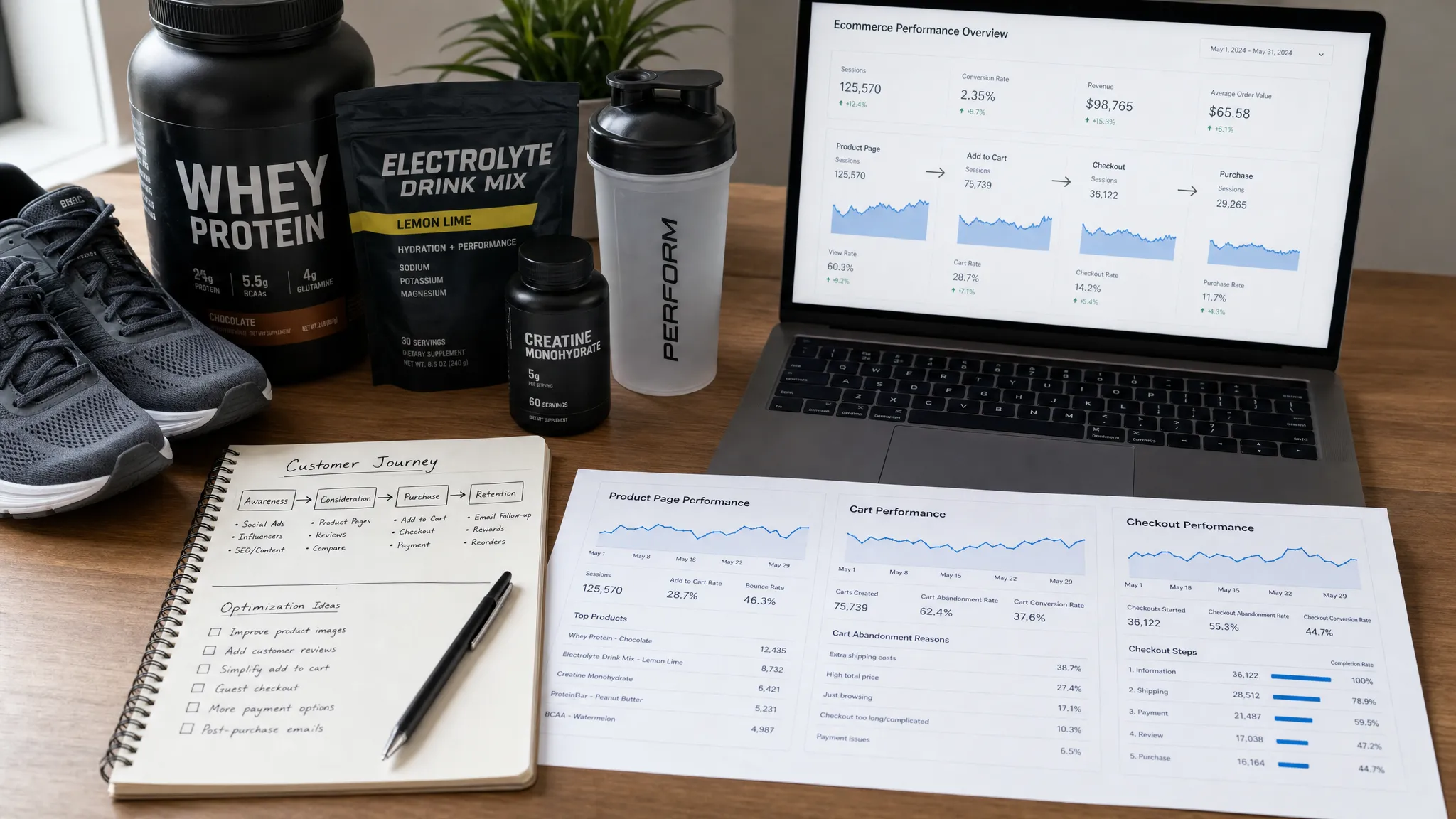
Many ecommerce brands think of CRO as a website design project. Design matters, but it is only one layer. Conversion problems often come from a mismatch between what the customer expects and what the page communicates.
A CRO agency will usually examine three connected areas.
First, messaging. Does the page quickly explain who the product is for, what problem it solves, and why it is different? In sports and wellness, vague language like “perform better” or “feel your best” may not be enough. Customers want specifics, proof, and context.
Second, offer structure. Is the pricing easy to understand? Are bundles positioned clearly? Is the subscription option helpful or confusing? Is free shipping visible before checkout? Does the offer match the traffic source?
Third, user experience. Can shoppers find size, flavor, ingredients, materials, reviews, shipping details, returns, and guarantees without effort? Is the mobile page easy to scan? Does the checkout feel secure and fast?
This is why landing pages matter so much for paid traffic. If your ad promises a specific benefit, the landing page needs to continue that exact story. OPTYO explains this in more detail in its article on how a landing page agency can lift conversion rates.
Step 6: Launch tests with clean measurement
Once the roadmap is approved, the agency begins implementing experiments. Depending on the store’s traffic, tech stack, and risk tolerance, this may include A/B testing, split URL testing, sequential testing, or controlled rollouts.
Not every ecommerce brand has enough traffic for statistically clean A/B tests on every idea. That does not mean CRO is impossible. Lower-traffic brands can still improve through heuristic analysis, customer research, user testing, landing page iteration, and careful before-and-after monitoring. The agency’s job is to choose the right method for the business, not force every brand into the same testing model.
Common test areas include:
- Product page above-the-fold layout and value proposition
- Review placement, testimonials, and user-generated content
- Bundle offers, quantity breaks, and subscription framing
- Cart drawer messaging and checkout friction
- Shipping, return, and guarantee visibility
- Email capture offers and quiz funnels
- Landing page structure for paid social campaigns
The best agencies also document results clearly. A failed test is not wasted if it teaches the team something useful. Sometimes a test disproves an assumption, reveals a segment difference, or shows that the real issue sits earlier in the funnel.
Step 7: Connect CRO with acquisition and retention
CRO should not live in a silo. If the paid social team is testing one message, the landing page says something different, and the email flow introduces a third angle, customers feel the disconnect.
An ecommerce conversion rate optimization agency works best when it collaborates with media buyers, creative strategists, email marketers, SEO teams, and operators. The site experience should reflect what is happening across the entire growth engine.
For example, if paid social ads show athletes using a recovery product after long training sessions, the landing page should reinforce that use case. The product page should explain when and how to use it. The email flow should follow up with education, proof, and objections. The post-purchase experience should help customers get results, which supports retention and repeat purchase.
This is why CRO is often part of a broader growth strategy. If you want to understand how conversion, acquisition, retention, and creative testing work together, OPTYO’s guide on how an ecommerce marketing agency can scale revenue gives a wider view of the system.
What deliverables should you expect from a CRO agency?
Deliverables vary by agency and engagement, but a serious CRO partner should provide more than a list of recommendations. You should expect a process that turns insight into execution.
Typical deliverables include:
- A measurement and KPI framework
- A funnel audit with prioritized findings
- A customer research summary
- A hypothesis backlog ranked by priority
- Wireframes, copy recommendations, or creative direction
- Test briefs with goals and success metrics
- Implementation support or developer-ready guidance
- Post-test analysis and next-step recommendations
- A rolling optimization roadmap
The most important deliverable is not a single report. It is a repeatable decision-making system. Over time, your team should learn which messages resonate, which offers attract profitable customers, and which friction points matter most.
How long does ecommerce CRO take?
Some improvements can happen quickly, especially if the audit uncovers obvious issues like broken tracking, slow mobile pages, unclear shipping information, or a confusing checkout step. However, meaningful CRO is usually a 60 to 90 day process at minimum, and the strongest gains often compound over several months.
A typical first month might focus on analytics, customer research, audits, quick wins, and roadmap creation. The next phase might include product page tests, landing page iterations, cart improvements, and offer experiments. As results come in, the agency refines the roadmap based on what the data shows.
Founders should be cautious of agencies promising instant, guaranteed lifts. CRO depends on traffic quality, product-market fit, offer strength, site constraints, and customer behavior. A good agency can improve the odds of better performance, but it should not pretend every test will win.
When should an ecommerce brand hire a CRO agency?
A CRO agency is usually most valuable when your brand already has meaningful traffic, a proven product, and a clear need to improve efficiency. If you are spending on paid acquisition, attracting visitors through SEO, or growing an email list, conversion improvements can make every channel more valuable.
You may be ready for CRO support if:
- Your traffic is growing but revenue is not keeping pace
- Paid acquisition costs are rising and margins are tightening
- Your product pages get views but add-to-cart rate is low
- Cart or checkout abandonment is a persistent issue
- Customers ask the same pre-purchase questions repeatedly
- Your site looks good but does not convert as expected
- You are scaling campaigns and need better landing page performance
That said, CRO is not a substitute for product-market fit. If customers do not want the product, no page layout can fix the core issue. In that situation, the agency may need to start with positioning, offer testing, or customer research before optimizing the site experience.
How to choose the right ecommerce conversion rate optimization agency
The right agency should be able to explain how its work connects to revenue, margin, and customer behavior. Look for a partner that asks about your business model before suggesting tactics.
Good questions to ask include:
- How do you decide which tests or changes to prioritize?
- How do you measure profit impact, not just conversion rate?
- What do you do when a test is inconclusive?
- How do you combine analytics with customer research?
- Can you work with our existing developers, designers, or media buyers?
- How do you approach mobile ecommerce specifically?
- What will we learn during the engagement, even if a test does not win?
You should also look for category understanding. A CRO agency that works with sports, fitness, and wellness brands should understand the importance of claims, trust, education, proof, community, and repeat purchase behavior. These categories often require more than a clean product page. They require confidence.
Frequently Asked Questions
What does an ecommerce conversion rate optimization agency do? An ecommerce CRO agency analyzes your customer journey, finds friction points, builds a prioritized testing roadmap, and improves pages, offers, messaging, and checkout flows to increase profitable conversions.
Is CRO only about A/B testing? No. A/B testing is one tool, but CRO also includes analytics audits, customer research, UX improvements, copywriting, offer strategy, landing page optimization, and post-test analysis.
How much traffic do I need for CRO? Higher traffic makes controlled testing easier, but lower-traffic stores can still benefit from audits, customer research, landing page improvements, and qualitative testing. The method should match your traffic level.
How long does it take to see results from CRO? Some quick wins can appear within weeks, but a structured CRO program usually needs at least 60 to 90 days to audit, test, analyze, and build momentum.
Can CRO help reduce customer acquisition costs? Yes. When more visitors convert from the same traffic, your effective acquisition cost can improve. CRO can also help paid campaigns scale more efficiently by improving landing page and product page performance.
Turn more of your traffic into profitable growth
If your ecommerce brand is spending to acquire customers, every conversion leak matters. Better product pages, clearer offers, stronger creative alignment, and smoother checkout experiences can make your entire growth system more efficient.
OPTYO helps sports, fitness, and wellness brands connect performance marketing, creative, ecommerce development, CRO, email marketing, SEO, and growth consulting into one smarter growth strategy. If you are ready to improve how your store converts, explore how OPTYO can help you build a more efficient path from traffic to revenue.