.png)



Fitness customers are rarely buying a product in isolation. They are buying a stronger routine, a visible result, a better game, a smaller barrier between who they are now and who they want to become. That is why fitness advertising has to do more than show a product and ask for the sale. It has to connect desire, trust and action in the same customer journey.
For ecommerce founders, this matters because the category is crowded. Apparel brands compete with every other activewear drop. Supplement brands fight for attention against new formulas, influencers and retail giants. Equipment, recovery, coaching and wellness products all face the same challenge: customers may want the outcome, but they still need a reason to buy from you now.
The brands that win do not rely on louder motivational language. They build campaigns around specific customer goals, credible proof, strong creative and a conversion path that removes friction.
Why Many Fitness Ads Get Attention but Not Sales
A high-energy ad can earn views without creating buyers. The gap usually appears when the message is emotionally exciting but commercially vague. A customer might like the video, relate to the athlete or admire the aesthetic, then keep scrolling because the ad never made the product feel necessary.
Common weak spots include generic promises like “level up your training,” visuals that look good but fail to explain the product, discounts that train customers to wait and landing pages that do not continue the same story the ad started. In fitness, there is also a trust issue. Consumers have seen exaggerated claims, edited results and vague “science-backed” positioning too many times. The more important the result feels to them, the more proof they need.
Effective fitness advertising starts by asking a sharper question: what is the customer already trying to improve, and what belief must change before they buy?
A runner buying recovery footwear may need to believe that small recovery habits protect tomorrow’s training. A parent buying home gym equipment may need to believe a 25-minute session is realistic. A customer considering protein powder may need taste, digestibility and ingredient confidence before they care about price.
The sale starts when the ad meets the buyer at that real point of hesitation.
Start With the Motivation Behind the Purchase
Fitness brands often group audiences by demographic data, such as age, gender, location or income. That information helps with targeting, but it rarely explains buying behavior on its own. Motivation is more useful.
Most fitness purchases connect to one or more of these drivers:
- Performance: The customer wants to lift more, run faster, recover better or train longer.
- Appearance: The customer wants to look leaner, more defined, more confident or more polished.
- Consistency: The customer wants a routine that is easier to maintain.
- Identity: The customer wants products that reflect discipline, ambition, community or lifestyle.
- Relief: The customer wants less soreness, less decision fatigue, less discomfort or less friction.
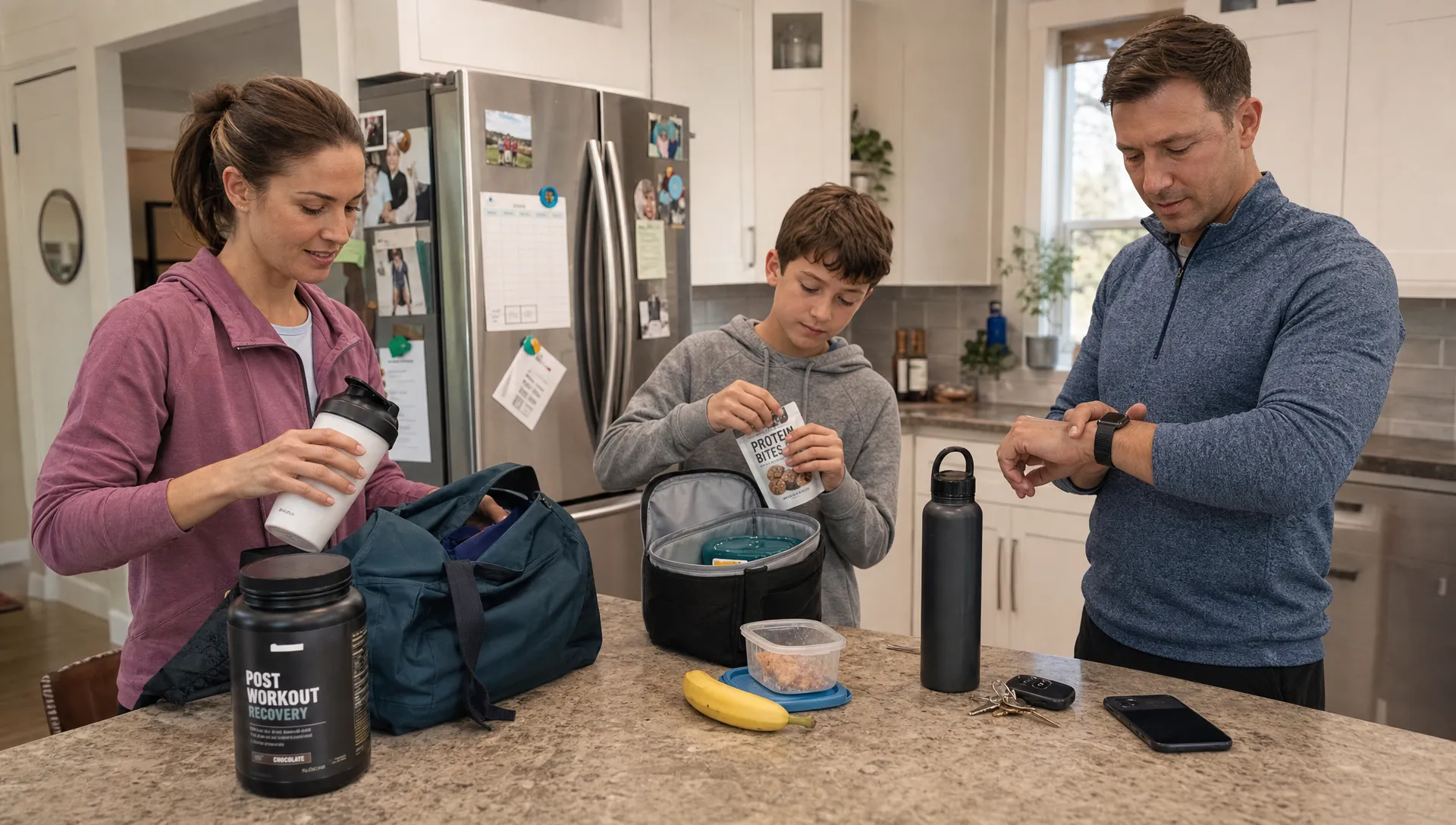
Once you know the driver, your messaging becomes more concrete. Instead of “built for your fitness journey,” a home equipment brand can say “a complete strength session before your first meeting.” Instead of “fuel your goals,” a nutrition brand can show a busy customer hitting their protein target without cooking another meal.
This is where brand strategy and direct response meet. A memorable brand gives customers a reason to recognize you, but the ad must still convert attention into a next step. If your positioning feels scattered, OPTYO’s article on how to build a brand strategy customers remember is a useful companion to this more sales-focused approach.
Build a Message That Moves From Desire to Decision
A strong ad message needs four parts: a relevant problem, a desirable outcome, a believable reason and a clear action. Leave one out and the campaign usually becomes either inspirational but weak or transactional but forgettable.
The problem should be specific enough that the right customer feels seen. “No time to train” is broad. “You have 30 minutes, no commute and no room for bulky equipment” is more useful for a compact home gym product. “Sore after workouts” is broad. “Your calves feel heavy the morning after interval training” gives the creative team something visual and credible to work with.
The outcome should be stated in customer language, not internal product language. A founder may be proud of fabric technology, amino acid ratios or app integrations. Customers care about what those features do for their workout, body, schedule or confidence.
The reason to believe is where many campaigns underinvest. Proof can come from customer reviews, demonstrations, founder credibility, coach validation, ingredient transparency, side-by-side comparisons or a clear explanation of how the product works. The call to action should then match the buyer’s readiness. A warm retargeting audience may be ready for “shop the bundle,” while a cold audience may respond better to “find your fit” or “see how it works.”
| Buyer motivation | Better creative angle | Useful proof | Conversion goal |
|---|---|---|---|
| Train with less friction | Show the product fitting into a real daily routine | Time saved, simple setup, customer use cases | Product page visit or quiz start |
| Improve performance | Demonstrate a measurable training benefit | Athlete demo, coach input, comparison test | Add to cart or bundle purchase |
| Feel more confident | Show fit, comfort and identity in realistic settings | Reviews, UGC, size guidance | First purchase |
| Recover faster | Explain the recovery habit and when to use the product | Routine demo, customer feedback, ingredient clarity | Subscription or repeat purchase |
| Stay consistent | Connect the product to a repeatable behavior | Calendar routine, challenge, community signal | Email signup or starter kit sale |
Creative That Makes the Product Feel Necessary
In fitness, strong creative is not just polished content. It is sales logic made visible. The customer should understand who the product is for, what it solves and why it is different without needing to read a long caption.
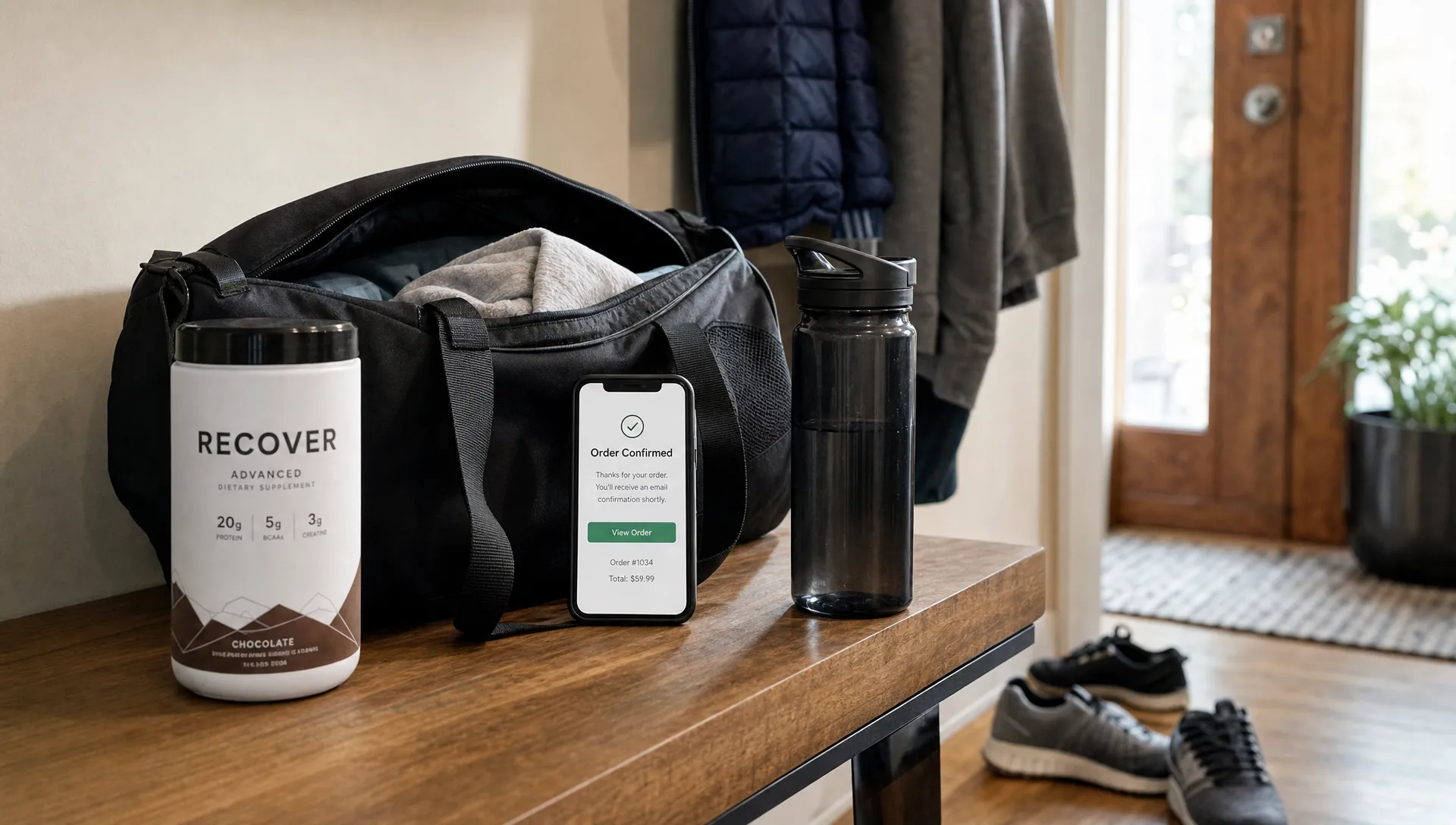
Product demonstrations are especially powerful because they reduce uncertainty. Show how leggings perform during squats, not just how they look in a mirror. Show how a shaker bottle seals inside a gym bag, not just the color options. Show how a mobility tool is used before a run, not just the tool on a white background.
User-generated content can also work well when it feels specific. A vague testimonial like “I love this” is weaker than “I use this before every lower body day because it keeps my warmup under 10 minutes.” Specificity creates belief.
For supplements, wellness products and recovery claims, be careful with compliance. Avoid unsupported medical claims, unrealistic transformations and language that suggests guaranteed results. Fitness buyers are skeptical, and platforms can restrict ads that make aggressive body, health or personal attribute claims. The safer, stronger path is to show usage, explain the mechanism clearly and let credible customer experiences support the message.
Match the Channel to the Buying Moment
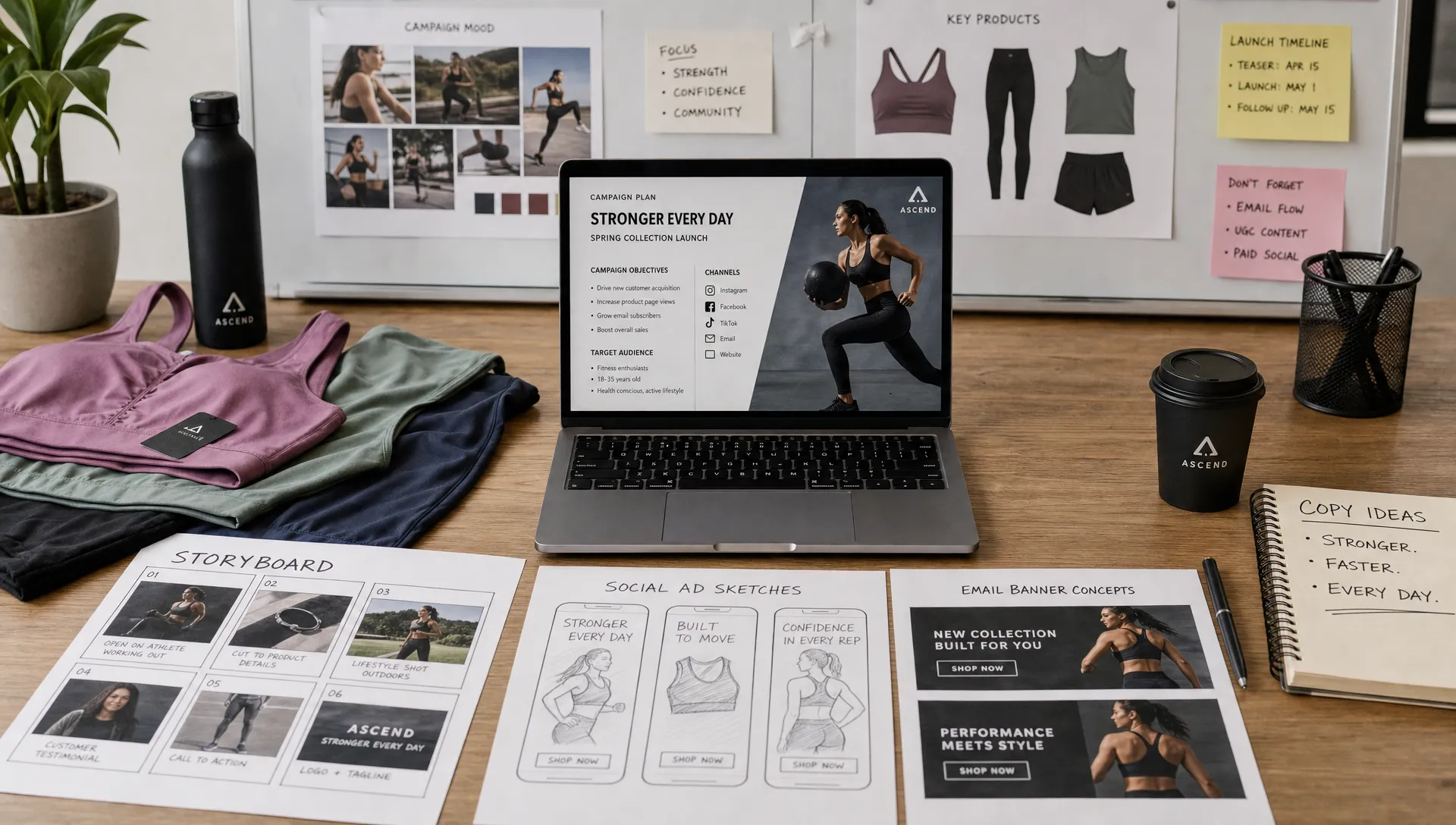
Fitness advertising works best when each channel has a clear job. Paid social is often strongest for creating demand through visual storytelling, demonstrations and retargeting. Search captures intent when customers are already comparing solutions. Email and SMS help convert hesitant shoppers, increase repeat purchases and launch new products to existing customers. SEO builds demand over time by answering research-driven questions and supporting trust.
For founders building paid acquisition, social platforms are usually the first major testing ground because they combine audience targeting, creative testing and fast feedback. If you want a broader breakdown of how targeting, engagement and paid media work together, this guide to effective social media advertising strategies gives a useful channel-level overview.
The important part is not choosing one channel and expecting it to do everything. A cold Meta ad might introduce a new resistance band system through a 20-second routine. A Google Search campaign might capture “best resistance bands for travel.” An email flow might explain the difference between light, medium and heavy resistance, then recommend a starter kit. Those pieces should feel like one connected buying journey.
OPTYO covers this broader sales system in more detail in its guide to sports advertising that turns attention into sales, especially for sports, fitness and wellness brands that need revenue, not just reach.
Make the Landing Page Continue the Ad
The click is not the finish line. It is the handoff between motivation and purchase. If the landing page feels disconnected from the ad, conversion rates drop because the customer has to rebuild context on their own.
A good landing page repeats the core promise, expands the proof and answers purchase objections quickly. For a fitness apparel brand, that may mean fit notes, movement videos, model sizing, fabric details, return policy clarity and reviews from customers with similar body types or training styles. For a supplement brand, it may mean flavor guidance, ingredient explanations, third-party testing if available, subscription flexibility and clear serving instructions.
The page should also make the next action obvious. If the campaign promotes a starter kit, do not send traffic to a general collection page with too many choices. If the ad focuses on recovery after long runs, send customers to a page that speaks directly to runners instead of a generic product description.
Conversion rate optimization does not mean changing button colors at random. It means studying where motivation leaks out of the funnel. Are shoppers clicking size charts but not buying? Are they adding one item but ignoring bundles? Are they reading reviews but abandoning at shipping? Each behavior points to a question your page or offer has not answered yet.
Use Offers Without Weakening the Brand
Discounts can drive short-term sales, but they are not always the best motivator. In fitness ecommerce, offers often work better when they support the customer’s goal rather than simply lowering the price.
A few examples: a “first 30 days of training” bundle for home equipment, a “race week recovery kit” for runners, a “starter stack” for nutrition, a free fit consultation for apparel or a limited challenge that pairs the product with a routine. These offers create context. They make the product easier to use and easier to justify.
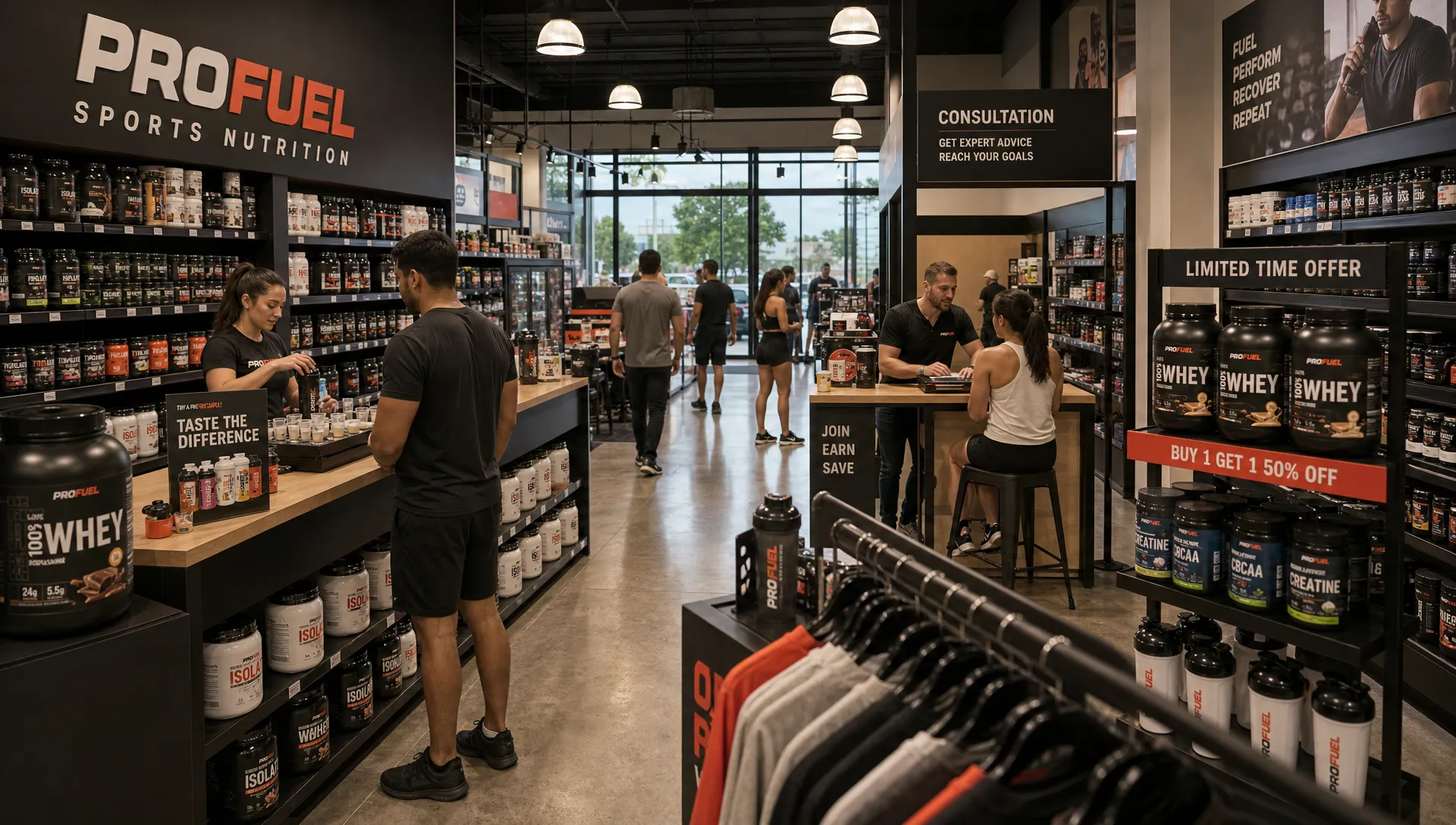
Price incentives still have a place, especially for first purchases or seasonal sales. The risk is training customers to see the brand as interchangeable. If every ad says “20 percent off ends tonight,” you are not building much memory beyond the promotion. A stronger approach combines urgency with a product reason: a launch window, a seasonal training need, a new colorway, a limited bundle or a program tied to a specific customer moment.
Measure Motivation, Not Just Media Efficiency
Many founders judge campaigns by surface metrics too early. A high click-through rate is useful, but it does not guarantee profitable buyers. A low cost per click can still produce weak customers if the offer attracts bargain hunters who never purchase again.
The goal is to understand how well each message turns motivation into revenue. That requires looking across the funnel.
| Metric | What it tells you | What to do with it |
|---|---|---|
| Thumb-stop rate or hook rate | Whether the opening visual earns attention | Test new first frames, claims or scenarios |
| Click-through rate | Whether the message creates enough interest | Sharpen the promise or audience match |
| Conversion rate | Whether the page and offer complete the sale | Improve proof, page speed, clarity or merchandising |
| Customer acquisition cost | How efficiently you acquire new buyers | Compare by creative angle, not only by campaign |
| Average order value | Whether shoppers are buying enough per order | Test bundles, kits, thresholds and product education |
| Repeat purchase rate | Whether customers keep using the product | Improve post-purchase flows, replenishment timing and retention offers |
| MER or blended ROAS | Whether total marketing spend supports revenue | Use it to avoid overreacting to platform attribution shifts |
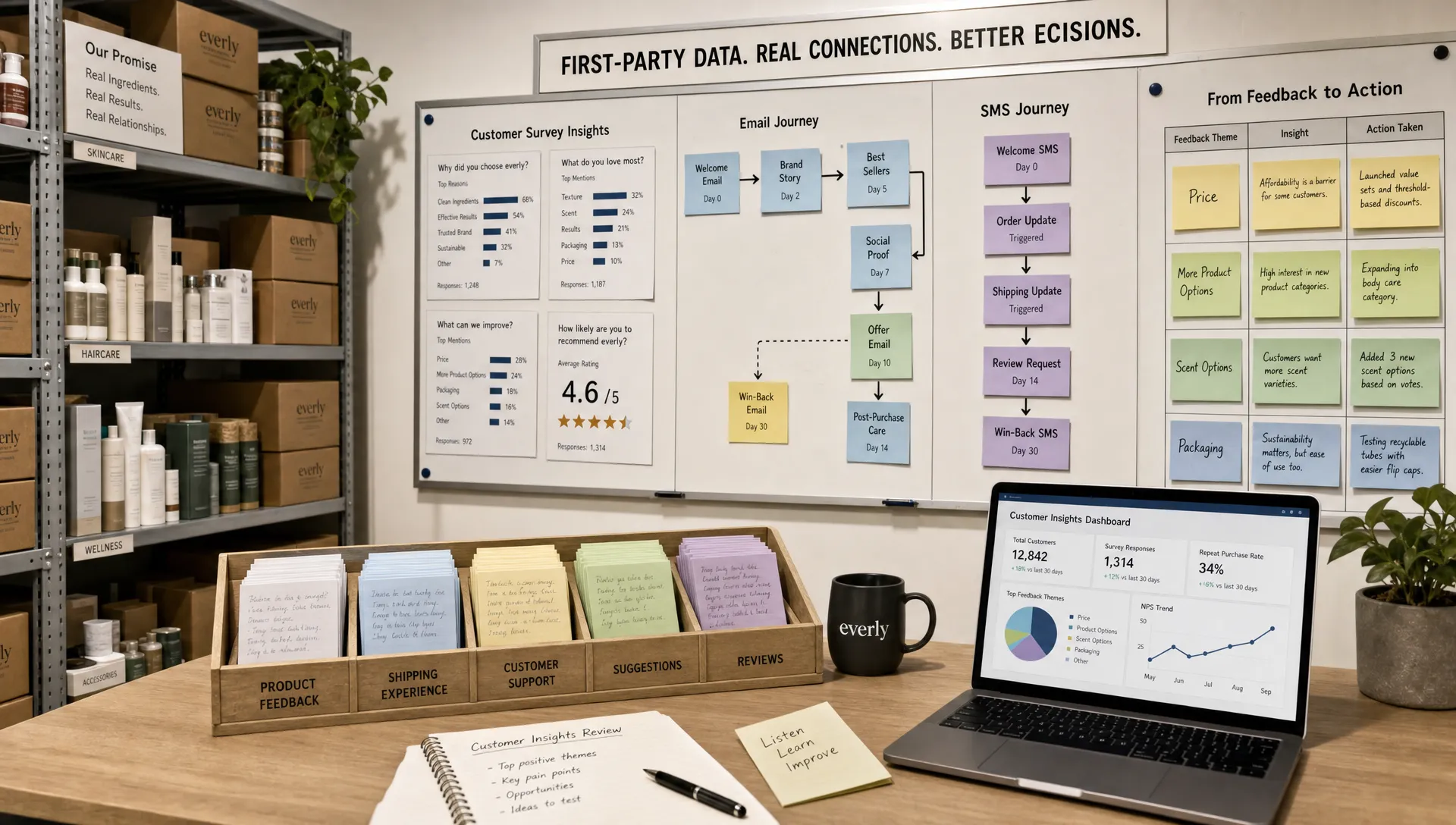
This is where creative testing becomes more strategic. Instead of testing random hooks, test motivations. One ad angle might focus on saving time. Another might focus on confidence in fit. Another might focus on recovery for the next session. If one motivation consistently produces better purchase quality, it can inform landing pages, email flows, product bundles and future brand campaigns.
For a wider look at channel and creative planning, OPTYO’s guide to advertising strategies that work for sports brands expands on how performance-focused campaigns can support ecommerce growth.
A Simple Campaign Framework for Fitness Brands
If you are planning a new launch or trying to improve an existing account, start with a campaign structure that separates learning from scaling.
First, define the buying moment. Do not start with “women ages 25 to 44” or “gym enthusiasts.” Start with the situation that creates demand: restarting training after a break, preparing for summer races, upgrading from cheap gear, solving discomfort during workouts or building a home routine.
Second, create three to five creative angles tied to different motivations. Each angle should have its own hook, proof point and landing page emphasis. For example, an activewear brand could test squat-proof confidence, all-day comfort, premium fit for petite athletes and performance fabric for high-sweat sessions.
Third, build the first purchase path. Decide whether the campaign should sell one hero product, a starter bundle, a quiz recommendation or an email capture before purchase. Match that path to how much education the customer needs.
Fourth, use retention from day one. Fitness products often connect to routines, so the post-purchase journey matters. Send usage tips, routine ideas, sizing support, replenishment reminders or product pairing recommendations. The first purchase should make the second purchase more likely.
Finally, review the data by message. Campaign reports should not only say which ad won. They should explain which customer motivation created the best buyers.
Common Mistakes to Avoid
One of the biggest mistakes is confusing aspiration with motivation. Aspirational visuals can strengthen a brand, but they do not always explain why someone should buy. A beautiful gym shoot may build desire, but it still needs a product role.
Another mistake is overusing founder logic. Founders know every feature, material choice and formulation detail. Customers usually need the one detail that matters to their use case. Lead with the benefit, then support it with the feature.
Brands also hurt performance by changing too many variables at once. If you test a new audience, new offer, new landing page and new creative in the same week, you may get data but not learning. Keep tests clean enough to identify why results changed.
Finally, do not let paid media operate separately from brand, email, creative and site experience. Fitness advertising performs best when the entire system reinforces the same customer promise.
Frequently Asked Questions
What makes fitness advertising different from general ecommerce advertising? Fitness purchases are tied to personal goals, identity and trust. The customer is often buying a desired outcome, such as consistency, confidence, performance or recovery, so the ad must connect the product to that outcome in a credible way.
Which channel is best for fitness brands? It depends on demand and product education. Paid social is strong for visual discovery and testing creative angles, search is useful for high-intent shoppers, email supports conversion and retention, and SEO helps answer research questions over time.
How much should a fitness brand rely on discounts? Discounts can help with acquisition, but they should not be the only reason to buy. Bundles, starter kits, challenges, seasonal training offers and product education often create stronger motivation without weakening the brand.
What should fitness brands test first in ads? Start by testing customer motivations rather than small design changes. Compare angles like time savings, performance improvement, comfort, confidence, recovery or routine support, then measure which ones produce profitable buyers.
How can a brand know if its ads are motivating the right customers? Look beyond clicks. Review conversion rate, customer acquisition cost, average order value, repeat purchases and customer feedback by creative angle. The best ads bring in customers who buy, use the product and come back.
Turn Fitness Motivation Into Measurable Growth
Great fitness advertising does not pressure customers into buying. It helps them recognize a problem, believe in a better outcome and take a clear next step with your brand.
For ecommerce entrepreneurs, the opportunity is to build a connected system: positioning that customers remember, creative that makes the product useful, paid media that tests real motivations, landing pages that answer objections and retention flows that keep customers engaged.
If your sports, fitness or wellness brand needs help aligning performance marketing, creative, ecommerce strategy, conversion optimization, email, SEO and KPI reporting, OPTYO helps D2C and CPG brands build growth systems designed for measurable sales.