.png)




Sports advertising has always been good at creating attention. A great athlete clip, a powerful product demo, a timely game-day activation, or a creator with a loyal training community can stop the scroll fast.
But attention is not the same as revenue.
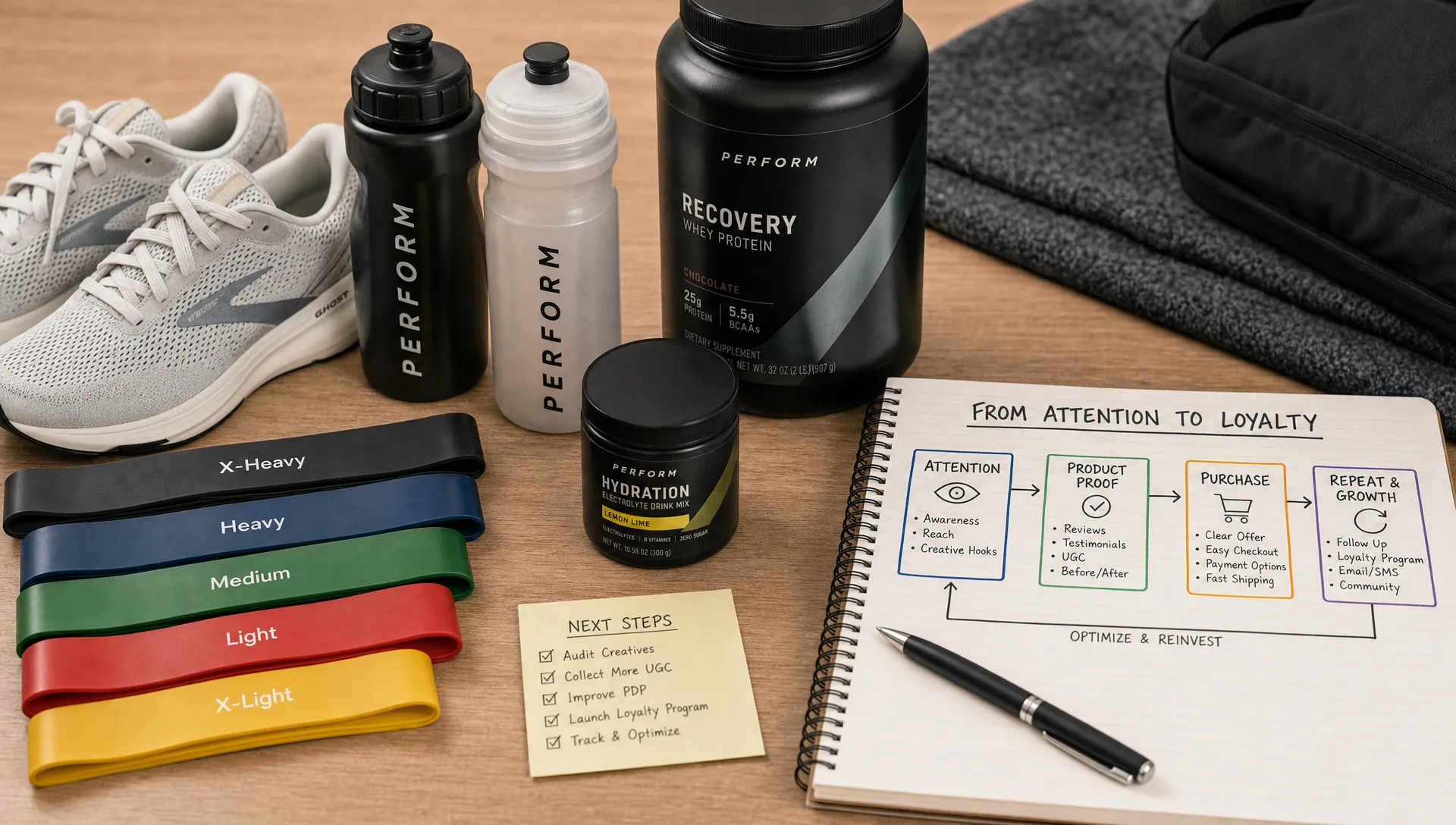
For ecommerce entrepreneurs in sports, fitness, and wellness, the real challenge is turning that attention into measurable sales without wasting budget on impressions that never convert. The brands that win are not simply louder. They connect brand energy, customer intent, paid media, product pages, and retention into one sales system.
That is where modern sports advertising has changed. It is no longer just about awareness, sponsorship visibility, or broad lifestyle campaigns. For growth-stage D2C and CPG brands, sports advertising must make a prospect feel understood, believe the product can help them, and take the next step with confidence.
Attention Is the Starting Line, Not the Finish Line
Sports audiences are emotionally engaged. They care about performance, identity, routine, competition, recovery, confidence, and belonging. That makes the category powerful, but also crowded. A runner sees endless shoe ads. A lifter sees dozens of supplement claims. A wellness buyer sees product after product promising better sleep, mobility, energy, or recovery.
If your ad only earns a pause, it has done the first job. If it earns a qualified click, adds context on the landing page, removes buying friction, and creates a repeat purchase loop, it becomes a growth asset.
The most effective sports advertising starts with a commercial question: what buyer behavior are we trying to create?
That behavior might be a first purchase, a subscription start, a bundle order, a retail locator visit, an email opt-in, or a repeat purchase from a past customer. The answer determines the creative, offer, channel mix, landing experience, and measurement plan.
This is also why performance thinking matters. A campaign can look successful in-platform while still failing the business. High click-through rates, low cost per view, and strong engagement are useful signals, but they do not matter much if contribution margin, conversion rate, and retention do not support profitable growth.
Start With the Buying Moment
Before choosing Meta, TikTok, Google, Amazon, YouTube, influencers, or sponsorships, define the moment that makes someone ready to buy. In sports and fitness, purchase intent is often triggered by a situation, not a demographic.
A customer may be preparing for a race, joining a gym, recovering from an injury, starting a new season, replacing worn gear, improving sleep, or trying to stay consistent with training. Each moment creates different questions and objections.
A new runner does not need the same message as a marathoner chasing a personal record. A busy parent buying home fitness equipment does not evaluate products like a commercial gym owner. A supplement buyer looking for recovery support may care more about ingredients, taste, and trust than hype.
Strong sports advertising turns these moments into focused angles:
- The performance angle: Built for people who want measurable improvement, such as speed, strength, endurance, mobility, or recovery.
- The identity angle: Built for customers who want to look, feel, or belong like a certain type of athlete or community.
- The problem-solution angle: Built around frustration, such as soreness, inconsistency, poor fit, discomfort, or lack of time.
- The proof angle: Built around credibility, including customer results, athlete usage, product testing, reviews, or expert validation.
The tighter the buying moment, the easier it becomes to write ads that feel specific rather than generic.
Build Creative That Moves From Emotion to Action
Sports advertising needs emotion, but it cannot live on emotion alone. The best creative usually combines aspiration with a clear reason to buy.
A strong ad might open with movement, tension, or identity. Then it quickly answers practical questions: who is this for, what does it do, why is it different, why should I believe it, and what should I do next?
For ecommerce brands, this means creative should not be treated as a single hero video. It should be a testing library. You need multiple angles, formats, hooks, proofs, and calls to action that speak to different stages of the buyer journey.
Awareness creative can introduce the problem or lifestyle. Consideration creative can explain features, compare alternatives, or show use cases. Conversion creative can highlight offers, reviews, guarantees, bundles, or urgency. Retention creative can help customers use the product better and buy again.
This is where many brands underinvest. They launch campaigns with a few polished assets and expect the media buyer to scale. But the algorithm cannot manufacture relevance from weak inputs. If the creative does not give the customer a reason to act, the campaign becomes expensive market research.
For a broader view of how creative, positioning, and channel strategy work together, OPTYO’s guide to sports marketing strategies that drive ecommerce growth breaks down several growth levers brands can combine.
Connect Paid Media to the Full Sales Path
Paid media is often where sports advertising gets the most attention, but it should not operate in isolation. A paid social campaign, search campaign, or creator whitelisting push is only as strong as the path that follows the click.
A customer who lands on a confusing product page will not convert just because the ad was good. A product page with weak proof will not turn skeptical visitors into buyers. A first purchase that leads to no email flow, no education, and no repeat purchase strategy leaves money on the table.
A sales-focused sports advertising system connects every step:
- Ad hook: The first message earns attention from the right buyer.
- Click promise: The ad sets an expectation the landing page can fulfill.
- Product education: The page explains value quickly and clearly.
- Trust proof: Reviews, results, credentials, and guarantees reduce risk.
- Offer structure: Bundles, subscriptions, trials, or limited offers increase purchase motivation.
- Post-purchase flow: Email and retention campaigns improve customer lifetime value.
This matters because sports and wellness products often require belief before purchase. Customers may wonder if the product will fit, taste good, last, work with their routine, or be worth the price. The ad can create curiosity, but the ecommerce experience has to close the gap.
Measure the Metrics That Actually Signal Sales
The easiest trap in sports advertising is optimizing for the metric closest to the platform dashboard instead of the metric closest to the business model.
A campaign can drive cheap traffic that does not buy. It can produce many add-to-carts but few purchases. It can generate first orders at a customer acquisition cost that looks acceptable until returns, discounts, shipping, and product margin are included.
For ecommerce entrepreneurs, the key is to build a scorecard that separates attention signals from business outcomes.
Useful attention signals include thumb-stop rate, video hold rate, click-through rate, engagement rate, and landing page visits. These help diagnose whether the creative is earning interest.
Useful sales signals include conversion rate, cost per acquisition, average order value, gross margin after discounts, new customer revenue, repeat purchase rate, subscription retention, email capture rate, and customer lifetime value.
The goal is not to ignore attention metrics. The goal is to interpret them correctly. If attention is high but sales are low, the issue may be the offer, landing page, proof, price, audience quality, or post-click experience. If sales are strong but attention is weak, you may have a valuable angle that needs better creative packaging.
This is why a sports advertising agency with performance discipline will look beyond platform wins. For example, OPTYO’s data-driven advertising work with MX Select shows how growth depends on connecting media, landing pages, and measurement rather than treating ads as a standalone tactic.
Make Testing a Repeatable Operating System
Great sports advertising rarely appears fully formed. It is built through testing, learning, and iteration.
That does not mean throwing dozens of random ad variations into an account and hoping one works. Testing should be structured. Each test should answer a specific question about the customer, offer, channel, or creative.
For example, a brand might test whether customers respond more to durability or performance. A supplement company might compare taste-led messaging against recovery-led messaging. A fitness equipment brand might test whether buyers need a product demo, customer transformation, or space-saving angle before they are ready to purchase.
This kind of disciplined learning compounds. Just as structured study and practice systems help professionals prepare for complex certification exams by turning feedback into progress, ad teams need clear testing systems that turn campaign data into better decisions.
A useful testing rhythm includes weekly creative reviews, landing page insights, offer performance analysis, and retention feedback. The most important question is not simply which ad won. It is why it won and how that learning can improve the next campaign.
Use Channel Roles Instead of Channel Silos
Different channels do different jobs. Sports advertising performs best when each channel has a clear role in the customer journey.
Paid social is often strong for demand creation, storytelling, product demos, and testing new angles. Search captures people already looking for a product, solution, or brand. SEO builds durable visibility around problems, education, comparisons, and category demand. Email turns first-party attention into revenue through education, offers, launches, and repeat purchase flows. Creator and athlete partnerships add credibility when the partnership feels authentic.
The mistake is expecting every channel to perform the same way at the same stage.
A TikTok or Meta campaign may introduce the product to someone who did not know they needed it. Google Search may convert the person who is already comparing options. Email may close the buyer who needed three more touchpoints. SEO may build trust weeks before the first purchase. Each role matters.
If you are building paid social as part of that mix, OPTYO’s article on how a social ad agency builds winning paid campaigns explains why strategy, economics, and creative testing need to come before campaign setup.
Avoid the Most Common Sports Advertising Mistakes
Many sports, fitness, and wellness brands have strong products but struggle to turn interest into purchases because their advertising system has gaps.
One common mistake is making the brand the hero too early. Customers do not care about your story until they understand how your product fits into theirs. Lead with the customer’s goal, pain point, or desired identity, then connect the brand to that outcome.
Another mistake is relying too heavily on aesthetics. Beautiful creative can elevate perception, but it still needs clarity. If a prospect cannot quickly understand what the product is, who it is for, and why it matters, the ad will leak value.
A third mistake is sending all traffic to the same page. Different buyers need different entry points. A new customer may need education. A warm retargeting audience may need proof or an offer. A branded search visitor may need fast product comparison and reassurance.
Finally, many brands stop measuring after the first purchase. In sports and wellness, retention can be a major growth driver. Consumables, apparel drops, equipment accessories, coaching programs, and seasonal training needs can all create repeat purchase opportunities when email, content, and customer experience are aligned.
What Sales-Focused Sports Advertising Looks Like in Practice
A sales-focused campaign does not start with the question, what should we post? It starts with the question, what needs to be true for the right customer to buy?
For a premium fitness product, the answer might be trust, space fit, durability, financing, and proof that the product supports a serious training routine. For a wellness CPG product, the answer might be ingredient transparency, taste, habit formation, reviews, and subscription value. For sports apparel, the answer might be fit, comfort, identity, social proof, and urgency around new releases.
Once those buying conditions are clear, the campaign can be built backward. Creative addresses the core belief gaps. Paid media targets the highest-intent audiences and tests new demand. Landing pages answer objections. Email flows educate and convert. Reporting ties every action back to revenue, margin, and customer value.
That is the difference between sports advertising that gets noticed and sports advertising that grows the business.
Frequently Asked Questions
What is sports advertising? Sports advertising is the use of paid media, creative campaigns, athlete or creator partnerships, search, ecommerce messaging, and brand storytelling to promote sports, fitness, or wellness products. For ecommerce brands, it should connect attention to measurable actions such as purchases, subscriptions, leads, and repeat orders.
How does sports advertising increase ecommerce sales? It increases sales by reaching buyers during relevant sports or fitness moments, presenting a clear product value proposition, building trust through proof, and sending traffic to conversion-focused product pages or funnels. The strongest campaigns also use email and retention strategies after the first purchase.
Which channels work best for sports advertising? The best channel depends on the buying journey. Paid social is useful for storytelling and demand creation, search captures active intent, SEO builds long-term discovery, and email improves conversion and retention. Many growing brands need a connected mix rather than one channel in isolation.
Do small sports brands need athlete sponsorships to grow? Not always. Athlete partnerships can help, but small brands can often grow faster by using customer stories, creator content, product demos, strong offers, and disciplined paid media testing. Authenticity and relevance matter more than celebrity reach.
How often should a brand test new ad creative? Creative testing should be continuous, but not random. Most growth-focused brands benefit from a weekly or biweekly review of hooks, formats, audience response, landing page behavior, and sales performance. The goal is to learn what drives qualified attention and profitable purchases.
Turn Sports Attention Into Sales
Sports advertising should do more than generate buzz. It should help the right customer understand your product, trust your brand, and take action.
OPTYO helps sports, fitness, and wellness brands connect performance marketing, creative asset production, ecommerce development, conversion rate optimization, email marketing, SEO, KPI reporting, and growth consulting into a system built for measurable growth.
If your brand is getting attention but not enough sales, the next step is not simply spending more. It is building the strategy, creative, and conversion path that turn attention into revenue.